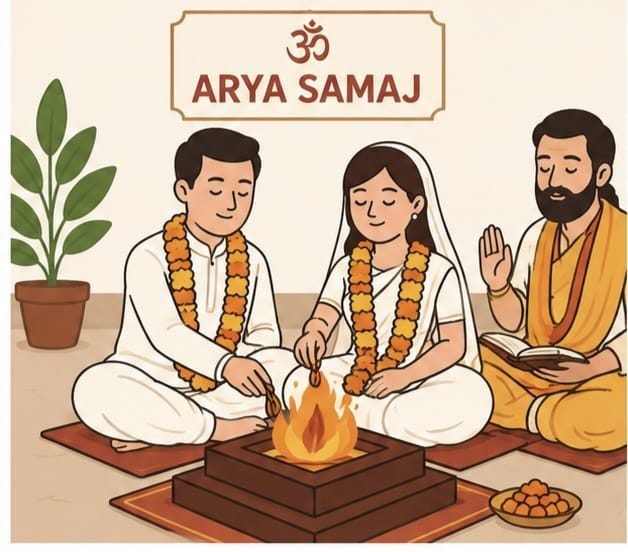
Inter-Religion Marriage in India (2026): Laws, Process and Rights Without Conversion
📅 Updated 22 Sep 2026⏱ 42 min read
Quick answer: Inter-religion marriage is legal throughout India. The main route is the Special Marriage Act, 1954, which lets any two eligible adults marry while each keeps their own religion: give notice to the Marriage Officer (in Delhi, the SDM) of the district where one of you has lived for at least 30 days, wait out the 30-day notice period, and marry at the SDM office before three witnesses. It usually takes 35 to 60 days, and no conversion is needed. Some couples instead choose religious marriage after a genuine, voluntary conversion, for example through Shuddhi before an Arya Samaj wedding. That route is faster but has legal consequences, and several states regulate conversion by law. A Hindu marrying a Sikh, Jain or Buddhist is not an inter-religion marriage in law: the Hindu Marriage Act covers all four.
Key takeaways
Inter-religion marriage is legal; the Special Marriage Act lets both partners keep their religion.
Process: notice to the SDM, 30-day display, marriage before three witnesses; about 35–60 days in Delhi.
Objections are valid only on legal grounds such as age, an existing spouse or prohibited relationship.
Conversion must be genuine; several states regulate conversion by law, so check before converting.
SMA marriages follow the Indian Succession Act (Sections 19, 21, 21A); Hindu–Sikh/Jain/Buddhist couples can use the HMA instead.
Couples of different religions come to us with more questions than any other couples, and with good reason. The legal choices they make at the start affect not only the wedding but also property, succession, children and even which divorce law applies. Many have also heard frightening things about conversion laws, public notices and police. This article sets out the whole legal picture calmly, so that you can choose the route that fits your beliefs and your situation.
If your main concern is family opposition, read love marriage legal rights alongside this. If you are both Hindu, Sikh, Jain or Buddhist but from different castes, you want inter-caste marriage instead.
Is Inter-Religion Marriage Legal in India?
Yes. Parliament enacted the Special Marriage Act, 1954 precisely so that any two Indians, and foreigners marrying in India, could marry regardless of religion. The Supreme Court has treated the right to marry a person of one's choice as part of Article 21, most prominently in Shafin Jahan v. Asokan (2018), where it upheld an adult woman's choice to marry a man of another faith. Article 25 protects each partner's freedom of conscience, which is why neither can be required to give up their religion to marry. The Allahabad High Court in Salamat Ansari v. State of U.P. (2020) likewise held that two adults may live together with a partner of their choice irrespective of religion.
Question
Answer
Can a Hindu marry a Muslim, Christian, Parsi or Jew?
Yes, under the Special Marriage Act, without conversion
Must either partner convert?
No
Is family consent required?
No, for adults (21 and 18)
Is there a public notice?
Yes, under the Special Marriage Act (30 days)
Is a Hindu–Sikh or Hindu–Jain marriage inter-religion in law?
No; both are covered by the Hindu Marriage Act
Is there a same-day option without conversion?
No
Which Law Applies to Your Couple
The first step is to identify which laws your combination of religions allows. The table covers the most common combinations we see.
Partners
Laws available
Usual choice without conversion
Hindu + Sikh / Jain / Buddhist
Hindu Marriage Act or Special Marriage Act
Arya Samaj + HMA registration (not inter-religion in law)
Hindu + Muslim
Special Marriage Act
Special Marriage Act
Hindu + Christian
Special Marriage Act; church marriage under the Indian Christian Marriage Act, 1872 is also possible where the church agrees
Special Marriage Act
Muslim + Christian
Special Marriage Act; Christian Marriage Act where applicable
Special Marriage Act
Hindu + Parsi
Special Marriage Act (the Parsi Marriage and Divorce Act applies only when both are Parsi)
Special Marriage Act
Any Indian + foreign national of another faith
Special Marriage Act
Special Marriage Act
Partners with no religion
Special Marriage Act
Special Marriage Act
The Three Routes Compared
Point
Special Marriage Act
Conversion + religious marriage
Section 15 registration of an earlier marriage
Religion after marriage
Both keep their own
One partner changes religion
Both keep their own
Time
About 35–60 days
Can be days, subject to state conversion rules
30-day notice, then registration
Public notice
Yes, 30 days
None for the marriage; some states require notice of conversion
Yes, 30 days
Law governing marriage and divorce
Special Marriage Act
The personal law of the common religion
Special Marriage Act (from registration)
Succession
Indian Succession Act (with exceptions)
Personal law of the common religion
Indian Succession Act (with exceptions)
Main risk
Notice period exposure
Conversion challenged as not genuine; state law compliance
Conditions must be met; notice exposure
For most interfaith couples, the Special Marriage Act is the safest legal choice. It is the only route that respects both partners' religions, and it produces a certificate that is conclusive evidence of the marriage. Conversion should be a matter of genuine belief, not a shortcut.
The Special Marriage Act, Explained Section by Section
Section
What it provides
4
Conditions: no living spouse; capacity to consent; groom 21, bride 18; not within prohibited degrees (unless custom allows)
5
Notice in writing to the Marriage Officer of the district where at least one partner has lived for 30 days before the notice
6
Notice entered in the Marriage Notice Book and displayed at the office; copy may be sent to the district of permanent residence
7
Objections within 30 days, only on the ground that a Section 4 condition is breached
8
Marriage Officer inquires into objections within 30 days and decides
11
Declaration signed by both partners and three witnesses before the officer
12
Marriage solemnised at the office or a nearby place, in any form the partners choose, with the statutory words of acceptance
13
Certificate entered in the Marriage Certificate Book; conclusive evidence of the marriage
15–16
Registration of marriages celebrated in other forms
19, 21, 21A
Effect on joint family membership and succession
27–28
Divorce, including divorce by mutual consent
Under Section 12, the partners may add any ceremony they like, religious or not, as long as they say to each other, before the officer and witnesses, the words the Act requires. Many interfaith couples later hold a celebration with elements of both traditions.
Special Marriage Act Process in Delhi, Step by Step
Check eligibility and residence. Ages 21 and 18; no living spouse; at least one of you has lived in the Delhi district for 30 days before notice, with address proof.
Prepare documents. Age, identity and address proofs, photographs, affidavits of age and marital status, and divorce or death certificates if relevant. A foreign partner needs a passport and visa and sometimes an embassy certificate.
Give notice online. Apply on the Delhi e-District portal for marriage under the Special Marriage Act, with both partners' details.
Verify the notice. Both partners appear at the SDM office with originals on the date given.
Wait 30 days. The notice is displayed. Plan where you will stay and whether you need protection.
Solemnisation. After 30 days and within three months of the notice, both partners and three witnesses appear, sign the declaration and the officer solemnises the marriage.
Certificate. The marriage certificate is issued and can be downloaded.
The notice is the part of the Special Marriage Act that worries interfaith couples most. It is displayed at the SDM office, and a copy may be sent to the office of the district where a partner permanently lives. In some states, notices have been used by hostile groups to find and pressure couples.
Courts have recognised the problem. In Safiya Sultana v. State of U.P. (2021), the Allahabad High Court held that publication of the notice should be optional, at the couple's written request, in that state, reasoning that mandatory publication intruded on privacy and liberty. That judgment binds Uttar Pradesh; practice elsewhere varies. In Delhi, ask about the current procedure when you file, and if you have concerns, put your request for privacy in writing.
Practical steps during the notice period
Decide in advance where you will live for the 30 days.
Keep documents and copies with you, not at the family home.
Send a protection request to the local SHO and district DCP before or on the day you file if you fear hostility.
Avoid posting details on social media.
Keep a lawyer's number handy.
Objections: What Is and Is Not Valid
Valid legal ground (Section 7 read with Section 4)
Not a valid ground
One partner already has a living spouse
"Our families do not agree"
One partner is under age
"The religions are different"
A partner cannot give valid consent due to unsoundness of mind
"The community will be dishonoured"
The partners are within prohibited degrees
"Conversion is expected in our religion"
—
"She is being misled" (without evidence of incapacity)
If an objection is made, the Marriage Officer must inquire and decide within 30 days, and cannot solemnise the marriage until then. If the officer upholds an objection, either partner can appeal to the district court within 30 days (Section 8). Invalid objections are dismissed.
Registering an Earlier Religious Marriage Under Section 15
Some interfaith couples have already had a religious ceremony, such as a temple wedding, a nikah or a church service, and later want the protection of the Special Marriage Act. Section 15 allows a marriage celebrated in another form to be registered under the Act if, among other conditions, a ceremony of marriage was performed and the couple have lived together as husband and wife since; neither has more than one spouse living; both are at least 21 at the time of registration; they are not within prohibited degrees; and one of them has lived in the district for 30 days. A 30-day notice is again displayed before registration.
Once registered, the marriage is treated as solemnised under the Special Marriage Act from the date of registration, with its consequences for succession and divorce. This route is useful where the original religious ceremony may be open to question, for example because one partner did not belong to the religion whose rites were used.
Marriage After Conversion: What the Law Expects
Some couples decide that one partner will adopt the other's religion and marry by religious rites. For couples where the non-Hindu partner genuinely wishes to become Hindu, Arya Samaj mandirs perform Shuddhi, after which the couple can marry by Vedic rites and register the marriage under the Hindu Marriage Act. Our Shuddhi Sanskar guide explains that ceremony.
Before choosing this route, understand three legal points:
Conversion must be genuine and voluntary. Courts look at whether a person actually adopted the new faith. A conversion made only to get around a legal requirement can be disregarded. The Supreme Court, in Sarla Mudgal v. Union of India (1995) and Lily Thomas v. Union of India (2000), held that a married Hindu man who converts to Islam only to take a second wife without dissolving the first marriage commits bigamy; the first marriage is not dissolved by conversion.
State law may regulate the conversion. Several states require prior notice to the District Magistrate and have penalties for conversions by force, fraud, allurement or "by marriage". See the next section.
The consequences are lasting. After conversion, the couple's marriage, divorce, maintenance and succession are governed by the personal law of the religion they now share, not by the Special Marriage Act.
Our firm view: no one should convert under pressure, from either partner or either family. The Special Marriage Act exists so that nobody has to.
State Anti-Conversion Laws
A number of states have laws, often called "freedom of religion" laws, that regulate religious conversion. Several of them specifically address conversion for marriage. Among them are Uttar Pradesh (Prohibition of Unlawful Conversion of Religion Act, 2021), Madhya Pradesh (Freedom of Religion Act, 2021), Uttarakhand, Gujarat, Himachal Pradesh, Karnataka and Haryana. Their details differ, and several have been challenged in the courts, but common features include:
prior declaration or notice to the District Magistrate before conversion, and sometimes a declaration afterwards;
police or administrative inquiry into the conversion;
offences for conversion by force, fraud, allurement or undue influence, and in some states "by marriage";
in some states, provisions under which a marriage done solely for conversion may be declared void.
Two practical points follow. First, these laws regulate conversion, not inter-religion marriage itself. A Special Marriage Act marriage without conversion does not involve them. Second, if you or your partner lives in one of these states and a conversion is planned, take advice on that state's law first, because a conversion done in Delhi may still be questioned in the home state. Delhi itself does not, at the time of writing, have a comparable anti-conversion statute, but the law in this area changes, so check before you act.
What Personal Laws Say About Interfaith Marriage
Personal law
Position on marrying outside the faith
Effect of Special Marriage Act
Hindu Marriage Act (Hindus, Sikhs, Jains, Buddhists)
Applies only where both partners are Hindu in this wide sense
SMA is the route for marrying a non-Hindu without conversion
Muslim personal law
Classical rules treat a Muslim man's marriage with a non-Muslim woman who is not "of the Book" as irregular, and a Muslim woman's marriage with a non-Muslim man as not valid
SMA marriage is valid in civil law regardless of these religious rules
Indian Christian Marriage Act, 1872
Allows marriage where at least one partner is Christian, if solemnised under the Act
SMA is an alternative with a uniform civil procedure
Parsi Marriage and Divorce Act, 1936
Applies only where both are Parsi
SMA is the route for a Parsi marrying a non-Parsi
The key point: a Special Marriage Act marriage is a valid civil marriage in Indian law, whatever any religious authority says about it. Religious recognition within a community is a separate, personal matter.
When One Partner Is Christian
Couples where one partner is Christian have two options. The Indian Christian Marriage Act, 1872 allows a marriage where one or both partners are Christian to be solemnised by a licensed minister or a Marriage Registrar under that Act, and some churches will marry a Christian to a non-Christian with conditions. Alternatively, the Special Marriage Act gives a civil marriage with no religious conditions. Couples sometimes do both in the correct order: a Special Marriage Act marriage for the legal record, and a church blessing afterwards. Ask your church about its rules before planning a church ceremony.
Property and Succession Effects
This is the part of the Special Marriage Act that couples most often overlook.
Situation
Effect
Succession to the property of a person married under SMA, and of their children
Governed by the Indian Succession Act, 1925 (Section 21), subject to Section 21A
Member of a Hindu, Sikh, Jain or Buddhist undivided family marries a non-Hindu under SMA
Treated as severed from the undivided family (Section 19)
Both partners Hindu, Sikh, Jain or Buddhist marrying under SMA
Section 21A preserves the Hindu Succession Act; no severance
Rights already vested before marriage
Section 19 preserves rights to property already vested, subject to the Act's provisions
Wills
Each spouse can make a will under the Indian Succession Act
If either family has significant joint property, take legal advice before filing notice. Making wills soon after the marriage is sensible for every interfaith couple.
Children: Religion, Names and Rights
Legitimacy: children of a valid SMA marriage are legitimate for every purpose.
Religion: the law does not assign a religion to the children of an SMA marriage. Parents may raise them in either faith, both, or neither, and children may choose for themselves as adults.
Names: parents choose freely; there is no legal rule tying a child's name to a religion.
Succession: the children's succession follows the Indian Succession Act, as above.
Guardianship: the Guardians and Wards Act, 1890 applies in disputes, with the child's welfare as the paramount consideration.
Divorce and Maintenance Under the Special Marriage Act
If an SMA marriage breaks down, divorce is under the Special Marriage Act itself, not under either partner's personal law. Section 27 lists grounds such as adultery, desertion for two years, cruelty and others, and Section 28 allows divorce by mutual consent where the couple have lived separately for a year or more, with the usual waiting period before the final decree. Maintenance can be claimed under Section 36 and 37 of the Act and under Section 144 of the Bharatiya Nagarik Suraksha Sanhita, 2023. Protection under the Protection of Women from Domestic Violence Act, 2005 applies as it does to any marriage.
The Solemnisation Day at the SDM Office
After the notice period, the marriage itself is short but meaningful. A typical day looks like this:
Stage
What happens
Arrival
Both partners and three witnesses arrive with originals and copies of their IDs and photographs
Verification
The office checks identities against the notice and confirms no objection is pending
Declaration
Both partners and the three witnesses sign the declaration in the form set by the Act
Solemnisation
In the presence of the officer and witnesses, each partner says to the other the words of acceptance required by Section 12
Certificate
The officer enters the certificate in the Marriage Certificate Book; the partners and witnesses sign
Afterwards
Many couples exchange garlands or rings and take photographs; some go on to a religious blessing or family meal
You may wear whatever you like. Some couples wear wedding clothes from both traditions; others come in office clothes. The legal effect is identical.
When One Partner Is a Foreign National
The Special Marriage Act applies to a marriage in India between an Indian and a foreign national of any religion. Practical points:
The residence condition still applies: one partner must have lived in the district for 30 days before notice. Often the Indian partner satisfies it.
The foreign partner needs a valid passport and visa. Some SDM offices ask for a certificate from the foreign partner's embassy confirming marital status (sometimes called a certificate of no impediment).
Both partners must be present at notice verification and solemnisation.
For use abroad, the Indian certificate is usually apostilled by the Ministry of External Affairs; our apostille and visa guide explains how.
Check with the foreign country's embassy which documents it will want for a spouse visa, before the wedding.
NRIs of Indian origin who are marrying a partner of another religion follow the same route; see the NRI marriage guide for the travel and timing side.
Common Delays in Interfaith Marriages
Residence proof not accepted for the district of notice. Use a document clearly showing at least 30 days' residence.
Mismatch in names or dates of birth across documents.
Witnesses who cannot attend on the solemnisation date.
Objections, even invalid ones, which the officer must inquire into.
The three-month window. If you do not marry within three months of the notice, a fresh notice is needed.
Embassy documents for a foreign partner taking longer than expected.
Office holidays during the notice period.
A document check before filing prevents most of these. It also lets you choose a solemnisation date when all three witnesses are free.
Deciding Between the Special Marriage Act and Conversion
Couples sometimes come to us having been told by relatives that one of them "must" convert. Here are the questions we ask them to answer honestly, together, before choosing:
Does either of you genuinely believe in the other's faith? If not, conversion would be a formality, which the law does not respect and which can be challenged later.
Is anyone pressuring either of you? Pressure from a partner, a family or a community is a reason to choose the Special Marriage Act, not conversion.
Where do your families live? If either lives in a state with an anti-conversion law, conversion brings notice, inquiry and legal risk.
How important is speed? The Special Marriage Act takes 35 to 60 days. If a deadline exists, plan around it rather than converting to beat it.
Is there joint family property? The Special Marriage Act's succession rules, and Section 19, may matter more than the timeline.
How will you raise children? Neither route decides this for you, but conversion often brings family expectations with it.
If after this discussion both partners are comfortable keeping their own faiths, the Special Marriage Act is almost always the right choice. If one partner sincerely wishes to adopt the other's religion, take advice on state law first, then proceed openly.
After the Marriage: Records to Update
Surname: a wife may keep her name or take her husband's; religion does not affect this choice. Update Aadhaar, PAN, bank and passport if she changes it.
Passport: the Special Marriage Act certificate supports adding a spouse's name.
Nominations: bank accounts, insurance and provident fund.
Wills: both spouses should make wills, because succession follows the Indian Succession Act.
Apostille: for any use abroad, including spouse visas.
Documents Checklist for Inter-Religion Marriage
Document
Special Marriage Act
Conversion + religious marriage
Age proof for both
Yes
Yes
Identity and address proof for both
Yes; address proof for the district of notice
Yes
Photographs
Yes
Yes
Affidavit of age, marital status, nationality
Yes
Yes, including religion
Divorce decree / death certificate
If applicable
If applicable
Proof of religion or conversion
Not required
Conversion certificate and any declaration the state law requires
Witnesses
Three at solemnisation, with IDs
Usually two at HMA registration, with IDs
Foreign partner
Passport, visa; embassy certificate if required
Passport, visa
Witnesses must genuinely know you. We do not provide witnesses. For an interfaith couple, friends or colleagues from both communities often make the best witnesses. The complete list, with alternatives when a document is missing, is in documents required and the witness rules in witness requirements.
Safety and Protection for Interfaith Couples
Interfaith couples sometimes face opposition not only from families but from outside groups. The same legal protections apply, and you should use them early.
Protection request: a written application to the SHO and DCP, naming those you fear, submitted before or when you file notice.
High Court protection petition: commonly filed by interfaith couples; courts routinely direct police to protect adults who have married or intend to marry.
Safe houses: directed by the Supreme Court in Shakti Vahini for couples under threat.
Emergency: dial 112.
False complaints: an adult's clear statement that she married by choice usually ends kidnapping allegations; see legal rights.
Cost and Timeline
Item
Amount
Time
Inter-religion marriage handling (our service)
₹10,000
Throughout the process
Special Marriage Act full process (our service)
₹15,000
About 35–60 days
Official SMA fees
About ₹15
—
Arya Samaj marriage after genuine Shuddhi (our service)
From ₹5,100; with registration ₹7,100
Subject to any state conversion requirements
Apostille for use abroad (our service)
₹4,500
After the certificate
Current prices are on our fees page. There is no fast track for the Special Marriage Act: the 30-day notice cannot be shortened, and Tatkal does not apply to it.
Living as an Interfaith Family
The legal marriage is the beginning. Couples who do well in interfaith marriages usually talk early about practical things:
Festivals: many couples celebrate both families' festivals, and children grow up enjoying both.
Food: dietary rules, fasting and kitchen practices matter to many families; agree on what your home will do.
Places of worship: whether each partner will continue to visit their own temple, mosque, church or gurdwara, and whether the other will accompany them.
Children's upbringing: names, religious education and ceremonies such as mundan, aqiqah or baptism.
Last rites: uncomfortable but important; wishes can be written down.
Wills: because succession follows the Indian Succession Act, wills give clarity.
Five Interfaith Couples
Typical situations, with details changed for privacy.
Hindu and Muslim, colleagues in Noida, living in Delhi
The groom had rented in South Delhi for two years, so they filed notice there. They submitted a protection request the same day, stayed with a friend during the notice period, and married at the SDM office on day 32 with three colleagues as witnesses.
Hindu and Christian, church blessing later
They married under the Special Marriage Act first, then had a church blessing and a small havan with both families a month later. Legally, the SMA marriage is the one that counts.
Muslim woman wishing to become Hindu
She had followed Hindu practices for years and wished to adopt the faith. Because her family lived in a state with an anti-conversion law, she took advice on that law first. After completing the required steps, she underwent Shuddhi and the couple married by Arya Samaj rites.
Couple who had a nikah only
A Hindu man and a Muslim woman had a nikah years earlier without either converting. Worried about its validity, they registered their marriage under Section 15 of the Special Marriage Act after the 30-day notice.
Indian Hindu and a foreign Christian
The foreign partner had been in Delhi on a work visa for over a year. They married under the Special Marriage Act, obtained an apostille and used the certificate for the spouse visa.
Inter-Religion Marriage: Myths and Facts
Myth
Fact
"One of us must convert."
No. The Special Marriage Act exists so that neither has to.
"Anti-conversion laws ban interfaith marriage."
They regulate conversion; an SMA marriage without conversion does not involve them.
"Parents can object and stop the marriage."
Only on legal grounds such as age or an existing spouse.
"The SDM will inform our families."
The notice is public and may go to the home district; the SDM does not seek parental consent.
"A nikah or temple wedding is enough."
Religious rites without a common religion may not be valid; SMA marriage or Section 15 registration gives certainty.
"Converting ends an earlier marriage."
No; the Supreme Court held in Sarla Mudgal and Lily Thomas that conversion does not dissolve a subsisting marriage.
"Hindu and Sikh couples need the Special Marriage Act."
No; the Hindu Marriage Act covers both.
"Tatkal can speed up court marriage."
Tatkal applies only to HMA registration, not SMA.
Inter-Religion Marriage Checklist
☐ Ages 21 and 18; no living spouse; not within prohibited degrees
☐ Route decided together, without pressure
☐ One of us has lived 30 days in the district of notice, with proof
☐ Documents ready and checked
☐ Three witnesses who know us
☐ Plan for the 30-day notice period: where to stay, protection request
☐ Advice taken on joint family property (Section 19)
☐ If conversion is planned: state law checked first
☐ Wills planned after marriage
One-Minute Summary
Inter-religion marriage is legal; the Special Marriage Act lets both partners keep their faith.
Notice to the SDM, 30 days' display, then marriage before three witnesses; about 35–60 days.
Objections are allowed only on legal grounds.
Conversion must be genuine; several states regulate it by law.
SMA marriages follow the Indian Succession Act, with special rules for joint family property.
Hindu–Sikh, Hindu–Jain and Hindu–Buddhist couples can use the Hindu Marriage Act instead.
How We Help Interfaith Couples
We have guided interfaith couples through the Special Marriage Act in Delhi since 1998. We check eligibility, residence and documents; prepare and file the notice; tell you exactly what to expect during the 30 days; point you to legal help for protection if needed; and support you through solemnisation and the certificate. Where a partner genuinely wishes to convert, we explain the legal consequences and state-law requirements first. Everything is confidential. We do not provide witnesses; please bring people who know you.
Interfaith marriage, without giving up your faith
Inter-religion marriage handling ₹10,000 · full Special Marriage Act process ₹15,000. Official fees separate and shown in writing.
Questions and Answers: Inter-Religion Marriage in India
Is inter-religion marriage legal in India?▼
Yes. The Special Marriage Act, 1954 allows any two eligible adults to marry regardless of religion, with each keeping their own faith. The groom must be at least 21 and the bride at least 18, neither may have a living spouse, both must be capable of consent, and they must not be within prohibited degrees. The Supreme Court in Shafin Jahan (2018) held that choosing a spouse, including one of another faith, is part of Article 21, and Article 25 protects each partner's religious freedom. Family consent is not required.
Can a Hindu and a Muslim marry without converting?▼
Yes, under the Special Marriage Act. Neither partner has to change religion. One of you must have lived in the district of the SDM office for at least 30 days before giving notice. You file the notice, verify it at the SDM office, wait 30 days while it is displayed, and then marry before the Marriage Officer with three witnesses. The certificate is conclusive evidence of the marriage. After marriage, both of you continue to follow your own religions, and your children may be raised in either faith, both, or neither.
How long does an inter-religion marriage take in Delhi?▼
Usually about 35 to 60 days. The notice must be displayed for 30 days before the marriage can be solemnised, and there is no fast track: Tatkal applies only to Hindu Marriage Act registration, not to the Special Marriage Act. The marriage must take place within three months of the notice, or a fresh notice is needed. Delays usually come from residence proof problems, document mismatches, witnesses who cannot attend, or objections that the officer must inquire into, so a document check before filing saves time.
Does one partner have to convert for an inter-religion marriage?▼
No. The Special Marriage Act exists so that nobody has to convert to marry. Conversion is a personal religious decision, and it should only happen if a person genuinely wishes to adopt a new faith. If one partner does convert, the couple can marry by the rites of their now-common religion, but the legal consequences change: marriage, divorce and succession then follow that religion's personal law. Several states also regulate conversion by law, requiring prior notice to the District Magistrate and inquiry.
Will our families be informed about the Special Marriage Act notice?▼
The notice is displayed publicly at the Marriage Officer's office and may be sent to the office in the district where a partner permanently resides, so families may learn of it. The SDM does not ask for parental consent and parents cannot object except on legal grounds. The Allahabad High Court in Safiya Sultana (2021) held publication should be optional at the couple's request in Uttar Pradesh; practice elsewhere varies. In Delhi, ask about current procedure and put any privacy request in writing. Plan protection before filing if you expect hostility.
Can our parents object to an interfaith marriage?▼
Anyone may object during the 30-day notice, but only on the grounds in Section 7 read with Section 4 of the Special Marriage Act: a living spouse, under-age partner, inability to give valid consent, or prohibited relationship. Objections such as different religions, family disapproval or community honour are not valid legal grounds. The Marriage Officer must inquire into any objection and decide within 30 days. If the officer wrongly upholds an objection, either partner can appeal to the district court within 30 days.
What are anti-conversion laws and do they affect us?▼
Several states, including Uttar Pradesh, Madhya Pradesh, Uttarakhand, Gujarat, Himachal Pradesh, Karnataka and Haryana, have laws regulating religious conversion. They typically require prior notice to the District Magistrate, provide for inquiry, and penalise conversion by force, fraud, allurement or, in some states, by marriage. They regulate conversion, not inter-religion marriage itself, so a Special Marriage Act marriage without conversion does not involve them. If a conversion is planned and either of you lives in such a state, take advice on that state's law first.
Is a nikah between a Muslim and a non-Muslim valid?▼
Under classical Muslim personal law, a Muslim woman's marriage to a non-Muslim man is not recognised, and a Muslim man's marriage to a woman who is not Christian or Jewish is treated as irregular. Courts may therefore question a nikah where one partner has not genuinely adopted Islam. Couples in this position can get legal certainty by marrying under the Special Marriage Act or, if the conditions are met, registering their existing marriage under Section 15 of the Act after a 30-day notice. Take legal advice on your specific facts.
What is Section 15 registration under the Special Marriage Act?▼
Section 15 lets a couple register a marriage that was celebrated in another form, such as a temple wedding, nikah or church service, under the Special Marriage Act. The conditions include that a ceremony was performed and the couple have lived together as husband and wife since, neither has more than one living spouse, both are at least 21 at registration, they are not within prohibited degrees, and one of them has lived in the district for 30 days. After a 30-day notice, the marriage is registered and treated as solemnised under the Act.
Can we have a religious ceremony along with the Special Marriage Act marriage?▼
Yes. Section 12 of the Act allows the marriage to be solemnised in any form the partners choose, as long as each says to the other, before the Marriage Officer and three witnesses, the words of acceptance required by the Act. Many couples also hold a separate religious blessing, a havan, a church blessing or a family function before or after. These ceremonies are celebrations; the Special Marriage Act marriage is the legal one. A religious ceremony does not change the law that governs your marriage.
How does the Special Marriage Act affect property and inheritance?▼
Succession to the property of a person married under the Act, and of their children, is governed by the Indian Succession Act, 1925 under Section 21. Under Section 19, a member of an undivided Hindu, Buddhist, Sikh or Jain family who marries a non-Hindu under the Act is treated as severed from that family. Section 21A preserves the Hindu Succession Act where both partners are Hindu, Buddhist, Sikh or Jain. If either family has significant joint property, take legal advice before filing, and consider making wills after the marriage.
What religion will our children follow?▼
The law does not assign a religion to children of a Special Marriage Act marriage. Parents may raise them in either faith, both, or neither, and children are free to choose their own religion as adults. Children of a valid marriage are legitimate for every purpose, and their succession follows the Indian Succession Act. Many interfaith couples agree on names, festivals and religious education before marriage, which avoids later disputes. In any custody dispute, courts decide by the child's welfare under the Guardians and Wards Act, 1890.
How does divorce work in an inter-religion marriage?▼
A marriage under the Special Marriage Act is dissolved under that Act, not under either partner's personal law. Section 27 sets out grounds such as adultery, desertion, cruelty and others, and Section 28 allows divorce by mutual consent where the couple have lived separately for at least one year, with a waiting period before the final decree. Maintenance can be claimed under Sections 36 and 37 of the Act and under Section 144 of the Bharatiya Nagarik Suraksha Sanhita, 2023. Domestic violence protections apply as to any marriage.
Can a Hindu and a Sikh marry under the Hindu Marriage Act?▼
Yes. The Hindu Marriage Act applies to Hindus, Sikhs, Jains and Buddhists, so a Hindu–Sikh, Hindu–Jain or Hindu–Buddhist couple is not an inter-religion couple in law. They can marry by Arya Samaj or other Hindu rites, or by Anand Karaj, and register the marriage under the Hindu Marriage Act without any notice period. They can also choose the Special Marriage Act if they prefer a civil marriage. Most prefer the Hindu Marriage Act route because it is faster and has no public notice.
Can a Hindu and a Christian marry in a church?▼
The Indian Christian Marriage Act, 1872 allows a marriage where at least one partner is Christian to be solemnised by a licensed minister or a Marriage Registrar under that Act. Whether a particular church will marry a Christian to a non-Christian depends on its own rules, which vary between denominations. Many couples choose the Special Marriage Act for the legal marriage and then have a church blessing afterwards. Ask your church about its requirements before planning, and remember the legal consequences depend on which Act the marriage is solemnised under.
Is Shuddhi a legal way to convert before marriage?▼
Shuddhi is the Arya Samaj ceremony through which a person adopts the Hindu faith. A genuine, voluntary Shuddhi allows the couple to marry by Vedic rites and register under the Hindu Marriage Act. But conversion must reflect genuine belief; courts can disregard a conversion made only to get around the law. If either partner lives in a state with an anti-conversion law, that state's notice and inquiry requirements must be followed. We explain these consequences before any Shuddhi and never encourage conversion under pressure.
Does conversion end an existing marriage?▼
No. The Supreme Court held in Sarla Mudgal v. Union of India (1995) and Lily Thomas v. Union of India (2000) that a married person who converts, for example to Islam, cannot use the conversion to marry again without first dissolving the existing marriage. The earlier marriage continues, and a second marriage in such circumstances can amount to bigamy. Anyone with a living spouse must obtain a final divorce decree before marrying again, whatever route or religion they choose.
How many witnesses are needed for an inter-religion marriage?▼
Three witnesses are needed at solemnisation under the Special Marriage Act, and they sign the declaration along with both partners. They must be adults with valid identity and address proof, and they should genuinely know you. They can be of any religion, and for interfaith couples friends or colleagues from both communities often make good witnesses. We do not provide witnesses; please bring people who know and support you. Check their availability for the solemnisation date before booking.
What documents are needed for an inter-religion marriage?▼
Both partners need age proof, identity proof, address proof for the district where notice is given (showing at least 30 days' residence for one partner), recent photographs, and affidavits about age, marital status and nationality. A divorced partner needs the final decree and a widowed partner the former spouse's death certificate. A foreign partner needs a passport and visa and sometimes an embassy certificate of marital status. Proof of religion is not required under the Special Marriage Act. Each of the three witnesses needs ID and address proof.
Can a foreign national marry an Indian of another religion in Delhi?▼
Yes, under the Special Marriage Act. One partner, usually the Indian partner, must have lived in the Delhi district for 30 days before notice. The foreign partner needs a valid passport and visa, and some offices ask for an embassy certificate confirming marital status. Both must attend notice verification and solemnisation. For use abroad, the certificate is usually apostilled by the Ministry of External Affairs. Check with the foreign country's embassy which documents it needs for a spouse visa before the wedding.
How much does an inter-religion marriage cost in Delhi?▼
Our inter-religion marriage handling costs ₹10,000, and the full Special Marriage Act process ₹15,000. Official fees under the Special Marriage Act are about ₹15. If a partner genuinely converts and the couple marry by Arya Samaj rites, our marriage service starts at ₹5,100, or ₹7,100 with registration. Apostille for use abroad is ₹4,500. Small extra costs include notary attestation and photographs. All charges and official fees are given to you in writing before you pay, and current prices are always on our fees page.
How do we stay safe during the 30-day notice period?▼
Decide in advance where you will stay, keep your documents with you, and avoid posting details online. If you fear hostility, submit a written protection request to the local SHO and district DCP before or when you file notice, naming those you fear, and keep the received copy. Interfaith couples commonly file protection petitions in the High Court, and courts routinely direct police to protect adults who have married or intend to marry. The Supreme Court in Shakti Vahini directed safe houses for threatened couples. Dial 112 in an emergency.
What if the notice period ends and we have not married?▼
The marriage must be solemnised within three months of the date of notice. If that period passes, the notice lapses and you must give a fresh notice, which starts a new 30-day period. So choose a solemnisation date after day 30 that suits both of you and all three witnesses, and do not let the window lapse. If an objection has been made, the officer cannot solemnise the marriage until the objection is decided, and the timing of any appeal also matters.
Can we marry under the Special Marriage Act if we are from different states?▼
Yes. What matters is that at least one of you has lived in the district of the SDM office for at least 30 days before notice. If neither of you has lived in Delhi, you cannot file in Delhi; file where one of you lives instead. The notice may be sent to the office in the other partner's permanent-residence district. After marriage, the certificate is valid throughout India. Temporary stays created only to file are not advisable, because residence must be genuine and supported by proof.
Can a Muslim man marry a second time under the Special Marriage Act?▼
No. Section 4 of the Special Marriage Act requires that neither partner has a spouse living at the time of the marriage. A person who is already married, under any law, cannot marry under the Special Marriage Act until that marriage is dissolved. Personal-law permissions for multiple marriages do not apply to a Special Marriage Act marriage, and a person married under the Act cannot take a second spouse while the first is living. Doing so would be bigamy.
Are interfaith couples entitled to police protection?▼
Yes. Adults who marry by choice, including across religions, are entitled to protection of their life and liberty under Article 21. Police must receive and act on protection requests, and the Supreme Court in Shakti Vahini directed states to prevent interference with such marriages and provide safe houses. High Courts across India routinely issue protection orders to interfaith couples. Keep evidence of threats, keep copies of your applications, and approach the DCP or the High Court if the local police station does not act.
Does inter-religion marriage change a person's religion automatically?▼
No. Marrying someone of another religion under the Special Marriage Act does not change either partner's religion. Each remains a member of their own faith for all purposes, unless they choose to convert. The only legal changes are those the Act itself makes, particularly that succession follows the Indian Succession Act and, where a member of a Hindu, Sikh, Jain or Buddhist undivided family marries a non-Hindu, the effect on joint family membership under Section 19.
Can we register an interfaith marriage done abroad in India?▼
A marriage validly performed abroad is generally recognised in India if it was valid where it was performed. Indians marrying abroad can also use the Foreign Marriage Act, 1969 before an Indian diplomatic or consular officer. Registration of a foreign marriage in Delhi under the Special Marriage Act depends on the specific conditions, including residence. If you need an Indian certificate for a foreign marriage, take advice on which route applies to your facts before travelling.
What should interfaith couples discuss before marriage?▼
Practical agreement helps more than anything: which festivals you will celebrate, food and kitchen practices, visits to places of worship, children's names and religious upbringing, ceremonies such as mundan, aqiqah or baptism, last rites, and how you will handle pressure from relatives. Because Special Marriage Act marriages follow the Indian Succession Act, making wills is also wise. Many couples write down what they have agreed. Talking openly before marriage prevents most of the conflicts that interfaith couples later report.
Why choose your service for an inter-religion marriage?▼
Since 1998 we have guided interfaith couples through the Special Marriage Act in Delhi. We check eligibility, residence and documents, prepare and file the notice, explain the 30-day period and privacy options, point you to legal help for protection, and support you through solemnisation and the certificate. Where a partner genuinely wishes to convert, we explain the legal consequences and state-law requirements first. Inter-religion handling costs ₹10,000 and the full SMA process ₹15,000. Everything is confidential, and we do not provide witnesses.
Can we get married on the same day in an inter-religion marriage?▼
Not without conversion. Under the Special Marriage Act, the marriage can only be solemnised after the 30-day notice period, so a same-day or same-week marriage is not possible, and there is no Tatkal option. What you can do is file the notice as early as possible, prepare documents and witnesses in advance, and choose a solemnisation date soon after day 30. If a visa or job deadline is involved, plan backwards from it. Converting just to save time is not advisable, because a conversion that is not genuine can later be challenged.
Is the Special Marriage Act certificate valid abroad?▼
Yes. The certificate issued under Section 13 of the Special Marriage Act is conclusive evidence of the marriage in India and is widely accepted abroad once it is apostilled by the Ministry of External Affairs for countries that are parties to the Hague Apostille Convention. For other countries, embassy attestation may be needed instead. Because the Special Marriage Act is a civil marriage law, many foreign authorities find its certificate straightforward. Check the requirements of the destination country's embassy before applying for a spouse visa.
Sources and Official References
Facts in this article were checked against the following primary sources. Government fees and procedures change, so confirm current details on the official portal before applying.