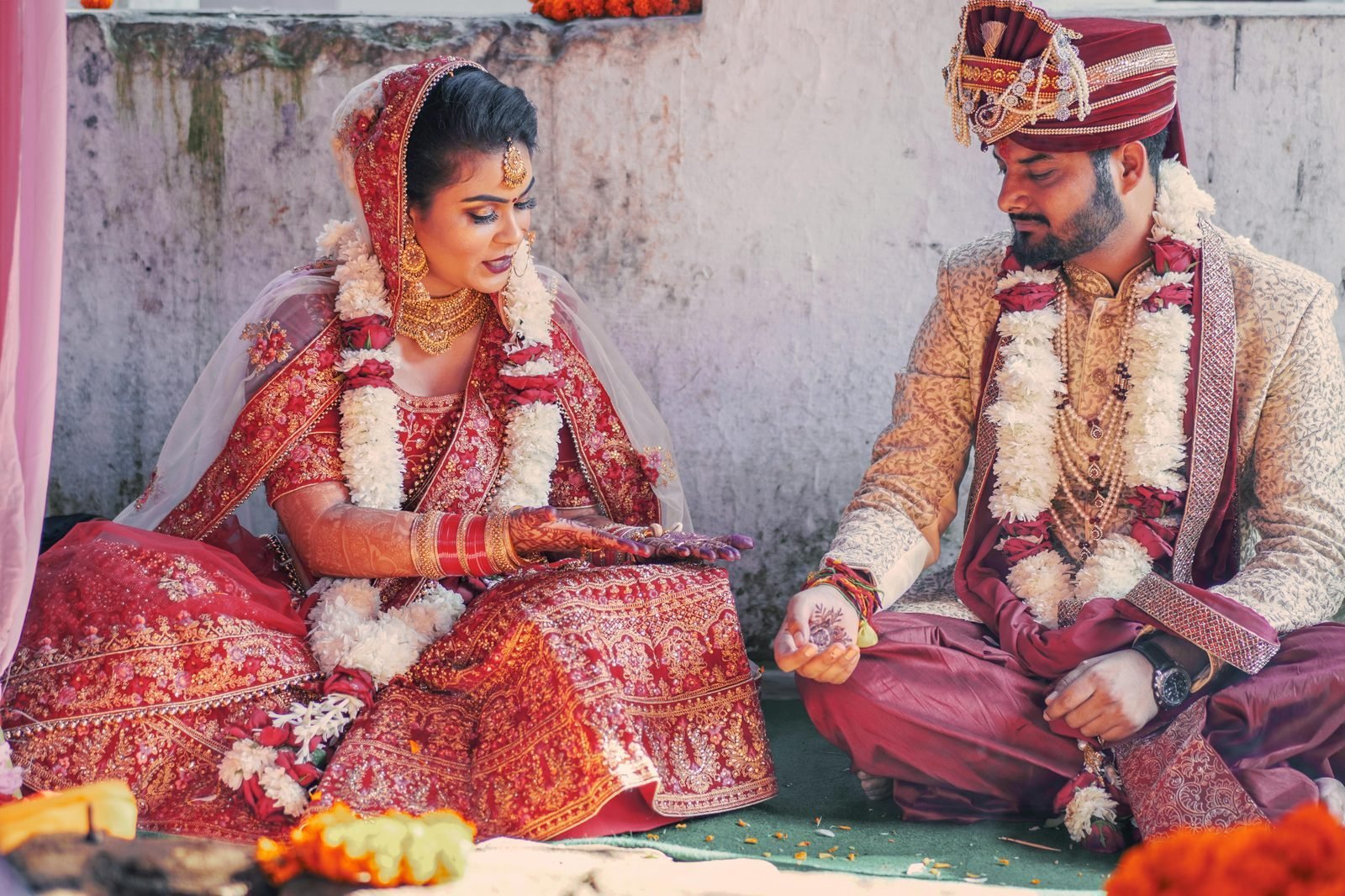
Court Marriage Delhi — Complete Process Guide
Court Marriage Delhi is a civil marriage solemnized under the Special Marriage Act 1954 at the Sub-Divisional Magistrate (SDM) Office. It is open to couples of any religion, caste or nationality and produces a Government Marriage Certificate directly. The standard timeline is 30 days (notice period) followed by same-day solemnization.
Our Arya Samaj Court Marriage Delhi team includes empanelled advocates and dedicated case managers who handle application drafting, document preparation, SDM appointment booking, notice publication and final registration — everything under one roof.
⚡ Quick Highlights: Special Marriage Act 1954 | All Religions Accepted | 30-day Notice Period | Government Certificate | 3 Witnesses required | Fees from ₹6,100 | Ideal for inter-religion couples
Court Marriage Step-by-Step Procedure
- Initial Consultation: Call +91 8376863962 to discuss your case. Our advocate will guide you.
- Documents Collection: Collect all documents per our checklist. We pre-verify everything.
- Notice of Intended Marriage: File the Marriage Notice in the SDM area where bride/groom reside. Both must be physically present.
- 30 Days Public Notice: Notice is displayed on the SDM Office notice board for 30 days. Any valid objection is verified.
- Objection Period: If no valid objection arises within 30 days, marriage permission is granted.
- Marriage Solemnization: On the 31st day, ceremony at SDM Office with bride, groom and 3 witnesses.
- Marriage Certificate: Government Marriage Certificate is issued the same day after signatures.
Court Marriage Documents Required Delhi
| Document | Bride | Groom | Witness |
|---|
| Application Form (Form-I) | Yes | Yes | — |
| Aadhar Card (Address Proof) | Yes | Yes | Yes |
| Birth Certificate / 10th Marksheet | Yes | Yes | — |
| Passport Size Photos | 8 | 8 | 2 each |
| Marital Status Affidavit | Yes | Yes | — |
| Residence Proof (Last 30 days) | Yes | Yes | — |
| Divorce Decree (if divorced) | If applicable | If applicable | — |
| Passport (if NRI/foreigner) | If NRI | If NRI | — |
Court Marriage Fees Delhi 2026
| Service | Fees |
|---|
| Basic Court Marriage Package | ₹6,100 |
| Court Marriage + Document Drafting | ₹7,100 |
| Tatkal/Urgent Court Marriage | ₹6,100 |
| NRI Court Marriage (with Apostille) | ₹6,100 |
| Government SDM Stamp Duty | ₹100-200 (separate) |
⚖️ Book Court Marriage Today
Free Legal Consultation • Advocate Support • SDM Office Help
Court Marriage vs Arya Samaj Marriage
| Criteria | Court Marriage | Arya Samaj Marriage |
|---|
| Time Required | 30+ days | Same Day |
| Legal Act | Special Marriage Act 1954 | Hindu Marriage Act 1955 |
| Religion Restriction | None | Hindu/Buddhist/Jain/Sikh |
| Family Notice | Public Notice (30 days) | No Notice |
| Ceremony Type | Civil/Legal only | Vedic Religious |
| Witnesses | 3 required | 2 required |
| Recommended For | Inter-religion, NRI | Hindu, traditional |
Court Marriage Special Cases
1. Inter-Religion Court Marriage Delhi
Hindu-Muslim, Hindu-Christian, Hindu-Sikh — any religion combination can opt for Court Marriage under Special Marriage Act 1954 without changing religion. This is the most popular option for inter-religion couples.
2. NRI Court Marriage
NRIs or Foreign Citizens can marry an Indian in Delhi. Extra documents: Passport, Visa, Embassy NOC, Apostilled documents. Marriage Certificate is valid worldwide after Apostille. NRI Marriage details →
3. Tatkal / Urgent Court Marriage
For emergencies (Visa deadline, foreign travel), our Tatkal service can complete the process in 7-15 days in special cases. Fees: ₹6,100+.
4. Court Marriage with Police Protection
For inter-caste/religion love marriage cases facing family threats, we file for High Court Police Protection Orders. Handled by experienced advocates.
Court Marriage Eligibility Criteria
- Boy minimum 21 years old
- Girl minimum 18 years old
- Both should be of sound mind
- Neither should be already married (or legally divorced/widowed)
- Not in prohibited blood relation
- At least one party residing in Delhi for 30+ days (for notice)
The 30-Day Notice, Explained Properly
Almost every question we are asked about court marriage is really a question about the notice period. People have heard that it is thirty days, they have heard that somebody can object, and they have heard that there is a way around it. Here is what actually happens, step by step, so that you can plan around facts rather than rumours.
What the notice is
A marriage under the Special Marriage Act, 1954 begins with a written notice of intended marriage given by both parties to the Marriage Officer of a district in which at least one of you has resided for at least thirty days immediately before the notice. The notice is in the form prescribed by the Act and it states both parties’ particulars.
Two separate thirty-day periods are involved, and confusing them is the single commonest planning mistake:
- Thirty days of residence before you may give notice. This is about where you live, and it is over before the file even opens.
- Thirty days of public notice after you have given it. This is the waiting period everybody talks about.
Back to back, that is roughly two months from the day you decide, not one — and a couple who has just arrived in Delhi cannot give notice today, however urgent the situation is.
What happens to the notice
The Marriage Officer enters the notice in the Marriage Notice Book and publishes it by affixing a copy at a conspicuous place in the office. The Marriage Notice Book is open to inspection at all reasonable times, without fee. Where neither party is permanently residing within the Officer’s district, a copy is also sent to the Marriage Officer of the district where each party permanently resides, to be published there in the same way.
That last sentence is one that couples should read twice, because it is the part nobody mentions and the part that matters most to a couple whose families do not know. The notice can travel to your home district. If you are from Meerut and giving notice in Delhi, a copy can be published in Meerut.
Who can object, and on what grounds
Any person may object to the marriage before the thirty days expire — but only on the ground that the marriage would contravene one or more of the conditions in section 4 of the Act. Those conditions are the substantive ones: neither party having a living spouse; both being capable of giving valid consent and not suffering from the disorders the section describes; the ages of twenty-one and eighteen; and the parties not being within the degrees of prohibited relationship.
Read that list again and notice what is not on it. Family disapproval is not a ground. Caste is not a ground. Religion is not a ground. “We had other plans for her” is not a ground. An objection that does not allege a breach of section 4 is not a valid objection at all, and the Marriage Officer is not deciding whether your family is happy.
What happens if somebody does object
The Act sets out the procedure, and it is finite:
- The Marriage Officer shall not solemnise the marriage until he has inquired into the objection and is satisfied that it does not prevent the marriage.
- He is required to decide the inquiry within thirty days of the objection being made.
- For the purposes of the inquiry he has the powers of a civil court in specified respects — summoning witnesses, examining them on oath, requiring documents.
- If he upholds the objection and refuses to solemnise, either party may appeal to the district court within thirty days, and the district court’s decision is final.
- Where an objection is found to be frivolous and not made in good faith, the Act empowers the Marriage Officer to award costs against the person who made it.
So an objection is not the end of a marriage. It is a delay with a defined length and a defined remedy. In practice, most objections in inter-caste and inter-faith cases allege nothing that section 4 covers, and they fail for that reason. What they do achieve is time and exposure — which is precisely why they are made.
The honest planning advice
If your families are supportive, the notice is a formality that nobody will ever look at, and there is nothing here to worry about.
If your families are strongly opposed, take the notice seriously as a practical matter, even though it is weak as a legal obstacle:
- Know before you file that the notice is publicly displayed and may be published in your home district as well.
- Decide, before day one, where you will both live for those thirty days and whether that is safe.
- Keep both phones live, keep documents on you and photographed into both email accounts, and tell one person outside the situation where you are.
- If there is a real apprehension of harm, a protection petition before the High Court is a recognised remedy, and it is an advocate’s work — not ours, and we will say so rather than taking money for it.
- Consider, honestly, whether the Arya Samaj route with registration fits your situation instead. Where both of you are Hindu, Sikh, Jain or Buddhist, it is lawful, it is faster, and it involves no public notice at all. We say this knowing it moves you from our ₹15,000 service to our ₹7,100 one.
Nobody can shorten either thirty-day period. Not for a fee, not through a contact, not in an emergency, and not in an office. Anybody who says otherwise is either going to take your money and stall, or is going to file something false in your names — and a false marriage record is usually discovered years later at a passport counter, when it cannot be quietly fixed.
The Residence Requirement: What Counts and What Does Not
This decides whether your file can even be opened, so it is worth being exact.
What the Act requires: that at least one of the two parties has resided in the district of the Marriage Officer for at least thirty days immediately preceding the date on which the notice is given. Only one of you. Not both.
What is usually put forward to show it: an Aadhaar showing the local address; a registered rent agreement, or a notarised one with supporting material; electricity, water, gas or landline bills; a bank statement showing the address; an employer’s letter confirming where you live; a ration card; or a landlord’s declaration. What the office is really assessing is a simple question of fact: do you actually live there?
What does not count:
- A hotel room, a guest house, a dharamshala or a friend’s floor for a few weeks. A stay is not a residence, and an office assessing a residence claim knows the difference.
- An address in a different state that happens to be nearby. Kaushambi, Vaishali, much of Sahibabad, Noida, Gurugram, Faridabad, Ghaziabad and Sonipat are not Delhi, however close they are and however Delhi the address feels. Ask “is this address in Delhi or not?” before you sign a rent agreement, because for this Act it decides everything.
- A rent agreement dated last week. It does not, by itself, establish thirty days of residence. An agreement dated two months ago, with a couple of bills and an Aadhaar updated to that address, comfortably does.
If you live in different districts — one in Delhi, one in Noida, say — the notice is given to the Marriage Officer of the district where one of you satisfies the thirty days, and the copy provisions described above apply to the other party’s permanent residence. You do not both have to move.
What we will not do about residence. We will not draft an affidavit claiming an address you do not live at, arrange a rent agreement for a room you have never occupied, or file a notice on a document we can see was created for the purpose. This is the request we refuse most often on Special Marriage Act files, and the reason is not squeamishness: a false residence claim sits on a public record for the rest of your life and surfaces at the worst possible moment.
The planning point for a couple who has just moved in together: the clock starts the day you actually start living there. Put both names on the rent agreement, keep the receipts, update one Aadhaar to that address, and give notice after the thirty days rather than arguing about it on day ten. Couples who plan this lose nothing; couples who improvise it lose a month.
The Solemnisation Day: What Actually Happens
The day itself is far less dramatic than couples expect, and knowing its shape removes most of the nerves.
Who must be there. Both parties, in person, and three witnesses. Not two — three. This is one of the real differences from a Hindu Marriage Act ceremony, and it is the single commonest reason a Special Marriage Act appointment has to be rescheduled.
What happens. The marriage is solemnised at the Marriage Officer’s office, or at a reasonable distance from it if the parties ask for that and pay the prescribed additional fee. The parties and the three witnesses sign a declaration in the form the Act prescribes, in the presence of the Marriage Officer, who countersigns it. There is a form of words in which each party declares, in the presence of the Officer and the witnesses, that they take the other to be their lawful wife or husband. It may be said in any language understood by the parties. No religious ceremony of any kind is required, and none is performed — that is the whole point of the Act.
The certificate. The Marriage Officer then enters a certificate in the Marriage Certificate Book, signed by the parties and the three witnesses. That entry is conclusive evidence that the marriage has been solemnised and that the formalities were complied with. This is your marriage certificate, and it is a different and stronger thing than a registration certificate for a ceremony that happened elsewhere.
Before you leave the counter, check: both names and their exact spellings, both fathers’ names, the date, the place, and both dates of birth. A correction made on the spot takes a minute; the same correction afterwards means a fresh application, a fee and another day off work. This one minute has saved more of our clients more trouble than any other sentence on this page.
Who can be a witness
An adult who genuinely knows you, carries their own original photo identity and address proof, and attends in person on the day. Three of them for a Special Marriage Act solemnisation; two for an Arya Samaj ceremony.
We do not provide witnesses. Not for a fee, not as a favour, not because you are new to Delhi and not because your family will not come. It is a fixed term of how we work and it is written into our terms and conditions. A paid witness is a false statement to a public authority, and it leaves your marriage record open to challenge at exactly the moment you most need it to be solid — a visa interview, an insurance claim, a property dispute.
Almost every couple who tells us they have nobody, finds three when they sit down and actually think: a cousin already working here, a friend from your town, a colleague, a batchmate, the friend whose sofa you slept on in your first week. Ask them a week ahead, tell them what to bring, and confirm the night before.
What Changes Legally the Moment You Are Married Under This Act
This section exists because almost nobody is told any of it, and two of the three points can matter a great deal to a family with property or a business.
Succession
The Special Marriage Act provides that succession to the property of a person whose marriage is solemnised under the Act is regulated by the Indian Succession Act, 1925 — not by the personal law that would otherwise have applied. The Act contains a specific saving for parties who are both Hindu, Buddhist, Sikh or Jain, for whom the position is dealt with separately. If property is a significant part of your planning, ask an advocate about this before you give notice, not after the certificate is issued. It is not a reason to avoid the Act; it is a reason to go in informed.
Joint family property
The Act also provides that where a member of an undivided family professing the Hindu, Buddhist, Sikh or Jain religion marries under it, that marriage is deemed to effect his severance from the undivided family. In a family that runs a business through an HUF, or holds ancestral property, that is a real consequence and not a technicality. Again: ask, before the notice, not afterwards.
Everything else that changes on any marriage
These apply whichever route you took, and they are the ones people forget for years:
- Nominations. EPF Form 2 and gratuity Form F nominations do not carry over on marriage, and a great many people still have a parent named years later. Insurance, bank accounts and PPF nominations need the same check. Note also that a nominee is a receiver, not an owner — nomination does not override succession law, with a deliberate exception for insurance where a parent, spouse or child nominee is a beneficial nominee.
- Aadhaar and bank KYC, for whichever of you has moved or is changing a name.
- Employer records — spouse details, medical cover, emergency contact. Group medical cover usually has a window of about thirty days to add a spouse.
- Passport. Adding spouse particulars, or a name change, is a re-issue, which changes the passport number. And no law requires anybody to change their surname. If you choose to, the sequence is affidavit, newspaper notices, Gazette of India, then Aadhaar, PAN, bank KYC, employer, and passport last.
- A joint account, a will, and a medical directive, if you are going to have them. A will costs little and settles a great deal; it is an advocate’s work and we take no share of that fee.
Which Route Is Actually Right for You
We would rather talk you into the correct route than the expensive one, so here it is laid out honestly, including the cases where the honest answer costs us the larger booking.
| Your situation | The route that fits | Time | Our fee |
|---|
| Both Hindu, Sikh, Jain or Buddhist; you want it done properly and soon | Arya Samaj marriage + registration | Ceremony same day; certificate in a few working days | ₹7,100 |
| Different religions, and neither of you will convert | Special Marriage Act — the only route | About 60 days | ₹15,000 |
| Same religion, but you want a civil marriage with no ceremony at all | Special Marriage Act, by choice | About 60 days | ₹15,000 |
| Already married by ceremony, never registered | Marriage registration | About 7–10 days | ₹6,000 |
| Nikah performed, needs registering | Nikah registration | About 7–10 days | ₹6,000 |
| Registered already; you need a duplicate or a correction | Duplicate / correction | 2–6 weeks | ₹2,500 |
| Either party under 21 (groom) or 18 (bride) | No route exists | — | We decline |
The comparison people most often get wrong is the first two rows. If you are both Hindu, Sikh, Jain or Buddhist, you are not obliged to use the Special Marriage Act at all, and the Arya Samaj route is both lawful and dramatically faster — a real marriage under the Hindu Marriage Act, with havan and saptapadi, followed by government registration. Couples come to us convinced they need the sixty-day route because somebody used the phrase “court marriage”, and a good number of them walk out having saved seven weeks and ₹7,900.
And the comparison nobody should get wrong: if you are of different faiths and somebody suggests a quick conversion so that you can use the faster route, stop. Conversion is a serious, permanent decision with consequences of its own, it should never be done under time pressure or to solve a paperwork problem, and the Special Marriage Act exists precisely so that nobody has to. Our inter-religion marriage guide deals with the whole question honestly.
If Either of You Was Married Before
A large share of the files we turn away are turned away here, so read this before you pay anybody anything.
A living spouse is an absolute bar. Section 4 of the Special Marriage Act requires that neither party has a spouse living, and a second marriage during the subsistence of a first is void for those governed by the Hindu Marriage Act and is an offence. We will not register or assist with such a marriage at any price, and the person who suffers most from one is almost always the second woman, who discovers at a bank counter or after a death that the status she believed she had does not exist.
What we need to see, and what will not do:
- A decree of divorce, in original or certified copy, with the case details legible. Not an affidavit saying the marriage “is finished”. Not a panchayat paper. Not a talaqnama presented as a decree.
- The appeal position dealt with. A decree is one thing; whether the time for appeal has run, or an appeal is pending, is another, and it affects when a party may lawfully remarry. Ask your advocate to confirm it in writing before you fix a date.
- A death certificate where a spouse has died. Again the document, not an assurance.
For a Muslim party, the position on a prior marriage and on the form of dissolution is governed by the applicable law and by the documents you actually hold, and it is not something to settle from a web page. Bring what you have — the nikahnama, any talaqnama or khula document, any court order — and we will tell you plainly whether it is enough for the office, and send you to an advocate where it is not.
Children from a first marriage keep their position as heirs whatever happens next, and a step-parent does not become a legal parent by marriage — that needs an adoption. Maintenance obligations from a first marriage do not disappear because there is a second household.
When One Party Is a Foreign National or an NRI
The Special Marriage Act is the route most cross-border couples end up using, and it works — but the paperwork is longer and the planning has to start earlier.
What is typically required in addition to the ordinary documents:
- Passport and a valid visa for the foreign national, and evidence of lawful stay covering the whole period.
- A no-impediment certificate or certificate of no objection to marriage, issued by that person’s embassy or high commission in India — each mission has its own procedure, form and timeline, and some take weeks. Start with the embassy, not with us.
- Proof of the thirty days’ residence if the foreign national is the party relying on it — which, for somebody on a short visit, is usually the binding constraint. It is generally easier for the Indian party to be the one who satisfies residence.
- Documents in a foreign language translated by a recognised translator, and attested or apostilled as required.
- Divorce decrees or death certificates from abroad, properly attested or apostilled.
Plan for the visa, not for the wedding. The commonest failure we see is a couple who plan a sixty-day process around a thirty-day visit. Work backwards from the date the foreign national must leave, add the embassy’s own timeline for the no-impediment certificate, and only then pick a date.
After the marriage, if the certificate is going to be used abroad, it will usually need apostille (for countries party to the Hague Convention) or embassy attestation (for those that are not), through the Ministry of External Affairs process. And for an OCI application based on marriage, note the requirement that the marriage be registered and subsisting for the period prescribed. Our NRI marriage page and our apostille guide go through that side in detail.
One warning specific to this group. Cross-border matches are the ones most often built on a lie about an existing marriage, an immigration status, or a job. Verify who you are marrying before you build a file around them — our guide on verifying a match sets out how, plainly.
What It Really Costs, End to End
Our charges are the same for everybody. They do not rise because you are in a hurry, because you have travelled a long way, because a family is creating pressure, or because you called on a Sunday.
| Service | Our fee | What it covers |
|---|
| Marriage certificate — duplicate or correction | ₹2,500 | Application, follow-up and collection |
| Arya Samaj marriage — ceremony only | ₹5,100 | Pandit, havan, saptapadi and the mandir certificate, same day |
| Marriage registration | ₹6,000 | Full application, appointment and certificate |
| Nikah registration | ₹6,000 | Registration of a nikah under the Delhi 2014 Order |
| Court marriage assistance | ₹6,100 | End-to-end assistance with the civil registration |
| Arya Samaj marriage with registration | ₹7,100 | Ceremony at the mandir plus the registration work |
| Special Marriage Act (full assistance) | ₹15,000 | Notice, the thirty days, solemnisation and certificate |
Government charges are separate and shown at cost, on their own line of your receipt with our charge on another. We add nothing to them and we round nothing up. If your receipt does not let you see exactly where every rupee went, tell us and we will rewrite it. The full list is on our fees page, and it is the same list quoted on every page of this site.
Costs that are yours and not ours, so that nothing is a surprise: e-stamp paper and notary charges for affidavits; photographs; courier, if documents have to come from another state; translation and attestation, on a cross-border file; and an advocate’s fee for anything that ends in a court — a protection petition, a divorce, a succession matter. We take no share of any advocate’s fee and we have no arrangement with anybody.
What We Will Not Do
Written out so that you can hold us to it, and so that you know what to make of anybody who offers the opposite.
- We do not provide witnesses. Two for an Arya Samaj ceremony, three for a Special Marriage Act solemnisation, all of them people who genuinely know you.
- We do not touch an under-age marriage. Under the Prohibition of Child Marriage Act, 2006 the minimum age is 21 for the groom and 18 for the bride. We decline in every case, at any price, whoever is asking and however the situation is explained — and we decline where a document appears to have been altered. Wait for the birthday and come back.
- We stop if either party is not giving a clear, free yes, in their own words. We speak to both parties separately to find out, in a language each is comfortable in, and if somebody has been brought along to answer on another’s behalf we ask them to step outside. If you are the person who is unsure, ask to speak to us alone; you will not be argued with, and nothing will be reported to the people waiting.
- We do not register a marriage while an earlier one subsists.
- We do not manufacture a residence, a rent agreement, an affidavit or an age proof, and we do not back-date anything.
- We do not promise to shorten a statutory period, and we will tell you when a date you have set is not achievable.
- We do not charge an urgency, distance, weekend or deadline surcharge.
- We do not practise law. Protection petitions, objections and appeals, divorce, maintenance, custody, succession and property go to an independent advocate acting in their own name, whose fee we take no share of.
- We do not discuss your file with anybody — not a family, not an employer, not a caller who says it is urgent. If there is a particular number or name to be careful about, tell us at the start and it goes on your file.
Two safety notes. Never hand original documents to somebody who approaches you outside a court, an office or a mandir, and never sign a blank form or blank stamp paper. And nobody from us will ever ask you for an OTP, a UPI PIN, a card PIN, a CVV or a net banking password, or ask you to install a screen-sharing app, or ask you to approve a payment request in order to receive money. If it happens in our name: stop, share nothing, call +91 8376863962, and report it at cybercrime.gov.in or on 1930 — within the first hour if money has gone.
Which Office, and the 2026 District Map
Applications and appointments in Delhi run through the Delhi e-District portal: you create an account, complete the application, upload the documents, and are given an appointment at the sub-divisional office the portal allots on the basis of what you enter.
Do not plan a morning around an office name you read on a website — including this one. Under the revenue reorganisation effective 1 January 2026, Delhi has 13 districts and 39 sub-divisions, and a number of familiar names are no longer sub-divisions at all. Shahdara, made a district in 2012, is now a sub-division of the North East district. Saraswati Vihar is gone. Vasant Vihar and Hauz Khas are not sub-division names on the current map. Apply first, see what you are allotted, and then plan the travel.
Two clarifications that save people a wasted trip:
No court marries you and no court registers you. Registration is done by the SDM or the Registrar of Marriages, and a Special Marriage Act marriage is solemnised before the Marriage Officer. “Court marriage” is everyday shorthand for a civil marriage or registration, not a description of a building. Tis Hazari, Karkardooma, Saket, Rohini, Dwarka and Patiala House are court complexes: they handle matrimonial litigation — divorce, maintenance, custody, protection orders — which is advocate work. The men with plastic folders outside those gates trade on exactly this confusion.
An old certificate is not invalidated by a renamed office. A document is not cancelled, weakened or made “old” because an office was renamed, merged, split or abolished. Anybody offering to “re-do” or “renew” a certificate for that reason is selling you something you do not need, and that particular fraud is run on older people more than anyone else.
The Document Checklist, Mapped to Real Life
The list is short. What takes the time is where each item has to come from, so plan in this order:
- Age proof for both — matriculation certificate, birth certificate, passport, or where school was not completed, a school leaving or transfer certificate. Start with this one. It is the item most often sitting in a trunk in another state, and it is the item that most often holds up a file. Have it couriered; do not spend four days and a fare travelling for it.
- Photo identity for both — Aadhaar, voter card, driving licence or passport, in original.
- Address proof for both. A home-state address proof is perfectly valid and is not a disqualification; what you must never do is claim a Delhi address you do not have. For the Special Marriage Act specifically, one of you additionally needs the thirty days’ residence material described above.
- Passport photographs — several each. Get both sets done together so they match.
- Witnesses’ original identity and address proof — three sets for the Special Marriage Act, two for an Arya Samaj ceremony.
- Divorce decree or death certificate where either party was married before. No affidavit substitutes for it.
- For a foreign national — passport, valid visa, the embassy’s no-impediment certificate, and translations or apostilles where documents are not in English.
- Affidavits in the prescribed form, which we prepare, on e-stamp paper.
Do this today, whatever else you do: photograph every original onto both of your phones and into both of your email accounts. Keep the originals together, in one folder, that both of you know the location of. Documents that exist in only one bag are one theft, one flood and one family quarrel away from being gone — and re-obtaining an age proof from another state costs weeks, not days.
A Realistic Timeline
| Your situation | Realistic time | What actually decides it |
|---|
| Special Marriage Act, one of you already resident 30 days | About 30–35 days from notice | The statutory notice period — nothing else |
| Special Marriage Act, recently moved to the district | About 60 days | 30 days’ residence, then 30 days’ notice |
| Special Marriage Act with an objection filed | Add up to 30 days, plus an appeal if refused | The Marriage Officer’s inquiry, then the district court |
| Special Marriage Act with a foreign national | 60 days plus the embassy’s own timeline | The no-impediment certificate and the visa |
| Arya Samaj route, documents in hand, witnesses confirmed | Ceremony same day; certificate in a few working days | Whether your originals are in Delhi |
| Registering a ceremony that already happened | About 7–10 days | Photographs, the institution’s slip, affidavits |
| Duplicate or correction | 2–6 weeks | Whether you have the registration number and date |
| Either party under 21 (groom) or 18 (bride) | Not at all | We decline, at any price |
Nobody in this trade can beat those numbers. What a good service actually does is stop you losing four days to a missing document, a wrong upload or an office you were never allotted — which, in practice, is where most real-world delay comes from.
Twelve Mistakes That Cost People Weeks
- Confusing the two thirty-day periods and planning for one month instead of two.
- Bringing two witnesses to a Special Marriage Act solemnisation. Three are needed.
- Assuming a nearby address is a Delhi address. Noida, Ghaziabad, Gurugram, Faridabad and Sonipat are not Delhi.
- Trying to prove residence with a hotel stay or an agreement signed last week.
- Using the Special Marriage Act when the Arya Samaj route fits and losing seven weeks for nothing.
- Converting in a hurry to use a faster route, when the Act exists so that nobody has to.
- Stopping at the mandir certificate on the Arya Samaj route and never completing registration. The mandir certificate records the ceremony; the government certificate is what a bank, an employer, a passport office or a court acts on.
- Leaving the counter without checking the spellings.
- Getting age proof last instead of first.
- Believing somebody who says the notice period can be shortened.
- Registering the same marriage twice — once here, once in a home state “to be safe”. Two records of one marriage is the discrepancy that stops a passport or a visa later.
- Never updating the nominations after the wedding.
Four Situations, and What Actually Happened
Anonymised, and each one stands for many.
The couple who did not need us at ₹15,000. Both Hindu, both working in Gurugram, convinced by a relative that “court marriage” meant the sixty-day route. They had a family event in five weeks. We told them on the first call that the Arya Samaj route with registration was lawful, faster and ₹7,900 cheaper for them, and that is what they did. We would rather have that call than the larger booking, because the alternative is a couple who feel cheated six months later.
The objection that went nowhere. An inter-caste couple; notice filed; an uncle objected. The objection alleged nothing that section 4 covers — it was about the family’s standing in their village. The Marriage Officer inquired, was satisfied it did not prevent the marriage, and the solemnisation went ahead. It cost them three weeks and a great deal of anxiety, and it cost the uncle the argument. Knowing in advance that an objection has a defined procedure and a defined end is most of what gets a couple through it.
The visa that ran out. An Indian woman and a European partner planned the whole sixty-day process around a thirty-day visit, and the embassy’s no-impediment certificate took a further three weeks. The marriage happened eventually, on a second trip nine months later. Everything about it was avoidable by working backwards from the departure date on the first call.
The one we refused. A man wanted a marriage solemnised while a first marriage was subsisting, and offered to pay whatever it took. The answer was no. Such a marriage is void and it is an offence, and the piece of paper would have collapsed at the first counter that examined it — harming, above all, the woman it was supposedly for.
What Happens When You Call Us
No obligation and no charge for the conversation, and here is exactly what it consists of.
- You send photographs of your documents on WhatsApp. Age proof, identity and address proof for both, and anything about a previous marriage.
- We tell you within minutes which route applies, what is missing, and the honest timeline — including when the answer is “this cannot be done by your date” or “this is not us”.
- We speak to both of you, and at some point separately, to be satisfied that both of you want this.
- You get a written quote with our charge and the government charges on separate lines before anything is paid.
- We prepare the affidavits and the application, and tell you exactly what to bring and who to bring.
- You attend. Both of you, in person, with your own witnesses.
- You check the certificate at the counter, and then we tell you the boring things to do in the following month — nominations, KYC, employer records.
Phone and WhatsApp: +91 8376863962. Court marriage assistance ₹6,100 · Arya Samaj marriage with registration ₹7,100 · marriage registration ₹6,000 · nikah registration ₹6,000 · Special Marriage Act ₹15,000 · duplicates and corrections ₹2,500. Government charges separate and at cost.
This page is general information about the law and the procedure, not legal advice on your own case. Statutes, rules, fees and office allocations change, and the office in front of you applies the current version — confirm the details on the Delhi e-District portal before you act. We are a marriage documentation and coordination service, not a law firm; we do not practise law and we do not appear anywhere.
Court Marriage Frequently Asked Questions
How long does Court Marriage take in Delhi?▼
Standard timeline is 30-45 days. First Notice is filed, then 30-day public notice period, then 31st day marriage solemnization. Tatkal is a facility for marriage REGISTRATION, not for the Special Marriage Act — it can speed up the appointment and issue where a marriage has already been solemnised. It cannot shorten the Special Marriage Act’s 30-day notice, which is in the statute and which no fee, contact or emergency lawfully shortens.
Is it necessary for both to live in Delhi for Court Marriage?▼
At least one party must have lived in the concerned Delhi SDM area for 30+ days with residence proof. Aadhar, Voter ID, Rent Agreement, Electricity bill are valid. If couple is from different cities, marriage will be registered where the Delhi-residing party's proof is valid.
Can objections come in the 30-day notice period?▼
Notice is displayed on SDM Office board for 30 days. Valid objections (already married, age requirement not met, blood relation) are verified by SDM. Invalid objections proceed marriage. False objections have no value.
Is Court Marriage Certificate valid abroad?▼
Yes — SDM Office Court Marriage Certificate is valid everywhere in India. For foreign use, Apostille (MEA stamp) and concerned country Embassy attestation are required, which our team arranges. Valid for Spouse Visa, Dependent Visa, Green Card.
What should witnesses have?▼
3 witnesses are needed with Aadhar Card, 2 Passport Photos and active mobile number. Witnesses must be 21+ years. Witnesses must be people who know you personally; we do not provide witnesses.
Can Court Marriage happen without family permission?▼
Yes absolutely — adult couples (Boy 21+, Girl 18+) need no legal family permission. However, Special Marriage Act has 30-day public notice during which family might find out. For complete confidentiality, Arya Samaj Marriage is a better option.
Is Online Court Marriage possible in Delhi?▼
Not completely online — final marriage solemnization must happen physically at SDM Office. But initial application, document submission and notice filing are online at some SDM offices. We coordinate end-to-end so couples need just 1-2 visits.
Can we reconvert to Hindu religion after Court Marriage?▼
Court Marriage under Special Marriage Act is religion-neutral — no religion change happens. Both partners remain in their original religion. You can separately arrange a religious ceremony under Arya Samaj afterwards if desired.
Is “court marriage” the same as marrying in a court?▼
No, and this is the misunderstanding that keeps the touts outside court gates in business. Courts do not perform marriages and do not register them. A marriage under the Special Marriage Act is solemnised before the Marriage Officer; a marriage registration is done by the SDM or the Registrar of Marriages. “Court marriage” is everyday shorthand for a civil marriage or a civil registration, not a description of a building. Tis Hazari, Karkardooma, Saket, Rohini, Dwarka and Patiala House handle matrimonial litigation — divorce, maintenance, custody, protection orders — which is advocate work.
How long does the Special Marriage Act really take?▼
About sixty days if you are starting from scratch: at least one of you must have resided in the district for thirty days before the notice is given, and the notice is then published for thirty days before solemnisation. If one of you already satisfies the residence requirement, it is about thirty to thirty-five days from the notice. If an objection is filed, add up to thirty more days for the inquiry, and longer if there is an appeal.
Can the 30-day notice period be reduced?▼
No. Nothing lawfully shortens it — not a fee, not a contact, not an emergency, not a medical reason, not a visa expiring. The period is in the statute, and an office that appeared to shorten it would be acting outside it. Anybody who tells you otherwise is either going to take your money and stall, or is about to file something false in your names, and a false marriage record is usually discovered years later at a passport counter when it cannot be quietly fixed.
What are the two different 30-day periods?▼
Thirty days of residence in the district before you may give notice, and thirty days of public notice after you give it. They run one after the other, not together. Confusing them is the commonest planning error we see — a couple budgets one month and the process takes two.
Where is the notice displayed, and who sees it?▼
The Marriage Officer enters the notice in the Marriage Notice Book and publishes it by affixing a copy at a conspicuous place in the office. The Marriage Notice Book is open to inspection at all reasonable times, without fee. And where neither party permanently resides in that district, a copy is sent to the Marriage Officer of the district where each party permanently resides, to be published there too. That last part is the one nobody mentions: if you are from Meerut and giving notice in Delhi, a copy can be published in Meerut.
Who can object to our marriage, and on what grounds?▼
Any person may object before the thirty days expire, but only on the ground that the marriage would contravene one or more of the conditions in section 4 of the Act — a living spouse, incapacity to give valid consent, the ages of 21 and 18, or the parties being within the degrees of prohibited relationship. Family disapproval is not a ground. Caste is not a ground. Religion is not a ground. An objection that does not allege a breach of section 4 is not a valid objection at all.
What happens if somebody objects?▼
The Marriage Officer cannot solemnise until he has inquired into the objection and is satisfied it does not prevent the marriage, and he is required to decide within thirty days of the objection being made. He has the powers of a civil court for the inquiry — summoning witnesses, examining them on oath, requiring documents. If he upholds the objection and refuses, either party may appeal to the district court within thirty days, and that decision is final. Where an objection is frivolous and not made in good faith, the Act allows costs to be awarded against the person who made it. So an objection is a delay with a defined length and a defined remedy, not the end of a marriage.
Our families are against it. Should we still use this route?▼
Legally, family opposition is not an obstacle at all — it is not a ground of objection and two consenting adults may marry. Practically, take the notice seriously: it is publicly displayed and may be published in your home district. Decide in advance where you will both live for those thirty days and whether that is safe, keep documents on you and photographed into both email accounts, keep both phones live, and tell one person outside the situation where you are. If there is a real apprehension of harm, a protection petition before the High Court is a recognised remedy — that is advocate work and we will say so rather than taking money for it. And if you are both Hindu, Sikh, Jain or Buddhist, consider the Arya Samaj route instead, which involves no public notice at all.
Is there a way to marry without a public notice?▼
Yes, if both of you are Hindu, Sikh, Jain or Buddhist: an Arya Samaj marriage under the Hindu Marriage Act, followed by government registration, involves no notice period. It is a real marriage with havan and saptapadi, the mandir issues its certificate the same day, and the registration follows by appointment. Our fee for both together is ₹7,100. We tell couples this even though it moves them from our ₹15,000 service to a cheaper one, because a couple who find out later feel cheated — and rightly.
We are of different religions. Do we have to convert?▼
No, and you should not convert in order to speed up a wedding. The Special Marriage Act exists precisely so that two people of any religions can marry without either changing faith. Conversion is a serious and permanent decision with consequences of its own — in succession, in family relationships, and sometimes in law — and it should never be done under time pressure or to solve a paperwork problem. If somebody is suggesting a quick conversion so that you can use a faster route, that is a reason to slow down, not to hurry.
What counts as proof of 30 days' residence?▼
In practice: an Aadhaar showing the local address, a registered rent agreement (or a notarised one with supporting material), electricity, water, gas or landline bills, a bank statement showing the address, an employer's letter, a ration card, or a landlord's declaration. What the office is really assessing is whether you actually live there. An agreement dated last week does not establish thirty days on its own; an agreement dated two months ago with a couple of bills and an updated Aadhaar comfortably does.
Does staying in a hotel or a PG count as residence?▼
No. A hotel room, a guest house, a dharamshala or a friend's floor for a few weeks is a stay, not a residence, and an office assessing a residence claim knows the difference. A PG where you genuinely live is a different matter — bring what you actually have and let the office assess it. What we will not do is draft an affidavit claiming a residence you do not have.
We live in Noida and Ghaziabad. Can we marry in Delhi?▼
Only if one of you satisfies the thirty days' residence in a Delhi district. Noida, Ghaziabad, Gurugram, Faridabad, Sonipat, Kaushambi, Vaishali and much of Sahibabad are not Delhi, however close they feel and however much of your life happens here. The alternative is to give notice where you do live — Uttar Pradesh and Haryana each have their own arrangements — and that is often the faster and simpler answer. Ask “is this address in Delhi or not?” before you sign anything.
Do both of us need to live in the same district?▼
No. The Act requires that at least one of the two parties has resided in the district for thirty days immediately before the notice. Only one of you. Where the other party permanently resides elsewhere, the copy-of-notice provisions apply to that district.
How many witnesses do we need?▼
Three for a solemnisation under the Special Marriage Act; two for an Arya Samaj ceremony. Bringing two to a Special Marriage Act appointment is one of the commonest reasons a date has to be rescheduled. Each witness must be an adult who genuinely knows you, must carry their own original photo identity and address proof, and must attend in person.
Can you arrange witnesses for us?▼
No — not for a fee, not as a favour, not because you are new to Delhi and not because your family will not come. It is a fixed term of how we work and it is written into our terms and conditions. A paid witness is a false statement to a public authority and it leaves your marriage record open to challenge at exactly the moment you most need it solid. Almost every couple who says they have nobody finds three when they sit down and think: a cousin working here, a friend from your town, a colleague, a batchmate, the friend whose sofa you slept on in your first week.
What actually happens on the day of solemnisation?▼
Both of you attend with three witnesses. The marriage is solemnised at the Marriage Officer's office, or within a reasonable distance of it if you ask and pay the prescribed additional fee. You and the three witnesses sign a declaration in the prescribed form in the Officer's presence and he countersigns it; each party declares, in the presence of the Officer and the witnesses, that they take the other to be their lawful wife or husband, and it may be said in any language you understand. No religious ceremony of any kind is required or performed. The Officer then enters a certificate in the Marriage Certificate Book, signed by both of you and the three witnesses.
Is the certificate strong evidence?▼
Yes — the entry in the Marriage Certificate Book is conclusive evidence that the marriage has been solemnised and that the formalities were complied with. That makes it a stronger document than a registration certificate for a ceremony that happened elsewhere, which records an event the office did not itself witness.
Does marrying under this Act change who inherits from us?▼
It can, and almost nobody is told. The Act provides that succession to the property of a person married under it is regulated by the Indian Succession Act, 1925 rather than by the personal law that would otherwise apply, with a specific saving where both parties are Hindu, Buddhist, Sikh or Jain. If property is a significant part of your planning, ask an advocate about this before you give notice rather than after the certificate is issued. It is not a reason to avoid the Act; it is a reason to go in informed.
Does it affect a joint family or an HUF?▼
Yes. The Act provides that where a member of an undivided family professing the Hindu, Buddhist, Sikh or Jain religion marries under it, the marriage is deemed to effect his severance from that undivided family. In a family that runs a business through an HUF or holds ancestral property, that is a real consequence. Ask before the notice, not afterwards.
One of us was married before. What do you need to see?▼
A decree of divorce in original or certified copy with the case details legible — not an affidavit saying the marriage “is finished”, not a panchayat paper — or a death certificate where a spouse has died. You also need the appeal position dealt with: a decree is one thing, whether the time for appeal has run or an appeal is pending is another, and it affects when a party may lawfully remarry. Ask your advocate to confirm that in writing before you fix a date.
Can you help if one of us is still married to somebody else?▼
No, at any price. Section 4 requires that neither party has a spouse living, and a second marriage during the subsistence of a first is void for those governed by the Hindu Marriage Act and is an offence. We will not assist with one, and the person who suffers most is almost always the second woman, who finds out at a bank counter or after a death that the status she believed she had does not exist.
Can we marry the same day if it is urgent?▼
An Arya Samaj ceremony can be the same day where both of you are Hindu, Sikh, Jain or Buddhist, both adults, have your original documents with you and bring your own two witnesses — a real marriage under the Hindu Marriage Act, with the mandir's certificate issued that day. The government registration follows by appointment. A Special Marriage Act marriage cannot be same-day for anybody, and a government marriage certificate is never issued the same day. Anybody promising one is lying or is about to file something false in your names.
One of us is a foreign national. What is different?▼
The passport and a valid visa covering the whole period; a no-impediment certificate or certificate of no objection from that person's embassy or high commission in India, each of which has its own form and timeline and some of which take weeks; translations and attestation or apostille for documents not in English; and properly attested foreign divorce decrees or death certificates. The practical advice is to plan for the visa, not the wedding — work backwards from the date the foreign national must leave, add the embassy's timeline, and only then pick a date. It is usually easier for the Indian party to be the one who satisfies the thirty days' residence.
Will our certificate be accepted abroad?▼
A marriage registered in India is valid throughout India, and for use abroad the certificate usually needs apostille — for countries party to the Hague Convention — or embassy attestation for those that are not, through the Ministry of External Affairs process. Ask the authority that will receive it which form it wants before you order anything, because getting the wrong one costs weeks. For an OCI application based on marriage, note the requirement that the marriage be registered and subsisting for the prescribed period.
Which office will handle our file?▼
Whichever one the Delhi e-District portal allots when you apply. Do not plan travel around an office name from a website, including this one — under the reorganisation effective 1 January 2026 Delhi has 13 districts and 39 sub-divisions, and several familiar names are no longer sub-divisions. Shahdara, made a district in 2012, is now a sub-division of North East; Saraswati Vihar is gone; Vasant Vihar and Hauz Khas are not sub-division names on the current map.
Our certificate is from an office that has since been renamed. Is it still valid?▼
Yes, completely. A document is not cancelled, weakened or made “old” because an office was renamed, merged, split or abolished. Anybody offering to “re-do” or “renew” a certificate for that reason is selling you something you do not need — and that particular fraud is run on older people more than anyone else. If you need another copy, that is a duplicate application, ₹2,500 with us.
What documents should we get first?▼
Age proof. It is the item most often sitting in a trunk in another state and the one that most often holds up a file, so start it on day one and have it couriered rather than spending four days and a fare travelling for it. Where school was not completed, a school leaving or transfer certificate is commonly relied on, and a birth certificate can be obtained from the panchayat or municipality where the birth was registered — a home-state application, so begin it early.
Can somebody attend on our behalf with a power of attorney?▼
No. Both parties must be physically present, at the solemnisation and at the office. There is no power-of-attorney marriage, no video-call marriage and no arrangement under which a relative or an agent stands in for one party. Anybody offering that is selling a document that will fail its first serious check.
Do you charge more if we are in a hurry?▼
No, never — not for urgency, distance, a weekend, a visa deadline or family pressure. Court marriage assistance ₹6,100; Arya Samaj marriage with registration ₹7,100; marriage registration ₹6,000; nikah registration ₹6,000; Special Marriage Act full assistance ₹15,000; duplicates and corrections ₹2,500; Arya Samaj ceremony only ₹5,100. Government charges are separate and shown at cost, on their own line of your receipt with our charge on another. If somebody in this trade quotes you a different number because you sound pressed, that is the whole review of that firm.
What costs are not included in your fee?▼
E-stamp paper and notary charges for affidavits; photographs; courier if documents have to come from another state; translation, attestation or apostille on a cross-border file; and an advocate's fee for anything that ends in a court — a protection petition, an objection appeal, a divorce, a succession matter. We take no share of any advocate's fee and we have no arrangement with anybody.
What if one of us is not sure?▼
We stop. A marriage requires the free consent of both adults — not the consent of a family, not of whoever arranged the journey, and not the silence of somebody who has been brought along and told to nod. We speak to both parties separately and ask directly, in a language each is comfortable in, and if somebody has been brought as a translator and is answering on the person's behalf we ask them to step outside. If the answer is not a clear yes from each of you in your own words, we do not proceed, however much has been paid or arranged. If you are the person who is unsure, ask to speak to us alone; you will not be argued with and nothing will be told to the people waiting.
Can you register a marriage if the bride is 17 or the groom is 20?▼
No. Under the Prohibition of Child Marriage Act, 2006 the minimum age is 21 for the groom and 18 for the bride, and section 4 of the Special Marriage Act sets the same ages. We decline in every case, at any price, whoever is asking and however the situation is explained, and we also decline where a document appears to have been altered. A marriage built on a false age can be challenged and the record cancelled, and the young couple are the ones actually damaged. Wait for the birthday and come back.
What should we check before leaving the counter?▼
Both names and their exact spellings, both fathers' names, the date, the place, and both dates of birth. A correction made on the spot takes a minute; the same correction afterwards means a fresh application, a ₹2,500 fee and another day off work. This is the single most useful minute of the whole process.
What should we do in the month after we marry?▼
Update every nomination — EPF Form 2 and gratuity Form F nominations do not carry over on marriage, and insurance, bank and PPF nominations need the same check. Remember that a nominee is a receiver, not an owner: nomination does not override succession law, with a deliberate exception for insurance where a parent, spouse or child nominee is a beneficial nominee. Then Aadhaar and bank KYC for whoever has moved or changed a name, employer records including medical cover (usually about a thirty-day window to add a spouse), and, if you are going to have them, a joint account and a will. And note that no law requires anybody to change their surname — if you choose to, the sequence is affidavit, newspaper notices, Gazette of India, then Aadhaar, PAN, bank KYC, employer, and passport last, because a passport name change is a re-issue and changes the passport number.
Can we register the same marriage in Delhi and in our home state?▼
No, and it is the opposite of safe. One marriage, one registration. Two records of the same marriage create exactly the discrepancy that stops a passport or a visa application later, and unwinding it is far harder than getting it right once. A marriage registered anywhere in India is valid everywhere in India — nobody has to “re-register” it at home, and anybody saying so is selling something.
We were married by ceremony years ago and never registered. Can we still do it?▼
Yes, and it is common. For a Hindu marriage there is no cut-off — a marriage from fifteen years ago can be registered. Bring the wedding card, ceremony photographs, a certificate or register extract from the mandir, gurudwara, church or qazi with the entry number where a register exists, age and identity proof for both, current address proof, affidavits from both spouses, and two witnesses who genuinely know you as a married couple. Our fee is ₹6,000. One warning: registration is not possible after a spouse has died — that door closes permanently, so do it while both of you are alive.
Will you tell our families that we contacted you?▼
No, never. We do not call families, we do not confirm to any caller or visitor that you are our client, and we do not discuss one couple with another. If there is a particular number or name to be careful about, tell us at the start and it goes on your file.
Will anyone from your office ask for an OTP or a UPI PIN?▼
Never. Nobody from us is authorised to ask for an OTP, a UPI PIN, a card PIN, a CVV or a net banking password, and we will never ask you to install a screen-sharing app or approve a payment request in order to receive money — an approved request is money leaving your account. Get a receipt for every rupee from anybody including us, never hand original documents to somebody who approaches you outside a court, an office or a mandir, and never sign a blank form or blank stamp paper. If anything is done in our name: stop, share nothing, call +91 8376863962 and report it at cybercrime.gov.in or on 1930, within the first hour if money has gone.
Do you give legal advice?▼
No. We are a marriage documentation and coordination service, not a law firm, and we do not practise law or appear anywhere. Protection petitions, objections and appeals, divorce, maintenance, custody, succession and property matters go to an independent advocate acting in their own name, whose fee we take no share of. We will tell you plainly when something is beyond us rather than taking money for it — and this page is general information about the law and procedure, not advice on your own case.
What is the most useful thing we can do today?▼
Send photographs of your documents on WhatsApp to +91 8376863962. It is free, it takes minutes, and it tells you which route actually applies to you, what is missing, and the honest timeline — including when the answer is “not by your date” or “not the route you thought”. The two most expensive mistakes in this process, using the sixty-day route when you did not need it and discovering a missing age proof in week five, are both prevented by that one call.
Related Services
🕊️ Nikah + Special Marriage Act
Interfaith couples marry without conversion; civil marriage for Muslims too. ₹15,000.
Read →
☪️ Muslim Nikah with Certificate
Our own Qazi, nikahnama and certificate the same day. ₹5,000.
Read →
⚡ Tatkal Marriage Certificate
₹10,000 fee, process, when worth it.
Read →
🇮🇳 Court Marriage in India
All-India steps and state differences.
Read →
👥 Witness Rules 2026
How many, who can be, what to bring.
Read →
💻 Registration Online (e-District)
Apply online step by step.
Read →
📜 Special Marriage Act vs HMA
Section-by-section legal comparison.
Read →
⚖️ Arya Samaj vs Court Marriage
Which route is right for you.
Read →
⚖️ Court Marriage in Delhi 2026
Full process, documents, fees and timeline.
Read →
🔱 Arya Samaj Marriage
Same day Vedic alternative.
Read →
🕊️ Inter-Religion Marriage
For Hindu-Muslim, Hindu-Christian.
Read →
🌍 NRI Court Marriage
For foreign passport holders.
Read →
❤️ Love Marriage
Legal marriage without family approval.
Read →
📜 Marriage Registration
Government registration of past marriage.
Read →
🏛️ SDM Registration
Which office, the 60-day rule, real government fees.
Read →
🗃️ Late Registration
Old marriage, the penalty, and what proof works.
Read →
✏️ Certificate Correction
Wrong name or date on the certificate — what actually fixes it.
Read →
📅 Appointment & Timeline
The four clocks, who must attend, and planning backwards.
Read →
✍️ Witnesses Explained
Two or three, who qualifies, and what a witness signs.
Read →
🇮🇳 हिंदी में पूरी गाइड
अदालतों ने क्या कहा, थाने में क्या कहना है, और सुरक्षा योजना।
पूरा पढ़ें →
📄 Marriage Certificate
Certificate copy, Apostille, Attestation.
Read →