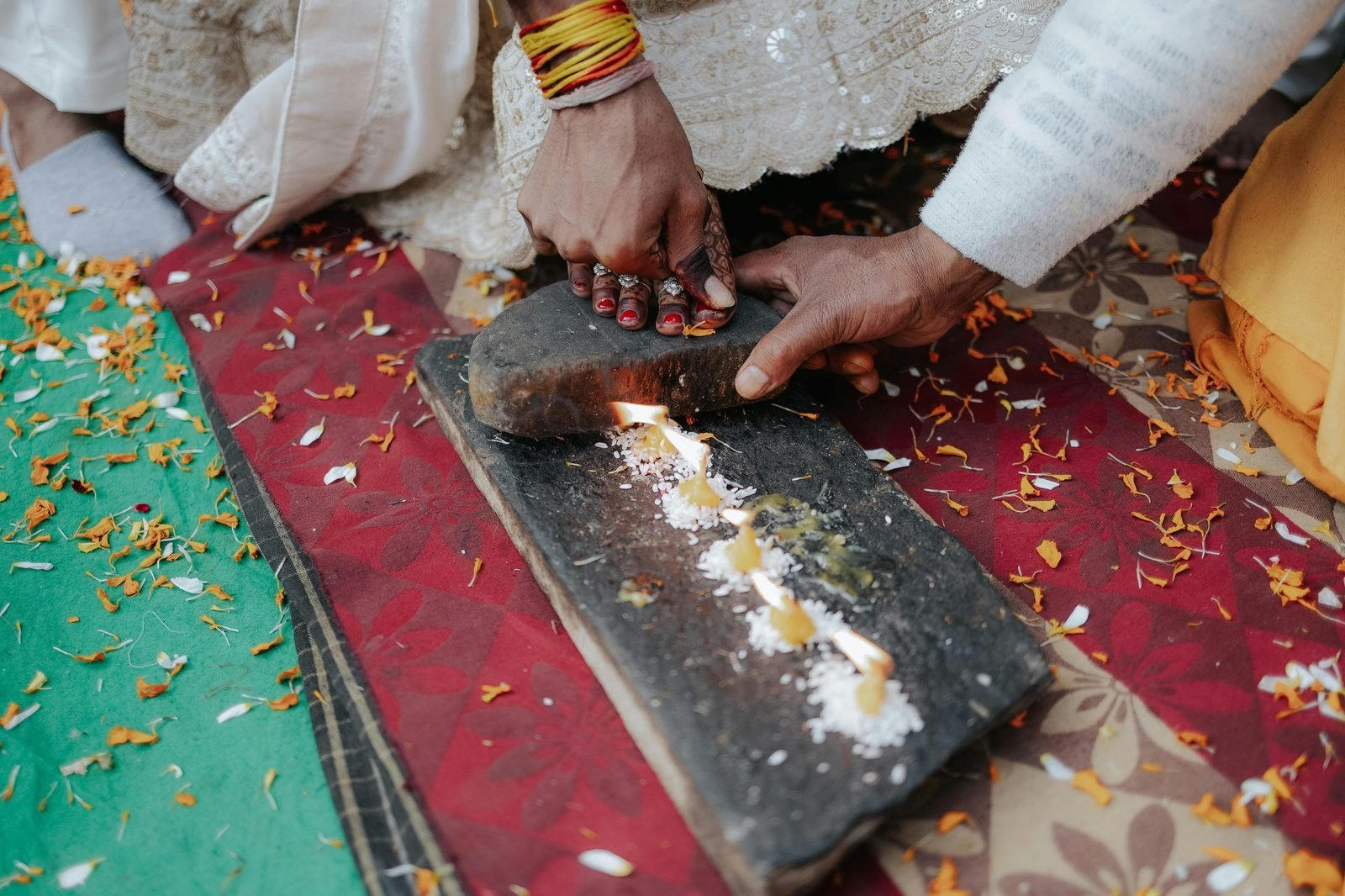
Kondli Couples Usually Want One of Three Things
After years of doing this on the eastern edge of Delhi, we have noticed that almost everyone who calls us from Kondli arrives with one of three needs. Some want a fast, no-fuss wedding that is unquestionably valid — often because a wedding date is close and time is short. Others are marrying for love and above everything else want it kept private and calm. And a third group are couples from different castes or religions who simply want to know their marriage will be recognised without a fight. This page is written for all three, because a Vedic court marriage answers each of them.
Kondli itself is a dense, lively stretch of east Delhi, sitting close to Gharoli, Mayur Vihar Phase 3 and the Ghazipur side, a short reach from the Noida border. It is home to working families, shop owners and young professionals who value getting things settled properly rather than dragging them out. A vedic court marriage in Kondli gives them a real Vedic ceremony completed in a single day, and, behind it, a registered government certificate that stands firm whenever it is asked for.
What follows is a straight, useful guide — a plain definition, the exact steps, the timeline, the papers to keep ready, and honest answers on cost, castes, religions and NRIs. Take it at your own pace. And if you would rather talk than read, one call to +91 8376863962 connects you to a consultant who works this part of east Delhi day in and day out.
📍 Kondli, in short: Same-day Vedic Arya Samaj ceremony • Court registration & government certificate • Love, inter-caste, inter-religion & NRI couples • Pandit arranged • East Delhi local • Full privacy • First call free
Vedic Court Marriage, in Plain Words
Let us define it once, cleanly, so the rest of the page makes sense. A vedic court marriage is a single service that stitches together two separate things. The first is the Vedic wedding — the Arya Samaj ceremony with mantras, the sacred havan fire and the vows, witnessed and completed the same day. The second is the court registration — the government paperwork that records the marriage and produces the official certificate. Done alone, each leaves a gap; done together, as we do them, you finish married in tradition and documented in law, with no loose ends between the two.
The Exact Steps, From First Call to Certificate
Here is precisely what happens when a Kondli couple decides to go ahead. No surprises, no hidden stages.
- You reach out. A call or WhatsApp with a few basics — ages, marital status, and what documents you have.
- We confirm and check. We tell you whether you are eligible, review your papers, and flag anything that needs an affidavit or a correction ahead of time.
- We book your slot. A convenient time is fixed for you, your partner and your two witnesses.
- The Vedic ceremony. The pandit performs the wedding; within a couple of hours you are married and holding the Arya Samaj certificate.
- We file the registration. Your case goes to the SDM office, and we guide the forms and signatures for the government certificate.
- You collect the certificate. The government marriage certificate reaches your hands, ready for every official use.
Timeline — What Happens When
Different couples care about different clocks. This table lays out how long each option really takes.
| What you choose | Ceremony | Certificate in hand |
|---|
| Vedic ceremony only | Same day | Arya Samaj certificate, same day |
| Vedic ceremony + registration | Same day | Government certificate in a few working days |
| Court marriage (Special Marriage Act) | After the 30-day notice | Roughly 30 to 45 days total |
| Registering an older marriage | Already done | A short window once papers are in |
Papers to Keep Ready — Grouped Simply
Keep it uncomplicated. Put originals and one photocopy set in a single folder, sorted into three small groups.
Group 1, each partner's identity and age: Aadhaar card, plus a birth certificate, 10th marksheet or passport for date of birth.
Group 2, each partner's photos and address: three to four passport-size photographs, and an address proof such as Aadhaar, voter ID or a utility bill.
Group 3, the extras that apply to some: two witnesses with photo ID for everyone; a divorce decree if previously divorced; a spouse's death certificate for a widow or widower; and for NRIs or foreign nationals a passport with a valid visa or OCI and a single-status proof. Names spelled differently across documents are common and usually fixed with a quick affidavit, which we arrange.
Eligibility in One Glance
The conditions are short and reasonable. You qualify if the groom is at least 21 and the bride at least 18; if both of you are single, or divorced with a decree, or widowed with a certificate; if you are both marrying willingly and of sound mind; if you are not related within the prohibited degrees; and if you can bring two adult witnesses with ID. That is the whole list. If any point is awkward for your situation, say so early and we will usually find a lawful way forward.
Marrying for Love in Kondli
If you have chosen each other and simply want it done quietly, this is the part written for you. Love marriages get our most careful, most private handling. Not a word goes to families or anyone outside the room. We arrange the ceremony, you bring your own witnesses, and we take the registration through to the certificate, so that by the time you leave you are legally married and your paperwork is already moving. Many couples from Kondli, Gharoli and the Kalyanpuri side have quietly begun their married life this way, without conflict and without fear.
Across Castes — Legal and Simple
Rumour causes real anxiety here, so let us be direct. Inter-caste marriage is fully legal in India. No permission is needed from anyone, and no caste certificate is ever requested. Two Hindus of different castes marry through the same Vedic ceremony and register in exactly the same way, and the certificate that results is indistinguishable from any other. Where families are on board, the day is a happy formality. Where they are not yet, we keep things discreet and steady, and many couples find that a settled, registered marriage becomes the calm ground everything else grows from.
Across Religions — Two Clear Routes
Couples of different faiths have two lawful ways forward, and neither should scare you. The first is the Special Marriage Act, a civil marriage that asks no one to change their religion; its only real cost is the 30-day notice. The second is Shuddhi Sanskar, where one partner formally embraces the Arya Samaj tradition before the Vedic wedding, after which the marriage is registered under the Hindu Marriage Act like any other. We explain both, with their honest timelines, and leave the choice with you.
For NRIs and Couples Flying In
Kondli's closeness to the Noida side and the wider east Delhi transport network makes it an easy base for couples arriving from abroad on a short trip. We plan around your travel dates so the ceremony and paperwork fit the window you have. Along with the standard documents you will bring a passport with a valid visa or OCI card and proof that you are single. When the certificate must be used overseas — for a spouse visa or official recognition — we handle the MEA apostille or embassy attestation. For anyone on a deadline, the same-day Vedic route almost always beats the slower court process.
When You Cannot Wait a Month
Some marriages are genuinely urgent — a visa appointment lands, a job posting is confirmed, or a family matter needs settling now. For these cases we examine every lawful way to move faster, usually the same-day ceremony followed by quick registration of the certificate. We will not sell you a false tatkal promise or pretend the court route can waive its notice. Instead we look at your real case and tell you the fastest honest path, which for most Kondli couples is exactly the clarity they were hoping for.
Already Married? Just Get It Registered
A fair number of couples come to us already married by an Arya Samaj, temple or other Hindu ceremony but never registered — and now a bank, an employer or a visa office wants the government certificate. That is an easy fix. We register your existing marriage and obtain the certificate for you. Bring your existing marriage proof, both partners' IDs, some photographs and two witnesses, and we take it from there.
Why the Government Certificate Is the Real Prize
It is tempting to think the wedding is the whole job. In truth, the government marriage certificate is what does the heavy lifting for the rest of your married life. It is what a passport office needs to add a spouse, what a bank wants for a joint account, what an embassy asks for a family visa, and what insurers and property offices rely on. A valid wedding with no certificate can still see you turned away at a counter. Registering now, while your documents and witnesses are fresh, is simply the sensible move — and it is the part we make sure never gets left undone.
Kondli and the Areas We Reach
Working from east Delhi, we comfortably serve the whole belt around Kondli. If you are in any of these, you are well within reach.
| Area | How close to Kondli |
|---|
| Gharoli & Gharoli Extension | Adjoining |
| Mayur Vihar Phase 3 | Very close, metro connected |
| Kalyanpuri & Trilokpuri | Nearby |
| Khichripur | Short hop |
| Dallupura | Close by |
| Ghazipur | Nearby |
| New Ashok Nagar | Short drive, metro connected |
| Vasundhara Enclave | Short drive |
| Noida border sectors | Reachable, east side |
Costs — How We Quote
We deliberately do not stamp a fixed price on this page, and here is why: an honest number depends on your case — the route you take, the number of documents and affidavits, and whether you need attestation for abroad. What we commit to instead is a clean process. After a two-minute call, you get one all-in figure, with the government's own fixed fees shown separately, and nothing slipped in at the end. If a simpler, cheaper route serves you just as well, we will say so rather than push the pricier one.
📍 Book Your Kondli Wedding
Free consultation • Same-day ceremony • East Delhi local • Registered certificate
The Laws Working in Your Favour
It reassures many couples to know which statutes stand behind their marriage. The Hindu Marriage Act, 1955 recognises the marriage of two Hindus, which the Vedic Arya Samaj ceremony is, and lets it be registered. The Arya Samaj Marriage Validation Act, 1937 was passed specifically to confirm that Arya Samaj weddings are valid marriages. And the Special Marriage Act, 1954 is the civil route for those who want a court marriage or come from different faiths, valid too but bound by its 30-day notice. Between them, every couple has a legal doorway, and we simply walk you through the right one.
What Sets Our Service Apart
Plenty of places will perform a ceremony. Fewer stay with you until the government certificate is actually in your hand — and that follow-through is where couples get let down elsewhere. We treat the registration as part of the job, not an afterthought. We are local to east Delhi, so a follow-up rarely costs you a whole day. We keep love marriages genuinely confidential. And we quote honestly, steering you to the cheaper route when it fits. Years of handling these cases mean the SDM counter holds no surprises for us, and that steadiness is what turns a nervous couple into a relaxed married one.
🔱 Let's Get You Married
One honest call sets the whole plan. Ceremony, certificate and full privacy.
Whose Name Is On What — The Question Behind Most Kondli Files
There is a pattern we see in this part of east Delhi more than anywhere else, and it is worth naming because once you see it, the whole documentary problem becomes obvious and fixable.
A household runs perfectly well for fifteen years. The electricity connection is in the husband's father's name. The rent receipt, if there is one, is a slip in the husband's name. The ration card names the household head. The children's school records name the father. The bank account is his. The plot papers, where they exist, are in whoever's name they were when the family came here. And the wife — who has been running that household for fifteen years — appears on almost nothing.
Nobody did anything wrong. It is simply how paperwork accumulates when it is created one form at a time by whoever happened to be at the counter. But it has two consequences, and both of them arrive at bad moments.
First, it makes a marriage harder to prove. An office being asked to register a marriage from years ago wants a trail. If the wife's name appears nowhere in fifteen years of documents, the trail is thin.
Second, and far more seriously, it makes an entitlement harder to claim — a pension, a compensation, a ration card, a hospital scheme — at exactly the moment when the person who could have explained everything is not there to explain it.
The fix is not complicated and it is mostly free. Over the next month, get the wife's name onto things: the ration card, the Aadhaar at the correct current address, a bank account in her own name, the school records as mother, and the electricity or gas connection where that is possible. Then register the marriage, which is the document that ties all of it together. Each step is small. The absence of all of them is what turns a bereavement into a two-year fight.
Address Proof on a Resettlement Plot or a Shared Connection
Kondli, Khichripur, Kalyanpuri, Trilokpuri, Ghazipur and the colonies around them include a large number of households on allotted or resettlement plots, in structures built up floor by floor over decades, often with one electricity connection serving several families and house numbers that were assigned by somebody long ago and have been amended by hand since.
An office does not need your property to be tidy. It needs to be satisfied that you live where you say you live. Here is what that looks like in practice.
| Your situation | What works |
|---|
| Aadhaar already shows the current address | Cleanest. If it does not, update it — free, online or at an enrolment centre, takes days. |
| Electricity bill in a father's or landlord's name | The bill, plus proof of your relationship or a rent agreement, plus an affidavit that you reside there. Three documents doing one job between them. |
| One shared connection for several floors | Do not rely on the bill alone. Lead with an updated Aadhaar and add the bill as support. |
| Allotment or resettlement papers in a grandparent's name | Bring them plus the relationship proof plus the affidavit. Old allotment papers are useful — they establish the premises and the family's long connection to it. |
| Renting a room with no written agreement | Get a simple written agreement, or lead with Aadhaar updated to that address. A landlord's letter plus an affidavit also helps. |
| Ration card showing the household | Good supporting document, particularly where it names both of you. |
| House number written differently on different papers | Pick the version on your Aadhaar and use exactly that wording everywhere. Consistency matters far more than tidiness. |
| You work in Delhi but your Aadhaar shows your home village | That Aadhaar is perfectly valid identity and age proof. Nobody may tell you otherwise. Where a route needs residence, that is a separate question and we will tell you honestly what is possible. |
One route that solves this for many couples here: a marriage solemnised at the mandir can generally be registered on the basis of where it was solemnised, rather than on proving a Delhi residence. If your address documents are difficult, say so at the start — that fact may change the route we recommend, and it is far better dealt with in the first conversation than at a counter.
What the Certificate Actually Unlocks for a Working Family
On other pages of this website we list the things a marriage certificate does — passports, visas, joint loans. For most families in Kondli that list is beside the point. Here is the list that actually matters, and it is the reason we push registration harder in this belt than anywhere else.
A widow's pension. The Delhi government runs the Delhi Pension Scheme to Women in Distress through the Department of Women and Child Development, applied for on the e-District portal, for widowed, divorced, separated, destitute and abandoned women. Proof of the marriage is part of establishing the claim. We do not handle these applications, we file nothing, and we earn nothing from them — check the current eligibility conditions and document list on the official portal, because scheme rules are revised. What we can tell you is that a woman who holds a registered marriage certificate and her husband's death certificate is in a completely different position from one who has neither.
Compensation after a workplace death or injury. Where a worker dies or is injured at work, a dependant's claim — under the employees' compensation framework, or through an insurer, or through a welfare board — turns on proving who the dependants are. The first question is always whether she was his wife, and the answer to that question is a document.
Provident fund, gratuity and employer records. Nominations name a spouse; a spouse has to be proved. And a nomination is not a will — a nominee holds for the estate, and succession law decides who is ultimately entitled. So proving the marriage matters even where a nomination exists.
Welfare board benefits. Construction and other workers registered with a labour welfare board can claim various family benefits, and family benefits require proof of family.
The ration card, the health scheme, the school. Adding a spouse to a ration card, to a family health card, or naming both parents on a school record all go more smoothly with a certificate and can stall badly without one.
Property, however modest. A plot, a room, a floor built over twenty years. When the person who built it dies, who inherits it is decided by succession law, and a surviving spouse's claim is proved with the marriage certificate. This is the single most common reason families in this belt end up in front of a court, and it is preventable for ₹6,000.
The honest sentence. A marriage certificate is worth more to a family with little than to a family with plenty, because a family with plenty can afford to argue for two years and a family with little cannot. That is why we tell couples here to register even when they were only planning to have the ceremony, and why ₹7,100 for both together is the package we recommend.
Proving a Marriage When There Is No Paper At All
A very large share of our registration work in this belt is for couples who married in a village in Bihar, eastern Uttar Pradesh, Jharkhand, Bengal or Odisha, twenty or thirty years ago, at a ceremony nobody recorded anywhere, and who now need to prove it to an office in Delhi.
Start with the good news. Registration remains possible however long ago the marriage took place, as long as both spouses are alive. There is no expiry, and anybody telling you it is too late is wrong. A late fee applies under the Delhi order — ₹500 if you register in the second sixty days after the marriage and ₹1,000 after that — and it does not compound. A marriage from 1994 attracts the same ₹1,000 as one from last year.
The work is building a trail. The office has to be satisfied about an event of which it has no record. Nothing on this list is a certificate of marriage; together they are a picture that is hard to argue with.
| Evidence | Weight | Where to get it |
|---|
| Attested extract from a mandir or institution register, with the entry number | Strongest, where the wedding was at one | Write to the institution. Many village weddings had none — that is normal. |
| Children's birth certificates naming both parents | Very strong for an old marriage | Municipal authority or the panchayat where they were born |
| School records naming both parents | Strong | The school — ask for an attested copy of the admission record |
| Ration card naming both spouses in one household | Strong, and shows continuity over years | You usually already have it |
| Wedding invitation card, and photographs with the witnesses in them | Supporting | Families often still have these |
| Documents naming a spouse over the years — employer records, insurance nomination, bank | Supporting, and cumulative | Gather whatever exists |
| A certificate or letter from the gram panchayat or village authority about the marriage | Supporting | The panchayat where the marriage took place |
| Affidavits of both spouses and of any surviving witnesses | Required | We draft these. Necessary, but never sufficient on their own. |
Where the witnesses have died or cannot be traced — normal after thirty years — say so plainly and rely on the documentary trail. What you must never do is produce two acquaintances and describe them as witnesses to a wedding they did not attend. That turns a genuine application into a false one, and the person who signs the affidavit is the person exposed.
A point worth knowing, though it is not a substitute for registering. Where a man and a woman have lived together as husband and wife over a long period and been treated as married by those around them, a court may draw a presumption in favour of a marriage. That is a protection that exists in litigation. It is not a document, it does not help at a counter, and it is not something to rely on instead of a certificate — it is a reason not to despair if you are already in a dispute without one.
The limit that is absolute, and the reason to act this month. Once a spouse has died, the marriage can no longer be registered — not for any fee, by anyone, at any office. A certified copy of an existing record can still be obtained if registration happened during their lifetime, but a fresh registration cannot be done. Every year we have to say this to somebody, and it is almost always a widow.
Marrying Without Losing a Day's Wages
For a salaried couple, a morning at an office is an inconvenience. For a daily-wage worker, a contract worker or someone who runs a shop alone, it is money that does not come back, and it is the real reason people put this off for years.
So here is the honest breakdown of what costs you time, and what we can compress.
What costs nothing. The first conversation. The document check — send photographs on WhatsApp the evening before and we tell you what is missing, what is mismatched and whether anything needs fixing first. Being told that your case is simpler and cheaper than you feared. None of that requires you to travel or to lose an hour of work.
What costs one morning. The ceremony. It can be arranged early — before a shift, before a shop opens — and it is no less valid for being at seven o'clock. The havan, the mantras and saptapadi are exactly the same, and the certificate says nothing about the hour.
What costs a second morning, and cannot be avoided. The SDM appointment, if you are registering. Both spouses and both witnesses must attend in person, on a working day, with all originals. That is the one unavoidable cost, and it applies to your witnesses too — worth remembering when you choose who to ask.
How we keep it to those two mornings. Documents checked in advance so nothing is discovered at the counter. Affidavits drafted and ready. A clear list of exactly what each of the four of you must carry. The commonest reason a file here needs a third trip is a witness who brought a photocopy and left the original at home — which is entirely preventable by telling him the night before.
If you already married years ago and only need registration, there is no ceremony at all. It is one appointment, and ₹6,000 plus the government fee and any late fee. For many families in this belt that is the whole job.
Witnesses, and the People Who Can Be Them
The requirement: two witnesses for the Arya Samaj ceremony and for registration under the Hindu Marriage Act; three for solemnisation under the Special Marriage Act. Each must be an adult, must have been present, must genuinely know the two of you, and must bring an original photo identity document, not a photocopy.
What is not required: that a witness is a relative, is from Delhi, owns property, is educated, is of any particular religion or caste, or is anybody's parent. A witness with a home-state Aadhaar is a perfectly good witness. Anyone suggesting otherwise is mistaken.
Who people here actually bring: a neighbour from the same lane, a co-worker from the site or the factory, a shopkeeper who has known the family for years, a brother-in-law, a friend from the village who is also in Delhi. People who know you — that is the entire test.
What we will not do, at any price, is provide witnesses. A witness signs a statement that he was present at your marriage and knows who you are. A stranger cannot honestly sign it. What that produces is a marriage with a defect sitting inside it, dormant, until the day somebody has a reason to look — a claim on a pension, a dispute over a room, a compensation file after a death. Services that supply witnesses are selling you their own risk, at the one moment you are least able to weigh it. We would rather lose the work.
If Your Families Are Against It
In this belt families are often in two places at once — some relatives here, most of them still in a village eight hundred kilometres away — and that changes the practical shape of the problem.
The legal position is simple and it is on your side. Consent of parents is not one of the five conditions in Section 5 of the Hindu Marriage Act. Caste appears nowhere in that Act at all. Two adults may marry without telling anybody, and no panchayat, gathering of elders or community body has any power to declare a valid marriage void — only a competent court can, in a proceeding to which both spouses are parties.
The practical position needs more care. The commonest family response here, as everywhere in Delhi, is a complaint at a police station, usually framed as a missing person, a kidnapping, an allegation about the bride's age, or a theft of jewellery. Three of those do not stand where two adults married by choice with correct documents. The fourth — age — is decided on documents, which is exactly why we verify dates of birth before discussing anything else and why we decline work where they do not add up.
Two pieces of advice we give before anything happens, not after. Do not carry jewellery or valuables whose ownership anyone could argue about; take your documents, your phone, your clothes and things that are unambiguously yours, and photograph what you leave behind. And scan every document to an account whose password nobody in either family knows — twenty minutes now, and it is the difference between an inconvenience and a crisis.
Where there are real threats — direct threats, someone already at a police station about you, being followed, your employer or landlord contacted — a protection petition before the High Court is what actually helps, and our love marriage page explains how it works and what it cannot promise. The ₹56,000 Premium package covers the full court marriage and documentation together with that petition, drafted and filed by an advocate. For most couples here nothing of that kind has happened, and the ₹7,100 package is the right spend — which is what we will tell you.
Which Office Handles Kondli
Delhi's revenue map was reorganised with effect from 1 January 2026, and the city now has thirteen districts and thirty-nine sub-divisions. Kondli sits in the east Delhi belt under that structure.
We do not print one office name and send you to it, because the e-District portal allocates the office by your exact address. Three things follow.
Older advice may name a sub-division that no longer exists in that form. Certificates issued before 1 January 2026 remain fully valid — the reorganisation does not disturb a marriage already registered. New applications go to the office allocated under the current structure.
Kondli is Delhi, and the boundary is closer than it looks. Noida and Ghaziabad are Uttar Pradesh, on a different Act and a different portal, however short the drive. If one of you lives on the other side of that line, say so in the first conversation, because it changes where a Special Marriage Act notice can be given at all.
And nobody can promise an appointment date in advance. It is allotted according to the office's load. We file promptly and tell you the date when it comes rather than quoting a comfortable number on the phone.
Kondli and the Areas Around It
| Area | What couples there usually ask us |
|---|
| Kondli, Kondli Gaon, Gharoli | Address proof on an allotted plot or a shared electricity connection |
| Khichripur, Kalyanpuri, Trilokpuri | Registering a village marriage from twenty or thirty years ago |
| Mayur Vihar Phase 3, Vasundhara Enclave | Society records and fitting the appointment around office hours |
| Ghazipur, Dallupura, Chilla | Workers' families — what the certificate unlocks for a pension or a compensation claim |
| New Ashok Nagar, Patparganj, Mandawali | Inter-caste couples marrying without family knowledge |
| Laxmi Nagar, Shakarpur, Preet Vihar | Students and young workers; same-day ceremonies |
| Noida, Indirapuram and the UP side | Which state the file belongs in, and why that decides the route |
The law is the same across all of them. What differs is which part of your file is likely to be the awkward one, and knowing that in advance is most of what a first conversation is for.
What It Costs, Published
The same everywhere on this website. No surcharge for caste, religion, urgency or distance, and the figure quoted on the phone is the figure at the counter. Ask for the total in writing on WhatsApp before you travel and hold us to it.
| Service | Fee | What it covers |
|---|
| Arya Samaj marriage, ceremony only | ₹5,100 | Pandit, havan, saptapadi, mandir certificate, same day |
| Love / inter-caste marriage, same day | ₹5,100 | Confidential ceremony and certificate |
| Hindu Marriage Act SDM registration | ₹6,000 | Registering a marriage already solemnised — including one from decades ago. For many families here this is the whole job. |
| Court marriage, advocate assisted | ₹6,100 | Drafting, affidavits, filing, appointment |
| Arya Samaj + court marriage, combined | ₹7,100 | Ceremony and SDM registration together — what we recommend |
| Hindu–Muslim / inter-religion marriage | ₹10,000 | Shuddhi or SMA route with certificate |
| Marriage registration, full service | ₹12,000 | End-to-end managed registration, for old marriages where proof must be assembled from scratch |
| Special Marriage Act marriage | ₹15,000 | Full process including the 30-day notice |
| Court marriage + High Court protection (Premium) | ₹56,000 | Full court marriage and documentation plus a protection petition filed by an advocate, with follow-up |
| Duplicate certificate | ₹2,500 | Lost or damaged |
| Government statutory fee | ₹100 / ₹200 / ₹15 | ₹100 Hindu Marriage Act registration, ₹200 requisite fee under the 2014 Order, ₹15 Special Marriage Act solemnisation — paid to government, not to us |
| Late registration fee | ₹500 / ₹1,000 | Only where the marriage is old. Does not compound. |
Not included, and told to you before you pay anything: the government statutory fee, any late-registration fee, notary charges of ₹100–₹200 per affidavit, apostille and embassy charges where a certificate is going abroad, translation, and optional photography, video and transport. The full list with worked total-cost examples is on the fees page.
A word about being overcharged, because it happens most to the people who can least afford it. Nobody can shorten the thirty-day Special Marriage Act notice — it is in the statute, and money paid for that buys nothing or a forgery. Nobody should be selling you witnesses. The government's own charges here are in hundreds, not thousands, so if you are told the office needs thousands to "process" your file, ask for the receipt and which rule requires it. And a price quoted on the phone that grows at the counter, once you have travelled and lost a day's work, is not a price — it is a trap. Get it in writing first, from us or from anybody else.
What we will not take money for: witnesses; a shortened statutory notice; a certificate for a ceremony that did not happen; a guaranteed court outcome; an under-age marriage; or a marriage while an earlier one subsists. And we do not handle pension, welfare-board or benefit applications and earn nothing from them — what we produce is the correctly spelled, properly registered certificate those applications need, which is exactly where they usually fail.
One Call, and the Advice Is Free
Tell us your ages, whether either of you has been married before and how that marriage ended, when and where the wedding took place if it has already happened, what your address documents actually say, whose names appear on the ration card and the electricity bill, and which mornings you can realistically be away from work.
From that we can tell you which route fits, what it costs all in, how many trips it will take, and the one thing in your file that needs fixing first. For a great many families here the answer is shorter and cheaper than expected: one appointment, ₹6,000 plus fees, and a certificate that settles a question nobody in the family should have to argue about later.
Call +91 8376863962. Hindi or English, free, and we will tell you if you need less than you rang up to buy.
Kondli Couples' Questions, Answered
What exactly is vedic court marriage in Kondli?▼
It is two things done as one service: a Vedic Arya Samaj wedding performed the same day, and the court registration that turns it into a documented, legal marriage. Kondli couples get the ceremony plus the government certificate without running between separate people.
Is a Vedic marriage accepted as legal?▼
Yes. It rests on the Hindu Marriage Act 1955 and the Arya Samaj Marriage Validation Act 1937. Once it is registered at the SDM office, you hold the government marriage certificate that every bank, passport office and embassy accepts.
Can the wedding finish in one day in Kondli?▼
The Vedic ceremony wraps up the same day when your documents and two witnesses are ready. The registration that follows takes a few working days. A civil court marriage under the Special Marriage Act, by contrast, needs a 30-day notice.
Who is allowed to marry from Kondli?▼
A groom of 21 and a bride of 18, both single or lawfully free to remarry, both of sound mind and marrying by choice. Couples from Kondli, Gharoli, Mayur Vihar Phase 3 and Kalyanpuri routinely qualify.
What documents will we need to bring?▼
For each partner: Aadhaar, a date-of-birth proof, passport photos and an address proof. Add two witnesses with photo ID. Divorced applicants bring a decree; widowed applicants bring a death certificate; NRIs bring a passport and visa or OCI.
Are two witnesses compulsory?▼
Yes, two adult witnesses with valid photo ID are needed for both the ceremony and the registration. They can be relatives or friends. Witnesses must be people who know you personally; we do not provide witnesses.
Can inter-caste couples marry in Kondli?▼
Absolutely. Inter-caste marriage is legal everywhere in India and needs no caste certificate. Two Hindus of different castes marry through the Vedic ceremony and register, receiving the same certificate as any other couple.
What is the route for inter-religion couples?▼
They can use the Special Marriage Act, which asks for no conversion, or one partner can take Shuddhi before a Vedic ceremony and then register under the Hindu Marriage Act. We set out both clearly so the couple decides.
Do you help NRI couples in Kondli?▼
Yes. NRI and foreign-national couples are welcome. Alongside the usual papers they carry a passport, a valid visa or OCI, and single-status proof. We also arrange apostille and attestation for certificates used abroad.
What do we receive after the ceremony?▼
You get the Vedic certificate on the same day. Then we register the marriage at the SDM office, which produces the government marriage certificate used for visa, bank, passport and name-change work.
How does Vedic marriage differ from court marriage?▼
Vedic marriage is a religious wedding under the Hindu Marriage Act, possible the same day. Court marriage under the Special Marriage Act is a civil process with a 30-day notice. Many Kondli couples do the ceremony first, then register.
How long does the whole thing take?▼
The Vedic ceremony and certificate are same day. Registration after it usually takes a few working days. A direct court marriage under the Special Marriage Act runs about 30 to 45 days because of the notice period.
Do we need a Kondli address to apply?▼
The ceremony has no residence condition. For registration, one partner usually needs a Delhi address proof. If you live in Kondli or a nearby east Delhi colony, your local address proof works without a problem.
Is there a tatkal option for urgent cases?▼
Where the rules allow, we speed up the registration paperwork for urgent needs like a visa or travel deadline. We review your exact case and give you an honest timeline rather than a false promise.
Is a love marriage kept private?▼
Yes. Love marriages are handled with full discretion, and nothing is shared with families or outsiders. Many couples across Kondli and the Mayur Vihar side choose us precisely because the process stays quiet.
What will it cost in Kondli?▼
It depends on the route, the documents and any add-ons such as attestation. We give a clear, all-in quote after a short call, with government charges shown separately and nothing added quietly at the end.
Can you register a marriage we already performed?▼
Yes. If you already married by a Vedic, temple or Arya Samaj ceremony, we register it and obtain the government certificate. Bring your existing marriage proof, both IDs, photos and two witnesses to complete it.
Do you handle apostille for visas?▼
Yes. We help with the official certificate and, where required, MEA apostille or embassy attestation for spouse visas and use abroad. NRI couples and those relocating overseas ask for this often.
Which nearby areas do you serve?▼
We serve the east Delhi belt including Gharoli, Mayur Vihar Phase 3, Kalyanpuri, Trilokpuri, Ghazipur, Khichripur, Dallupura, New Ashok Nagar and the Vasundhara Enclave side.
What is the legal age to marry?▼
The groom must be at least 21 and the bride at least 18. Age is proved with a birth certificate, 10th marksheet, passport or Aadhaar. A marriage below these ages cannot be performed or registered under Indian law.
How do we start from Kondli?▼
Call or WhatsApp with your basic details. We review your documents, confirm the route that fits, share the timeline and cost, and book your slot. From Kondli the whole arrangement is quick and simple.
My wife's name is not on any of our documents. Is that a problem?▼
It makes two things harder: proving the marriage to an office, and claiming an entitlement later. Over the next month get her name onto the ration card, an Aadhaar at the correct address, a bank account in her own name and the school records as mother — then register the marriage, which ties it all together.
Our electricity bill is in my father's name. Can we still use it?▼
Yes, if you bring it together with proof of your relationship to him and an affidavit that you reside there. Three documents doing one job between them. The bill establishes the premises; the other two establish you.
One connection serves several floors of our building. What then?▼
Do not rely on that bill alone. Lead with an Aadhaar updated to your address and add the bill as support. Updating Aadhaar is free and takes days.
Our allotment papers are in my grandfather's name. Does that matter?▼
Not for the marriage file — nobody is examining title, the office wants residence. Bring them anyway with the relationship proof and an affidavit; old allotment papers are useful because they establish the premises and the family's long connection to it.
Our house number is written differently on different papers. What do we use?▼
Whatever your Aadhaar says, word for word, on every document you file. Consistency matters far more than tidiness, and an office comparing two versions of the same address is an office asking a question you did not need.
My Aadhaar shows my village in Bihar. Is it valid here?▼
It is perfectly valid identity and age proof and nobody may tell you otherwise. Where a route depends on residence that is a separate question, and one route often solves it: a marriage solemnised at the mandir can generally be registered on the basis of where it was solemnised.
We rent a room with no written agreement. Is that a problem?▼
It is solvable. Get a simple written agreement, or lead with Aadhaar updated to that address; a landlord's letter with an affidavit also helps. Tell us at the start so we choose the right route.
We married in our village in 1996 and never registered. Is it too late?▼
No. Registration remains possible however long ago, while both spouses are alive. A late fee of ₹1,000 applies under the Delhi order and it does not compound — a 1996 marriage attracts the same figure as one from last year.
There was no mandir and no register at our wedding. What proof can we give?▼
A trail rather than a certificate: children's birth certificates naming both parents, school records naming both parents, a ration card showing you in one household, the invitation card and photographs, documents naming a spouse over the years, a letter from the gram panchayat, and affidavits from both of you.
Which of those carries the most weight?▼
For an old marriage, children's birth certificates and school records naming both parents, together with a ration card showing continuity over years. Affidavits are required but are never sufficient on their own.
Our witnesses from that wedding have died. Can we still register?▼
Yes. Say so plainly and rely on the documentary trail. What you must never do is produce two acquaintances and describe them as witnesses to a wedding they did not attend — that turns a genuine application into a false one, and the person who signs the affidavit is exposed.
We have lived as husband and wife for thirty years. Does that count for anything?▼
In litigation, yes — where a couple have lived together as husband and wife over a long period and been treated as married by those around them, a court may draw a presumption in favour of a marriage. But it is not a document, it does not help at a counter, and it is no substitute for registering.
Can a marriage be registered after my husband has died?▼
No, and this one is absolute — not for any fee, by anyone, at any office. A certified copy of an existing record can still be obtained if registration happened during his lifetime. This is why we tell families here to register this month rather than next year.
Why does a marriage certificate matter so much for a family like ours?▼
Because a family with plenty can afford to argue for two years and a family with little cannot. It is what proves a widow's claim, a dependant's compensation, a ration card addition, a health scheme, and who inherits the room or the floor that was built over twenty years.
What is the Delhi widow pension scheme called?▼
The Delhi Pension Scheme to Women in Distress, run by the Department of Women and Child Development and applied for on the e-District portal, for widowed, divorced, separated, destitute and abandoned women. Check the current eligibility and document list on the official portal, because scheme rules are revised.
Do you handle the pension application for us?▼
No. We do not file it, follow it up, or take any money for it. What we produce is the correctly spelled, properly registered marriage certificate the application needs — which is exactly where these claims usually fail.
My husband died at work. What will the compensation claim ask for?▼
Proof of who the dependants are. The first question is always whether you were his wife, and the answer to that question is a document — which is why the certificate matters long before anybody expects to need it.
He named me as nominee on his PF. Is that enough?▼
Not by itself. A nomination is not a will — a nominee holds the money for the estate, and succession law decides who is ultimately entitled. Proving the marriage still matters.
Can we do the ceremony early in the morning before work?▼
Yes, and it is no less valid for being at seven o'clock. The havan, the mantras and saptapadi are exactly the same and the certificate says nothing about the hour.
How many days of work will this cost us?▼
One morning for the ceremony, and one morning for the SDM appointment if you are registering — for both of you and both witnesses. Nothing else needs you to travel: the first conversation and the document check are free and happen on WhatsApp.
We are only registering an old marriage. Is there a ceremony too?▼
No. There is no ceremony at all — it is one appointment, ₹6,000 plus the government fee and any late fee. For many families here that is the whole job.
How do we avoid a third trip?▼
Send photographs of everything the evening before so nothing is discovered at the counter, and make sure all four of you carry originals. The commonest reason a file here needs another trip is a witness who brought a photocopy.
Who can be our witnesses?▼
Any adult who was present, genuinely knows you both and brings an original photo identity — a neighbour from the lane, a co-worker from the site, a shopkeeper who has known the family for years, a friend from the village. Not necessarily a relative and not necessarily from Delhi.
Can a witness use an Aadhaar from his home state?▼
Yes. A home-state Aadhaar is a perfectly good identity document for a witness.
Will you arrange witnesses for us?▼
No, at any price. A stranger cannot honestly sign that he was present at your marriage and knows you, and the defect sits dormant until somebody has a reason to look — a pension claim, a dispute over a room, a compensation file. We would rather lose the work.
Do we need our parents' permission?▼
No. Consent of parents is not one of the five conditions in Section 5 of the Hindu Marriage Act, and caste appears nowhere in that Act at all. Two adults may marry without telling anybody.
Can a panchayat in our village cancel our marriage?▼
No. A valid marriage is dissolved only by a competent court, in a proceeding to which both spouses are parties. No gathering of elders has that power, wherever it sits.
My family has gone to the police. What happens?▼
The usual complaints are a missing person, a kidnapping, an age allegation or a theft. Three of those do not stand where two adults married by choice with correct documents. The age allegation is decided on documents, which is why we verify dates of birth before anything else.
Should I take my jewellery when I leave home?▼
Take only what is unambiguously yours, and photograph what you leave behind. A theft allegation is the hardest police complaint to dispose of quickly, and an argument about a cupboard becomes a criminal file in your first fortnight of marriage.
Is Kondli in Delhi or UP for registration purposes?▼
Kondli is Delhi. Noida and Ghaziabad are Uttar Pradesh, on a different Act and a different portal, however short the drive. If one of you lives across that line, say so in the first conversation because it changes where a Special Marriage Act notice can be given at all.
Which SDM office covers Kondli?▼
The e-District portal allocates it by exact address under the reorganised 2026 structure of thirteen districts and thirty-nine sub-divisions. We find the correct office for your address and file there.
Are certificates issued before 2026 still valid?▼
Yes, fully. The reorganisation does not disturb a marriage already registered. It affects only where a new application goes and which office now holds the records.
Can you tell us the appointment date in advance?▼
No, and nobody honestly can. It is allotted according to the office's load. We file promptly and tell you the date when it comes.
Someone is asking for thousands of rupees as a 'government processing fee'. Is that real?▼
The government's own charges here are in hundreds — ₹100–₹200 statutory fee, ₹100–₹200 per affidavit for the notary. If you are told the office needs thousands, ask for the receipt and which rule requires it.
Can anyone get the 30-day notice reduced for us?▼
No. It is written into the statute and nobody can shorten it. Money paid for that buys nothing, or a forged document that leaves you far worse off than having no certificate.
The price we were quoted on the phone went up at the counter. Is that normal?▼
It is common and it is not acceptable, and it happens most to people who have already lost a day's wages to get there. Get the total in writing on WhatsApp before you travel — from us or from anybody else.
What is the first thing we should tell you?▼
Your ages, any previous marriage and how it ended, when and where the wedding took place if it has already happened, what your address documents say, whose names are on the ration card and the electricity bill, and which mornings you can be away from work. The call is free.
To Sum It Up for Kondli
Whichever of the three needs brought you here — speed, privacy, or the certainty that a cross-caste or cross-religion marriage will be recognised — a vedic court marriage answers it. You get a genuine Vedic ceremony completed in a single day, and a registered government certificate that holds firm wherever you present it. For couples in Kondli and across the eastern belt, both halves happen close to home, handled by people who do this work every day and stay with you until the paperwork is done. Tradition and legality, sorted together, without the running around.
If something has been keeping you from taking the step, let one honest conversation clear it. Tell us your situation and we will tell you the route, the timeline, the documents and a fair price — plainly, with no pressure. When you are ready, we handle the rest with the care your day deserves.
Call To Action
In Kondli, Gharoli, Mayur Vihar Phase 3, Kalyanpuri or anywhere close, and ready to marry the traditional way with proper legal backing? Reach out today. Call or send a WhatsApp — a real consultant will pick up, understand your case and guide you through every step. Your marriage, done with honesty, speed and complete privacy. Call +91 8376863962 now for a free consultation.
Explore More