To the Couple Reading This in Dwarka Sector 12
If you have found this page, chances are you have already found each other — and the only thing standing between you and marriage is a knot of worry about caste. Let us loosen that knot right away. Marrying across castes is not a grey area, not a favour, and not something you need to apologise for. It is a right that belongs to you as two consenting adults, and Indian law protects it plainly. Our work in Dwarka Sector 12 is simply to turn that right into a wedding and a certificate, quietly and correctly.
Dwarka's sectors are full of young people who came here to study and work and, along the way, fell for someone their family might not have picked. We meet these couples every week. Some walk in beaming with both families' blessings; others come in quietly, unsure who they can trust. Whatever your situation, an inter-caste Arya Samaj marriage in Dwarka Sector 12 gives you the same clean outcome: a real Vedic ceremony completed the same day, and a registered government certificate that treats your marriage exactly like any other — because in the eyes of the law, it is.
This page is written for you specifically, not as a generic brochure. It answers the questions inter-caste couples actually carry — about legality, caste certificates, family, privacy and safety — and lays out how the whole thing works. Read what you need. And whenever you want a real, judgment-free conversation, one call to +91 8376863962 reaches someone who has helped hundreds of couples in your exact position.
📍 What we promise inter-caste couples: A fully legal marriage • No caste certificate, ever • Total confidentiality • Same-day Vedic ceremony • Registered government certificate • Guidance if you face pressure • Dwarka local • Free, private first call
First, the Law — Because It Is Firmly on Your Side
Let us settle the big question before anything else. Inter-caste marriage between two Hindus is fully legal under the Hindu Marriage Act, 1955, and the Arya Samaj ceremony that solemnises it is recognised by the Arya Samaj Marriage Validation Act, 1937. There is no separate, lesser category for inter-caste marriages — once done and registered, yours is identical in law to any other. India's courts have gone further still, repeatedly affirming that two adults who choose to marry need no one's consent, caste no bar, and that couples who face threats for marrying across caste lines are entitled to protection. In short: the fear is understandable, but the law does not share it.
Untangling the Myths Inter-Caste Couples Are Told
A lot of the anxiety comes from things people say with total confidence and zero accuracy. Here are the ones we hear most, set straight.
| What you may have heard | The actual position |
|---|
| "An inter-caste marriage isn't fully valid." | It is completely valid and identical in law to any other marriage. |
| "You need a caste certificate to marry." | No caste document is ever required at any stage. |
| "Both families must agree first." | Two consenting adults need no family permission to marry. |
| "Different gotra or sub-caste is a legal problem." | Gotra and sub-caste differences are not a legal bar at all. |
| "The certificate will mention your castes." | The certificate records your marriage, not your castes. |
| "You'll be on your own if family objects." | The law lets couples facing threats seek police protection. |
What "Arya Samaj Marriage" Means for You Two
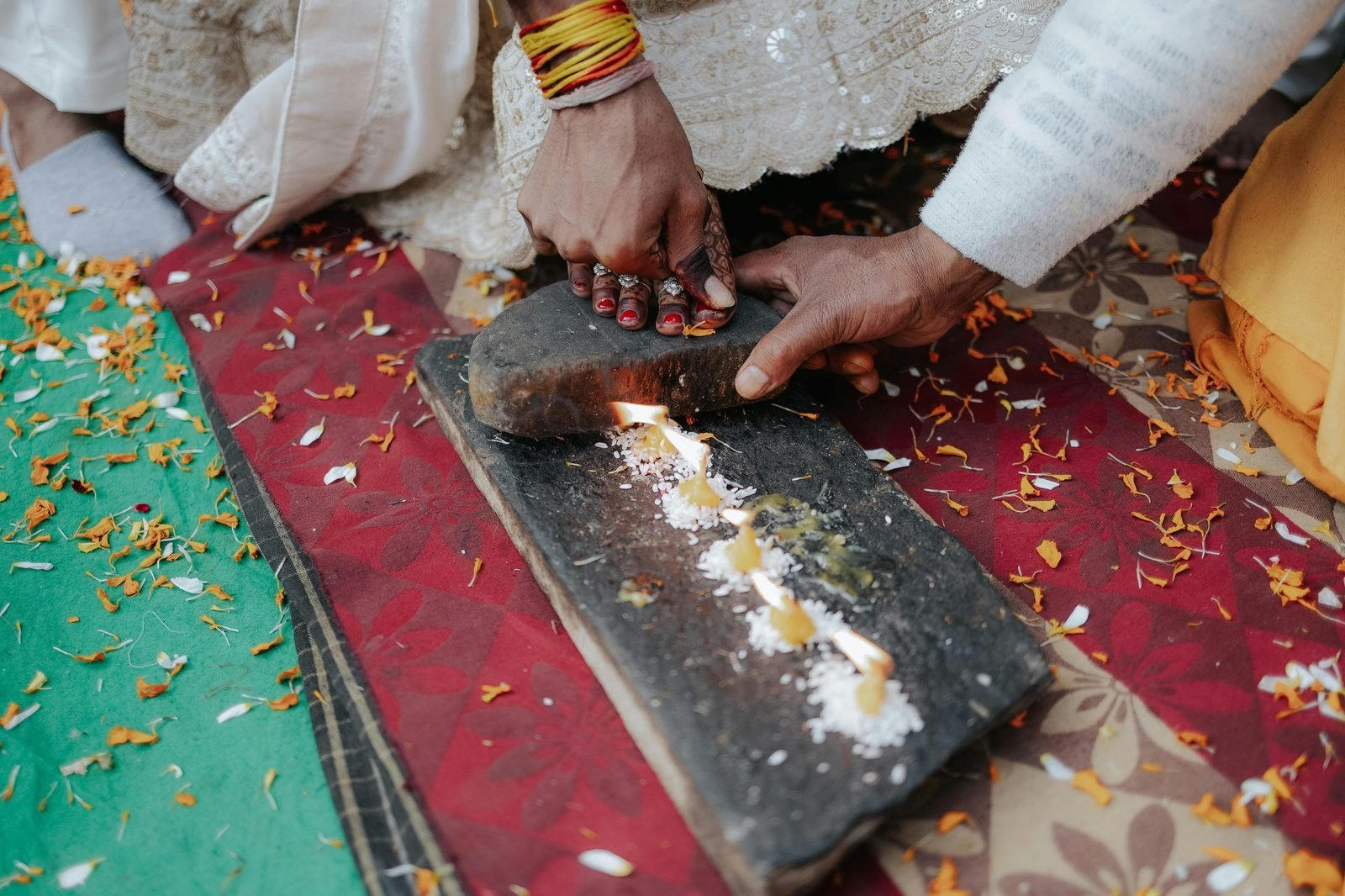
For an inter-caste couple, the Arya Samaj route has a real, practical beauty: it treats you simply as two Hindus marrying, without a single question about who came from which community. The ceremony is a Vedic one — the pandit lights the sacred fire, recites the mantras, and guides you through the vows and the pheras, with your two witnesses present. There are no idols, no lavish demands, and crucially no caste enquiry. Within a couple of hours you are married in a genuine, dignified tradition, and you hold the Arya Samaj certificate the same day. We then take that marriage to registration so you also receive the government certificate the outside world runs on.
Your Rights, Spelled Out
It helps to see them listed plainly, because knowing your rights is what turns worry into calm.
- You may marry the person you choose, whatever their caste, once you are both of legal age.
- You do not need permission from either family, or from anyone else.
- No authority can demand a caste certificate to solemnise or register your marriage.
- Your marriage certificate carries the same legal weight as any other couple's.
- If anyone threatens you for marrying across castes, you can approach the police for protection, and the courts back that right.
- Your marriage details are yours; we keep them confidential and share them with no one.
How the Day Actually Goes
Stripped of the drama some people imagine, the process is short and calm.
- A private first contact. You call or message, we listen, and we confirm you are both eligible and tell you which route suits you.
- Document check. We go through your papers in advance so nothing trips you up on the day — and no, none of them is a caste certificate.
- A discreet slot. We fix a convenient time for you, your partner and two witnesses.
- The Vedic ceremony. The pandit performs the wedding; you are married within a couple of hours and receive the Arya Samaj certificate.
- Registration. We file at the SDM office and guide the paperwork toward the government certificate.
- Your certificate. The government marriage certificate comes to you, ready for every official need.
What to Bring — The Simple List
Exactly the same documents any couple brings, and nothing caste-related. For each of you: an Aadhaar card, a date-of-birth proof such as a 10th marksheet, birth certificate or passport, three or four passport photos, and an address proof like Aadhaar, voter ID or a bill. Plus two adult witnesses, each with a photo ID — they can be trusted friends if you would rather not involve family. If one of you was previously married, add a divorce decree or a spouse's death certificate; NRIs add a passport with a valid visa or OCI and a single-status proof. A name spelled differently across papers is easily fixed with an affidavit, which we arrange for you.
📍 Talk to Us, Privately and Without Judgment
Free consultation • Fully confidential • No caste certificate • Same-day legal marriage
Two Legal Routes — Pick What Feels Right
Inter-caste couples can marry by either of two lawful paths, and both end in the same government certificate. Here is a simple comparison so you can see which suits you.
| Feature | Arya Samaj + registration | Special Marriage Act |
|---|
| Nature | Vedic ceremony, then registered | Purely civil marriage |
| Speed | Ceremony same day | About 30–45 days |
| Notice period | None for the ceremony | 30-day public notice |
| Best when | Both are Hindu and want it quick and private | You prefer a civil route or one partner is of another faith |
| Certificate | Government marriage certificate | Government marriage certificate |
Most inter-caste couples who are both Hindu choose the Arya Samaj route simply because it is same day and stays private. The Special Marriage Act, with its 30-day public notice, is the natural fit for those who want a civil-only marriage or where one partner belongs to a different religion. We will lay out both honestly and let you decide.
If Your Families Are Not On Board Yet
We will be gentle but honest here, because it matters. Not every family says yes at once, and some couples arrive carrying real fear. Please hear this clearly: your right to marry does not wait for anyone's approval. We complete the marriage lawfully and privately, and nothing is disclosed to either family. If either of you feels unsafe or is being threatened for choosing this marriage, the law is firmly protective — couples in that situation can approach the police for protection, and the courts have consistently upheld that right. We are not a legal-aid body, but we have walked many couples through this and can point you toward the right help while we handle your marriage. You are not as alone as the fear makes you feel.
Keeping It Private
Confidentiality is not a nice extra for inter-caste couples — it is often the whole point. So we treat it that way. Your enquiry, your documents, your ceremony date and your certificate stay strictly between you and us. We do not contact your families, we do not need their signatures, and we do not put your business on display. Witnesses can be friends you trust rather than relatives. Many couples tell us afterwards that this quiet, unhurried handling was exactly what let them go through with it calmly.
The Certificate — and Why It Protects You Later
Beyond the wedding itself, the registered government certificate quietly becomes one of your most useful possessions. It is what lets you add each other to a passport, open a joint bank account, apply for a spouse or family visa, name each other on insurance, and handle property together. For inter-caste couples especially, it is also settled, documented proof of a lawful marriage — the kind of solid ground that ends arguments before they start. That is why we never stop at the ceremony; we see it through to the certificate in your hands.
Inter-Caste NRI Couples
Plenty of the inter-caste couples we help have one partner living abroad, flying into Delhi with limited days. Dwarka's easy transport links make it a convenient base. Alongside the usual documents, the NRI partner brings a passport with a valid visa or OCI card and a single-status proof, and where the certificate must work overseas — for a spouse visa or foreign recognition — we arrange the MEA apostille or embassy attestation. For couples on a deadline, the same-day Arya Samaj route is almost always the practical choice over the slower civil process.
Dwarka Sector 12 and the Areas Around It
Based to serve the Dwarka sub-city and the wider south-west, we reach the whole neighbourhood with ease. If you are in any of these, you are close by.
| Area | How close to Sector 12 |
|---|
| Dwarka Sector 11 & 13 | Adjacent sectors |
| Dwarka Sector 10 & 7 | Very close, metro connected |
| Dwarka Mor | Short drive, metro connected |
| Ramphal Chowk | Nearby |
| Bindapur & Nawada | Close by |
| Uttam Nagar | Short drive |
| Palam & Sagarpur | Reachable, east side |
A Fair Word on Cost
We will not paste a fixed figure here, because an honest price depends on your case — the route you take, the documents involved and whether you need attestation for abroad. What we do promise is a clean quote: after a short, private call you get one all-in number, with the government's own fixed fees shown separately and nothing added at the end. If a simpler, cheaper route works just as well for you, we will point you to it. And no, being an inter-caste couple never changes the price — the process is the same for everyone.
🤝 Ready to Marry the Person You Chose?
One private call sorts the whole plan. Legal, same-day, and no one's permission needed.
Both of You Moved Here for Work — Which Changes the Notice Question Completely
Dwarka is unusual among Delhi neighbourhoods in one specific way, and it has a consequence almost nobody warns inter-caste couples about until it is too late.
Most of the couples who call us from Sector 12 and the sectors around it are not from Delhi. One grew up in Patna, the other in Kota. One is from Thrissur, the other from Ranchi. They met at work or at university, they live in Dwarka because that is where the flats and the metro are, and the families they are worried about telling are eight hundred or two thousand kilometres away.
Now read the Special Marriage Act with that in mind. When notice of an intended marriage is given, the Marriage Officer enters it in the Marriage Notice Book and displays a copy in a conspicuous place in his office. And where a party is not permanently resident within his district, he sends a copy to the Marriage Officer of the district where that party is permanently resident, for display there too.
For a Dwarka couple where neither of you is permanently resident in Delhi, that means two copies go out — one to each of your home districts. Your two names, your parentage, your addresses and the fact that you intend to marry, on a board in the town where your father is known, and on another board in the town where hers is, for thirty days, at the same time. Nothing improper has happened. The Act requires the display, and the officer is doing his job.
We have had couples discover this in week two, when a relative who happened to have work at that office made a phone call. By then the notice is given, the thirty days are running, and there is nothing anyone can do to pull it back. It is the single most avoidable disaster in this line of work and it is avoided by knowing about it before you file, not after.
What the alternative actually is. If both of you are Hindu, Sikh, Jain or Buddhist — whatever your castes — you do not need the Special Marriage Act at all. An Arya Samaj Vedic ceremony creates a valid marriage under Section 7 of the Hindu Marriage Act the same day, and registration of that marriage under Section 8 involves no notice period and no public display anywhere. You are not applying for permission to marry; you are recording a marriage that has already happened. Caste is not a condition in either step.
Where one of you is not Hindu, Sikh, Jain or Buddhist, the Special Marriage Act is the honest route and the notice comes with it. In that case plan around it rather than hoping: know which two districts will receive a copy, decide who in each family should hear it from you first, and decide it before the notice is given.
Nobody can shorten the thirty days. Not for a fee, not through a contact, not in an emergency. It is written into the statute. Anyone offering you a five-day or ten-day Special Marriage Act marriage is offering a forged document, and a forgery leaves you far worse off than having no certificate at all.
The Society's Own Paperwork — What Changes After You Marry
Dwarka is built almost entirely out of co-operative group housing societies, and a society is a small institution with records of its own. Those records do not update themselves when you marry, and the gap between what the society's file says and what your life actually looks like is where a surprising number of problems start.
What a society typically holds: a share certificate in the member's name, a membership register, an allotment or possession letter, a nomination recorded against the membership, and a list of who is permitted to occupy the flat. In most Dwarka societies at least one of those documents still names the original allottee — a father, an uncle, sometimes a person who sold the flat a decade ago and whose name nobody got round to changing.
| What you may want to do | What the society will ask for |
|---|
| Add your spouse's name to the occupancy or family record | The registered marriage certificate. A mandir certificate alone is often not accepted by a managing committee. |
| Change the nomination against the membership to your spouse | Marriage certificate, the society's nomination form, and usually a small fee |
| Transfer or add a name on the share certificate | Marriage certificate plus whatever the society's bye-laws require — often a resolution of the managing committee |
| Add a spouse to the gate or RWA records, parking, clubhouse | Marriage certificate, and sometimes an affidavit |
| Joint home loan on the flat | Marriage certificate, and the bank's own list |
| Get maintenance bills or the electricity connection in your own name | Depends on the society and the discom, but a registered certificate removes most of the friction |
The recurring lesson here is the same one this whole website keeps coming back to: the mandir certificate proves the ceremony, the SDM government certificate is what an institution acts on. A managing committee is an institution, a bank is an institution, and a discom is an institution. Which is why the ₹7,100 combined package — ceremony plus registration — is the one we recommend to couples here, rather than the ₹5,100 ceremony alone.
One point on nominations that matters more than people think. A nomination is not a will. The Supreme Court has made clear that a nominee holds the money or the asset for the estate, and succession law decides who is ultimately entitled. So updating a society nomination or a bank nomination after marriage is useful and worth doing — but it is not a substitute for actually thinking about a will, particularly where there is a flat involved.
Moving Into a Flat That Is Not in Your Name
A very common Dwarka situation: the couple marries and moves into a society flat that belongs to the husband's parents, or that the husband's father bought and the society records still show in his name. The wife has no title, no share certificate, and her name appears on nothing.
Couples rarely think about this on a happy day, and we raise it not to be gloomy but because the law here is clear and worth knowing.
Section 17 of the Protection of Women from Domestic Violence Act, 2005 provides that every woman in a domestic relationship "shall have the right to reside in the shared household, whether or not she has any right, title or beneficial interest in the same". It further provides that she shall not be evicted or excluded from the shared household, or any part of it, save in accordance with the procedure established by law.
And "shared household" is defined broadly in Section 2(s). It covers a household where she lives or has lived in a domestic relationship — owned or rented, jointly or singly, by either of them — and it expressly extends to a household belonging to the joint family of which the husband is a member, whether or not he or she has any right, title or interest in it.
In plain terms: a woman does not lose her right to reside in the matrimonial home merely because the flat is in her father-in-law's name and her own name appears on nothing. That is precisely the situation the definition is written to cover. Whether a particular property is a shared household in a particular case is a question of fact for a court — this is not a licence, and it is not advice on your family's flat — but the frightening version an inter-caste bride is sometimes told, that she has "no rights because the flat is not ours", is not the law.
The practical corollary, which is entirely within your control: keep your own documents in your own possession and scanned to an account whose password nobody in either family knows. Keep a bank account in your own name. Keep the marriage certificate with you, not in a family cupboard. None of this is expecting the worst; it is the same reason people keep a spare key.
Streedhan, and What You Actually Take With You
Every inter-caste couple we deal with reaches a version of this question, and the answer has a legal half and a practical half that point in slightly different directions.
The legal half. Streedhan — property given to a woman at or around her marriage, by her own family or by others — is hers. It does not become her husband's, and it does not become her in-laws'. That position is well settled, and a woman is entitled to recover it.
The practical half, which we give as advice rather than law. On the day you leave a house against your family's wishes, do not take jewellery, cash or valuables whose ownership anyone could argue about. Take your documents, your phone, your clothes, your laptop and things that are unambiguously yours. The reason is not that streedhan is unimportant. It is that the most common family response to a marriage they oppose in this city is a complaint at a police station, and a theft allegation is the version of that complaint which is hardest to dispose of quickly. An argument about what was in a cupboard becomes a criminal file in your first fortnight of marriage, and that is a bad trade for a set of bangles you can litigate about calmly a year later.
Make a list either way. Photograph what is yours before you leave, note what you took and what you did not, and keep bills where they exist — jewellery bills carry hallmarking details that make identification straightforward. A list made in advance is worth far more than a recollection assembled afterwards.
Witnesses When You Have No Family in Delhi
For a Dwarka couple whose families are in another state and do not know, the witness question is not a formality. It is often the hardest practical problem in the whole exercise, and couples put off the wedding over it.
What the law actually requires. Two witnesses for the Arya Samaj ceremony and for registration under the Hindu Marriage Act; three for solemnisation under the Special Marriage Act. Each must be an adult, must have been present at the marriage, must genuinely know the two of you, and must carry original photo identity.
What it does not require. That a witness is a relative. That a witness is from Delhi. That a witness is of any particular religion, caste or age beyond being an adult. That a witness is anybody's parent. None of these is a condition, and any office suggesting otherwise is mistaken.
Who Dwarka couples actually bring, in our experience: a flatmate, a colleague from the same team, a friend from college now working in Gurugram, a landlord, a neighbour from the same tower, a cousin on the side of the family that supports you, a friend's spouse. People who know you. That is the whole test.
What we will not do, at any price, is provide witnesses. A witness signs a document stating that he was present at your marriage and knows who you are. A stranger arranged by an agent cannot honestly sign that, and what it produces is a marriage with a defect lying dormant inside it — until a succession dispute, a maintenance case, or a consulate that telephones the witness named on your certificate and finds a man who has never heard of either of you. Services that supply witnesses are transferring their risk to you, for money, at the one moment when you are least able to weigh it.
If you genuinely cannot find two people, tell us before booking anything. In our experience the real problem is almost never a shortage of people — it is a fear about who might talk. That has better answers than paid strangers, and they are worth a conversation.
The First Month, When Your Family Is Twelve Hundred Kilometres Away
A couple who marry in their home town have thirty relatives to help with the aftermath. A couple who marry in Dwarka, quietly, with two colleagues as witnesses, have each other and a to-do list. Here is the list, in the order that saves the most trouble.
Week one. Collect the mandir certificate and write down the register entry number and the date somewhere that is not the same folder as the certificate — a notes app and one piece of paper. File the registration application if it is not already in. Scan everything, both of you, into an account only you control.
Week two to four. Attend the SDM appointment with both witnesses and all originals. Collect the government certificate. Then, and only then, the rest of the list becomes possible.
Then, in this order: any name change, if either of you is changing one — and it is entirely optional, nothing in Indian law requires a woman to change her surname. Then Aadhaar, because so much now verifies against it. Then PAN. Then bank accounts. Then passport, which is the strictest of the set and the one most likely to reject an application where your documents disagree with one another. Then employer records, health cover, provident fund and gratuity nominations, insurance, the society's records, and the electricity or gas connection.
The single rule that governs all of it: one spelling per person, everywhere, forever. Choose the spelling on your primary identity document and use it on the affidavit, the certificate and every form afterwards. More applications are delayed by a name spelled three ways across three documents than by anything else on this website.
And one thing worth doing that nobody does: if you are both far from family and have just acquired a flat, a loan or a nomination between you, spend an hour on a will. It is not morbid and it is not expensive, and it is the one document that decides what a nomination cannot.
Fitting It Around a Corporate Job
Most couples here are in offices, and the constraint is not money, it is calendar.
What is flexible: the ceremony. It can be early in the morning, before either of you needs to log in, and it is no less valid for being at eight o'clock. The havan, the mantras and saptapadi are the same; the certificate says nothing about the hour.
What is not: the SDM appointment. It happens on a working day, at the office's pace, with both spouses and both witnesses physically present. That is one morning that has to be found, and the honest advice is to plan for it rather than hope around it. Your witnesses need that morning too, which is a reason to ask people who can manage it.
What we can do to reduce it to one morning: check every document the evening before by WhatsApp, so nothing is discovered at the counter; draft and get the affidavits ready in advance; and tell you exactly what each of the four of you needs to bring. The commonest reason a Dwarka file needs a second visit is a witness who brought a photocopy and left the original at home.
A note on probation and notice periods. Nothing about marrying affects your employment, and no employer's permission is required. Where a service rule asks for intimation of marriage — some public sector employers and banks have such rules — that is a matter between you and your HR, and it is satisfied by giving them the registered certificate after the event, not by seeking anybody's approval before it.
Which Office Handles Dwarka Sector 12
Delhi's revenue map was reorganised with effect from 1 January 2026 and the city now has thirteen districts and thirty-nine sub-divisions. Dwarka sits in the south-west belt under that structure.
We are deliberately not printing one office name here and telling you to go to it, because the e-District portal allocates the office by your exact address. Three practical consequences follow.
Older advice may name a sub-division that no longer exists in that form. Certificates issued before 1 January 2026 remain fully valid; nothing about the reorganisation disturbs a marriage already registered. But a new application goes to the office allocated under the current structure.
The court complex is not the registration office. There is a court complex in Dwarka and couples assume "court marriage" happens there. It does not. No court in India marries anybody or registers a marriage — "court marriage" is everyday shorthand for a civil marriage before a Marriage Officer, or for registration with the SDM. You will not be standing in front of a judge.
And nobody can promise you an appointment date in advance. It is allotted according to the office's load. We file promptly and tell you the date when it comes rather than quoting a number that sounds good on the phone.
Dwarka Sector 12 and the Sectors Around It
| Area | What couples there usually ask us |
|---|
| Sector 12, Sector 11, Sector 13 | Society records and nominations after marriage; fitting the appointment around office hours |
| Sector 6, Sector 7, Sector 9 | Shift workers and couples with one partner travelling; same-day ceremonies |
| Sector 10, Sector 14, Sector 17 | Whether "court marriage" happens at the court complex — it does not |
| Sector 19, Sector 22, Sector 23 | Couples from two different states and the notice question |
| Palam, Sadh Nagar, Mahavir Enclave | Address proof in older colonies; same-day ceremonies for couples travelling in |
| Janakpuri, Uttam Nagar, Vikaspuri | Inter-caste couples marrying without family knowledge |
| Najafgarh and the urban villages | Gotra and community objections — none of which is a legal condition |
| Bijwasan, Kapashera, the Gurugram edge | Whether the address is in Delhi or Haryana, which decides where an SMA notice can be given at all |
The law is identical across every one of those. What differs is which part of your particular file is likely to be the awkward one — and knowing that in advance is most of what a useful first conversation consists of.
What It Costs, Published
The same everywhere on this website. No inter-caste surcharge, no Dwarka surcharge, no urgency surcharge, no distance surcharge, and the figure quoted on the phone is the figure at the counter. Ask us for the total in writing on WhatsApp before you travel and hold us to it.
| Service | Fee | What it covers |
|---|
| Arya Samaj marriage, ceremony only | ₹5,100 | Pandit, havan, saptapadi, mandir certificate, same day |
| Love / inter-caste marriage, same day | ₹5,100 | Confidential ceremony and certificate |
| Hindu Marriage Act SDM registration | ₹6,000 | Registration of a marriage already solemnised |
| Court marriage, advocate assisted | ₹6,100 | Drafting, affidavits, filing, appointment |
| Arya Samaj + court marriage, combined | ₹7,100 | Ceremony and SDM registration together — the right package for almost every couple here |
| Hindu–Muslim / inter-religion marriage | ₹10,000 | Shuddhi or SMA route with certificate |
| Marriage registration, full service | ₹12,000 | End-to-end managed registration |
| Special Marriage Act marriage | ₹15,000 | Full process including the 30-day notice |
| NRI marriage + MEA apostille | ₹20,000 | Marriage, registration and the apostille chain |
| Court marriage + High Court protection (Premium) | ₹56,000 | Full court marriage and documentation plus a protection petition filed by an advocate, with follow-up |
| Duplicate certificate | ₹2,500 | Lost or damaged |
| Government statutory fee | ₹100 / ₹200 / ₹15 | ₹100 Hindu Marriage Act registration, ₹200 requisite fee under the 2014 Order, ₹15 Special Marriage Act solemnisation — paid to government, not to us |
Not included, and told to you before you pay anything: the government statutory fee, notary charges of ₹100–₹200 per affidavit, any late-registration fee where the marriage is old, MEA apostille and embassy attestation where the certificate goes abroad, certified translation, and optional photography, video and transport. The complete list with worked total-cost examples is on the fees page.
On the Premium package. ₹56,000 covers the full court marriage and documentation together with a protection petition drafted and filed before the High Court by an advocate, and follow-up on the order. It exists for couples facing specific, credible threats — direct threats, a family member already at a police station, being followed, an employer or landlord contacted. For an inter-caste couple in Dwarka whose families are unhappy but where nothing has actually happened, the ₹7,100 package is the correct spend, and that is what we will tell you. Courts have themselves grown wary of protection petitions filed with no genuine threat, so buying one "just in case" is not even neutral.
What we will not take money for, here or anywhere: witnesses; a shortened statutory notice; a certificate for a ceremony that did not happen; a guaranteed court outcome; an under-age marriage; or a marriage while an earlier one subsists. The first conversation and the document pre-check are free, including the conversation in which we tell you the honest answer is the smaller package.
Start With One Call
Tell us your ages, your religions, whether either of you has been married before and how that marriage ended, which documents you actually hold, what your address proof says, where each of you is permanently resident — because in Dwarka that is the question that decides the route — and which morning you can realistically both be free.
From that we can tell you which route fits, the all-in cost, how long it takes, and the one thing in your file that needs fixing first. For most inter-caste couples here the answer is short and cheaper than they expected: an Arya Samaj ceremony on a morning that suits you, registration at ₹7,100 all told, no notice, no display, nobody informed.
Call +91 8376863962. Hindi or English, free, no obligation, and no attempt to sell you something larger than your situation calls for.
Questions Inter-Caste Couples Ask Us
Is inter-caste Arya Samaj marriage legal in Dwarka Sector 12?▼
Yes, completely. Two Hindus of different castes can marry through the Arya Samaj ceremony under the Hindu Marriage Act, and the marriage is as legal as any other. In Dwarka Sector 12 we perform it the same day and register it for the certificate.
Do inter-caste couples need a caste certificate to marry?▼
No. No caste certificate is required at any stage of an inter-caste Arya Samaj marriage or its registration. Caste is simply not part of the marriage process, and your certificate looks identical to any other couple's.
Do we need our families' permission to marry across castes?▼
No. Two consenting adults do not need anyone's permission to marry, regardless of caste. The law only cares that you both meet the age requirement, are free to marry and consent willingly.
Can we keep the inter-caste marriage private from family?▼
Yes. We keep the entire matter confidential. Nothing is shared with either family or anyone outside. Many inter-caste couples in Dwarka choose us precisely for this discreet, calm handling.
Is the ceremony same day in Dwarka Sector 12?▼
Yes. The Vedic Arya Samaj ceremony is completed the same day when your documents and two witnesses are ready. The government registration that follows takes a few working days for the certificate.
Who is eligible for inter-caste marriage?▼
The groom must be 21 and the bride 18, both unmarried or legally free to remarry, both of sound mind and marrying by choice. Caste, sub-caste or gotra difference is never a bar.
What documents do inter-caste couples need?▼
The same as any couple: Aadhaar, a date-of-birth proof, photos and address proof for each partner, plus two witnesses with ID. There is no extra caste-related document because caste is not asked for.
Are witnesses required, and can they be our friends?▼
Yes, two adult witnesses with valid photo ID are needed. They can be friends or relatives — anyone you trust. Witnesses must be people who know you personally; we do not provide witnesses.
What if our families oppose the marriage?▼
Your right to marry does not depend on family approval. We complete the marriage privately and legally. If a couple faces threats, the law allows them to seek police protection, and we can point you toward the right help.
Should we choose Arya Samaj or the Special Marriage Act?▼
Both are legal for inter-caste couples. The Arya Samaj route is same day and suits two Hindus. The Special Marriage Act is a civil route with a 30-day notice, useful if you prefer a purely civil marriage. We help you choose.
Will we get a proper marriage certificate?▼
Yes. After the Arya Samaj ceremony and registration you receive the official government marriage certificate, accepted for visa, bank, passport, name change and every legal purpose, just like any other marriage.
How long until we hold the certificate?▼
The Arya Samaj certificate is same day. The government certificate after registration usually takes a few working days. A full Special Marriage Act court marriage takes about 30 to 45 days due to the notice.
Do we need a Dwarka address to apply?▼
The ceremony has no residence condition. For registration, one partner usually needs a Delhi address proof. If you live in Dwarka Sector 12 or a nearby sector, your local address proof is accepted.
Is there a faster tatkal option?▼
Where the rules permit, we speed up the registration for urgent needs like a visa or travel deadline. We assess your specific case and give you an honest timeline rather than a false assurance.
Do you help inter-caste NRI couples?▼
Yes. NRI and foreign-national inter-caste couples are welcome. They bring a passport, valid visa or OCI and single-status proof, and we arrange apostille or attestation when the certificate is for use abroad.
What will an inter-caste Arya Samaj marriage cost?▼
It depends on the route, the documents and any add-ons such as attestation. We share one clear all-in quote after a short call, with government charges separate and nothing hidden at the end.
We already married across castes but never registered. Can you help?▼
Yes. We register an existing Arya Samaj or temple marriage and get you the government certificate. Bring your existing marriage proof, both IDs, photos and two witnesses to complete it.
Which nearby areas do you serve?▼
We serve the whole Dwarka sub-city and south-west Delhi including Dwarka Sectors 10, 11, 13 and 7, Dwarka Mor, Ramphal Chowk, Bindapur, Uttam Nagar, Nawada and Palam.
Do both partners have to be present?▼
Yes. Both the bride and groom must attend in person for the ceremony and for signing at registration, and the two witnesses must be there too. We fix a time that suits everyone.
How do we begin quietly from Dwarka Sector 12?▼
Call or WhatsApp with your details. We check your documents, confirm eligibility, explain your options, share the timeline and cost, and book a discreet slot. From Dwarka Sector 12 it is quick to arrange.
Neither of us is originally from Delhi. Does that affect the Special Marriage Act notice?▼
Very much. Where a party is not permanently resident in the Marriage Officer's district, he sends a copy of the notice to the Marriage Officer of the district where that party is permanently resident, for display there. If neither of you is permanently resident in Delhi, two copies go out — one to each of your home districts.
So our families back home could see the notice?▼
Yes, and that is the most avoidable disaster in this line of work. Your names, parentage and addresses are displayed in each home district for thirty days. Nothing improper has happened — the Act requires it — but it is why couples in your position should know before filing, not in week two.
Is there a way to avoid the notice altogether?▼
If both of you are Hindu, Sikh, Jain or Buddhist — whatever your castes — yes. An Arya Samaj ceremony creates a valid marriage under HMA s.7 the same day, and registration under s.8 has no notice period and no public display anywhere. You are recording a marriage, not seeking permission for one.
Can the thirty-day notice be shortened for a fee?▼
No. It is written into the statute and nobody can shorten it. An offer of a five-day or ten-day Special Marriage Act marriage is an offer of a forged document, which leaves you far worse off than having no certificate.
One of us is not Hindu. What then?▼
Then the Special Marriage Act is the honest route and the notice comes with it. Plan around it: know which two districts will receive a copy, and decide who in each family should hear it from you first — before the notice is given.
Will our housing society accept the mandir certificate?▼
Often not. A managing committee is an institution, and institutions act on the SDM government certificate. That is why we recommend the ₹7,100 combined package rather than the ₹5,100 ceremony alone.
What does the society need after we marry?▼
Typically the registered marriage certificate to add a spouse to the occupancy or family record, to change the nomination against the membership, to add a name to the share certificate under its bye-laws, and for gate, parking and clubhouse records.
The flat is still in my father's name in the society records. Is that a problem for the marriage?▼
Not for the marriage file — the office wants residence, not title. It matters for the society's own paperwork afterwards, and for a joint loan, which is a separate exercise.
Is a society nomination the same as a will?▼
No. The Supreme Court has made clear that a nominee holds for the estate and succession law decides entitlement. Updating a nomination after marriage is worth doing, but it is not a substitute for a will — particularly where there is a flat.
I am moving into my in-laws' flat. Do I have any right to live there?▼
Section 17 of the Protection of Women from Domestic Violence Act, 2005 provides that every woman in a domestic relationship has the right to reside in the shared household, whether or not she has any right, title or beneficial interest in it, and shall not be evicted save in accordance with the procedure established by law.
But the flat belongs to my father-in-law, not my husband.▼
"Shared household" is defined broadly in Section 2(s) and expressly extends to a household belonging to the joint family of which the husband is a member, whether or not he or she has any right, title or interest in it. Whether a particular property qualifies is a question of fact for a court, but the claim that you have no rights because the flat is not in your names is not the law.
What should I keep in my own possession after marriage?▼
Your own documents, scanned to an account whose password nobody in either family knows; a bank account in your own name; and the marriage certificate with you rather than in a family cupboard. This is not expecting the worst — it is the same reason people keep a spare key.
Is my jewellery mine after marriage?▼
Streedhan — property given to a woman at or around her marriage — is hers. It does not become her husband's or her in-laws', and she is entitled to recover it.
Should I take my jewellery when I leave home to marry?▼
Take only what is unambiguously yours. The commonest family response to a marriage they oppose is a police complaint, and a theft allegation is the hardest version to dispose of quickly. An argument about a cupboard becomes a criminal file in your first fortnight — a bad trade for bangles you can litigate about calmly a year later.
How do we prove what was ours?▼
Photograph it before you leave, note what you took and what you did not, and keep bills where they exist — jewellery bills carry hallmarking details that make identification straightforward. A list made in advance is worth far more than a recollection afterwards.
How many witnesses do we need, and who can they be?▼
Two for the Arya Samaj ceremony and for HMA registration; three for solemnisation under the Special Marriage Act. Any adult who was present, genuinely knows you both, and carries original photo identity. Not necessarily a relative, not necessarily from Delhi.
Our families are in other states and do not know. Who do people usually bring as witnesses?▼
A flatmate, a colleague from the same team, a friend from college now in Gurugram, a landlord, a neighbour from the same tower, or a cousin on the side that supports you. People who know you — that is the whole test.
Can you arrange witnesses?▼
No, at any price. A stranger cannot honestly sign that he was present at your wedding and knows you, and the defect lies dormant until a succession dispute or a consulate telephones the witness named on your certificate. Services that supply witnesses are transferring their risk to you.
We genuinely cannot find two people. What now?▼
Tell us before booking anything. The real problem is almost never a shortage of people — it is a fear about who might talk, and that has better answers than paid strangers.
Can the ceremony be early so we do not miss work?▼
Yes. It can be early in the morning before either of you logs in, and it is no less valid for being at eight o'clock. The havan, the mantras and saptapadi are the same and the certificate says nothing about the hour.
Can the SDM appointment be done on a weekend?▼
No. It happens on a working day with both spouses and both witnesses physically present. That is one morning that has to be found — including for your witnesses, which is worth remembering when you ask them.
How do we make sure it only takes one morning?▼
Send photographs of every document the evening before so nothing is discovered at the counter, have the affidavits drafted in advance, and make sure all four of you bring originals. The commonest reason a Dwarka file needs a second visit is a witness who brought a photocopy.
Does my employer need to know or approve?▼
No employer's permission is required and marrying affects nothing about your employment. Where a service rule asks for intimation — some public sector employers and banks have one — you satisfy it by giving HR the registered certificate afterwards, not by seeking approval beforehand.
Does "court marriage" happen at the Dwarka court complex?▼
No. No court in India marries anybody or registers a marriage. "Court marriage" is everyday shorthand for a civil marriage before a Marriage Officer, or for registration with the SDM. You will not be standing in front of a judge.
Which SDM office covers Dwarka Sector 12?▼
The e-District portal allocates it by exact address under the reorganised 2026 structure of thirteen districts and thirty-nine sub-divisions. We find the correct office for your address and file there rather than sending you to guess.
Are certificates issued before 2026 still valid?▼
Yes, fully. The reorganisation does not disturb a marriage already registered. It affects only where a new application goes, and which office now holds the records if you need a certified copy, a correction, or verification for an apostille.
Can you promise us an appointment date?▼
No, and nobody honestly can. It is allotted according to the office's load. We file promptly and tell you the date when it comes.
Is caste a legal obstacle at all?▼
None whatsoever. Caste appears nowhere in the Hindu Marriage Act — not in the five conditions in Section 5, not in the definitions. No permission, no certificate, no extra fee.
Do we need a caste certificate or our parents' consent?▼
Neither. If an office asks for either, tell us the same day and our advocate will take it up.
Does our caste change after marriage?▼
No, in either direction. Caste status is determined by birth and does not transfer by marriage. Existing certificates stay as they are.
What should we do in the first month after marrying?▼
Collect the mandir certificate and write down the register entry number and date separately; file for registration; attend the appointment; collect the government certificate. Then name change if any, Aadhaar, PAN, bank, passport, then employer, insurance, nominations and the society's records.
Does the wife have to change her surname?▼
No. Nothing in Indian law requires it and keeping your own name creates no legal difficulty anywhere.
What is the one rule that prevents most delays later?▼
One spelling per person, everywhere, forever. Choose the spelling on your primary identity document and use it on the affidavit, the certificate and every form afterwards.
Is there an extra charge for an inter-caste marriage here?▼
No. No inter-caste surcharge, no Dwarka surcharge, no urgency surcharge, no distance surcharge. Ask for the total in writing before you travel.
Should we buy the ₹56,000 Premium package just in case?▼
No. It is for couples facing specific, credible threats — direct threats, a family member already at a police station, being followed, an employer or landlord contacted. Courts have grown wary of protection petitions with no genuine threat, so buying one "just in case" is not even neutral.
What is the first thing you need to know from us?▼
Your ages, your religions, any previous marriage and how it ended, the documents you hold, what your address proof says, and — the question that decides the route in Dwarka — where each of you is permanently resident. Ten minutes settles the plan, and the call is free.
The Last Word for Dwarka Sector 12
Caste has kept a lot of good people apart for a long time, but it has no power over your legal right to marry the person you love. An inter-caste Arya Samaj marriage in Dwarka Sector 12 turns that right into something real and permanent — a heartfelt Vedic ceremony done the same day, and a registered certificate that stands as firm as any other marriage in the country. No caste certificate, no family permission, no fuss, and complete privacy from the first call to the last signature.
If fear has been holding you back, let one honest conversation take its place. Tell us where you stand and we will tell you exactly how to proceed, how long it takes, what it costs, and how we keep it private. When you are ready to take the step you have already made in your hearts, we will handle the rest with the care it deserves.
Call To Action
In Dwarka Sector 12, Sector 11, Sector 13, Dwarka Mor, Uttam Nagar or anywhere close, and ready to marry across caste lines the legal, private way? Reach out today. Call or WhatsApp — a real, understanding consultant will answer, hear you out, and guide you step by step. Your marriage, your choice, handled with honesty and complete discretion. Call +91 8376863962 now for a free, private consultation.
Explore More