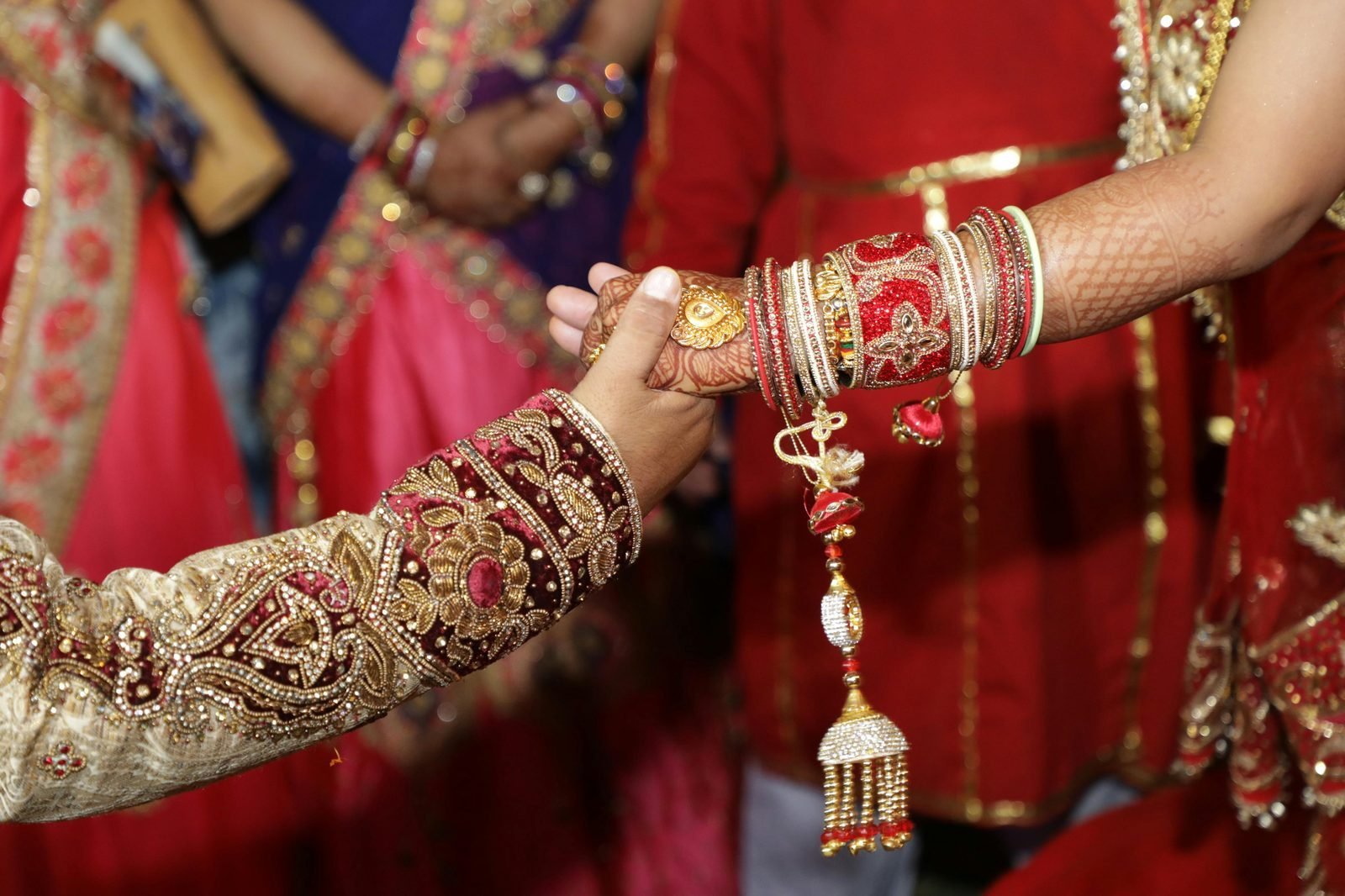
SC, ST, OBC, General — any caste combination. Legal marriage with specific support under Arya Samaj Validation Act 1937. Dr. Ambedkar Government Incentive scheme guidance.
Quick answer: Inter-caste marriage is fully legal in India under the Hindu Marriage Act 1955 and Special Marriage Act 1954, with no religion or caste change required. Our package starts from ₹5,100 with same-day options. Inter-caste couples may also be eligible for government incentive schemes. The Supreme Court affirms an adult's right to marry a partner of their choice. You need age proof, Aadhaar, address proof, photos and two witnesses.
Inter-Caste Marriage Delhi — Legal Overview
Inter-Caste Marriage means a marriage between persons of two different castes. Inter-caste marriage is completely legal in India and the Government also promotes it. Arya Samaj Validation Act 1937 specifically supports inter-caste marriages — this is why Arya Samaj Mandirs see the highest number of inter-caste marriages.
Our Arya Samaj Court Marriage Delhi service helps 8,000+ inter-caste couples each year — same day Mandir certificate included. Brahmin-Yadav, Rajput-Jat, Vaish-OBC, SC-General — we help with any combination. We also guide you on Government Inter-Caste Marriage Incentive Schemes.
🎯 Benefits: Same Day Certificate | Govt Incentive up to ₹2.5 Lakhs | No Family Notice | Legal Protection | Police Protection if needed
Government Incentive Schemes
Dr. Ambedkar Scheme for Social Integration
The Central Government scheme gives ₹2.5 Lakhs financial assistance where one party is from SC/ST community and the other is from outside SC/ST. Eligibility:
Marriage under Hindu Marriage Act 1955
Both partners' first marriage
Registered within 1 year
Family income limit applicable
Application via MoSJE (Ministry of Social Justice)
Inter-Caste Marriage — Options
Option 1: Arya Samaj Inter-Caste Marriage (Recommended)
Arya Samaj Validation Act 1937 was specifically created to promote inter-caste marriages. Maharishi Dayanand Saraswati strongly opposed the caste system. Same day ceremony + certificate, Vedic rituals, no family notice, Government certificate via SDM, fees from ₹5,100.
Option 2: Inter-Caste Court Marriage
Inter-Caste Court Marriage is also possible under Special Marriage Act 1954 — 30-day notice period, direct Government Certificate, religion-neutral. Better for couples not wanting Vedic ceremony. Fees from ₹6,100.
Inter-Caste Marriage Documents Required
Aadhar Card of bride and groom
Caste Certificate (mandatory for incentive scheme)
Caste Is Not a Condition Anywhere in the Hindu Marriage Act
Most couples who call us about an inter-caste marriage start the conversation apologetically. They say something like "sir, hamari caste alag hai, ho payega kya?" as though they are asking for an exception to be made for them. There is no exception to be made, because there is no rule standing in the way. That is the single most useful thing anyone can tell an inter-caste couple in Delhi, and it is worth understanding properly rather than accepting as reassurance.
Open the Hindu Marriage Act, 1955 and go to Section 5, which is the section that lists the conditions for a valid Hindu marriage. There are five conditions. Neither party should have a living spouse at the time of the marriage. Both should be capable of giving valid consent and should not be suffering from a mental condition that makes them unfit for marriage or for having children. The bridegroom should have completed twenty-one years and the bride eighteen. The parties should not be within the degrees of prohibited relationship unless a custom governing at least one of them permits such a marriage. And the parties should not be sapindas of each other unless, again, a custom permits it.
Read that list again and notice what is missing. Caste is missing. Sub-caste is missing. Gotra is missing. Community, biradari, khap, village, mother tongue, whether your families know each other, whether your parents agree — none of it appears. The legislature in 1955 wrote down exactly five conditions, and caste is not among them. A registrar cannot add a sixth condition because he personally believes families should match, a pandit cannot add one because a horoscope did not work out, and a relative certainly cannot add one by shouting about it.
This is not an accident or an oversight. The Hindu Marriage Act was passed at a time when the Constitution had already come into force with Article 15 prohibiting discrimination on grounds of caste, and the same Parliament that passed the Hindu Marriage Act passed the Hindu Succession Act, the Hindu Minority and Guardianship Act and the Hindu Adoptions and Maintenance Act as a package intended to modernise Hindu personal law. Removing caste as a barrier to marriage was one of the deliberate reforms of that package. Before 1955, the position under classical Hindu law varied by region and school and was genuinely uncertain in places. After 1955 it stopped being uncertain.
So when a couple asks us whether a Brahmin can marry a Jatav, whether a Yadav can marry a Baniya, whether a Scheduled Caste groom can marry a General Category bride, whether a Punjabi Khatri can marry a Tamil Iyer, the answer is the same sentence every time. Yes, and the law does not even require you to mention your castes during the process. We have registered marriages where neither the affidavit nor the application form nor the certificate contains the word caste anywhere, because there was no column asking for it and no reason to volunteer it.
The practical version: an inter-caste Hindu marriage in Delhi is procedurally identical to a same-caste Hindu marriage. Same documents, same ceremony, same registration route, same certificate, same fee. Nothing extra is required of you because your castes differ, and nobody is entitled to ask you for anything extra.
Gotra, Sub-Caste and Community Rules Have No Legal Standing
Gotra deserves its own discussion because it produces more panic in north Indian families than caste itself, and because the legal position is widely misunderstood even by people who consider themselves well informed.
Gotra is a lineage marker used in some Hindu communities, traditionally traced to a common ancestor or sage. In parts of Haryana, western Uttar Pradesh and rural Delhi, community bodies enforce rules against marriage within the same gotra, and sometimes against marriage within the same village or between certain named gotras that are treated as related. Couples who fall on the wrong side of these rules are told their marriage is invalid, or that it is incestuous, or that no pandit will perform it and no office will register it.
The Hindu Marriage Act does not mention gotra. Not in Section 5, not in the definitions in Section 3, not anywhere. The two relationship bars that the Act does create — prohibited degrees and sapinda relationship — are defined precisely in Section 3, and they are defined by counting actual generations of actual ancestors, not by a shared clan name. Two people can have the same gotra and be completely unrelated in the sapinda sense, which is extremely common given how few gotras there are relative to how many people claim them. Conversely, two people with different gotras can be first cousins on the mother's side and therefore genuinely within the sapinda bar.
What this means in practice is that a same-gotra marriage between two Hindus who are not sapindas of each other and not within the prohibited degrees is a perfectly valid marriage under the 1955 Act. A registrar has no legal basis to refuse it. A community panchayat has no legal power to annul it. A khap has no legal existence at all — it is a group of people with opinions, and its declarations have exactly the force of any other group of people's opinions, which is none.
The Supreme Court has said this plainly more than once, in cases where couples were attacked or killed for marrying within a gotra or across a caste line. The Court's language in those judgments is unusually blunt for judicial writing. It has described such killings as barbaric and feudal, has directed state governments to act against those who gather to declare such marriages invalid, and has made it clear that no community body enjoys any authority to sit in judgment over an adult's choice of spouse.
We raise this because couples sometimes arrive believing they need to hide the gotra question or find a pandit willing to "overlook" it. You do not need a pandit who will overlook anything. The ceremony we perform is a Vedic marriage under the Arya Samaj tradition, and Arya Samaj as a reform movement has historically been indifferent to caste and clan restrictions by principle, not as a favour. That is a large part of why inter-caste and inter-community couples have come to Arya Samaj mandirs for over a century.
The Arya Marriage Validation Act, 1937 — Why One Short Statute Matters
There is a small piece of legislation that almost nobody outside this line of work has heard of, and it is the legal foundation of a very large number of inter-caste marriages performed in Delhi every month.
The Arya Marriage Validation Act, 1937 is one of the shortest statutes on the Indian books. Its operative provision says, in substance, that a marriage between Arya Samajists shall not be held invalid, and shall be deemed never to have been invalid, merely because the parties belonged to different castes or different sub-castes, or because one or both of them were converts to the Arya Samaj from another religion.
Read that carefully. In 1937 — eighteen years before the Hindu Marriage Act — the legislature specifically addressed the objection that an inter-caste marriage performed by Arya Samaj rites might be void, and closed it. The words "shall be deemed never to have been invalid" are retrospective, meaning the Act reached backwards to protect marriages already performed. It also covered the conversion question, which is the reason the Arya Samaj shuddhi route exists for inter-religion couples and why that route has been treated as legally solid for close to ninety years.
After 1955, the 1937 Act is belt and braces rather than the sole support, because the Hindu Marriage Act independently makes caste irrelevant. But it still matters for two reasons. First, it is a direct statutory answer to anyone who claims an Arya Samaj inter-caste marriage is somehow of lesser standing. Second, it is useful in arguments about older marriages, inheritance disputes and legitimacy of children where the marriage in question took place before 1955.
When an inter-caste couple marries at an Arya Samaj mandir in Delhi today, the resulting marriage is a valid Hindu marriage under the Hindu Marriage Act, 1955, performed according to customary rites recognised by Section 7 of that Act, with the additional historical backing of the 1937 Act on the specific question of caste. There is no weak link in that chain.
What Actually Blocks a Hindu Marriage: Prohibited Degrees and Sapinda
Since caste is not a bar, it is worth knowing what is. There are really only two relationship bars, and they catch a small number of couples who are genuinely surprised to be caught by them.
Prohibited degrees of relationship. Section 3 of the Hindu Marriage Act defines these. Broadly, two people are within the prohibited degrees if one is a lineal ascendant of the other; if one was the wife or husband of a lineal ascendant or descendant of the other; if one was the wife of the other's brother, or of the father's or mother's brother, or of the grandfather's or grandmother's brother; or if the two are brother and sister, uncle and niece, aunt and nephew, or children of brother and sister or of two brothers or of two sisters.
Sapinda relationship. This one is defined by counting generations. A person is sapinda of another if they fall within three generations in the line of ascent through the mother, and within five generations in the line of ascent through the father, counting upwards from the person concerned and treating that person as the first generation. Two people are sapindas of each other if one is a sapinda of the other, or if they have a common sapinda ancestor within those limits.
In everyday terms, the sapinda rule is what makes a marriage between first cousins on the paternal side impermissible under the general rule, and it reaches further back on the father's side than on the mother's.
Both bars carry the same important exception: a marriage within the prohibited degrees or between sapindas is valid if there is a custom or usage governing at least one of the parties that permits such a marriage. This is not a loophole invented by lawyers. It is written into Section 5 itself, and it exists because several communities in southern India have long-established customs permitting marriage between a man and his sister's daughter, or between certain cousins. In those communities such marriages are valid.
Claimed obstacle
Legal position
Effect on your marriage
Different caste
Not a condition under Section 5
None. Marriage is valid.
Different sub-caste or biradari
Not mentioned in the Act
None.
Same gotra
Not mentioned in the Act
None, unless you are also sapindas.
Same village
Community rule only, no statutory basis
None.
Parents do not consent
Consent of parents is not a condition for adults
None.
Horoscopes do not match
Not a legal concept
None.
Prohibited degrees
Section 3(g) and Section 5(iv)
Marriage void, unless custom permits.
Sapinda relationship
Section 3(f) and Section 5(v)
Marriage void, unless custom permits.
Existing living spouse
Section 5(i)
Marriage void and an offence.
Under age
Section 5(iii)
We will not proceed. No exceptions.
We check the last three on that list for every couple, inter-caste or not, because those are the ones that actually cause a marriage to fail later. We have never once had to check a caste.
The Judgments Every Inter-Caste Couple Should Know About
Couples do not usually want a lecture on case law. But there are four decisions that come up so often in the real situations inter-caste couples face — a family complaint at a police station, a habeas corpus petition filed by parents, a request for protection — that knowing their names and what they held is genuinely useful. If you are ever sitting in front of an officer who says something doubtful, being able to name a Supreme Court decision changes the temperature of the room.
Lata Singh v. State of Uttar Pradesh (2006). A woman of age married a man of a different caste, her brothers filed a complaint alleging abduction, and the resulting criminal proceedings were used to harass the husband's family. The Supreme Court quashed the proceedings and went further. It said that a major is free to marry whoever she likes, that if parents disapprove the most they can do is cut social relations, and that there is no legal sanction for threats, violence or harassment. The Court directed administration and police across the country to ensure that anyone harassing or threatening an inter-caste or inter-religious couple, or committing violence against them, is prosecuted.
Shakti Vahini v. Union of India (2018). This is the honour-killing judgment. The Court held that when two adults marry of their own choice, neither family nor community nor clan can question that choice, and that assemblies which gather to condemn such marriages have no authority whatsoever. It laid down preventive, remedial and punitive measures for the states: identifying districts where such incidents have occurred, sensitising police, setting up safe houses, treating intelligence about a planned gathering seriously, and holding officers accountable for failing to act. When our advocates seek protection for a couple, this judgment is the backbone of the petition.
Shafin Jahan v. Asokan K.M. (2018). The Kerala High Court had annulled an adult woman's marriage on a petition by her father. The Supreme Court set that aside and restored the marriage. The reasoning matters more than the outcome: the right to choose a partner is part of the right to life and personal liberty under Article 21, the Court said, and it is not for the state or a court to substitute its own view of a suitable spouse for the individual's. A writ of habeas corpus cannot be used to hand an adult woman back to her parents against her wishes.
Laxmibai Chandaragi B. v. State of Karnataka (2021). Parents lodged a missing-person complaint after their daughter married a man of another caste. The Supreme Court quashed the FIR, and added practical directions about how police should handle such complaints — recording the adult's statement without dragging her back to the parental home, and being careful about registering cases that are really about family disapproval. The Court also observed that education has not kept pace with social attitudes on inter-caste marriage, and that such marriages in fact reduce caste tension.
Take screenshots of these four case names and keep them on both your phones. You will not need to argue law at a police station in most cases — but in the small number of cases where a station is being difficult, the ability to say "Shakti Vahini, 2018, Supreme Court" often shortens the conversation considerably.
Three Routes for an Inter-Caste Couple in Delhi
Every inter-caste Hindu couple in Delhi is choosing between three routes, and the choice is almost entirely about timing and privacy rather than about legality. All three produce a valid marriage. All three produce documents that work for a passport, a visa, a bank account, an insurance nomination and a property transaction. They differ in how long they take and in who gets told along the way.
Route one — Arya Samaj ceremony, same day. A Vedic marriage performed at the mandir with havan, mantras and saptapadi, witnessed and certified. This is a marriage under Section 7 of the Hindu Marriage Act, which recognises a marriage solemnised according to the customary rites and ceremonies of either party. No notice, no waiting period, no public display of your names. Done in a morning.
Route two — Arya Samaj ceremony followed by registration under the Hindu Marriage Act. You marry at the mandir and then register that marriage with the SDM, which produces the government marriage certificate. This is what most couples actually want, because the mandir certificate proves the ceremony and the SDM certificate is the document institutions ask for. There is no thirty-day notice on this route, because you are registering a marriage that has already happened, not applying for permission to marry.
Route three — Special Marriage Act, 1954. A purely civil marriage before the Marriage Officer, with a thirty-day notice period. It is the correct route where one party is not Hindu, Sikh, Jain or Buddhist, or where the couple positively wants a civil marriage with no religious ceremony at all. For two Hindus of different castes, it is available but rarely the practical choice, for reasons set out in the next section.
Arya Samaj only
Arya Samaj + HMA registration
Special Marriage Act
Time
Same day, 2–3 hours
Ceremony same day; certificate follows
30 days' notice, then solemnisation
Notice published
No
No
Yes, at the office, plus a copy to your home district
Both parties must be
Hindu, Sikh, Jain or Buddhist
Same
Any religion, or none
Caste relevance
None
None
None
Produces government certificate
Mandir certificate only
Yes, SDM certificate
Yes, Marriage Officer's certificate
Witnesses
Required
Required
Required
Our fee
₹5,100
₹7,100 combined
₹15,000
A note on witnesses, because it is the question we are asked most often and the answer disappoints people: we do not provide witnesses. Not for a fee, not as a favour, not quietly. A witness signs a document saying he personally saw your marriage take place and knows who you are. A stranger arranged by an agent cannot honestly sign that, and a marriage supported by paid strangers is a marriage with a defect sitting inside it waiting to surface in a dispute years later. Bring people who actually know you — a friend, a colleague, a cousin, a neighbour, a landlord. Two is the usual requirement for the ceremony and registration; three is asked for in some Special Marriage Act situations.
Why the Thirty-Day Notice Is the Real Decision
For an inter-caste couple whose families are not on board, the single most consequential thing in this entire subject is not caste law. It is Section 6 and Section 7 of the Special Marriage Act, 1954.
Under the Special Marriage Act, the parties give written notice of intended marriage to the Marriage Officer of a district where at least one of them has resided for at least thirty days. The Marriage Officer keeps that notice in a book and, crucially, publishes it by affixing a copy in a conspicuous place in his office. If neither party is permanently resident within his district, he also sends a copy to the Marriage Officer of the district where each such party is permanently resident, for similar display there. Anyone may then object on the limited grounds set out in the Act, within thirty days.
Read that second sentence again, because it is the one that catches couples. The notice does not only sit in a Delhi office where nobody you know will ever walk past it. If your permanent residence is a district in Haryana, Uttar Pradesh, Bihar, Rajasthan or anywhere else, a copy goes there and is displayed there. Your two names, your parentage, your addresses, and the fact that you intend to marry, on a board in your home district, for a month.
We have had couples come to us in real distress two weeks into a Special Marriage Act notice because a relative happened to have work at that office, saw the board, and made a phone call. Nobody did anything unlawful. The Act requires the display; the officer did his job.
Nobody can shorten the thirty days. Not for a fee, not through a contact, not in an emergency, and not by knowing someone. It is written into the statute. Anybody who offers you a five-day Special Marriage Act marriage is going to take your money and give you either nothing or a forged document. Walk away from that conversation.
This is the honest reason so many inter-caste couples in Delhi choose the Arya Samaj route and then register under the Hindu Marriage Act. Not because the Special Marriage Act is inferior — it is a fine statute and for an interfaith couple it is often the right answer — but because a Hindu couple has a lawful alternative that does not require them to publish their intentions in the one place where publication will cause them harm. Registration of an already-solemnised Hindu marriage under Section 8 of the Hindu Marriage Act involves no notice period and no public display. The marriage has happened; you are recording it.
There has been litigation over whether the notice and objection machinery should survive at all, and at least one High Court has held that couples cannot be compelled to publish the notice, treating the display requirement as intruding on privacy and liberty. The position is not uniform across the country and we do not advise anyone to plan around a favourable reading of it. Plan around the statute as it is written, and use the Hindu Marriage Act route if you are eligible for it.
The Same-Day Inter-Caste Marriage, Step by Step
Here is what actually happens on the day, told in the order it happens, so that nothing on the morning is a surprise.
The day before, on the phone or on WhatsApp. You send photographs of both sets of documents. We check the date of birth on each, check that the address proofs are legible, check whether either of you has been married before, and tell you if anything is missing. This step exists to make sure nobody travels across the city for nothing. Most of the problems we find at this stage are trivial — a blurred photo, an Aadhaar with an old address, a birth certificate that spells a name differently from the passport — and all of them are easier to fix on a Tuesday evening than on a Wednesday morning.
Arrival. Come with your two witnesses and their original ID. Allow for Delhi traffic; the ceremony itself is not long but the paperwork before it takes time and rushing it is how mistakes get into a certificate.
Document verification and drafting. Originals are checked against the copies. Affidavits are drafted — date of birth, marital status, and a statement that the marriage is by free will. Names are spelled as they appear on the primary identity document, not as they are usually written. This matters more than couples expect: a certificate reading "Priyanka" against a passport reading "Priyanaka" will cost you a correction application later.
The ceremony. The havan is lit. The pandit conducts the Vedic rites — the mantras, the offerings, the vows, and saptapadi, the seven steps, which is the point at which the marriage becomes complete and binding under Section 7(2) of the Hindu Marriage Act where saptapadi is part of the rites. Garlands are exchanged, sindoor and mangalsutra if you want them. It runs about forty-five minutes to an hour. Photographs are yours to take.
Certification. The marriage register is signed by both of you, by the witnesses and by the officiating priest. The Arya Samaj marriage certificate is issued the same day.
Registration, if you have chosen the combined service. The application for registration under the Hindu Marriage Act is prepared with the mandir certificate, the affidavits, the photographs and the witness details, and filed with the SDM's office for your area. An appointment follows. On the appointment date both spouses and the witnesses attend, the SDM satisfies himself, and the government certificate is issued.
At no point in that sequence does anyone ask you your caste. There is no column for it on the affidavit, no question about it in the ceremony, and no reference to it on either certificate.
Documents for an Inter-Caste Marriage — and What You Do Not Need
The list is the same as for any other Hindu marriage. We are setting it out in full anyway, because inter-caste couples are routinely told by well-meaning relatives that they need extra paperwork, and they arrive carrying documents nobody asked for.
From each of you: proof of date of birth — Aadhaar, passport, PAN with date of birth, birth certificate, or a school leaving certificate; proof of address — Aadhaar, voter ID, passport, driving licence, or a utility bill; recent passport-size photographs, usually six to eight each; and, if either of you was married before, the decree of divorce or the death certificate of the previous spouse.
From each witness: original photo identity and a copy, plus photographs.
For registration: the marriage certificate from the mandir, the joint photograph, the affidavits, and proof that at least one of you resides in the district where you are applying.
What you do not need, whatever anyone tells you:
Frequently demanded
Actually required?
Caste certificate
No. Not for the ceremony and not for registration.
Parents' consent letter
No, for adults. Consent of parents is not a condition under Section 5.
Parents' identity documents
No.
Gotra certificate or pandit's clearance
No such document exists in law.
Horoscope or kundli matching
No.
NOC from a community body or panchayat
No. No such body has authority to grant or withhold anything.
Proof of conversion, for two Hindus
No.
Caste certificate for the Ambedkar incentive
Only for the incentive application, which is a separate matter handled by government, not by us.
If an office asks you for a caste certificate to register a marriage between two Hindus, that request has no basis in the Hindu Marriage Act or in the Delhi registration rules. It is usually a misunderstanding rather than anything worse, and it is usually resolved by politely asking which provision the requirement comes from. Tell us if it happens and our advocate will take it up.
What an Inter-Caste Marriage Actually Costs
There is no inter-caste surcharge. The fee is the fee for the service you choose, exactly as it would be for any other couple. We publish the full list on our fees page and it does not change based on who you are.
Service
Fee
What it covers
Arya Samaj marriage — ceremony only
₹5,100
Pandit, havan, saptapadi, mandir certificate, same day
Love / inter-caste marriage, same day
₹5,100
Confidential Arya Samaj ceremony and certificate
Hindu Marriage Act SDM registration
₹6,000
Registration of a solemnised marriage
Court marriage, advocate assisted
₹6,100
Drafting, affidavits, filing, appointment
Arya Samaj + court marriage, combined
₹7,100
Ceremony and SDM registration together — the usual choice
Marriage registration, full service
₹12,000
End-to-end managed registration
Special Marriage Act marriage
₹15,000
Full SMA process including the 30-day notice
Court marriage + High Court protection (Premium)
₹56,000
Full court marriage and documentation plus a protection petition filed before the High Court by an advocate, with follow-up on the order
Duplicate certificate
₹2,500
Lost or damaged certificate
Government statutory fee
₹100 / ₹200 / ₹15
₹100 Hindu Marriage Act registration, ₹200 requisite fee under the 2014 Order, ₹15 Special Marriage Act solemnisation — paid to government, not to us
Two things we want to be plain about. First, the government statutory fee is a government fee — it is not ours, and if you registered entirely on your own you would still pay it. Second, if anybody quotes you a higher figure for an inter-caste marriage "because it is complicated", they are charging you for a difficulty that does not exist.
If the Family Goes to the Police
This is the part of the subject that couples actually lie awake about, so we will be concrete rather than reassuring.
When a woman of age leaves her parents' home to marry a man of another caste, the most common family response in Delhi and the surrounding districts is not violence. It is a complaint at the local police station. The complaint is usually framed in one of three ways: that she is missing, that she has been kidnapped or abducted, or that she is under age. Sometimes an allegation of theft is added — that she took jewellery or cash with her — because a property allegation gives the complaint more weight at the station.
Here is what each of those runs into.
The missing-person complaint. An adult who has chosen to leave is not missing. The police may open an enquiry, and the standard resolution is that the woman's statement is recorded. Once she states that she left of her own will and is an adult, the matter should end. The Supreme Court in Laxmibai Chandaragi specifically criticised the practice of hauling a woman back to her parental home in these situations, and said her statement can be recorded without that.
The kidnapping or abduction allegation. The offence requires the person to have been taken away without consent, or, in the case of a minor, out of lawful guardianship. An adult woman who walks out and marries by choice has not been kidnapped, and the Supreme Court has quashed exactly these proceedings repeatedly — Lata Singh is the standard citation. Where such an FIR is registered, the remedy is a quashing petition before the High Court, and our advocates handle these.
The age allegation. This is the one to take seriously, because it is the only one that can genuinely cause trouble, and because it is the one we screen for before anything else. If the bride is twenty-two and her family produces a school record showing seventeen, the age question will be decided on documents. This is why we insist on a reliable date-of-birth proof before we begin, and why we will not proceed where the documents do not add up. We would rather lose the work than perform a marriage that unravels in a courtroom.
The theft allegation. Our consistent advice, given before anything happens rather than after: do not take jewellery, cash or valuables that are not unambiguously your own. Streedhan is yours in law, but a dispute about what was streedhan and what was taken from a cupboard is a dispute you do not want to be having in a police station in the first week of a marriage. Take your documents, your phone, your clothes and your own things. Leave the argument about gold for a calmer time, if it is even worth having.
Practical preparation, before the day. Scan every important document to a cloud account only you can access, and to an email address your family does not have the password for. Note the number of the police station with jurisdiction over where you will be staying. Tell one trustworthy friend where you are. Keep both phones charged. Keep the mandir certificate and the registration receipt with you rather than in a suitcase at a relative's house. These sound paranoid until the week you need them.
Protection Petitions — How They Actually Work
A protection petition is a writ petition filed in the High Court by a married couple who face a real threat, asking the Court to direct the police to protect them. In Delhi it is filed before the Delhi High Court. Couples from Haryana and western Uttar Pradesh often file before the Punjab and Haryana High Court or the Allahabad High Court respectively, depending on where the threat and the parties are.
What the petition contains: proof that both of you are adults, proof that you are married, a clear and specific account of the threat — who threatened you, when, in what terms, by what means, and whether anything was reported — and the relief sought, which is usually a direction to the concerned Station House Officer to provide protection and to act on any complaint you make.
What the Court typically does: issues notice, and in a clear case passes an order directing the police to look into the representation and provide protection as warranted. Some orders direct the SHO to assess the threat and act; some are more specific. The order is then served on the station, which changes how your complaints are received there.
What a protection order is not: it is not a bodyguard, it is not a police vehicle outside your house, and it is not a guarantee. It is a court direction that puts the local station on notice, creates accountability, and in practice deters families who were relying on the assumption that nobody official was watching. In most cases that deterrent effect is the whole benefit, and it is a real one.
The honest caveats. Courts have grown wary of protection petitions filed with no genuine threat, simply to manufacture a document that looks like judicial approval of a marriage. Several High Courts have said so and have dismissed such petitions with observations. A petition must therefore be truthful and specific. Vague statements that "the family is against us" will not carry it. If there have been calls, messages, a visit, a confrontation, a complaint at a station — say so, with dates. If there has been nothing yet, say what you actually fear and why, and let the advocate advise honestly on whether a petition is the right step now or whether it is better to wait and document.
The ₹56,000 Premium Package — Court Marriage With High Court Protection
Most inter-caste couples need a marriage and a certificate. A smaller number need a marriage, a certificate, and a court order behind them because the situation at home is genuinely dangerous. The Premium package exists for the second group.
At ₹56,000 it covers the full court marriage and documentation — the ceremony where applicable, the affidavits, the registration, the certificate — together with a protection petition drafted and filed before the High Court by an advocate, and follow-up on the order once it is passed. It is one engagement rather than two, which matters because the petition depends on the marriage documents being correct and the marriage timing depends on when the petition is ready to file.
We do not push this package. It costs several times the ordinary combined fee, and for the great majority of inter-caste couples it is unnecessary. If you describe your situation to us and we think a ₹7,100 combined marriage is all you need, we will tell you that, and we would rather you spent the difference on your own life. What we will not do is take ₹7,100 from a couple who is telling us about specific, credible threats and send them out of the door with nothing but a certificate.
Ask for it if: there have been direct threats to either of you or to people helping you; a family member has been to a police station about you; you have been followed, or your workplace or landlord has been contacted; there is a history of violence in either family in a comparable situation; or you have been forced to leave the city and cannot safely return.
Community Panchayats and Khaps Have No Legal Power
Because a large share of our inter-caste couples come from Delhi's rural belt, from Haryana and from western Uttar Pradesh, the question of what a community panchayat can do comes up constantly. The answer is short. It can hold a meeting. It can pass a resolution. It can announce a social boycott. It can declare your marriage void. None of these has any effect on your marriage.
A marriage validly solemnised under the Hindu Marriage Act can be dissolved only by a competent court, on the grounds set out in the Act, in a proceeding to which both spouses are parties. There is no other mechanism. A gathering of people in a village does not become a court by calling itself a panchayat, and a resolution does not become a decree by being written on paper and signed by elders. If a body of this kind issues you a document saying your marriage is annulled, keep it — it is evidence against them, not against you.
The Supreme Court in Shakti Vahini addressed these assemblies directly, holding that they have no authority to question a marriage between two consenting adults and directing state machinery to prevent such gatherings and act against those who organise them. Where a boycott is declared, or where families are pressured to cut off a couple, that conduct can itself attract criminal liability, and in several states specific legislation addresses social boycott.
What a community body can genuinely do is cause you social and economic pain — pressure on a family business, on a landlord, on relatives who are on your side. That is real and we do not minimise it. But it is a social problem, not a legal one, and the solution to it is not to treat the panchayat as though it has powers it does not have.
Nine Mistakes We See Inter-Caste Couples Make
One: marrying in a hurry with the wrong documents. The day itself is short; the certificate lasts your whole life. A misspelled name or a wrong date of birth on the certificate becomes a problem at the passport office in four years. Spend the extra evening getting the documents right.
Two: using a temporary address to establish residence. A hotel is not a residence. A friend's flat where you stayed three nights is not a residence. Where a route requires residence in a district, it requires actual residence with something to show for it.
Three: telling one relative "who can be trusted". We have lost count of the couples whose plan reached the wrong ears through exactly one confidence. If you decide to tell someone, tell them after, not before.
Four: believing the thirty-day notice can be shortened. It cannot. Every rupee paid to someone claiming it can is a rupee lost, and sometimes worse, because the "certificate" that arrives is a forgery that makes your position far weaker than having no certificate at all.
Five: paying for witnesses. Covered above. We do not supply them and you should be wary of anyone who does.
Six: not registering the marriage at all. A ceremony without registration is a valid marriage but a difficult one to prove to a bank, an insurer, a visa officer or a hospital. Registration is the cheap part. Do it.
Seven: taking disputed valuables. Discussed above. It converts a family disagreement into a criminal complaint.
Eight: going quiet after the marriage. If a family complaint is made and the couple is unreachable, the enquiry escalates. It is usually better for the adult woman's statement to be on record early, on her terms, with an advocate available, than for a file to grow for three weeks in her absence.
Nine: assuming an inter-caste marriage needs a lawyer for everything. Most of them do not. An ordinary inter-caste marriage with cooperative documents and no threats is an ordinary marriage. Reserve the advocate for the situations that genuinely need one.
The Dr Ambedkar Inter-Caste Marriage Incentive — The Honest Version
We are going to be careful here, because this is the subject on which inter-caste couples are most often misled, and because the misleading is frequently done by people who take money for it.
First, the disclaimer that matters. We do not handle incentive applications. We do not file them, we do not follow up on them, we earn nothing from them, and we cannot promise anybody a single rupee. What follows is a description of a central government scheme as it is publicly documented, offered so that eligible couples know it exists and can pursue it through the proper channel. Verify the current position with the Dr Ambedkar Foundation or your District Magistrate's office before relying on any figure or condition below, because scheme guidelines are revised from time to time.
The scheme is the Dr Ambedkar Scheme for Social Integration through Inter-Caste Marriages, run by the Dr Ambedkar Foundation under the Ministry of Social Justice and Empowerment. Its core features as documented are these.
What counts as an inter-caste marriage for the scheme. A marriage in which one spouse belongs to a Scheduled Caste and the other belongs to a non-Scheduled Caste. This is narrower than the everyday meaning of inter-caste. A marriage between two different non-Scheduled castes — say a Yadav and a Baniya — is an inter-caste marriage socially and is perfectly valid legally, but it does not meet this scheme's definition.
The amount. Rupees 2.50 lakh per couple. As documented, it is not paid as a single cheque: approximately ₹1.50 lakh is released to the couple's joint bank account by RTGS or NEFT, and ₹1.00 lakh is placed in a fixed deposit for three years, released afterwards with the interest that has accrued.
Conditions. The marriage must be valid in law and duly registered under the Hindu Marriage Act, 1955, or supported by equivalent registration documentation properly certified. It must be a first marriage for both — no incentive is available on a second or subsequent marriage. The proposal must be submitted within one year of the marriage. If the couple has already received an incentive for the same marriage under a state scheme, that amount is adjusted against the central amount.
Route. The application is recommended or forwarded by the District Magistrate, District Collector, Deputy Commissioner or the State Social Welfare Department, and reaches the Director, Dr Ambedkar Foundation in New Delhi.
Read this before you plan around the money. This is a limited scheme with a finite annual allocation, and reporting on its working has repeatedly found low disbursement, long delays and applications pending for years. Treat it as a possible benefit you may receive later, not as funds you can count on. Do not take a loan against it. Do not let it influence when or whether you marry. And do not pay any private person a "processing fee" to secure it — the application goes through a government office, and anyone charging you to guarantee an outcome is not in a position to guarantee anything.
State schemes. Several states run their own inter-caste marriage incentive schemes with different amounts, different definitions and different procedures. Amounts and conditions vary widely and change. If you want to explore this, the correct starting point is the Social Welfare Department of the state where you are resident, or the national scheme portal, not a middleman.
What we will do, gladly and at no charge, is make sure the documents we produce for you are the documents such an application needs — a correctly spelled, properly registered marriage certificate issued under the Hindu Marriage Act, with the dates right. That is the part where a bad document actually costs a couple an application, and it is the part we control.
Caste, Certificates and Children After an Inter-Caste Marriage
Two separate questions get tangled together here, so let us take them apart.
Does your own caste change when you marry? No. Caste status is determined by birth, and marrying someone of another caste does not transfer either spouse into the other's category. A woman from a General Category family who marries a Scheduled Caste man does not become Scheduled Caste, and cannot claim the benefits attached to that status by reason of the marriage. The Supreme Court has addressed this and the position has been consistent: reservation benefits attach to those who have suffered the disadvantages that the classification was created to address, and marriage does not create that history. Equally, a Scheduled Caste woman who marries a General Category man does not lose her own status by marriage.
What about children? This is the question we cannot answer with a clean rule, and anyone who gives you one is overstating the position. The general administrative practice in most states is that a child's caste follows the father's, and caste certificates are ordinarily issued on that basis. But courts have decided cases both ways depending on facts, looking at which community the child was actually brought up in, what disadvantages the child actually faced, and whether the claim is being made genuinely or to obtain a benefit. Decisions have gone in favour of children claiming the mother's Scheduled Caste status where the child was raised in that community and suffered the associated disadvantages, and against such claims where the child was raised in advantage.
The practical takeaway: do not marry on the assumption that your children will be able to claim a particular caste status, and do not let anyone tell you the answer is automatic in either direction. If this question matters to your plans, it is worth an hour with an advocate who deals with service and admission matters, on your specific facts.
Legitimacy is not in question. Whatever the caste-certificate position, children of a valid inter-caste marriage are legitimate in every sense, with full rights of inheritance and succession from both parents. There is no distinction anywhere in Indian law between children of a same-caste marriage and children of an inter-caste one.
After the Certificate: Aadhaar, PAN, Bank, Passport and Name Change
The marriage certificate is the key that unlocks a list of updates. Doing them in the right order saves a great deal of running about.
Order of operations. Marriage certificate first, because most of the rest ask for it. Then, if a name is changing, the name change itself — an affidavit, publication in newspapers where required, and gazette notification if you want the strongest possible record. Then Aadhaar, because a great many systems now verify against it. Then PAN. Then bank accounts, since the bank will want the updated identity documents. Then passport, which is the most demanding of the set and the one most likely to reject an application where the documents do not agree with each other. Then insurance nominations, employer records, provident fund, driving licence and voter ID.
A name change is optional. Nothing in Indian law requires a woman to change her surname on marriage. Plenty of women do not, and it causes no legal difficulty anywhere. If you are marrying across castes and a surname carries meaning you would rather not carry, or would rather not give up, that is entirely your decision and the law is indifferent to it.
Consistency beats correctness. The single most common cause of a rejected passport or visa application in this area is not an error in the marriage certificate — it is disagreement between documents. If your Aadhaar says one spelling, your PAN another and your marriage certificate a third, every office you visit will send you away. Pick the spelling on your primary identity document, use it everywhere without exception, and fix the outliers before you need them.
For couples planning to go abroad. A marriage certificate for use outside India generally needs apostille through the Ministry of External Affairs, and sometimes embassy attestation on top. That chain takes weeks and is done on the original certificate, so factor it into visa timelines rather than discovering it a fortnight before a flight. Our NRI marriage service covers the apostille and attestation route end to end.
Inter-Caste Couples Coming to Delhi From Outside
A substantial share of the inter-caste couples we marry are not from Delhi. They come from Haryana, from western Uttar Pradesh, from Rajasthan, from Bihar, sometimes from much further. The reason is usually not that their own state is hostile in law — the Hindu Marriage Act applies identically everywhere — but that Delhi is large, anonymous, well connected and has an established Arya Samaj infrastructure.
Some practical points for couples travelling in.
For the ceremony, residence is not the issue. A Vedic marriage under Section 7 is not tied to where you live. What matters is that both of you are eligible to marry and that the rites are properly performed.
For registration, it is. Registration of a Hindu marriage is done with the authority having jurisdiction, which is tied to residence or to where the marriage was solemnised, depending on the rules being applied. If neither of you lives in Delhi and neither of you can show any Delhi address, registration in Delhi becomes complicated. Tell us your actual situation at the start and we will tell you honestly what is possible — including, sometimes, that registering in your own district is the cleaner answer even though the ceremony happened here.
Do not manufacture a Delhi address. A rent agreement created for the purpose, an address borrowed from a relative you have never lived with, a hotel bill presented as residence — these create a certificate with a defect in it. The defect will not trouble you at the counter. It will trouble you the day someone contests the marriage, or the day a visa officer compares the certificate's address against every other document you have ever filed.
Allow more than one day. Couples who plan a same-day return trip from Meerut or Rohtak and hit traffic, a missing document or an SDM appointment date end up making the journey twice. Plan for a night in Delhi if you can.
Realistic Timelines
What you want
Realistic time
What drives it
Arya Samaj ceremony and mandir certificate
Same day
Documents ready, witnesses present
Ceremony plus SDM registration
Ceremony same day; certificate follows the appointment
SDM appointment availability
Registration of an older marriage
Depends on the appointment and any late fee
How long ago the marriage was
Special Marriage Act
30 days' notice, then solemnisation
Statutory. Cannot be shortened.
Protection petition, filing to first order
Days, not months, in an urgent case
Court listing and the quality of the petition
MEA apostille
Typically a week or two after the certificate
MEA processing
Ambedkar incentive, if eligible
Unpredictable. Often long.
District forwarding and central allocation
Talk to Us Before You Decide Anything
Almost every inter-caste couple who calls us has already spent weeks worrying about a legal problem that does not exist, and has spent no time at all on the two things that actually matter — whether their documents are in order, and whether anyone is genuinely likely to make trouble. A ten-minute conversation reorders those priorities.
Tell us your ages, whether either of you has been married before, which documents you both hold, where each of you actually lives, and honestly what has been said at home. From that we can tell you which route fits, what it costs, how long it takes, and whether you need anything beyond an ordinary marriage. If the answer is "you need nothing special, come on Thursday with these papers", that is what we will say, and it is what we say most of the time.
Call +91 8376863962. We answer in Hindi and English, we do not charge for the conversation, and we will not sell you a protection petition you do not need.
Yes — 100% legal. Constitution, Hindu Marriage Act 1955, Arya Samaj Validation Act 1937, and Special Marriage Act 1954 all support it. Caste discrimination is illegal.
How much government incentive can we get?▼
Dr. Ambedkar Scheme provides up to ₹2.5 Lakhs incentive if one party is SC/ST. Delhi State has separate scheme too. Contact our team for eligibility verification.
SC/ST + General couple — is this possible?▼
Absolutely possible. This is the most common Inter-Caste combination and the one eligible for Government scheme. Marriage is fully legal and incentive can also be claimed.
Does caste change after Inter-Caste Marriage?▼
No — your original caste does not change. Both partners remain in their own caste. Children typically take father's caste though they can claim mother's for some benefits.
Are there extra fees for Inter-Caste Marriage?▼
No extra fees — standard fees apply. ₹5,100+ (Arya Samaj), ₹6,100+ (Court Marriage), ₹7,100 (Combined).
Family threatening us — can we get Police Protection?▼
Yes absolutely — Supreme Court (Shakti Vahini case, 2018) made it mandatory to provide Police Protection to Inter-Caste couples. Our advocates can file Writ Petition for Protection Order in 2-3 days.
Does the Hindu Marriage Act say anything at all about caste?▼
No. Section 5 of the Hindu Marriage Act, 1955 lists exactly five conditions for a valid Hindu marriage: no living spouse, capacity to consent, age twenty-one for the groom and eighteen for the bride, not within the prohibited degrees, and not sapindas of each other. Caste does not appear in that list, or anywhere else in the Act.
Can a Scheduled Caste man marry a General Category woman?▼
Yes. It is a valid Hindu marriage with no additional requirement of any kind. The process, the documents, the certificate and our fee are identical to any other marriage.
Is a same-gotra marriage legal?▼
Yes, provided the two of you are not sapindas of each other and not within the prohibited degrees. Gotra is not mentioned anywhere in the Hindu Marriage Act. A shared gotra between people who are not actually related within the statutory generations is no bar at all.
A panchayat has declared our marriage void. What happens now?▼
Nothing happens to your marriage. A valid Hindu marriage can be dissolved only by a competent court, in a proceeding to which both spouses are parties. A community body has no such power. Keep any document they issued — it is evidence about them, not about you.
Do we need a caste certificate to marry?▼
No. Not for the Arya Samaj ceremony and not for registration under the Hindu Marriage Act. A caste certificate is relevant only if you later apply for a government incentive scheme, which is a separate matter handled by a government office.
Do we need our parents' consent?▼
No. Consent of parents is not one of the five conditions in Section 5. Two adults may marry without telling anyone. The Supreme Court in Lata Singh said that where parents disapprove, the most they may do is cut social relations.
What is the Arya Marriage Validation Act, 1937?▼
A short statute providing that a marriage between Arya Samajists is not invalid merely because the parties belonged to different castes or sub-castes, or were converts to the Arya Samaj. It was passed eighteen years before the Hindu Marriage Act and is retrospective in its terms.
Which is faster for an inter-caste couple, Arya Samaj or the Special Marriage Act?▼
The Arya Samaj route, by a wide margin. The ceremony happens the same day. The Special Marriage Act requires a thirty-day notice which cannot be shortened by anyone.
Why do people say the thirty-day notice is risky for inter-caste couples?▼
Because the Marriage Officer displays the notice in his office, and where a party is permanently resident in another district, a copy is sent there for display as well. Your names and addresses are therefore on public view in your home district for a month.
Can the thirty-day notice be reduced for a fee?▼
No. It is written into the Special Marriage Act. Anyone offering a five-day or ten-day Special Marriage Act marriage is offering you either nothing or a forged document.
Is an Arya Samaj marriage certificate the same as a government certificate?▼
No. The mandir certificate proves the ceremony took place. The government certificate is issued by the SDM on registration under the Hindu Marriage Act. Most institutions ask for the government one, which is why the combined service at ₹7,100 is the usual choice.
Is the Arya Samaj marriage valid all over India?▼
Yes. It is a marriage under the Hindu Marriage Act, 1955, which applies across India, and registration under that Act produces a certificate accepted everywhere in the country and for visa and passport purposes abroad.
Do you provide witnesses?▼
No. We do not provide witnesses under any circumstances. A witness signs to say he personally saw your marriage and knows who you are. Bring two people who genuinely know you.
How many witnesses do we need?▼
Two for the ceremony and for registration under the Hindu Marriage Act. Three are asked for in some Special Marriage Act situations. Each must bring original photo identity.
Is there an extra charge because our castes are different?▼
No. There is no inter-caste surcharge anywhere in our fee list. Anyone charging you more because your marriage is inter-caste is charging you for a difficulty that does not exist.
What does an inter-caste marriage cost with you?▼
₹5,100 for the Arya Samaj ceremony and mandir certificate, ₹6,000 for SDM registration alone, ₹7,100 for the combined ceremony and registration, ₹15,000 for a full Special Marriage Act marriage, and ₹56,000 for the Premium package with a High Court protection petition. A ₹100–₹200 government statutory fee is payable to government.
What is included in the ₹56,000 Premium package?▼
The full court marriage and documentation, plus a protection petition drafted and filed before the High Court by an advocate, plus follow-up on the order. It is for couples facing genuine, specific threats. Most inter-caste couples do not need it and we will say so.
Our families are angry but nobody has threatened us. Do we need a protection petition?▼
Probably not yet. Courts have become wary of petitions filed with no real threat, and a vague petition can be dismissed with observations. Tell us exactly what has happened and our advocate will advise honestly, including advising you to wait and document if that is right.
My family has filed a missing-person complaint. What do I do?▼
An adult who left of her own will is not missing. Contact us and an advocate the same day. Usually the matter is resolved once your statement is recorded, and the Supreme Court in Laxmibai Chandaragi criticised dragging a woman back to her parental home to do it.
My family has filed a kidnapping FIR against my husband. Is that serious?▼
It should be taken seriously and answered properly, but it does not stand where an adult woman married by choice. The Supreme Court has quashed exactly these proceedings repeatedly. The remedy is a quashing petition before the High Court, which our advocates handle.
What if they claim I am under age?▼
That is the one allegation that can cause real trouble, and it is decided on documents. It is why we check a reliable date of birth proof before we begin anything, and why we will not proceed where the documents do not add up.
Should I take my jewellery when I leave home?▼
Take only what is unambiguously your own. Streedhan is yours in law, but a dispute over what was in a cupboard easily becomes a theft allegation at a police station in your first week of marriage. Take documents, phone, clothes and your own things.
Does my caste change after an inter-caste marriage?▼
No. Caste status is determined by birth and does not transfer by marriage in either direction. A General Category woman marrying a Scheduled Caste man does not acquire that status, and a Scheduled Caste woman marrying outside does not lose hers.
What caste will our children be?▼
Administratively, caste certificates are ordinarily issued on the father's caste. But courts have decided cases both ways depending on how the child was actually raised and what disadvantage the child actually faced. There is no automatic rule, and anyone who gives you one is overstating the position.
Are children of an inter-caste marriage legitimate?▼
Entirely. There is no distinction anywhere in Indian law between children of a same-caste marriage and children of an inter-caste marriage. Inheritance and succession rights from both parents are identical.
What is the Dr Ambedkar inter-caste marriage incentive?▼
A central scheme under the Dr Ambedkar Foundation offering ₹2.50 lakh to a couple where one spouse is Scheduled Caste and the other is not. As documented, about ₹1.50 lakh is paid to a joint account and ₹1.00 lakh is placed in a three-year fixed deposit. We do not handle these applications and earn nothing from them — verify the current position with the Foundation or your District Magistrate.
Do you file the Ambedkar incentive application for us?▼
No. We do not file it, follow it up, or take any money for it. It is recommended through the District Magistrate or the State Social Welfare Department and goes to the Dr Ambedkar Foundation. What we do at no charge is make sure your marriage certificate is correct, because a bad document is what actually sinks these applications.
Both of us are from different non-SC castes. Do we qualify for the incentive?▼
Not under the central scheme as documented, which defines an inter-caste marriage for its purposes as one where one spouse belongs to a Scheduled Caste and the other does not. Your marriage is of course completely valid; it simply does not meet that particular scheme's definition.
How long does the incentive take to arrive?▼
Unpredictable, and often very long. Reporting on the scheme has repeatedly found low disbursement and applications pending for years. Do not take a loan against it and do not let it affect when you marry.
Is there a deadline for applying for the incentive?▼
As documented, the proposal must be submitted within one year of the marriage, and the marriage must be registered. It is also available only on a first marriage.
What documents do we need for the ceremony?▼
From each of you: date of birth proof, address proof, and six to eight passport photographs. Plus a divorce decree or death certificate if either of you was married before. From each witness: original photo identity and copies.
Someone told us we need a pandit's clearance for gotra. Is that a real document?▼
No such document exists in law. There is nothing to clear, because gotra is not a legal condition of marriage.
Can we register the marriage if neither of us lives in Delhi?▼
The ceremony does not depend on residence, but registration does, because jurisdiction is tied to residence or to where the marriage was solemnised. Tell us your real situation and we will say honestly what is possible — sometimes registering in your own district is the cleaner answer.
Can we use a hotel address or a made-up rent agreement to show Delhi residence?▼
Please do not. It produces a certificate with a defect in it. Nobody will notice at the counter; it surfaces the day the marriage is contested or a visa officer compares your documents against each other.
We married two years ago and never registered. Can we still do it?▼
Yes. Registration stays possible however late, while both spouses are alive. A late fee may apply under the Delhi order — ₹500 for the second sixty days after the marriage and ₹1,000 after that, which you should confirm on the e-District portal.
Does the wife have to change her surname?▼
No. Nothing in Indian law requires it and it causes no legal difficulty to keep your own name. It is entirely your decision.
What order should we update our documents in after marriage?▼
Marriage certificate, then any name change, then Aadhaar, then PAN, then bank, then passport, then insurance nominations, employer records, provident fund, licence and voter ID. Consistency of spelling across all of them matters more than anything else.
We are planning to move abroad. What extra steps are there?▼
A certificate for use outside India generally needs MEA apostille and sometimes embassy attestation on top, done on the original. It takes weeks, so build it into your visa timeline rather than discovering it a fortnight before a flight.
Can an inter-caste couple marry the same day they arrive?▼
Yes, if the documents are checked in advance and the witnesses come with you. Send photographs of everything the day before — that is the step that prevents a wasted journey.
Is an inter-caste marriage kept confidential?▼
The Arya Samaj ceremony and Hindu Marriage Act registration involve no public notice and no display of your names, unlike the Special Marriage Act. We do not discuss our couples with anyone.
Can a Hindu marry a Muslim through this route?▼
Not through the Hindu Marriage Act as such — that is an inter-religion matter rather than an inter-caste one, and it goes either through the Special Marriage Act or through the Arya Samaj shuddhi route. See our inter-religion marriage page for how each works.
What should we do first?▼
Call +91 8376863962 and tell us your ages, whether either of you was married before, which documents you hold, where you actually live, and what has been said at home. Ten minutes usually settles the whole plan. The conversation is free.
Arya Samaj Court Marriage Delhi — Government Registered Arya Samaj Mandir for Same Day Arya Samaj Marriage, Court Marriage Registration, Love Marriage, Inter-Caste Marriage, Inter-Religion Marriage, NRI Marriage in Delhi NCR. Services available in Delhi, Noida, Greater Noida, Gurgaon (Gurugram), Ghaziabad, Faridabad, Chandigarh, Jaipur, Lucknow, Meerut, Agra, Dehradun, Patna, Ludhiana, Mathura, Rohtak, Panipat, Sonipat, Ambala. Marriage under Hindu Marriage Act 1955, Special Marriage Act 1954, Arya Samaj Marriage Validation Act 1937. Same Day Mandir Certificate + SDM Court Government Registration. Marriage Documents, Fees, Process, Apostille, Embassy Attestation for USA, Canada, UK, Australia, Dubai, Singapore. Free consultation • 24/7 WhatsApp • 50,000+ Happy Couples • 25+ Years Experience.
📚 Knowledge Hub
Trending Marriage Guides
Expert articles on every marriage topic — read before you decide