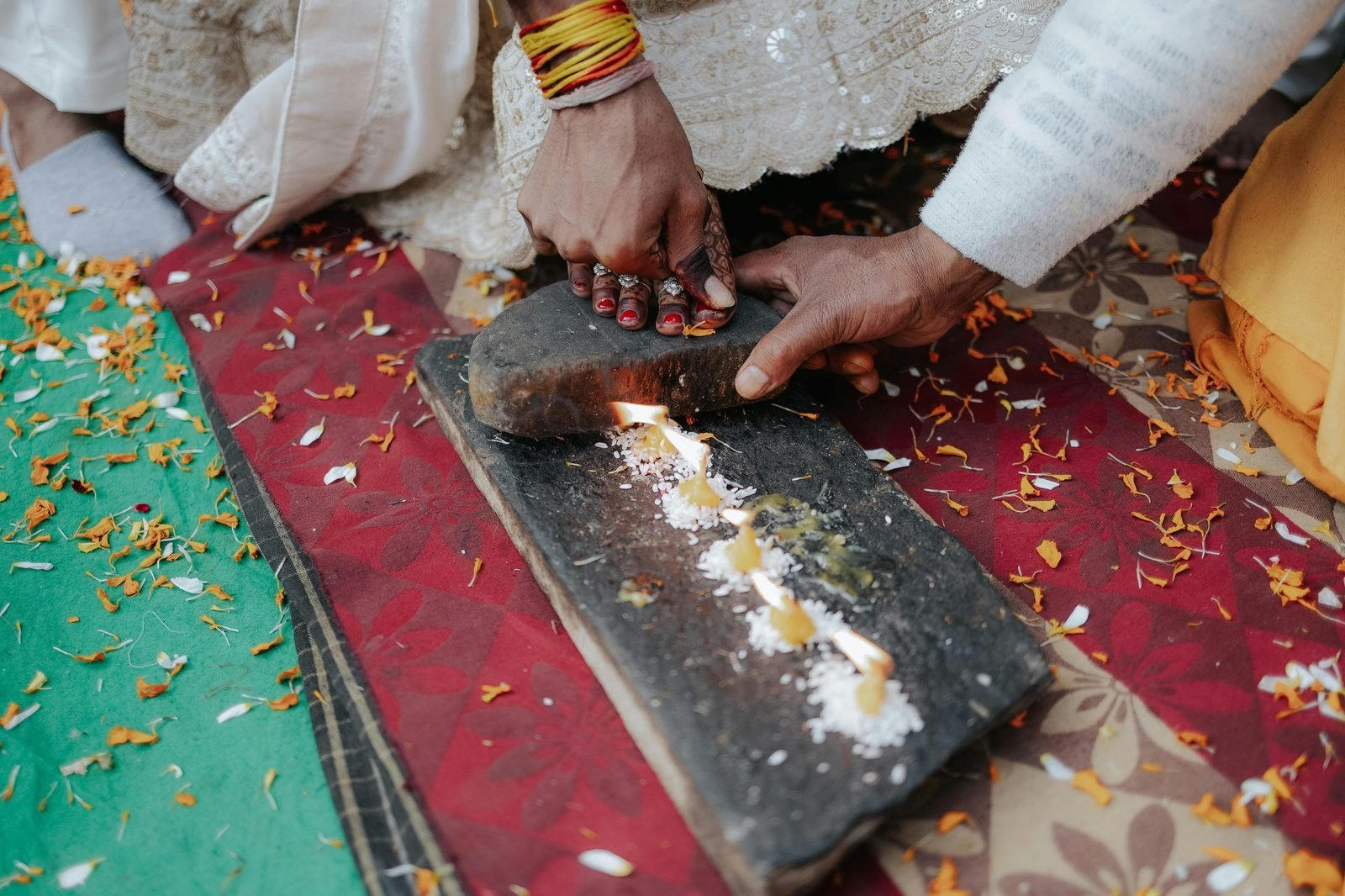
Why "Court-Valid" Is the Word That Matters
Lodhi Colony and the streets around it are full of people who deal with paperwork for a living — civil servants, lawyers, officers, professionals who know that a document is only as good as its ability to survive scrutiny. So when a couple from here asks for an Arya Samaj ceremony, they rarely ask "can you do it cheap and fast?" They ask something sharper: "will it actually hold up?" That is exactly the right question, and this page is our answer to it.
Here is the honest truth many places gloss over. An Arya Samaj wedding is a valid marriage — but a wedding that is casually performed, poorly documented or never registered can become a headache the day you need to prove it. A visa officer, a bank, a passport desk or, in a dispute, a court, will look past the flowers and the fire and ask for the paper trail. A court-valid Arya Samaj ceremony in Lodhi Colony is one performed and recorded so that trail is airtight from the very first day.
Below we explain plainly what makes a ceremony court-valid, where couples unknowingly leave gaps, and how we close every one of them — the eligibility, the witnesses, the documentation and the registration. If you would rather have us simply review your situation, one call to +91 8376863962 gets you a straight, professional assessment with no pressure.
📍 What "court-valid" means here: Correct eligibility • Proper witnesses • Airtight documentation • Genuine registration • Government marriage certificate • Accepted by courts, banks, passport offices & embassies • Central Delhi local • Free document review
What Makes a Ceremony Court-Valid — The Three Pillars
Strip it down and a legally sound marriage rests on three pillars. Get all three right and nothing can shake it; miss one and you invite trouble later.
Pillar one — eligibility. Both partners must meet the legal age (groom 21, bride 18), be free to marry, of sound mind, and marrying willingly. This is the foundation; without it, nothing else stands.
Pillar two — a proper ceremony with witnesses. The Vedic wedding must be genuinely performed by a pandit, with two adult witnesses present and identified. A ceremony that cannot be evidenced is a ceremony that can be questioned.
Pillar three — registration and the government certificate. The marriage must be registered so it produces the official government certificate. This is the document the outside world treats as conclusive proof, and it is what elevates a valid wedding into a court-valid one.
Where Couples Accidentally End Up Non-Valid
Most disputes and rejections trace back to a handful of avoidable gaps. We flag and fix each of these before they can matter.
| The gap | Why it causes trouble |
|---|
| No or weak age proof | Age is the first thing questioned; a shaky proof undermines the whole marriage |
| Names spelled differently across papers | Mismatches raise doubt and stall registration |
| No proper witnesses on record | An unwitnessed ceremony is hard to evidence later |
| Ceremony never registered | Without the government certificate, offices may not accept the marriage |
| Certificate from an unverifiable source | A certificate that cannot be traced is worth little in a dispute |
| Missing single-status or divorce proof | Casts doubt on whether the partners were free to marry |
How We Make Sure Yours Holds Up
Our process is built backward from that goal — a marriage that survives any examination.
- We review before we perform. On the first call we go through your documents specifically hunting for weak points, and fix them (an affidavit for a name mismatch, for example) in advance.
- We confirm eligibility on paper. Age, status and identity are all evidenced properly, not assumed.
- We perform a genuine ceremony with witnesses. The Vedic wedding is done correctly, your two witnesses are recorded, and you receive the Arya Samaj certificate the same day.
- We register the marriage. Your case goes to the SDM office and we guide the paperwork to the government certificate.
- You hold conclusive proof. The government marriage certificate — the document that ends questions before they begin.
The Documents That Give Your Marriage Backbone
Think of documents not as bureaucracy but as the spine of a defensible marriage. For each partner: an Aadhaar card, a firm date-of-birth proof (10th marksheet, birth certificate or passport), passport photographs, and an address proof such as Aadhaar, voter ID or a utility bill. Two adult witnesses, each with a photo ID. Where relevant, a divorce decree or a spouse's death certificate to prove free status, and for NRIs a passport with a valid visa or OCI and a single-status proof. Anything inconsistent — a name, a date — we resolve with an affidavit beforehand, so the record is clean.
The Two Certificates, and Which One a Court Wants
It is worth being precise, because the difference is the whole point of this page. After the ceremony you receive the Arya Samaj certificate, which records that the Vedic wedding took place. It is genuine and useful, but it is a religious record. The government marriage certificate, issued after registration at the SDM office, is the civil record — and it is the one a court, a bank, a passport office or an embassy will actually rely on. A truly court-valid marriage means you hold the second certificate, not merely the first. We make sure you do.
Timeline — Speed Without Cutting Corners
| What you choose | Ceremony | Court-valid certificate |
|---|
| Vedic ceremony only | Same day | Arya Samaj certificate (religious record) |
| Vedic ceremony + registration | Same day | Government certificate in a few working days |
| Court marriage (Special Marriage Act) | After 30-day notice | Government certificate, about 30–45 days |
| Registering an older ceremony | Already done | Government certificate in a short window |
📍 Get a Free Document Review
We check your papers for weak points • Court-valid ceremony • Registered certificate • Central Delhi
The Laws Behind a Valid Marriage
For a page about validity, the statutes deserve a clear mention. The Hindu Marriage Act, 1955 recognises the marriage of two Hindus, which the Vedic Arya Samaj ceremony is, and provides for its registration. The Arya Samaj Marriage Validation Act, 1937 exists precisely to confirm that Arya Samaj weddings are valid marriages. The Special Marriage Act, 1954 is the civil route — equally valid, with its 30-day notice — used for court marriages and for couples of different faiths. Every court-valid marriage we arrange sits squarely on one of these, and we tell you exactly which.
For Professionals Who Cannot Afford a Loose End
Many of our Lodhi Colony couples have careers where a marriage certificate will be examined — for a government posting, a spouse's dependent card, a foreign assignment, or official records. For them, "mostly valid" is not good enough. We work to that standard: clean documents, a properly witnessed ceremony, genuine registration, and a certificate that traces back correctly. If your work or your plans mean the document will be scrutinised, this careful approach is exactly what protects you.
Love Marriages, Handled Discreetly
Not everyone marrying in central Delhi has both families cheering. Love marriages are handled with complete confidentiality — nothing reaches families or outsiders, witnesses can be trusted friends, and the whole matter stays private. Crucially, private does not mean informal: your love marriage is performed and registered to the same court-valid standard as any other, so you leave not only married but properly documented, which is its own kind of security.
Inter-Caste and Inter-Religion Couples
Both are fully valid in law and we treat them as such. Inter-caste couples marry through the Arya Samaj ceremony with no caste certificate ever required, and the result is as court-valid as any marriage. Inter-religion couples choose either the Special Marriage Act, a civil marriage needing no conversion, or Shuddhi before an Arya Samaj ceremony and then registration. Whichever route fits, we make sure it is documented so it stands up — because for these couples especially, a solid, unquestionable certificate is worth a great deal.
NRI Couples and Certificates for Abroad
When a certificate has to be valid not just in an Indian court but before a foreign embassy, the bar is even higher. We handle that end too. NRI and foreign-national couples bring a passport with a valid visa or OCI and a single-status proof, and we arrange the MEA apostille or embassy attestation that makes the certificate acceptable overseas for spouse visas and official recognition. Given tight travel windows, the same-day Arya Samaj route followed by prompt registration is usually the practical path.
Lodhi Colony and the Areas We Serve
Working across central and south Delhi, we comfortably reach the whole neighbourhood around Lodhi Colony.
| Area | How close to Lodhi Colony |
|---|
| Lodhi Road & Khanna Market | Right here |
| Jorbagh | Adjacent, metro connected |
| INA & Sarojini Nagar | Very close, metro connected |
| Safdarjung & Kidwai Nagar | Nearby |
| Golf Links & Pandara Road | Short drive |
| Nizamuddin | Short drive |
| Meharchand Market | Close by |
How We Quote
We do not print a fixed figure, because an honest number depends on your case — the route, the documents, and whether you need attestation for abroad. What we commit to is a clean quote: after a short call you receive one all-in figure, with the government's own fixed fees shown separately and nothing added at the end. The careful, court-valid approach does not cost more than a sloppy one — it simply spares you far bigger costs later.
⚖️ Marry Once, Marry Right
A ceremony that holds up, documented and registered. One call to get started.
The Lodhi Colony Address Problem — When Your Proof Names a Colony That No Longer Stands
There is a documentary difficulty in this part of Delhi that you will not meet in Rohini or Uttam Nagar, and it catches people out at the counter because nobody warns them about it in advance.
The government housing belt around Lodhi Colony has been under redevelopment for years. Sarojini Nagar, Netaji Nagar, Nauroji Nagar, Kidwai Nagar, Mohammadpur, Srinivaspuri — whole colonies of low-rise quarters have come down and gone back up as towers, and the residents were moved, sometimes more than once, sometimes to a different colony altogether, sometimes to a temporary allotment while they waited.
The consequence for a marriage file is specific. Your Aadhaar says Block 12, Type II, Netaji Nagar. That block does not exist any more. Your voter ID says a colony that has been renumbered. Your bank statement goes to an address you left two allotments ago. None of this is your fault and none of it means anything is wrong with you — but an office comparing an address proof against an address that is no longer on the map is an office that asks questions.
What actually works, in order of how easily it is accepted:
| Address proof | How it lands | What to do about it |
|---|
| Aadhaar updated to your current quarter | Cleanest | Update it before you need it. It is free and takes days, not weeks. |
| Allotment or occupation letter for the current quarter, plus updated Aadhaar | Works well | Carry both. The letter explains the quarter; the Aadhaar ties it to you. |
| Allotment letter alone, Aadhaar not updated | Often questioned | Add an affidavit stating your current residential address, and update the Aadhaar anyway. |
| Living in a parent's quarter | Needs two links | The parent's allotment letter, proof of relationship, and an affidavit that you reside there. |
| A temporary or transit allotment during redevelopment | Needs explaining | Carry the transit allotment letter and say plainly what happened. It is a common situation and not a suspicious one. |
| Service identity card | Good identity, weak address | Do not rely on it for address. Bring it anyway for identity. |
| An address proof naming a demolished block | Will be queried | Update it first, or bring the newer allotment letter alongside it with an affidavit. |
The one thing to do this week: update your Aadhaar address to the quarter you actually live in. It is free, it is done online or at an enrolment centre, and it removes the most common obstacle in this neighbourhood before it becomes one. Doing it two weeks before you need it is comfortable; doing it two days before is not.
Retired officers who have moved out of government accommodation altogether have a milder version of the same problem — a pensioner living in Noida or Gurugram on an Aadhaar that still shows the Lodhi Road quarter he vacated in 2019. The fix is the same: bring the document into line with where you actually live, and do it before a file depends on it.
Marriages Later in Life — Widows, Widowers and Second Marriages
A noticeable share of the enquiries that reach us from this belt are not from couples in their twenties. They are from people in their fifties, sixties and seventies — a widow and a widower who have found companionship, a retired officer marrying again some years after his wife's death, a divorced couple each starting over. The questions they ask are different from the questions a young couple asks, and they deserve proper answers rather than an assumption that marriage law is only for the young.
There is no upper age limit. Section 5 of the Hindu Marriage Act sets a minimum — twenty-one for the groom and eighteen for the bride — and no maximum. Nobody at any office is entitled to comment on your age, question whether you should be marrying, or ask what your children think.
A widow or widower may remarry. There is no waiting period and no permission to seek. What is needed is the death certificate of the previous spouse issued by the municipal authority — not a hospital summary, not a cremation slip. If it has been mislaid over the years, apply for a copy from the authority where the death was registered before you fix a date for the ceremony, because that is the document the whole file rests on.
A divorced person may remarry once the decree is final. "Final" is the word that matters. If the period for filing an appeal is still running, or an appeal is pending, the position is not settled. Ask the advocate who handled the divorce for a written confirmation of the decree's date and that no appeal was filed within time. Where the decree is from a family court in another state, a certified copy is sufficient — it does not need to be re-registered in Delhi.
What will not do, at any age. A long separation. A settlement written on stamp paper. A panchayat's decision. A mutual understanding, however sincere and however many years old. Only a decree of a competent court ends a marriage, or the death of the spouse. We have had to turn away people in their sixties who had believed for two decades that an arrangement made in a village had ended a marriage. It had not, and proceeding would have created a void second marriage and taken from the new spouse the very protections the marriage was meant to provide.
Children from the earlier marriage. Adult children sometimes object, sometimes strongly, and their objection has no legal force whatever. They cannot prevent the marriage, cannot have it set aside, and are not required to consent. What their objection can affect is inheritance and pension arithmetic — which is a reason to plan those things properly, not a reason to postpone a marriage.
Family Pension and a Spouse Married After Retirement
This is the single most useful thing on this page for a retired government servant, and it is also the subject on which we hear the most confident misinformation.
The belief we keep meeting: "If I marry after retirement, my wife will get nothing, because she was not my wife when I was in service." That is not the position.
The actual position. A spouse married after retirement — a post-retiral spouse — is eligible for family pension. Where the pensioner has no child or children from a previous marriage, the post-retiral spouse is eligible for the full family pension. Where there are eligible children from an earlier marriage, the pension is shared according to the rules that govern that situation.
But it does not happen by itself. This is the part people miss, and missing it is what actually causes a widow to be refused years later. The pensioner must apply — intimating the marriage, with an attested copy of the marriage document — to the Head of Office that processed his pension. That office verifies it and forwards it to the Pay and Accounts Officer, who issues a corrigendum PPO — not a fresh pension order, an amendment to the existing one. It travels through the Central Pension Accounting Office to the pension disbursing authority, and a copy is endorsed to the pensioner.
The sequence that protects your spouse. Marry → register the marriage and obtain the government certificate → apply to your Head of Office with an attested copy → follow it up until the corrigendum PPO actually reaches you → keep that corrigendum with your pension papers, not loose in a drawer. Every step matters, and the last one matters more than people expect: a family pension claim goes far more smoothly when the widow can produce the corrigendum PPO along with the marriage certificate.
Why the mandir certificate is not enough here. A pension office deals in government records. It will want the registered marriage certificate issued by the SDM, not a certificate issued by an institution, however genuine the ceremony was. This is exactly the situation the page you are reading is about: a ceremony that is valid is not the same as a marriage that is easy to prove to an office fifteen years from now, when the person who could have explained it is no longer alive to explain it.
We do not handle pension applications and we do not take money for them — that is a matter between you and your Head of Office. What we do is produce the document that application needs: a correctly spelled, properly registered certificate with the dates right, which is precisely where these applications fail.
The Nomination Trap — The Quiet Reason Families End Up in Court
A marriage changes who your family is in law. It does not change the forms you filled in years ago, and those forms are where trouble starts.
After a marriage, particularly a second one, the papers that need attention are the ones nobody thinks about: the nomination on the General Provident Fund or the National Pension System, the nomination under the Central Government Employees Group Insurance Scheme, gratuity nominations, bank account and locker nominations, insurance policies, mutual fund and demat nominations, and the family details recorded in the service book or with the pension office. Every one of them may still name a first spouse who has died, or a spouse from whom you are divorced, or nobody at all.
The point that surprises people: a nomination is not a will. The Supreme Court has made clear that a nominee receives the money as a holder for the estate, and it is succession law — not the nomination form — that decides who is ultimately entitled. So an out-of-date nomination does not merely delay a payment. It produces a situation in which one person holds money that another person is entitled to, and that is how families that were getting along end up in front of a court.
The other half of it is proof. Whoever is entitled has to show that they are the spouse. That is the registered marriage certificate. A widow who can produce a certificate, and a corrigendum PPO if a pension is involved, is in an entirely different position from a widow explaining a ceremony from years ago to an office that has no record of it.
A short list worth working through in the month after your marriage: service book or pension office family details · GPF or NPS nomination · CGEGIS nomination · gratuity nomination · CGHS card, where applicable · bank accounts and lockers · life and health insurance · mutual funds and demat · property records where a transfer or mutation is intended · and a will, which is a different conversation but the right one to have at the same time.
None of this is our work and we charge nothing for saying it. It is simply what we would want someone to tell a member of our own family.
Registering a Marriage From Decades Ago — Before It Becomes Impossible
A steady share of our work in this belt is for couples who married thirty or forty years ago, never registered because nobody did in those days, and have now met an office that wants proof — a pension file, a CGHS card, a property mutation, a bank after a bereavement, a visa application for a child settled abroad.
The door is open. Registration remains possible however long ago the marriage took place, as long as both spouses are alive. There is no expiry, and any official or agent who tells you it is too late is wrong. A late fee applies under the Delhi order — ₹500 if you register in the second sixty days after the marriage and ₹1,000 after that — and it does not compound. A marriage from 1986 attracts the same ₹1,000 as a marriage from last year. Confirm the current figures on the e-District portal.
The real work is proof, because the office has to be satisfied about an event of which it has no record.
| Evidence | Weight | Where to get it |
|---|
| Attested extract from the solemnising institution's marriage register, quoting the entry number | Strongest | Write to the institution. Worth real effort — this one document often carries the whole application. |
| The original institution or mandir certificate | Strong | Usually already with you, often in a trunk |
| Wedding invitation card | Supporting | Dated, naming both families. Older couples often still have one. |
| Wedding photographs showing the witnesses | Supporting | Particularly useful where a witness will attend |
| Service book entry or old departmental family-details form naming the spouse | Strong support | Your Head of Office or pension office. Peculiarly useful for government families. |
| Old CGHS card, LTC records, insurance nomination naming the spouse | Supporting | Shows the marriage was held out officially over decades |
| Children's birth certificates naming both parents | Supporting | Municipal authority |
| Affidavits of both spouses, and of witnesses where alive | Required | We draft these |
When the original witnesses have died. After forty years this is normal, and it is not a reason to give up. Say so plainly and lean on the register extract and the documentary trail. What you must never do is produce two acquaintances and describe them as witnesses to a wedding in 1984. That converts a genuine application into a false one, and the person who signs the affidavit is the person exposed.
The deadline that is absolute. Once a spouse has died, the marriage can never be registered. A certified copy of an existing record can still be obtained where registration happened during their lifetime — but a fresh registration cannot be done, for any fee, by anyone, in any office. Every year we have to tell somebody this, usually a widow, usually at the worst possible moment. If you have been meaning to get round to it, this month is the right month.
Why Validity Is Really Tested Fifteen Years Later
The phrase at the top of this page — court-valid — sounds like it is about today. It is not. A marriage is almost never examined on the day it takes place. It is examined years later, usually by somebody with a reason to examine it, and usually when one of the two people who could have explained things is no longer available.
The four moments when it is actually tested:
A pension claim. A widow applies for family pension. The office wants the registered certificate, and if the marriage was a post-retirement one, the corrigendum PPO. Where neither exists, what follows is months of correspondence at the point in her life when she has the least capacity for it.
A succession dispute. Property in central Delhi is worth enough that somebody will litigate over it. A surviving spouse's claim, or a claim by children of a second marriage, will be tested by people with an incentive to find a flaw. The flaws they look for are precisely the ones this page is about: a ceremony that cannot be proved, a certificate whose spellings do not match, witnesses nobody can produce, a previous marriage that was never formally ended.
A visa or an immigration file. Consulates check. They compare the certificate against every other document you have filed, sometimes across years. A name spelled three ways is a genuine problem there in a way it is nowhere else.
A medical crisis. Consent for a procedure, access to an intensive care unit, and the paperwork after a death all turn on whether the person present can show a legal relationship. This is the one nobody plans for and the one that hurts most.
Everything we do — insisting on real age proof, refusing to move without a final decree, refusing to supply witnesses, spelling names exactly as the primary identity document spells them, pressing couples to register rather than stop at the ceremony — is aimed at those four moments rather than at today. It is also why we are willing to be tiresome about a misspelled father's name on an affidavit that you would quite like to sign and go home.
For the People Who Work in This Neighbourhood
Lodhi Colony is not only officers and pensioners. It runs on people who work here and mostly live elsewhere — domestic staff in the quarters and the Golf Links and Jorbagh houses, drivers, gardeners, the shopkeepers and staff of Khanna Market and Meharchand Market, vendors at INA, contract and outsourced workers in the offices along Lodhi Road, and embassy local staff. Their marriage questions are different again, and usually more urgent.
A home-state Aadhaar is perfectly valid identity. An Aadhaar carrying a village address in Bihar, Uttar Pradesh, Jharkhand or Odisha is a valid identity and age document. Where a route depends on residence, that is a separate question and we will tell you honestly what your options are — but nobody should tell you that your Aadhaar is no good because it is not a Delhi one.
Nobody may keep your original documents. Not an employer, not a placement agency, not a contractor. If your originals are being held, that is a problem to solve before the marriage, not after, and it is worth telling us about because it changes what we can do and when.
Register where the wedding was solemnised. If the ceremony takes place at the mandir here, that opens a route that does not depend on proving a Delhi address. For many workers this is the cleanest answer, and it is one we give often.
Ask for the extract, not just the certificate. If you marry at an institution and then go back to your home district, the attested register extract quoting the entry number is the document that will still be obtainable and persuasive in ten years. Ask for it at the time.
A bank account in your own name matters. So does keeping your own documents in your own possession, and scanning them to an account only you can open. This is advice we give to every worker who asks, and it has nothing to do with selling anybody a package.
Which Office Handles Lodhi Colony
Delhi's revenue map was reorganised with effect from 1 January 2026, and the city now has thirteen districts and thirty-nine sub-divisions. Lodhi Colony and the colonies around it sit in the central and New Delhi belt under that structure.
We are deliberately not going to print a single office name here and tell you to go to it, because the e-District portal allocates the office by your exact address, and addresses a few hundred metres apart in this area can fall differently. Two practical consequences follow.
First, older pages and older advice may name a sub-division that no longer exists in that form. Certificates issued before 1 January 2026 remain fully valid — nothing about the reorganisation disturbs a marriage already registered. But a new application goes to the office allocated under the current structure, not to whichever office a 2019 blog post mentions.
Second, if you need a certified copy, a correction, or verification of an old certificate for an apostille, the question is which office now holds the records for your locality. That is worth establishing before you make a trip, and it is the sort of thing we check for couples as a matter of course.
What we do is find the correct office for your address, file there, and tell you the appointment date when it is allotted rather than promising one in advance. The date is set by the office's load. Anybody who guarantees you a specific date before filing is guessing.
Lodhi Colony and the Colonies Around It
We work across this whole belt, and the couples we see from each part of it tend to arrive with a slightly different set of questions.
| Area | What we usually get asked there |
|---|
| Lodhi Colony, Lodhi Estate, Lodhi Road | Quarter address proof; registering a marriage from decades ago for a pension or CGHS file |
| Sarojini Nagar, Netaji Nagar, Nauroji Nagar, Kidwai Nagar | Address proof naming a block that has been demolished or renumbered in redevelopment |
| Pandara Road, Bharti Nagar, Kaka Nagar, Bapa Nagar | Service records, nominations and family details after a second marriage |
| Golf Links, Jorbagh, Sundar Nagar | Certificates for use abroad, apostille timing, children settled overseas |
| Khanna Market, Meharchand Market, INA | Shop staff and vendors marrying on a home-state Aadhaar; same-day ceremonies around working hours |
| Nizamuddin, Bhogal, Jangpura | Nikah with registration, and interfaith couples asking about the Special Marriage Act |
| Safdarjung Enclave, Green Park, AIIMS area | Doctors and hospital staff working around rotating duty; certificates needed for a posting |
| Defence Colony, Andrews Ganj, South Extension | Ordinary combined packages, and NRI couples visiting briefly |
None of this changes the law, which is the same across Delhi. It changes what is likely to be the awkward part of your particular file, and knowing that in advance is most of what a useful first conversation consists of.
If You Are Still in Service
Serving central government employees have a separate set of considerations — the conduct rules on bigamous marriage, the requirement to intimate a marriage to a person other than of Indian nationality, the dowry prohibition that applies to government servants as misconduct as well as an offence, and the service-specific rules that apply to some cadres. We have written that up properly, with the rule numbers, on our Chanakyapuri guide rather than repeating it here.
The two points worth carrying across to this page are these. Marrying an eligible partner of your own choosing is not misconduct, whatever a relative may suggest — no permission is required, and family disapproval has no standing in a service context. And the certificate your department will act on is the registered government one, not the mandir certificate, for the service book, for a CGHS addition, for nominations, and for an official passport before a posting.
What It Costs Here
The same as everywhere else. Our fees are published, they are the same for every couple, and there is no central-Delhi surcharge, no urgency surcharge, and no distance surcharge.
| Service | Fee | What it covers |
|---|
| Arya Samaj marriage, ceremony only | ₹5,100 | Pandit, havan, saptapadi, mandir certificate, same day |
| Hindu Marriage Act SDM registration | ₹6,000 | Registration of a marriage already solemnised — including one from decades ago |
| Court marriage, advocate assisted | ₹6,100 | Drafting, affidavits, filing, appointment |
| Arya Samaj + court marriage, combined | ₹7,100 | Ceremony and SDM registration together — the package most couples here should take |
| Marriage registration, full service | ₹12,000 | End-to-end managed registration, useful for complicated old marriages |
| Special Marriage Act marriage | ₹15,000 | Full process including the 30-day notice |
| NRI marriage + MEA apostille | ₹20,000 | Marriage, registration and the apostille chain |
| Duplicate certificate | ₹2,500 | Lost or damaged — faster if you can quote the registration number |
| Government statutory fee | ₹100 / ₹200 / ₹15 | ₹100 Hindu Marriage Act registration, ₹200 requisite fee under the 2014 Order, ₹15 Special Marriage Act solemnisation — paid to government, not to us |
| Late registration fee | ₹500 / ₹1,000 | Only where the marriage is old. Does not compound. |
Not included and told to you before you pay: notary charges of ₹100–₹200 per affidavit, MEA apostille and any embassy attestation where the certificate is going abroad, certified translation where needed, and optional photography, video and transport. The full list, with worked total-cost examples, is on the fees page.
What we will not take money for, here or anywhere: witnesses; a shortened statutory notice; a certificate for a ceremony that did not happen; a guaranteed court outcome; an under-age marriage; or a marriage while an earlier one subsists. And the first conversation and the document pre-check are free — including the conversation in which we tell you that the honest answer is a ₹6,000 registration rather than anything larger.
Start With a Ten-Minute Call
Whether you are a couple in your twenties who want the ceremony on Saturday, a retired officer sorting out a marriage from 1981 so that a pension file will move, or a widow and widower in Kaka Nagar who have decided to marry and want it done properly, the first step is the same.
Call +91 8376863962. Tell us your ages, whether either of you has been married before and how that marriage ended, which documents you actually hold, what your current address proof says, and whether any office is already asking you for something. Ten minutes usually settles the whole plan — the route, the cost, the timeline, and the one thing in your particular file that needs fixing first.
The call is free, we answer in Hindi or English, and if the honest answer is smaller than what you were expecting to buy, that is the answer you will get.
Your Validity Questions, Answered
What does court-valid Arya Samaj ceremony mean?▼
It means the Vedic wedding is performed and documented so it holds up as a legally recognised marriage. A court-valid ceremony meets the age and eligibility rules, is done with proper witnesses, and is then registered to produce the government certificate authorities accept.
Is an Arya Samaj ceremony automatically valid in court?▼
The ceremony is valid under the Hindu Marriage Act 1955 and the Arya Samaj Marriage Validation Act 1937. But to be reliably court-valid for official use, it should be registered so you hold the government marriage certificate, which is the accepted proof.
What can make an Arya Samaj marriage weak or disputable?▼
Common gaps are missing age or identity proof, no proper witnesses, an unregistered marriage, or a certificate from an unverifiable source. We close all these gaps so your marriage is documented and defensible.
Can the ceremony be same day in Lodhi Colony?▼
Yes. The Vedic ceremony is completed the same day when documents and two witnesses are ready, and you receive the Arya Samaj certificate immediately. The government certificate follows after registration in a few working days.
Who is eligible for a court-valid marriage?▼
The groom must be 21 and the bride 18, both single or lawfully free to remarry, both of sound mind and marrying by choice. These conditions are exactly what make the marriage legally sound.
What documents keep the marriage court-valid?▼
Clear identity and age proof (Aadhaar plus a 10th marksheet, birth certificate or passport), address proof and photos for each partner, and two witnesses with photo ID. Solid documents are the backbone of a defensible marriage.
Are witnesses essential for validity?▼
Yes. Two adult witnesses with valid photo ID are required for both the ceremony and the registration. Proper witnesses are part of what makes the marriage stand up, so we ensure this is done correctly.
Is the registration what makes it court-valid?▼
Registration is the step that turns a valid ceremony into documented legal proof. The government marriage certificate from the SDM office is the record courts, banks, passport offices and embassies rely on.
Can inter-caste couples have a court-valid ceremony?▼
Yes. Inter-caste marriage is fully legal, needs no caste certificate, and is just as court-valid as any other when performed and registered properly. Two Hindus of different castes marry the same way.
What is the route for inter-religion couples?▼
They can use the Special Marriage Act, a civil marriage needing no conversion, or Shuddhi before an Arya Samaj ceremony followed by registration. Both routes are court-valid; we explain each clearly.
Do you help NRI couples in Lodhi Colony?▼
Yes. NRI and foreign-national couples bring a passport, valid visa or OCI and single-status proof. We arrange MEA apostille or embassy attestation so the certificate is valid and accepted abroad as well.
How long until the certificate is in hand?▼
The Arya Samaj certificate is same day. The government marriage certificate after registration usually takes a few working days. A full Special Marriage Act court marriage takes about 30 to 45 days due to the notice.
Do we need a Lodhi Colony address to apply?▼
The ceremony has no residence condition. For registration one partner usually needs a Delhi address proof. If you live in Lodhi Colony or nearby central Delhi, your local address proof is accepted.
Is a love marriage kept private?▼
Yes. Love marriages are handled with full discretion and nothing is shared with families or outsiders. Many professionals in central Delhi choose us for this quiet, correct handling.
Is there a faster option for urgent cases?▼
Where the rules allow, we speed up the registration for urgent needs like a visa or posting deadline. We review your case and give you a realistic, honest timeline rather than an empty promise.
What will a court-valid ceremony cost?▼
It depends on the route, the documents and any attestation. We give one clear all-in quote after a short call, with government charges separate and nothing added quietly at the end.
We already married by Arya Samaj — can you make it court-valid?▼
Yes. If you married by an Arya Samaj or temple ceremony but never registered, we register it and obtain the government certificate. Bring your existing marriage proof, both IDs, photos and two witnesses.
Do you handle apostille and attestation?▼
Yes. We help with the official certificate and, where needed, MEA apostille or embassy attestation for spouse visas and use abroad. This is common for NRI couples and those relocating overseas.
Which nearby areas do you serve?▼
We serve central and south Delhi including Lodhi Road, Jorbagh, Khanna Market, INA, Sarojini Nagar, Safdarjung, Nizamuddin, Golf Links, Kidwai Nagar and Pandara Road.
How do we start from Lodhi Colony?▼
Call or WhatsApp with your details. We review your documents for any weak points, confirm the route, share the timeline and cost, and book your slot. From Lodhi Colony it is quick and clean to arrange.
My Aadhaar shows a block in Netaji Nagar that has been demolished. Will that be a problem?▼
It will be queried. Update your Aadhaar to the quarter you actually live in — it is free and takes days — or bring the current allotment letter alongside it with an affidavit stating your present address. This is the commonest documentary obstacle in this belt and it is entirely fixable in advance.
We were moved to a transit allotment during redevelopment. What address proof do we use?▼
Carry the transit allotment letter and say plainly what happened. It is a common and unsuspicious situation. An Aadhaar updated to where you are actually living makes it straightforward.
Is a service identity card enough as address proof?▼
It is good identity proof but not usually address proof on its own. Pair it with an updated Aadhaar or an allotment letter plus an affidavit.
I live in my father's government quarter. What do I bring?▼
His allotment letter, proof of your relationship to him, and an affidavit that you reside there. Two links are needed — one for the quarter and one tying you to it.
Is there an upper age limit for marriage?▼
No. Section 5 of the Hindu Marriage Act sets a minimum of twenty-one for the groom and eighteen for the bride, and no maximum. Nobody at any office is entitled to comment on your age or ask what your children think.
Can a widow or widower remarry, and is there a waiting period?▼
Yes, and there is none. What you need is the municipal death certificate of the previous spouse — not a hospital summary or a cremation slip. If it has been mislaid, apply for a copy before fixing a date for the ceremony.
My children object to my second marriage. Can they stop it?▼
No. Their objection has no legal force. They cannot prevent the marriage, cannot have it set aside, and are not required to consent. What their objection can affect is inheritance and pension arithmetic, which is a reason to plan those properly rather than to postpone.
If I marry after retirement, will my wife get family pension?▼
Yes — a post-retiral spouse is eligible. Where the pensioner has no child or children from a previous marriage, the post-retiral spouse is eligible for the full family pension; where there are eligible children from an earlier marriage, it is shared under the applicable rule.
Does that happen automatically once we marry?▼
No, and this is where families get caught. The pensioner must apply to the Head of Office that processed his pension, intimating the marriage with an attested copy of the marriage document. That office forwards it to the Pay and Accounts Officer, who issues a corrigendum PPO.
What is a corrigendum PPO?▼
An amendment to your existing pension payment order rather than a fresh one. It travels through the Central Pension Accounting Office to the pension disbursing authority, with a copy endorsed to you. Keep it with your pension papers — a family pension claim moves far more smoothly when the widow can produce it with the marriage certificate.
Will the pension office accept our mandir certificate?▼
Generally not. A pension office deals in government records and will want the registered certificate issued by the SDM. This is exactly why a valid ceremony is not the same thing as a marriage that is easy to prove to an office fifteen years from now.
Do you handle the pension application itself?▼
No, and we take no money for it — that is between you and your Head of Office. What we do is produce the document the application needs: a correctly spelled, properly registered certificate with the dates right, which is where these applications usually fail.
Why do nominations matter after a second marriage?▼
Because a marriage changes who your family is in law but does not change forms you filled in years ago. GPF or NPS, CGEGIS, gratuity, bank and locker, insurance, mutual funds and demat may all still name a previous spouse.
Is a nomination the same as a will?▼
No. The Supreme Court has made clear that a nominee receives the money as a holder for the estate, and succession law decides who is ultimately entitled. An out-of-date nomination does not just delay a payment — it puts money in one person's hands that another is entitled to, which is how families end up in court.
We married in 1986 and never registered. Is it too late?▼
No. Registration remains possible however long ago the marriage took place, while both spouses are alive. A late fee of ₹1,000 applies under the Delhi order and it does not compound — a 1986 marriage attracts the same figure as one from last year.
What is the strongest proof for a marriage from decades ago?▼
An attested extract from the solemnising institution's marriage register, quoting the entry number. Then the original certificate. Government families also have an unusually useful support: the old service book entry or departmental family-details form naming the spouse.
Our witnesses from 1984 have died. Can we still register?▼
Yes. Say so plainly and rely on the register extract and the documentary trail — invitation card, photographs, old CGHS or LTC records, insurance nominations, children's birth certificates. Never produce acquaintances and describe them as witnesses to a wedding they did not attend.
Can a marriage be registered after one spouse has died?▼
No, and this one is absolute. A certified copy of an existing record can still be obtained where registration happened during their lifetime, but a fresh registration cannot be done, for any fee, by anyone. If you have been meaning to register, this month is the right month.
When is a marriage actually tested for validity?▼
Almost never on the day. It is tested at a pension claim, in a succession dispute, at a visa or immigration check, and in a medical crisis — usually years later, and usually when one of the two people who could explain it is no longer available.
Why are you so particular about spellings on the affidavit?▼
Because the certificate carries the name on the affidavit, and every later document copies it forward. A name spelled three ways is a genuine problem at a consulate and in a succession dispute in a way it is nowhere else. Ninety seconds of reading before you sign prevents a correction application.
Which SDM office covers Lodhi Colony?▼
The e-District portal allocates the office by exact address, and addresses a few hundred metres apart here can fall differently under the reorganised 2026 structure of thirteen districts and thirty-nine sub-divisions. We find the correct office for your address and file there rather than sending you to guess.
Are certificates issued before 2026 still valid?▼
Yes, fully. The reorganisation does not disturb a marriage already registered. It only affects where a new application goes, and which office now holds the records if you need a certified copy or a correction.
Can you promise us an appointment date?▼
No, and nobody honestly can. The date is set by the office's load. We file promptly and tell you the date when it is allotted.
I work as domestic staff here but my Aadhaar shows my village. Is that a problem?▼
Your home-state Aadhaar is perfectly valid identity and age proof. Nobody should tell you otherwise. Where a route depends on residence that is a separate question, and often the cleanest answer is to have the ceremony here and register where the marriage was solemnised.
My employer is holding my original documents. What should I do?▼
No employer, placement agency or contractor may keep your originals. Tell us about it before the marriage rather than after, because it changes what we can do and when.
Do serving government employees need permission to marry?▼
Not to marry an eligible partner of your own choosing — and family disapproval has no standing in a service context. The conduct rules do bar marrying a person with a living spouse, or marrying again while having one, and require intimation where the spouse is not of Indian nationality. Our Chanakyapuri guide sets that out with the rule numbers.
Is the mandir certificate enough for my department or CGHS?▼
Generally not. Departments, CGHS, passport offices and pension offices want the registered government certificate — for the service book, a CGHS addition, nominations and an official passport before a posting.
Does it cost more here than elsewhere in Delhi?▼
No. There is no central-Delhi surcharge, no urgency surcharge and no distance surcharge. Arya Samaj ceremony ₹5,100; SDM registration ₹6,000; combined ₹7,100; Special Marriage Act ₹15,000; duplicate ₹2,500; government statutory fee ₹100–₹200 paid to government.
We only need the old marriage registered, nothing else. What does that cost?▼
₹6,000 plus the ₹100–₹200 government fee and any late fee, or ₹12,000 for the full managed service where the proof has to be assembled from scratch. If ₹6,000 is all you need, that is what we will tell you.
What will you refuse to do?▼
Provide witnesses; shorten a statutory notice; issue a certificate for a ceremony that did not happen; guarantee a court outcome; touch an under-age marriage; or register a marriage while an earlier one subsists. None of it is negotiable at any price.
We have a settlement on stamp paper from twenty years ago ending an earlier marriage. Is that enough?▼
No. Only a decree of a competent court ends a marriage, or the death of the spouse. A separation, a stamp-paper settlement and a panchayat's decision are all nothing in law, and proceeding on one would create a void second marriage that gives the new spouse none of the protections she is marrying for.
How do we start?▼
Call +91 8376863962 and tell us your ages, whether either of you has been married before and how that marriage ended, which documents you hold, what your address proof actually says, and whether any office is already asking you for something. Ten minutes settles the plan, and the call is free.
The Takeaway for Lodhi Colony
A wedding you can feel proud of and a certificate that can survive any desk it lands on are not two separate ambitions — they are one, and getting both is entirely within reach. A court-valid Arya Samaj ceremony in Lodhi Colony gives you a genuine same-day Vedic wedding built on solid eligibility and proper witnesses, followed by real registration and a government certificate that courts, banks, passport offices and embassies accept without a second glance. For anyone whose marriage may one day be examined, that is not over-caution; it is simply doing it right the first time.
If you want the reassurance of a professional job, start with a conversation. Tell us your situation, let us review your documents for weak points, and we will map out a clean, defensible path with dates and a fair price. Marry once, marry right — and never spend a day worrying whether your marriage will hold up.
Call To Action
In Lodhi Colony, Jorbagh, INA, Sarojini Nagar, Nizamuddin or anywhere in central Delhi, and want a marriage that is beyond question? Reach out today. Call or WhatsApp for a free document review and a straight answer — a real consultant will handle it with the care your paperwork deserves. Court-valid, registered, and done right. Call +91 8376863962 now for a free consultation.
Explore More