Ceremony Plus Certificate — One Job, One Team in Hari Nagar
Most couples who contact us from Hari Nagar have already made up their minds about getting married. What they really want to know is how to end up with the marriage certificate — the official one — without running from a pandit to a typist to a government counter over several weeks. That is precisely the problem this package solves. You get the Arya Samaj Vedic wedding and the government registration as a single, joined-up service.
Hari Nagar is a settled west Delhi neighbourhood of DDA flats, old markets and families who have lived here for decades, ringed by Tilak Nagar, Subhash Nagar and Janakpuri. The couples we help range widely — a staff nurse from the DDU hospital side, a young pair from Fateh Nagar, a shop-owning family near the Tilak Nagar market. What they share is the same aim: Arya Samaj marriage with registration in Hari Nagar that leaves them holding a certificate the world accepts.
This page lays it all out in plain language — what the combined package includes, who can apply, the documents to keep ready, how the timeline runs, and the mistakes that cost couples time. Read it at your own pace. If you would rather just ask, one call to +91 8376863962 connects you with a consultant who handles Hari Nagar registrations week in, week out.
📍 Hari Nagar Package Snapshot: Same day Arya Samaj Vedic ceremony • Full SDM government registration • Legal marriage certificate delivered • Love, inter-caste, inter-religion & NRI couples welcome • Pandit arranged • Document support • Full privacy • First consultation free
The Quick Picture — What This Package Delivers
The reason this service exists is simple: an Arya Samaj certificate alone will not clear a visa file or a bank form. You need the government certificate too. Here is the snapshot before the detail.
| Point | In Plain Words |
|---|
| What it is | Arya Samaj Vedic wedding plus full government registration, together |
| Where | For couples in Hari Nagar and the surrounding west Delhi colonies |
| Ceremony time | Same day, usually within a couple of hours |
| What you receive | Arya Samaj certificate the same day, government certificate after registration |
| Who it fits | Working couples, students, love, inter-caste, inter-religion and NRI couples |
| Handled by us | Pandit, forms, affidavits and the SDM registration |
What Is Arya Samaj Marriage with Registration? (Direct Answer)
Arya Samaj marriage with registration is a combined service where you complete a Vedic Arya Samaj wedding and then have that marriage officially registered with the government. The ceremony gives you the Arya Samaj certificate the same day, and the registration produces the legal government marriage certificate. In Hari Nagar, both are handled together so you walk away with the document that authorities actually recognise.
Who Can Apply? (Direct Answer)
Any couple where the groom is 21 or above and the bride is 18 or above, both single or lawfully free to remarry, both of sound mind, and both marrying by choice. Whether you belong to Hari Nagar, Mayapuri, Kirti Nagar or Rajouri Garden, the same conditions apply. Caste is never an obstacle, and inter-religion couples have their own clear, lawful route.
How Soon Do You Get the Certificate? (Direct Answer)
The Arya Samaj certificate is issued the same day as the ceremony. The government marriage certificate, produced after SDM registration, usually takes a few working days. If you instead choose the full court marriage under the Special Marriage Act, expect about 30 to 45 days because of the compulsory 30-day notice. We share the honest timeline for your case.
Why This Combined Package Makes Sense
Plenty of couples do the Arya Samaj ceremony and then stop, thinking they are fully married on paper. Months later, when a passport, a joint bank account or a visa needs the government certificate, they scramble to register — sometimes with lost witnesses or expired documents. Bundling the registration with the ceremony avoids all of that. You finish the whole thing in one clean run, while your witnesses and papers are fresh and in hand.
There is a practical comfort too. Because one team runs both halves, there is no gap where something falls through. The person who arranges your ceremony is the same one steering your file at the SDM office, so nothing gets lost in translation. For busy Hari Nagar couples, that single point of responsibility is worth a great deal.
Benefits of the Ceremony-Plus-Registration Route
- You end with the real certificate. Not just the Arya Samaj proof, but the government certificate that banks, embassies and offices demand.
- Everything in one visit window. Ceremony and registration paperwork start together, so witnesses and documents are used while still fresh.
- Same day wedding. The Vedic rites are done in a single day; only the government processing takes a few days more.
- Local convenience. Being close to Hari Nagar, Tilak Nagar and Janakpuri means faster follow-ups.
- Privacy for love couples. Your matter stays strictly between you and us.
- Honest guidance. If a different route suits you better, we tell you plainly rather than upselling.
Eligibility at a Glance
Before we begin, let us make sure you qualify. The rules are fair, and most couples clear them easily. Here they are, set out plainly.
| Condition | What Is Needed |
|---|
| Groom's age | 21 years or above, with valid proof |
| Bride's age | 18 years or above, with valid proof |
| Current status | Single, or divorced with decree, or widowed with death certificate |
| Mental soundness | Both able to give free, informed consent |
| Willingness | The marriage must be completely voluntary |
| Relationship | Not within prohibited degrees under the law |
| Witnesses | Two adults with valid photo identity |
Documents Needed for Marriage and Registration
Because this package includes registration, clean paperwork matters even more. Keep the originals plus one clear set of photocopies together in a folder. Here is the standard list for both partners.
| Document | Why It Is Needed | Whose |
|---|
| Aadhaar card | Identity | Bride & Groom |
| Birth certificate / 10th marksheet / passport | Age & date of birth | Bride & Groom |
| Passport size photographs | Records & certificate | Bride & Groom |
| Address proof (Aadhaar, voter ID, bill) | Residence for registration | Bride & Groom |
| Two witnesses with ID | Legal requirement | Both sides |
| Divorce decree (if applicable) | Proof of free status | Divorced applicant |
| Spouse's death certificate (if applicable) | Proof of free status | Widow / widower |
| Passport + visa / OCI (NRI or foreign) | Nationality & status | NRI / foreign national |
If a paper is missing, or your name appears differently across documents, do not worry. These are everyday snags, usually fixed with a simple affidavit. Mention it on the first call and we will arrange the correction before your date.
The Full Process, Step by Step
Here is exactly how the ceremony-plus-registration package runs for a couple in Hari Nagar, from your first message to holding the government certificate.
- First chat. You get in touch with a few basics. We check ages, status and documents, and confirm the package fits your situation.
- Paper review. We go through your documents ahead of time so nothing is missing on the day. Any affidavit or correction is arranged beforehand.
- Fix the slot. We set a time that works for you, your partner and your two witnesses.
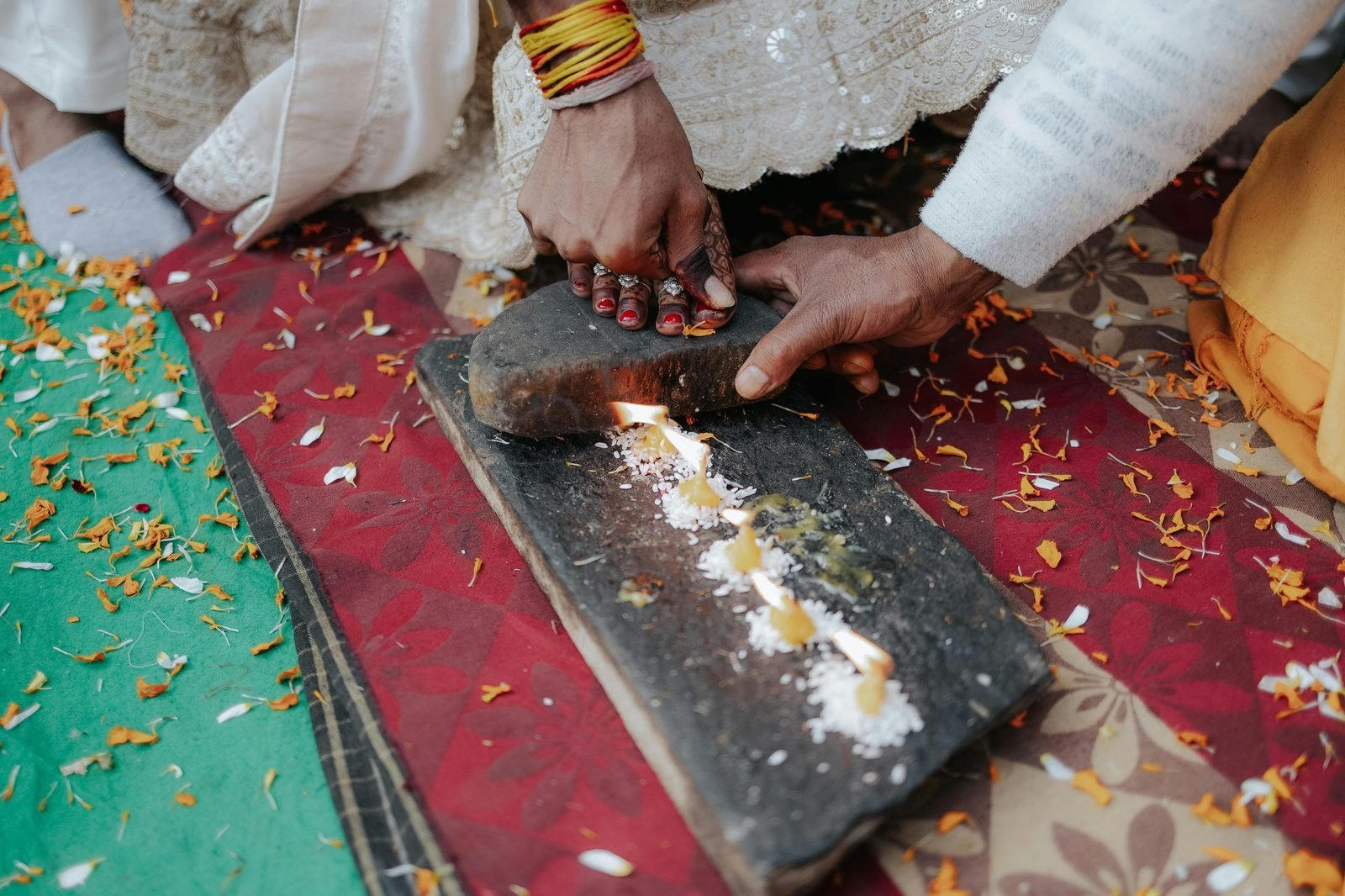
- Arya Samaj ceremony. The pandit conducts the Vedic wedding with mantras, the havan and the vows. You receive the Arya Samaj certificate the same day.
- Government registration. We move straight to the SDM office paperwork for the official marriage certificate, guiding forms and signatures.
- Certificate handed over. You collect your legal government marriage certificate, ready for visa, bank, passport, name change and every official need.
How Long Each Route Takes
| Route | Ceremony | Certificate |
|---|
| Arya Samaj ceremony only | Same day | Arya Samaj certificate same day |
| Arya Samaj + government registration (this package) | Same day ceremony | Government certificate in a few working days |
| Court marriage (Special Marriage Act) | After the 30-day notice | About 30 to 45 days in total |
| Registering an existing marriage | Already done | Usually a short window |
Fees — Told Straight
The honest answer to "what will it cost" is that it depends. It shifts with the service you pick, how many documents and affidavits are involved, and whether you add attestation for use abroad. Government registration charges are separate and set by the office, not by us.
Rather than throw out a random figure, we would sooner understand your case in a two-minute call and then give you a clean, all-in number covering both the ceremony and the registration, with nothing hidden at the end. You will know what you are paying, and why, before you agree to anything.
| Service | What It Covers | How We Price It |
|---|
| Arya Samaj marriage with registration | Ceremony, certificate & SDM registration | All-in quote after a short call |
| Ceremony only | Pandit, Vedic rites, Arya Samaj certificate | Quoted after a short call |
| Court marriage help | Special Marriage Act filing & guidance | Quoted after a short call |
| NRI / attestation / apostille | Extra documentation for abroad | Depends on scope, quoted clearly |
💡 Our word on money: No pressure, no surprise charges, and a written quote before we begin. If a cheaper route serves you just as well, we will point you to it.
📍 Book Your Hari Nagar Package
Free consultation • Ceremony + certificate together • Close to Tilak Nagar & Janakpuri • Fast follow-up
The Law Behind Your Marriage and Registration
It helps to know which laws sit behind your marriage and its certificate, because that is what shapes the timeline. We work with each of these day to day.
- Hindu Marriage Act 1955. Governs marriages between two Hindus, including the Arya Samaj ceremony, and provides the basis for registering that marriage.
- Arya Samaj Marriage Validation Act 1937. Specifically recognises marriages solemnised in the Arya Samaj tradition, giving the ceremony its legal footing.
- Special Marriage Act 1954. A civil law under which any two adults may marry regardless of religion. It carries a 30-day notice, which is why the full court route is slower.
The key takeaway is that the ceremony and the government registration are two distinct events, and this package deliberately joins them. The Arya Samaj certificate confirms the wedding; the government certificate from the SDM office is the legally recognised record. For every official purpose, that second certificate is the one you need — and getting it is the whole promise of this service.
What Registration Actually Gives You
People sometimes ask why the government certificate matters so much. In practice, it is the document that unlocks nearly everything that follows a marriage. A spouse's name on a passport, a joint home loan, a family visa, insurance nominee changes, property matters, and school or employer records all lean on that certificate. The Arya Samaj certificate is meaningful and valid, but it is the registered government certificate that offices treat as final proof. By finishing registration now, you save your future self a great deal of chasing.
Court Marriage Assistance
Some couples prefer the court path under the Special Marriage Act, often because it works cleanly for partners of different religions or those who want a purely civil marriage without any ceremony. We manage the notice filing, the documentation and the coordination with the office so the 30-day window passes smoothly. Every stage is explained before it happens, and we keep you updated as your date approaches. It is slower than the Arya Samaj-plus-registration package, but for the right couple it is the correct choice.
Love Marriage — Quiet, Safe, Fully Registered
Love marriages are the ones we handle with the greatest care, because the couple is often anxious and simply wants things done quietly and correctly. If the two of you have decided, we offer a safe, respectful and fully confidential process that ends with a registered marriage and a government certificate in your hands. Nothing is disclosed to families or anyone else. We arrange the ceremony and the registration (you bring your own witnesses). Many couples across Hari Nagar and west Delhi have started married life this way — settled, legal and private.
Inter-Caste Marriage
Inter-caste marriage is fully legal in India, and no couple needs anyone's permission to marry across castes. Two Hindus of different castes can marry through the Arya Samaj ceremony under the Hindu Marriage Act and register the same way. No caste certificate is ever required, and your government certificate looks like any other. If your families support you, wonderful — we simply handle the formalities. If they are not yet convinced, we keep everything private and steady, and many couples find a registered, legal marriage smooths the road with time.
Inter-Religion Marriage
When partners follow different faiths, two clear routes exist. The first is the Special Marriage Act, where you marry and register as a civil union with neither person changing religion. The second is Shuddhi Sanskar, where one partner formally embraces the Arya Samaj tradition before the Vedic ceremony, after which the marriage is registered under the Hindu Marriage Act. Neither is complicated once someone walks you through it. We lay out both options with their timelines so you can pick what suits you. Either way, the outcome is a validly registered marriage.
NRI Marriage Assistance
NRI and foreign-national couples are a regular part of who we serve, often flying into Delhi with a narrow window. We plan around your travel so the ceremony and the registration slot neatly into your visit. Alongside the usual documents you will need a valid passport, your visa or OCI card, and proof of single status. Where the certificate must be used abroad — for a spouse visa or recognition in another country — we arrange MEA apostille or embassy attestation on the registered certificate. If one partner lives in Hari Nagar and the other is arriving from overseas, we make sure both sides are fully covered.
Tatkal Marriage Certificate — When Time Is Short
Life does not always spare you a whole month. A visa interview lands, a job posting arrives, or a family situation needs the marriage settled quickly. For genuinely urgent cases we look at every lawful way to speed up your registration, so the government certificate comes through as fast as the rules honestly allow. We will never sell you a false tatkal promise — instead we assess your real case and tell you the fastest honest path. For many Hari Nagar couples racing a deadline, that clarity is a relief in itself.
Areas We Cover Around Hari Nagar
Hari Nagar sits in a well-connected pocket of west Delhi, so we naturally serve the whole cluster of colonies and nearby neighbourhoods. If you live in any of these, reaching us is easy.
| Area | Position Relative to Hari Nagar |
|---|
| Tilak Nagar | Adjacent, metro connected |
| Subhash Nagar | Very close |
| Fateh Nagar | Right beside |
| Janakpuri | Short drive |
| Rajouri Garden | Nearby |
| Mayapuri & Kirti Nagar | Close by |
| Naraina | Short drive |
| Vikaspuri | Short drive west |
| Uttam Nagar | Reachable, west side |
| Tihar & Ashok Nagar | Nearby |
Ceremony + Registration vs Court Marriage — Side by Side
| Feature | Arya Samaj + Registration | Court Marriage (SMA) |
|---|
| Nature | Vedic ceremony plus civil registration | Civil legal process only |
| Law | Hindu Marriage Act + registration | Special Marriage Act 1954 |
| Ceremony speed | Same day | After 30-day notice |
| Religion | Both Hindu (or after Shuddhi) | Any religion, no conversion |
| Notice period | None for the ceremony | 30 days compulsory |
| End certificate | Government marriage certificate | Government marriage certificate |
| Best suited to | Couples wanting a quick wedding + legal record | Inter-religion & civil-only couples |
Marriage Types We Handle
| Type | Who It Suits | Registration Included |
|---|
| Arya Samaj marriage with registration | Couples wanting ceremony + legal certificate | Yes |
| Love marriage | Couples marrying by choice, privately | Yes |
| Inter-caste marriage | Hindus of different castes | Yes |
| Inter-religion marriage | Partners of different faiths | Via Shuddhi or SMA |
| NRI marriage | NRI / foreign-national couples | Yes, with apostille help |
| Court marriage | Couples wanting civil registration only | Yes (30-day notice) |
| Existing marriage registration | Already-married couples needing a certificate | Yes |
Mistakes Couples Often Make
A lot of stress is avoidable. Here are the slips we see most, so you can dodge them from the start.
- Stopping at the Arya Samaj certificate. Without registration it is not enough for visa, bank or passport work. This package fixes that by including registration.
- Mismatched names. A different spelling on Aadhaar versus your marksheet can hold up registration. Check it early.
- Expecting court marriage to be same day. The Special Marriage Act needs a 30-day notice. Only the Arya Samaj ceremony is truly same day.
- Witnesses without proper ID. Both witnesses must carry valid photo identity, or the registration pauses.
- Forgetting age proof. Both partners must show clear date-of-birth documents. A vague photocopy will not cut it.
- Trusting gossip over the law. Inter-caste and inter-religion marriages are legal and registrable. Do not let rumours scare you off.
Handy Tips Before the Day
- Keep one tidy set of photocopies plus all originals together in a single folder.
- Confirm both witnesses in advance and remind them to carry their ID on the day.
- Tell us early about any special circumstance — divorce, widowhood, NRI status or a tight deadline.
- If the certificate is for a visa, mention the country so the apostille is planned right.
- Ask for the complete all-in quote in writing so you know the total before starting.
- Do not leave it to the final week if you have a fixed date; a small buffer removes all the panic.
A Few Real Situations From Around Hari Nagar
Names and details are changed for privacy, but these cases are very typical of what we handle.
The couple who had only the Arya Samaj certificate. A pair from Tilak Nagar had married by Arya Samaj a year earlier but never registered. When a spouse visa came up, they needed the government certificate fast. We registered their existing marriage with two friends who had attended the wedding as witnesses, and delivered the certificate in time for the application.
The nurse and her fiance. With rotating hospital shifts near Hari Nagar, they had one shared day. We completed the Arya Samaj ceremony that morning and started the registration paperwork the same day, so the whole package moved without wasting their limited time off.
The NRI groom on a short visit. With his bride's family in Janakpuri and twelve days in India, timing mattered. We planned the ceremony, registration and apostille around his flights so he left with an attested government certificate ready for use abroad.
Why Couples Trust Us — Experience You Can Feel
Handling marriages and their registration is not something we took up recently. It rests on years of sitting with couples through every kind of moment — the joyful, the urgent, the delicate. That experience means little surprises us at the SDM counter, and that calm passes on to you on what can be a tense day. We know the statutes, we know the offices, and we know how to keep your file moving forward rather than stalling.
More than the mechanics, people remember how they were treated: honest answers, a fair price, complete discretion, and someone who follows through until the certificate is in your hand. When couples from Hari Nagar, Tilak Nagar, Janakpuri and Rajouri Garden recommend us to their friends, it is because they felt safe and respected from the first call to the final document. Guarding that trust matters to us more than anything else.
🔱 Ready to Begin?
Talk to a real consultant today. Ceremony plus certificate, honest advice, total privacy.
The Document This Website Keeps Recommending — and Nobody Ever Explains
Across these pages we say, again and again, that a nomination is not a will and that a married couple ought to make one. And then, like everybody else in this trade, we move on without explaining what a will actually is or how you make one that works.
That stops here, because registering a marriage and making a will are the two cheap documents that decide what happens to a family, and only one of them is anybody's business to sell you. We do not draft wills, we do not charge for them, and we earn nothing from this section. It is here because it is the most useful thing we know that nobody tells our clients.
Why it belongs on a marriage page at all. Marriage changes who your family is in law. From the day of the wedding there is a person who will inherit from you, who can be your nominee, whose consent matters in a hospital, and whose position depends entirely on what you did or did not write down. The month after a wedding is the easiest month of anybody's life to write a will, and almost nobody does it.
What Actually Makes a Will Valid
It is far simpler than people imagine, and the requirements are set out in Section 63 of the Indian Succession Act, 1925, which governs the execution of ordinary ("unprivileged") wills. In full, in plain order:
(a) The signature. The testator — the person making the will — "shall sign or shall affix his mark to the will, or it shall be signed by some other person in his presence and by his direction". So a person who cannot sign may make a thumb impression, and a person who cannot do even that may have somebody sign for them, in their presence and at their direction.
(b) Where the signature goes. It "shall be so placed that it shall appear that it was intended thereby to give effect to the writing as a will". In practice: sign at the end, after the last line of what you are directing, and initial every page.
(c) The attestation. The will "shall be attested by two or more witnesses", each of whom has either seen the testator sign or affix his mark, or seen the other person sign at his direction, or received from the testator a personal acknowledgment of that signature. And "each of the witnesses shall sign the will in the presence of the testator". Two further details from the same clause matter: it is not necessary that more than one witness be present at the same time, and no particular form of attestation is necessary.
Read that last part again, because it is the whole point. There is no prescribed form. A will does not have to be typed, does not have to be on stamp paper, does not have to be in English, and does not have to be drafted by anybody in particular. What it must be is signed by you and attested by two witnesses who signed in your presence. Everything else people believe about wills — the stamp paper, the registration, the notary, the lawyer — is either optional or simply untrue.
On registration: registering a will is optional in India, not compulsory. A registered will has some practical advantages in proving it later, and plenty of perfectly valid wills are never registered. Do not let anybody tell you an unregistered will is worthless — that is wrong, and it is usually said by somebody selling registration.
On probate: whether a will needs probate depends on where and in what circumstances it was made, and it is a question for an advocate on your facts rather than a rule we should state loosely here.
Five Things That Wreck a Will
All five are avoidable and all five are common.
One — a beneficiary as an attesting witness. The safest rule, and the one every careful practitioner follows, is that a person who takes anything under the will should not be one of its attesting witnesses, and nor should that person's spouse. Use two independent people who get nothing.
Two — signing in the wrong place. Section 63(b) requires the signature to be placed so that it appears intended to give effect to the writing as a will. A signature at the top, or in the margin, or on a separate sheet with nothing tying it to the rest, invites an argument. Sign at the end and initial every page.
Three — witnesses who did not actually see anything. The clause requires each witness to have seen you sign, or seen the person signing at your direction, or received your personal acknowledgment of the signature — and then to sign in your presence. A witness who signed a blank page in another room three days later has not attested anything. Get it right at the time; it takes five minutes.
Four — no date, or several undated versions. A later will normally displaces an earlier one, so if nobody can tell which came last, your family inherits an argument. Date it, and when you make a new one, say in it that it revokes all earlier wills — and destroy the old ones.
Five — a perfect will nobody can find. This is the commonest failure of all and it is purely practical. Tell at least two people it exists and where it is. A will in a bank locker whose key nobody can locate, or in a cupboard sold with the house, is the same as no will.
Ten minutes of housekeeping that is worth more than most legal advice: after the wedding, write down in one place — and tell your spouse where that place is — the marriage registration number and date, where the marriage certificate is, where any will is, which bank accounts and lockers exist, which policies exist and who is nominated on each, and any loans. That single sheet of paper is what a family needs in the first week after something happens, and it is exactly what nobody has.
If You Do Not Make a Will — Who Actually Inherits
Dying without a will is called dying intestate, and it does not mean the government takes your property. It means the law decides instead of you, and the law's answer may not be the one you would have chosen.
For a Hindu male dying intestate, Section 8 of the Hindu Succession Act, 1956 provides that the property devolves first upon the heirs specified in Class I of the Schedule — who take together and simultaneously, not in order. Class I includes the widow, the mother, sons and daughters, together with the children of a predeceased son or daughter and certain other descendants of predeceased children. The complete list is in the Schedule and there are more entries than most people expect, so take advice on the full picture rather than assuming.
Two consequences people are surprised by. First, the mother is a Class I heir and shares alongside the widow and children. Second, sons and daughters take equally — a daughter's share is not smaller, and marriage does not reduce it.
For a Hindu female dying intestate, the scheme is different again, set out separately in the Act, with its own order of heirs and its own special rules about property inherited from parents or from a husband or father-in-law. It is genuinely different from the male scheme and worth specific advice rather than an assumption that it mirrors it.
And where a marriage was solemnised under the Special Marriage Act, succession can be governed by the Indian Succession Act, 1925 instead — subject to the saving where both parties profess the Hindu, Buddhist, Sikh or Jaina religion. That is set out properly on our court marriage page, and it is one more reason to take advice before giving notice rather than after.
The honest summary: intestate succession is not a disaster, it is simply somebody else's plan. If the law's default happens to match what you want, you lose nothing by relying on it. If it does not — a second marriage, children from an earlier marriage, a parent you want provided for, a flat you want to go to one person — then the will is the only instrument that changes it, and it costs almost nothing to make.
Nomination, Will, Joint Holding — Three Different Things People Treat as One
This confusion causes more family litigation than almost anything else on this website, and it is cleared up in one table.
| What it actually does | What it does not do |
|---|
Nomination
(bank, PF, insurance, demat, society) | Tells the institution whom to pay or hand over to, so the institution can close its file safely | It does not decide who is entitled. The Supreme Court has made clear a nominee receives as a holder for the estate, and succession law decides entitlement. |
| Will | Decides who is entitled, to what, on your death — overriding the default rules of intestate succession | It does not move anything during your lifetime, and it does not by itself tell a bank whom to pay — which is why you need both. |
Joint holding
(joint account, jointly owned flat) | Gives the other holder rights in the asset itself, depending on how the holding is structured | It is not a substitute for a will, and "joint" does not always mean "half each" or "survivor takes all" — it depends on the document. |
The practical upshot for a newly married couple: update your nominations and make a will. The nomination gets the money released without a fight. The will decides who is actually entitled to it. Doing only the first is how one family member ends up holding money another is entitled to — which is precisely how relatives who were getting along stop getting along.
And update the nominations after the wedding, not "sometime". Bank accounts and lockers, provident fund and gratuity, insurance policies, mutual funds and demat, employer records, and a housing society's own nomination register. Every one of them may still name a parent, or a first spouse, or nobody.
If There Is a Flat in the Picture
Hari Nagar, Janakpuri, Subhash Nagar and the blocks around them are full of DDA flats and society flats that have been in a family for decades, and property is the thing that turns a documentary gap into a court case.
Three points worth knowing, none of which affects your marriage file but all of which affect your life afterwards.
The flat being in a parent's name does not affect your marriage registration. The office wants residence, not title — nobody is examining ownership. Bring the bill or allotment papers with proof of your relationship and an affidavit that you reside there, and that is the end of it.
But it does affect what a spouse can prove later. A surviving spouse's claim, a transfer, a mutation in municipal records, a society membership transfer — all of them ask for proof of the marriage, and all of them go smoothly with a registered certificate and badly without one. This is the real reason we push the ₹7,100 combined package rather than the ₹5,100 ceremony alone.
And a wife's right to reside is not the same as ownership. Under the Protection of Women from Domestic Violence Act, 2005, a woman in a domestic relationship has the right to reside in the shared household whether or not she has any right, title or beneficial interest in it — and "shared household" extends to a house belonging to the husband's joint family. That is a right of residence, not a share in the property, and the two should not be confused in either direction.
Why "With Registration" Is the Part That Matters
This page is called Arya Samaj marriage with registration, and everything above explains why those last two words carry the weight.
The ceremony creates the marriage. Under Section 7 of the Hindu Marriage Act, where the customary rites include saptapadi, the marriage is complete and binding at the seventh step — and nothing that happens or fails to happen afterwards undoes that.
The registration creates the proof. And every single institution named in the last three sections — a bank, an insurer, a provident fund office, a housing society, a hospital, a municipal office, a court deciding a succession — acts on the government certificate, not on the mandir certificate.
| ₹5,100 buys | ₹7,100 buys |
|---|
| The Vedic ceremony and the mandir certificate. You are validly married. | The same, plus SDM registration and the government certificate. |
| Proof that a ceremony took place | Proof, to every institution in India, that you are married |
| Enough if you will register shortly afterwards, or in your own home district | Enough for the passport office, an embassy, a bank, an insurer, a society, a pension office and a court |
Two thousand rupees, once. Against every situation described on this page in which somebody has to prove a marriage at a moment when the person who could have explained it is not there.
Which Office Handles Hari Nagar
Delhi's revenue map was reorganised with effect from 1 January 2026 and the city now has thirteen districts and thirty-nine sub-divisions. Hari Nagar sits in the west Delhi belt under that structure.
We do not print one office name and send you to it, because the e-District portal allocates the office by your exact address. Certificates issued before 1 January 2026 remain fully valid — the reorganisation does not disturb a marriage already registered, and it affects only where a new application goes and which office now holds the records for a certified copy, a correction, or verification before an apostille. And nobody can promise an appointment date in advance: it is allotted by the office's load. We file promptly and tell you the date when it comes.
Hari Nagar and the Areas Around It
| Area | What couples there usually ask us |
|---|
| Hari Nagar, Fateh Nagar, Ashok Nagar | Registration for a family flat; updating nominations and society records after the wedding |
| Janakpuri, Vikaspuri, Tilak Nagar | DDA flat address proof where the flat is in a parent's name |
| Subhash Nagar, Rajouri Garden, Ramesh Nagar | Second marriages, and who inherits if there is no will |
| Uttam Nagar, Mohan Garden, Nawada | Quickly-arranged marriages and checking the other side's documents |
| Tilangpur Kotla, Khyala, Mayapuri | Shift work and same-day ceremonies |
| Punjabi Bagh, Paschim Vihar, Madipur | Certificates for use abroad and apostille timing |
| Dwarka sectors and Palam | Couples from two different states and the notice question |
| Najafgarh and the urban villages | Gotra and community objections — none of which is a legal condition |
The law is identical across all of them. What differs is which part of your file is likely to be the awkward one, and that is what a first conversation is for.
What It Costs, Published
The same everywhere on this website. No surcharge for caste, religion, urgency or distance, and the figure quoted on the phone is the figure at the counter.
| Service | Fee | What it covers |
|---|
| Arya Samaj marriage, ceremony only | ₹5,100 | Pandit, havan, saptapadi, mandir certificate, same day |
| Love / inter-caste marriage, same day | ₹5,100 | Confidential ceremony and certificate |
| Hindu Marriage Act SDM registration | ₹6,000 | Registration of a marriage already solemnised |
| Court marriage, advocate assisted | ₹6,100 | Drafting, affidavits, filing, appointment |
| Arya Samaj + court marriage, combined | ₹7,100 | Ceremony and registration together — the package this page is named after |
| Hindu–Muslim / inter-religion marriage | ₹10,000 | Shuddhi or SMA route with certificate |
| Marriage registration, full service | ₹12,000 | End-to-end managed registration |
| Special Marriage Act marriage | ₹15,000 | Full process including the 30-day notice |
| NRI marriage + MEA apostille | ₹20,000 | Marriage, registration and the apostille chain |
| Court marriage + High Court protection (Premium) | ₹56,000 | Full court marriage and documentation plus a protection petition filed by an advocate, with follow-up |
| Duplicate certificate | ₹2,500 | Lost or damaged |
| Government statutory fee | ₹100 / ₹200 / ₹15 | ₹100 Hindu Marriage Act registration, ₹200 requisite fee under the 2014 Order, ₹15 Special Marriage Act solemnisation — paid to government, not to us |
Not included, and told to you before you pay: the government statutory fee, notary charges of ₹100–₹200 per affidavit, any late-registration fee, MEA apostille and embassy attestation where the certificate goes abroad, certified translation, and optional photography, video and transport. The full list with worked total-cost examples is on the fees page.
And one thing that is not on this list at all, deliberately: the will. We do not draft wills, we do not charge for them, and we do not take a referral from anybody who does. Everything on this page about wills is here because it is useful, not because it is for sale. If you want one drawn up, any competent advocate will do it for a modest fee — and a simple, correctly attested will that you wrote yourself is valid too.
What we will not take money for: witnesses; a shortened statutory notice; a certificate for a ceremony that did not happen; a guaranteed court outcome; an under-age marriage; or a marriage while an earlier one subsists.
The Month After the Wedding Is the Easy Month
Everything on this page is easier in the four weeks after a wedding than at any later point — the registration, the nominations, the will, the single sheet of paper saying where everything is. After that, life resumes and it quietly never happens.
So: tell us your ages, your religions, whether either of you has been married before and whether that decree is final, where each of you actually lives and what your documents say, and whether there is a flat, a business or children from an earlier marriage in the picture — because that last answer changes what we will tell you to do afterwards.
We will handle the marriage and the registration. The rest of it — the nominations, the will, the sheet of paper — costs you an evening and nothing at all, and nobody makes a rupee from telling you to do it. Which is probably why nobody does.
Call +91 8376863962. Hindi or English, free, no obligation.
Frequently Asked Questions — Hari Nagar Marriage & Registration
What is Arya Samaj marriage with registration in Hari Nagar?▼
It is a complete package where you get married in the Arya Samaj Vedic way and also receive the government marriage certificate. For couples in Hari Nagar the ceremony and legal registration are handled together, so you finish with both certificates rather than just the ritual one.
Why do I need registration after an Arya Samaj marriage?▼
The Arya Samaj certificate proves the ceremony happened, but banks, passport offices, visa authorities and courts ask for the government certificate. Registration turns your marriage into an official record, which is why we bundle it with the ceremony.
Can the marriage and paperwork start the same day?▼
Yes, the Arya Samaj ceremony is completed the same day and you get its certificate immediately. The government registration is then processed, usually taking a few working days. We begin the paperwork right after the ceremony so nothing is delayed.
Who can apply from Hari Nagar?▼
A groom aged 21 or above and a bride aged 18 or above, both single or free to remarry, both of sound mind and marrying willingly. Couples from Hari Nagar, Tilak Nagar, Subhash Nagar and Janakpuri apply with these conditions regularly.
What documents are needed for the registration?▼
Aadhaar, an age proof such as a birth certificate or 10th marksheet, passport photos and address proof for both partners, plus two witnesses with ID. Divorced applicants add the decree; widowed applicants add the death certificate.
Are witnesses needed for both steps?▼
Yes. Two adult witnesses with valid photo ID are required for both the Arya Samaj ceremony and the registration. They can be friends or family. Witnesses must be people who know you personally; we do not provide witnesses.
Can inter-caste couples get this package?▼
Yes. Inter-caste marriage is fully legal in India. Two Hindus of different castes marry through the Arya Samaj ceremony and register the same way. No caste certificate is asked for, and the certificate looks identical to any other.
How do inter-religion couples register?▼
Inter-religion couples usually register under the Special Marriage Act without conversion, or one partner takes Shuddhi before the Arya Samaj ceremony and then registers under the Hindu Marriage Act. We explain both so you choose comfortably.
Do you help NRI couples with registration?▼
Yes. NRI and foreign-national couples are welcome. Besides the usual papers they carry a passport, valid visa or OCI, and single-status proof. We also arrange apostille and attestation on the certificate for use abroad.
Will I get an official certificate at the end?▼
Yes, that is the whole point of this package. After the Arya Samaj ceremony and SDM registration you receive the official government marriage certificate, which is accepted for visa, bank, passport, name change and every legal need.
What is the difference between this and plain court marriage?▼
This package gives a same day Vedic ceremony plus registration. A plain court marriage under the Special Marriage Act is civil only and needs a 30-day notice. Many Hari Nagar couples prefer the Arya Samaj route because the ceremony is same day.
How long until I hold the certificate?▼
The Arya Samaj certificate is same day. The government certificate after registration usually takes a few working days. If you go the full Special Marriage Act route instead, it takes about 30 to 45 days due to the notice period.
Do we need a Hari Nagar address to register?▼
For the ceremony there is no residence rule. For registration one partner usually needs a Delhi address proof. If you live in Hari Nagar or a nearby colony, your local address proof works without any problem.
Is there a tatkal option for urgent cases?▼
Yes, where the rules allow we speed up the registration paperwork for urgent needs like visa or travel deadlines. We check your exact case and share a realistic timeline honestly before you commit to anything.
Is a love marriage kept private here?▼
Yes. Every love marriage is handled with full discretion. Nothing is shared with families or outsiders. Many couples across Hari Nagar and west Delhi pick us because the whole process stays quiet and respectful.
What will the full package cost?▼
It depends on the service, the documents involved and any add-ons such as attestation. We give a clear all-in quote after a short call. Government registration charges are separate and fixed by the office itself.
Can you register a marriage already performed?▼
Yes. If you already married by Arya Samaj, temple or another Hindu ceremony, we register it and get the government certificate. Bring your existing marriage proof, IDs, photos and two witnesses to finish it.
Do you handle apostille for visas?▼
Yes. We assist with the official certificate and, where needed, MEA apostille or embassy attestation for spouse visas and overseas use. NRI couples and those relocating abroad request this often.
Which nearby areas do you serve?▼
We serve couples across west Delhi including Tilak Nagar, Subhash Nagar, Janakpuri, Rajouri Garden, Fateh Nagar, Mayapuri, Kirti Nagar, Vikaspuri, Uttam Nagar and Naraina.
What is the legal marriage age?▼
The groom must be at least 21 and the bride at least 18. Age is confirmed with a birth certificate, 10th marksheet, passport or Aadhaar. Marriage below these ages is not permitted under Indian law.
Do both partners have to be present?▼
Yes. Both the bride and groom must attend in person for the Arya Samaj ceremony and for signing at registration, and the two witnesses must be there too. We fix a time that suits everyone.
How do we start from Hari Nagar?▼
Call or WhatsApp with your basic details. We check your documents, confirm the package, share the timeline and cost, and book your slot. From Hari Nagar the whole ceremony-plus-registration is quick to arrange.
Why does a marriage website talk about wills?▼
Because marriage changes who your family is in law, and the month after a wedding is the easiest month of anybody's life to write a will — and almost nobody does. We do not draft wills, do not charge for them and take no referral from anyone who does. It is here because it is useful.
What makes a will valid in India?▼
Section 63 of the Indian Succession Act, 1925: the testator signs or affixes a mark (or someone signs in his presence and by his direction); the signature is placed so it appears intended to give effect to the writing as a will; and it is attested by two or more witnesses who saw that, each signing in the testator's presence.
Does a will have to be on stamp paper?▼
No. There is no prescribed form. Section 63(c) says expressly that no particular form of attestation is necessary. A will does not need stamp paper, does not have to be typed, does not have to be in English, and does not have to be drafted by anyone in particular.
Does a will have to be registered?▼
No — registration is optional in India. A registered will has practical advantages in proving it later, and plenty of perfectly valid wills are never registered. Anyone telling you an unregistered will is worthless is usually selling registration.
Do both witnesses have to be present together?▼
No. Section 63(c) states it is not necessary that more than one witness be present at the same time. Each must have seen you sign (or received your personal acknowledgment of the signature) and must sign in your presence.
Can a person who cannot sign make a will?▼
Yes. Section 63(a) allows the testator to affix a mark, or to have some other person sign in his presence and by his direction. The attestation requirements then apply in the same way.
Can someone who inherits under the will be a witness?▼
The safe rule, and the one careful practitioners follow, is no — a beneficiary should not be an attesting witness, and nor should that beneficiary's spouse. Use two independent people who take nothing under it.
Where exactly should we sign?▼
At the end, after the last line of what you are directing, and initial every page. Section 63(b) requires the signature to be placed so that it appears intended to give effect to the writing as a will — a signature in a margin or on a loose sheet invites an argument.
Our witness signed the will later, in another room. Is that all right?▼
No. Each witness must have seen you sign, or seen the person signing at your direction, or received your personal acknowledgment — and must then sign in your presence. A witness who signed a blank page three days later has not attested anything.
Should a will be dated?▼
Yes, always. A later will normally displaces an earlier one, so undated versions leave your family an argument instead of an answer. When you make a new one, say in it that it revokes all earlier wills, and destroy the old ones.
What is the commonest problem with wills?▼
Nobody can find it. Tell at least two people that it exists and where it is. A will in a locker whose key nobody can locate is the same as no will.
What should we write down after the wedding, apart from the will?▼
One sheet: the marriage registration number and date, where the certificate is, where any will is, which bank accounts and lockers exist, which policies exist and who is nominated on each, and any loans. That sheet is what a family needs in the first week after something happens, and it is exactly what nobody has.
If there is no will, does the government take the property?▼
No. It means the law decides instead of you. For a Hindu male dying intestate, Section 8 of the Hindu Succession Act, 1956 devolves the property first on the heirs in Class I of the Schedule, who take together and simultaneously.
Who is in Class I?▼
It includes the widow, the mother, sons and daughters, together with the children of a predeceased son or daughter and certain other descendants of predeceased children. The full list in the Schedule has more entries than most people expect, so take advice rather than assuming.
Does the mother inherit alongside the wife?▼
Yes — the mother is a Class I heir and shares alongside the widow and children. It surprises people, and it is one of the commonest reasons a family discovers too late that the default was not what anybody wanted.
Do daughters get less than sons?▼
No. Sons and daughters take equally, and marriage does not reduce a daughter's share.
Is it the same for a woman dying without a will?▼
No — the scheme for a Hindu female is set out separately in the Act, with its own order of heirs and its own special rules about property inherited from parents or from a husband or father-in-law. It genuinely differs and deserves specific advice.
Does a Special Marriage Act marriage change succession?▼
It can. Succession for a couple married under that Act may be governed by the Indian Succession Act, 1925 — subject to the saving where both parties profess the Hindu, Buddhist, Sikh or Jaina religion. Take advice before giving notice, not after.
Is a nomination the same as a will?▼
No, and this confusion causes more family litigation than almost anything else. A nomination tells an institution whom to pay so it can close its file. The Supreme Court has made clear a nominee receives as a holder for the estate, and succession law decides who is actually entitled.
So do we need both?▼
Yes. The nomination gets the money released without a fight; the will decides who is entitled to it. Doing only the first is how one relative ends up holding money another is entitled to.
What about a joint account or a jointly owned flat?▼
Joint holding gives the other holder rights in the asset itself, depending on how the holding is structured — but 'joint' does not always mean half each or survivor takes all, and it is not a substitute for a will.
Which nominations should we update after marriage?▼
Bank accounts and lockers, provident fund and gratuity, insurance policies, mutual funds and demat, employer records, and the housing society's own nomination register. Every one may still name a parent, a first spouse, or nobody.
The flat is in my father's name. Does that affect our marriage registration?▼
No. The office wants residence, not title — nobody is examining ownership. Bring the bill or allotment papers with proof of your relationship and an affidavit that you reside there.
Then why does registration matter for the flat?▼
Because a surviving spouse's claim, a transfer, a mutation and a society membership transfer all ask for proof of the marriage. They go smoothly with a registered certificate and badly without one.
Does a wife own her husband's family flat?▼
Right of residence and ownership are different things. Under the Domestic Violence Act, 2005 a woman in a domestic relationship has the right to reside in the shared household whether or not she has any title in it, and that extends to a house belonging to the husband's joint family. That is residence, not a share.
What is the difference between ₹5,100 and ₹7,100 here?▼
₹5,100 is the ceremony and the mandir certificate — you are validly married from the seventh step of saptapadi. ₹7,100 adds SDM registration and the government certificate, which is what every bank, insurer, society, hospital, pension office and court actually acts on.
Is the mandir certificate enough for a bank or a society?▼
Generally not. Institutions act on the government certificate. That is the whole reason this page is called 'with registration'.
Which SDM office covers Hari Nagar?▼
The e-District portal allocates it by exact address under the reorganised 2026 structure of thirteen districts and thirty-nine sub-divisions. We find the correct office and file there.
Are certificates issued before 2026 still valid?▼
Yes, fully. The reorganisation affects only where a new application goes and which office now holds the records.
Can you promise an appointment date?▼
No, and nobody honestly can. It is allotted by the office's load. We file promptly and tell you the date when it comes.
How many witnesses does the marriage need?▼
Two for the Arya Samaj ceremony and for Hindu Marriage Act registration; three for solemnisation under the Special Marriage Act. Each must be an adult, present at the marriage, genuinely known to you both, and carrying an original photo identity document.
Will you provide witnesses?▼
No, at any price. A witness states that he was personally present at your marriage and knows who you are — testable years later in exactly the succession disputes this page is about.
Do you charge for drafting a will?▼
We do not draft wills at all and earn nothing from this. Any competent advocate will do it for a modest fee — and a simple, correctly attested will that you wrote yourself is valid too.
We married years ago and never registered. Is it too late?▼
No, while both spouses are alive. A late fee applies under the Delhi order — ₹500 in the second sixty days and ₹1,000 after that — and it does not compound. Once a spouse has died, registration becomes impossible.
When should we do all this?▼
In the four weeks after the wedding. Everything on this page is easier then than at any later point — the registration, the nominations, the will, the sheet of paper — and after that life resumes and it quietly never happens.
Conclusion — Married and Registered, All in One Go
Marriage should open a new chapter, not leave you with half-finished paperwork. For couples in Hari Nagar and across west Delhi, Arya Samaj marriage with registration ties together the two things that matter most — a meaningful Vedic ceremony you can complete quickly, and the government certificate that stands firm wherever you present it. Whether you are a love couple wanting privacy, an inter-caste or inter-religion pair standing by your choice, or an NRI couple working against a flight date, this single package leaves you fully married and fully registered.
The most useful step is simply to ask. One honest conversation settles more than days of worrying. Tell us your situation and we will tell you what is possible, how long it will take, and what it will cost — no pressure, no jargon, no judgment. When you are ready, we take care of the rest, right through to the certificate in your hand.
Call To Action
If you are in Hari Nagar, Tilak Nagar, Subhash Nagar, Janakpuri, Rajouri Garden or anywhere nearby and you want to be married and registered without the runaround, reach out today. Pick up the phone or send a WhatsApp message — a real consultant will answer and walk you through the whole package. Your marriage and certificate, handled with honesty, speed and complete privacy. Call +91 8376863962 now for your free consultation.
Explore More