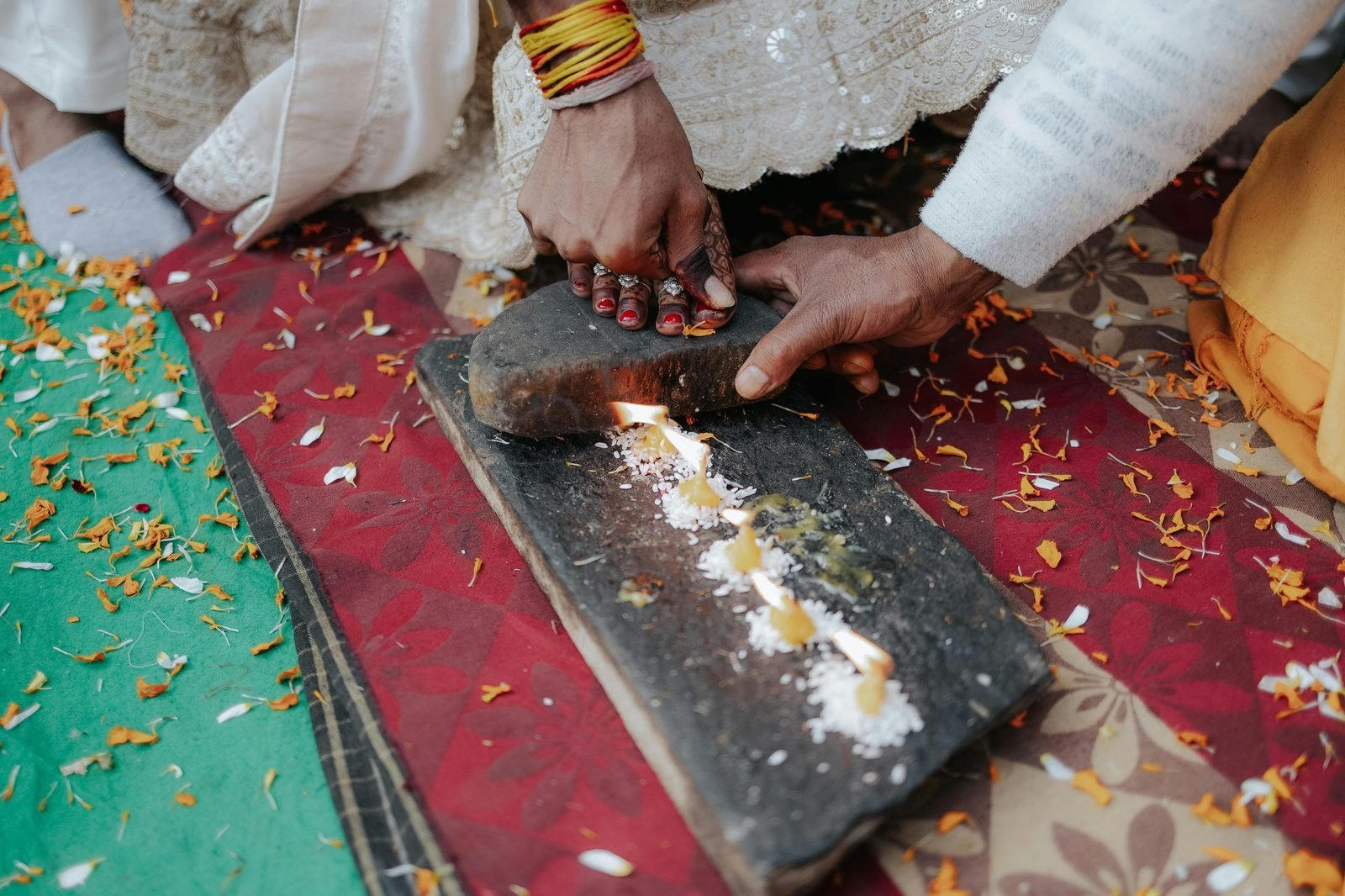
Daryaganj, and a Marriage That Crosses an Old Line
The lanes of Daryaganj have watched a great deal of history pass through — traders, poets, reformers, and countless ordinary people building lives against the odds. Among the couples who come to us from these old streets, a good number carry a very modern courage: they have chosen each other across a caste divide their families still take seriously. If that is you, we want to open with a simple, steadying fact. What you are planning is not a rebellion against the law; it is a right the law hands you freely. Our part is only to make it real, quickly and quietly.
An inter-caste Arya Samaj marriage in Daryaganj is, in practice, no different from any other Arya Samaj marriage — the Vedic ceremony treats you as two Hindus marrying, and caste never enters the room. You get the same same-day wedding, the same witnesses, the same registration and the same government certificate that any couple receives. The only thing "inter-caste" changes is the amount of worry couples carry into the process, and reducing that worry is exactly what this page is for.
Read whatever part answers your question. And when you want to speak to a real person who has guided hundreds of couples in your position without a hint of judgment, one call to +91 8376863962 is all it takes. The conversation is private, and it costs you nothing to have it.
📍 For inter-caste couples in Daryaganj: Marriage is 100% legal • No caste certificate • No family consent required • Total privacy • Same-day Vedic ceremony • Registered government certificate • Guidance if you face pressure • Old Delhi local • Free, private call
A Quick, Clear Legal Briefing
Let us give you the law in a few plain sentences, so no rumour can shake you. Marriage between two Hindus of different castes is valid and complete under the Hindu Marriage Act, 1955, and the Arya Samaj ceremony that solemnises it is recognised by the Arya Samaj Marriage Validation Act, 1937. There is no separate, second-class category for inter-caste marriages — yours, once performed and registered, is legally identical to anyone else's. India's higher courts have said this many times over, and have gone further, holding that adults who choose to marry need no family consent and that couples threatened for marrying across caste lines are entitled to state protection. In short, the fear is old; the law is firmly on your side.
The Caste-Certificate Question, Settled Once
Of all the questions inter-caste couples ask, this is the one that comes up first and most nervously: "Will they demand a caste certificate?" The answer is a flat no. At no stage — not for the ceremony, not for the witnesses, not for the registration — is any caste document asked for, produced, or recorded. Caste is simply not part of getting married. And because it plays no part, your final marriage certificate mentions your marriage and your names, never your castes. Whatever anyone has told you to make this feel complicated, it is not: on paper, you are just a couple getting married.
What the Wedding Itself Looks Like
Since many couples have never attended an Arya Samaj wedding, here is what your day actually holds. The pandit lights the sacred havan fire and recites the Vedic mantras. You exchange the vows and take the pheras around the fire, with your two witnesses present. There are no idols, no dowry demands, no drawn-out rituals, and — this is the part that matters to you — no questions about who came from which community. Within roughly two hours you are married in a genuine, dignified tradition, and the Arya Samaj certificate is placed in your hands the same day. We then carry the marriage forward to registration for the government certificate.
Your Path, in Six Calm Steps
Nothing about this needs to be dramatic. Here is the whole route, start to finish.
- A private word. You call or message; we listen without judgment and confirm you are both eligible.
- A look at your papers. We check your documents in advance and fix anything small, like a name mismatch, before the day.
- A quiet appointment. We set a time that works for you, your partner and two witnesses of your choosing.
- The Vedic ceremony. You marry the same day and receive the Arya Samaj certificate.
- The registration. We take the marriage to the SDM office and guide it to the government certificate.
- Your proof in hand. The government marriage certificate reaches you, ready for every official need.
What You'll Carry — Nothing Caste-Related
The list is short and ordinary. Each of you brings an Aadhaar card, a proof of date of birth (a 10th marksheet, birth certificate or passport), a few passport photographs, and an address proof such as Aadhaar, voter ID or a bill. You bring two adult witnesses, each with a photo ID — trusted friends are perfectly fine if you would rather keep family out of it. If either of you was married before, add a divorce decree or a spouse's death certificate; NRIs add a passport with a valid visa or OCI and a single-status proof. Not a single caste document appears anywhere on this list, because it is never asked for. Small inconsistencies, like a spelling that differs across papers, we settle with a quick affidavit.
📍 A Private, Judgment-Free Conversation
Free consultation • Fully confidential • No caste certificate • Same-day legal marriage
Two Doors to the Same Legal Marriage
Inter-caste couples can walk through either of two lawful doors, and both lead to the same government certificate. This helps you see which door suits you.
| Question | Arya Samaj + registration | Special Marriage Act |
|---|
| How fast? | Ceremony the same day | Around 30 to 45 days |
| Any waiting notice? | None for the ceremony | A 30-day public notice |
| Suits whom? | Two Hindus wanting speed and privacy | A civil-only marriage, or different religions |
| Ceremony involved? | Yes, a Vedic wedding | No, purely civil |
| End result | Government marriage certificate | Government marriage certificate |
If you are both Hindu, most couples choose the Arya Samaj door simply because it is done the same day and stays discreet. The Special Marriage Act door, with its public notice period, tends to suit couples who want a purely civil marriage or where one partner follows another faith. We will lay both out honestly and let you pick.
When the Answer at Home Is "No"
We will speak to this gently, because we know it is often the hardest part. Not every family comes around, and some couples arrive genuinely afraid. Please hold on to this: your legal right to marry does not wait for anyone to say yes. We complete the marriage lawfully and in complete confidence, contacting no family and needing no one's signature but yours. And if either of you is being pressured or feels unsafe, remember the law leans protective here — couples facing threats for an inter-caste marriage can seek police protection, a right the courts have consistently affirmed. We are not a legal-aid service, but we have quietly supported many couples through this stretch and can guide you toward the right help while we handle the marriage itself.
Privacy Is the Whole Point, and We Treat It That Way
For many inter-caste couples, discretion is not a bonus — it is the very thing that lets them go ahead. So we build the process around it. Your enquiry, your documents, your ceremony date and your certificate stay strictly between you and us. Nobody is informed, no family is involved, and your witnesses can be friends rather than relatives. Couples often tell us afterwards that this calm, unhurried privacy was exactly what gave them the confidence to take the step they had already taken in their hearts.
The Certificate That Quietly Settles Everything
Long after the ceremony, the registered government certificate becomes one of the most useful things you own — and for an inter-caste couple, one of the most reassuring. It is what lets you add each other to a passport, open a joint bank account, apply for a spouse or family visa, name one another on insurance and handle property together. Just as importantly, it is solid, documented proof of a lawful marriage: the kind of settled ground that ends disputes before they begin. That is why we never stop at the wedding; we see the whole thing through until the certificate is in your hands.
Inter-Caste Couples With One Partner Abroad
A fair number of the inter-caste couples we help have one partner living overseas, flying into Delhi with only a few days to spare. Daryaganj's central location and metro links make it an easy base. The NRI partner brings a passport with a valid visa or OCI card and a single-status proof, and where the certificate must work abroad — for a spouse visa or foreign recognition — we arrange the MEA apostille or embassy attestation. On a tight schedule, the same-day Arya Samaj route is almost always the sensible choice over the slower civil process.
Daryaganj and the Areas We Cover
Based to serve Old and central Delhi, we reach the whole neighbourhood around Daryaganj with ease.
| Area | How close to Daryaganj |
|---|
| Delhi Gate | Right here, metro connected |
| Ajmeri Gate & Turkman Gate | Very close |
| Chawri Bazar & Chandni Chowk | Nearby, metro connected |
| Asaf Ali Road | Adjacent |
| Jama Masjid | Short walk |
| Kashmere Gate | Short drive |
| ITO & Rajghat side | Close by |
A Straight Word on Money
We do not stamp a fixed price here, because an honest figure depends on your case — the route you choose, the documents involved and whether you need attestation for abroad. What we promise is a clean quote: after a short, private call you get one all-in number, with the government's own fixed fees shown separately and nothing sneaked in at the end. And to be perfectly clear, being an inter-caste couple never changes what you pay — the process, and the price, are the same for everyone.
🤝 Marry the Person You Chose — Legally, Quietly
One private call sets the whole plan in motion. No permission needed, no caste proof asked.
The Old City Address Problem — When There Is No House Number
Daryaganj, Ansari Road, Nai Sarak, the galis running off Netaji Subhash Marg, the katras and the old havelis — this is a part of Delhi where the ordinary assumption behind an address proof breaks down. Somewhere in Rohini a flat has a number, a block and a sector, and a utility bill matches all three. Here a family has lived above a shop for four generations in premises that have no number anyone uses, reached by a gali that appears on no signboard, on an electricity connection taken out in the name of a grandfather who died in 1998.
None of that is irregular and none of it reflects badly on you. It simply means the documents an office is used to receiving look different when they come from here, and it is worth arriving prepared rather than discovering the gap at a counter.
What the office is actually trying to establish is not the elegance of your address. It is that you live where you say you live, so that it can be satisfied it has jurisdiction over your file. Once you see it that way, the solutions become obvious.
| Situation | What works |
|---|
| Aadhaar carries the shop-cum-residence address | Cleanest. If it does not, update it — free, done online or at an enrolment centre, takes days. |
| Electricity or water bill in a grandfather's or father's name | Bring it, plus proof of your relationship to that person, plus an affidavit that you reside there. The bill establishes the premises; the other two establish you. |
| Premises with no usable house number | Use the address exactly as it appears on your Aadhaar and on the bill, and keep the wording identical across every document you file. Consistency matters far more than tidiness. |
| Living above the family shop | Perfectly normal. Say so plainly. A shop-cum-residence is a residence. |
| Rented room in a katra or shared haveli | A genuine rent agreement plus a bill, or Aadhaar updated to that address. Not a rent agreement created for the file. |
| Property in ancestral joint names | Does not matter for a marriage file. Nobody is examining title; they want residence. |
| Property tax receipt | Useful supporting document, especially where it names the premises consistently with your bill. |
| Staff living on the premises | An employer letter with an affidavit, and ideally an Aadhaar updated to that address. |
The one thing to do this week: write down your address exactly as your Aadhaar states it, and use that wording on the affidavit, the application and everything else. Old-city addresses get written six different ways by six different people — with and without the gali, with and without the katra, "Daryaganj" and "Darya Ganj" — and an office comparing two spellings of the same place is an office asking a question you did not need.
If Your Family Has a Firm: Sections 19, 21 and the Rescue in Section 21A
This is the most valuable thing on this page for a Daryaganj family, and it is the point most marriage websites either skip or get exactly backwards. If your family runs a business — a publishing house on Ansari Road, a paper or stationery wholesale, a book shop on Nai Sarak, a hardware or electrical firm, a restaurant, a property held jointly by brothers — then which route you marry by can change your position in that family's property. Not your legitimacy, not your certificate, but your share.
Here is the law, in the order it matters.
Section 19 of the Special Marriage Act, 1954. A marriage solemnised under that Act by a member of an undivided family who professes the Hindu, Buddhist, Sikh or Jaina religion "shall be deemed to effect his severance from such family". Read that plainly: marry under the Special Marriage Act and, as far as the joint family is concerned, you are deemed to have separated from it.
Section 21. Succession to the property of a person married under that Act is regulated by the Indian Succession Act, 1925, rather than by Hindu succession law, with certain provisions omitted.
And now Section 21A, which is the part nobody tells you. Where a marriage under the Act is between a person professing the Hindu, Buddhist, Sikh or Jaina religion and a person professing the Hindu, Buddhist, Sikh or Jaina religion, Section 19 and Section 21 shall not apply, and so much of Section 20 as creates a disability shall also not apply.
What this means for an inter-caste couple. If both of you are Hindu — whatever your castes — and you marry under the Special Marriage Act, Section 21A saves you. There is no deemed severance from the joint family, and succession is not shifted to the Indian Succession Act. Caste has nothing to do with it; Section 21A is written by religion, and two Hindus of different castes are two Hindus.
What it means for an inter-religion couple. If one of you is Muslim, Christian, Parsi, Jewish or of no religion, Section 21A does not apply to your marriage. Section 19 and Section 21 do. For a member of a joint family with a share in a family firm or in ancestral property, that is a real and potentially large consequence, and it should be discussed with an advocate before notice is given, not after the certificate is issued.
We set this out at length because in this neighbourhood the difference is not academic. A young man who is one of four brothers in a firm on Ansari Road, marrying a woman of another religion, is making a decision with property consequences that nobody in the family may have thought about, and which are far easier to plan for in advance than to argue about later. Equally, a couple of different castes who have been told by a well-meaning relative that "court marriage will cut you out of the family property" should know that, for two Hindus, the statute says the opposite.
Two caveats we will not soften. First, this is a summary of what the sections say, not advice on your family's particular property, and a family firm with partnership deeds, a registered HUF, or property held in several names deserves an advocate's view on its own facts. Second, none of this should push anybody into converting for paperwork reasons — that is a bad idea on its own terms, and several states have conversion laws that make it a worse one. Our inter-religion page deals with that properly.
Which Route a Daryaganj Family Should Actually Take
Putting the last two sections together with the ordinary considerations gives a fairly clear answer for most couples here.
| Arya Samaj + HMA registration | Special Marriage Act |
|---|
| Open to | Both Hindu, Sikh, Jain or Buddhist | Anyone, any religion or none |
| Caste relevance | None whatsoever | None whatsoever |
| Time | Ceremony same day | 30 days' residence, then 30 days' public notice |
| Public notice displayed | No | Yes — in the office, and a copy to each party's permanent-residence district |
| Severance from an undivided family | Does not arise | s.19 — but s.21A saves two Hindus; it does not save an inter-religion couple |
| Succession | Hindu succession law | s.21, Indian Succession Act 1925 — again, s.21A saves two Hindus |
| Witnesses | Two | Three |
| Our fee | ₹7,100 | ₹15,000 |
The practical upshot for most inter-caste couples in Daryaganj: the Arya Samaj ceremony with Hindu Marriage Act registration at ₹7,100 is faster, cheaper, carries no public notice, and raises none of these questions at all. We tell couples this even where they arrived asking for "court marriage", and even though it costs us ₹7,900 each time we say it.
For an inter-religion couple in a joint-family business: the Special Marriage Act is very likely still the right route, because the alternative is conversion and that is a far larger step with its own legal exposure. But take an hour with an advocate about the property position first. That hour is cheap compared with what it protects.
Marrying Around the Trade's Own Clock
Daryaganj does not keep office hours, and a couple who both work in the family business cannot simply take a Tuesday off without three people noticing. This is a practical problem rather than a legal one, and it is solvable if you tell us about it at the start instead of at the end.
What we can move: the ceremony. The Vedic marriage can be arranged early in the morning before the shutters go up, or on a day the market is shut, and it does not become less valid for being at seven in the morning. Couples worry that an early or quiet ceremony looks like something to hide. It does not. The havan is the havan, the mantras are the mantras, saptapadi is saptapadi, and the certificate says nothing about the hour.
What we cannot move: government offices. Registration steps happen on working days, at the office's pace, and the appointment date is allotted rather than chosen. This is the one part of the process that will cost somebody a morning, and the honest advice is to plan for it rather than hope around it.
The pattern that works for most trading families here is a ceremony on the market's closed day or very early, with the registration appointment taken later on a weekday, both of you attending with the two witnesses. Two people missing for three hours on a weekday morning is a smaller problem than two people missing for a whole day.
Witnesses, in a neighbourhood where everybody knows everybody. This is the honest difficulty. A witness must be an adult who was present and genuinely knows you — and in Daryaganj the people who know you are quite likely to know your father's shop as well. Couples solve this in the usual ways: a friend from college, a colleague from outside the family trade, a flatmate, a cousin on the other side of the family who is on your side. What we will not do, for any fee, is provide witnesses, because a stranger cannot honestly sign that he was present at your wedding and knows you, and a marriage propped up by paid strangers has a defect in it that surfaces at the worst possible time.
Where You Will Live Afterwards
An inter-caste couple in the old city faces a question that a couple in a Dwarka flat does not: the house you marry into may be the same house the whole extended family lives in, above the same shop, with the same courtyard.
This is not a legal issue and we will not pretend to solve it. But three legal points are worth knowing because they come up in exactly this situation.
You do not need anybody's permission and you do not owe anybody an explanation. Consent of parents is not one of the five conditions in Section 5 of the Hindu Marriage Act. Caste appears nowhere in that Act at all. A marriage between two eligible adults is complete and valid whether or not a single relative approves.
No family body can undo it. A valid marriage is dissolved only by a competent court, in a proceeding to which both spouses are parties. A gathering of elders in a courtyard, however serious it feels and however many people attend, has no power to annul anything. If such a body issues a written declaration that your marriage is void, keep the paper — it is evidence about them, not about you.
A social boycott is a social problem, not a legal defeat. Pressure on the shop, on suppliers, on a landlord, on relatives who are on your side — that is real and we do not minimise it. But it is not a challenge to your marriage, and the answer to it is not to treat a panchayat as though it had powers it does not have.
If it goes further than that — direct threats, someone going to a police station about you, being followed, your employer or landlord being contacted — then it stops being a social problem and our love marriage page sets out what actually helps, including how a High Court protection petition works and what it can and cannot deliver. The ₹56,000 Premium package covers the full court marriage and documentation together with that petition drafted and filed by an advocate. Most couples do not need it, and where we think ₹7,100 is enough we will say so rather than sell you the larger thing.
Caste Certificates, Children and the Family Business
Two questions come up here more than elsewhere, because a business family is thinking about the next generation and about documents that already exist in a file.
Does either of you change caste by marrying? No. Caste status is determined by birth and does not transfer by marriage in either direction. A woman from a General Category family who marries a Scheduled Caste man does not acquire that status, and a Scheduled Caste woman who marries outside does not lose hers. Existing caste certificates remain what they were and do not need to be surrendered, amended or explained to anybody.
What about your children? There is no automatic rule, and anyone who gives you one is overstating the position. Administratively, caste certificates are ordinarily issued on the father's caste. But courts have decided cases both ways, looking at which community the child was actually brought up in and what disadvantage the child actually faced. If this matters to your family's plans, it is worth an hour with an advocate on your specific facts rather than a rule of thumb from a relative.
What is not in doubt: children of a valid inter-caste marriage are legitimate in every sense, with full rights of inheritance and succession from both parents. Indian law draws no distinction whatever between them and children of a same-caste marriage, and nobody in a family firm can suggest otherwise with any legal backing.
The full treatment of all of this, including the Dr Ambedkar incentive scheme stated honestly — we do not handle those applications and earn nothing from them — is on our inter-caste marriage page.
Which Office Handles Daryaganj
Delhi's revenue map was reorganised with effect from 1 January 2026, and the city now has thirteen districts and thirty-nine sub-divisions. Daryaganj and the old-city areas around it sit in the central belt under that structure.
We are deliberately not printing one office name and telling you to go to it, because the e-District portal allocates the office by exact address, and in a neighbourhood of galis and katras two addresses a few hundred metres apart can fall differently. Three consequences follow.
Older advice may name a sub-division that no longer exists in that form. Certificates issued before 1 January 2026 remain fully valid — nothing about the reorganisation disturbs a marriage already registered. But a new application goes to the office allocated under the current structure.
If you need a certified copy, a correction, or verification of an old certificate for an apostille, the question is which office now holds the records for your locality. Worth establishing before making a trip.
And nobody can promise you an appointment date in advance. It is allotted according to the office's load. We file promptly and tell you the date when it comes.
Daryaganj and the Areas Around It
| Area | What couples there usually ask us |
|---|
| Daryaganj, Ansari Road, Nai Sarak | Address proof for shop-cum-residence premises; ceremony timing around the book and paper trade |
| Chandni Chowk, Chawri Bazar, Katra belt | The family-firm question — s.19, s.21 and the s.21A saving; bills in an ancestral name |
| Jama Masjid, Turkman Gate, Sitaram Bazar | Nikah with registration, and interfaith couples asking about the Special Marriage Act |
| Kashmere Gate, Civil Lines | Students and young professionals marrying without family knowledge |
| Delhi Gate, Ajmeri Gate, Paharganj | Same-day ceremonies for couples travelling in, and hotel addresses that do not count as residence |
| Lal Kuan, Sadar Bazar, Bara Hindu Rao | Trading families, joint property and witness privacy |
| Rajghat, ITO, Bahadur Shah Zafar Marg | Office staff fitting registration into a working week |
The law is identical across all of them. What differs is which part of your particular file is likely to be the awkward one, and knowing that in advance is most of what a useful first conversation consists of.
What It Costs, Published
The same as everywhere else on this website. There is no inter-caste surcharge, no old-city surcharge, no urgency surcharge and no distance surcharge, and the figure quoted on the phone is the figure at the counter.
| Service | Fee | What it covers |
|---|
| Arya Samaj marriage, ceremony only | ₹5,100 | Pandit, havan, saptapadi, mandir certificate, same day |
| Love / inter-caste marriage, same day | ₹5,100 | Confidential ceremony and certificate |
| Hindu Marriage Act SDM registration | ₹6,000 | Registration of a marriage already solemnised |
| Court marriage, advocate assisted | ₹6,100 | Drafting, affidavits, filing, appointment |
| Arya Samaj + court marriage, combined | ₹7,100 | Ceremony and SDM registration together — the right package for most couples here |
| Hindu–Muslim / inter-religion marriage | ₹10,000 | Shuddhi or SMA route with certificate |
| Marriage registration, full service | ₹12,000 | End-to-end managed registration |
| Special Marriage Act marriage | ₹15,000 | Full process including the 30-day notice |
| NRI marriage + MEA apostille | ₹20,000 | Marriage, registration and the apostille chain |
| Court marriage + High Court protection (Premium) | ₹56,000 | Full court marriage and documentation plus a protection petition filed by an advocate, with follow-up |
| Duplicate certificate | ₹2,500 | Lost or damaged |
| Government statutory fee | ₹100 / ₹200 / ₹15 | ₹100 Hindu Marriage Act registration, ₹200 requisite fee under the 2014 Order, ₹15 Special Marriage Act solemnisation — paid to government, not to us |
Not included, and told to you before you pay anything: the government statutory fee, any late-registration fee where the marriage is old, notary charges of ₹100–₹200 per affidavit, MEA apostille and embassy attestation where the certificate is going abroad, certified translation, and optional photography, video and transport. The complete list with worked total-cost examples is on the fees page.
What we will not take money for, here or anywhere: witnesses; a shortened statutory notice; a certificate for a ceremony that did not happen; a guaranteed court outcome; an under-age marriage; or a marriage while an earlier one subsists. The first conversation and the document pre-check are free, including the conversation in which we tell you the honest answer is the smaller package.
Start With One Phone Call
Every file we handle from this neighbourhood starts the same way. Tell us your ages, your religions, whether either of you has been married before and how that marriage ended, what your address proof actually says, whether there is a family firm or joint property in the picture, and which days you can realistically be away from the shop.
From that we can tell you which route fits, what it costs all in, how long it takes, and the one thing in your particular file that needs fixing first — which in Daryaganj is very often the address proof and, where a family business is involved, the question of which Act you marry under.
Call +91 8376863962. Hindi or English, free, no obligation, and no attempt to sell you a bigger package than your situation calls for.
Your Questions, Answered Plainly
Can a couple from two castes marry by Arya Samaj in Daryaganj?▼
Yes, without any hurdle. Two Hindus of different castes marry through the same Vedic Arya Samaj ceremony, and it is a full legal marriage under the Hindu Marriage Act. In Daryaganj we do it the same day and then register it.
Will the marriage office ask for our caste details?▼
No. Caste plays no part in solemnising or registering the marriage. You are never asked to prove or declare caste, and the certificate you receive records only the marriage, not who came from which community.
Can our parents stop an inter-caste marriage?▼
No. Once you are both of legal age, the decision to marry is yours alone. Parental consent is not a legal requirement for marriage at any point, whatever the castes involved.
Is the whole thing kept discreet?▼
Yes, entirely. From your first message to the final certificate, we keep the matter private. No family is contacted, and witnesses can be friends you trust. Discretion is standard for inter-caste couples with us.
Does the ceremony finish the same day?▼
Yes. When your documents and two witnesses are ready, the Vedic ceremony is completed the same day and the Arya Samaj certificate is issued at once. The government certificate follows after registration in a few working days.
Who can apply for an inter-caste Arya Samaj marriage?▼
A groom of at least 21 and a bride of at least 18, both free to marry and consenting willingly, of sound mind. Belonging to different castes, sub-castes or gotras is never a legal obstacle.
Do we bring any special papers because we're inter-caste?▼
No special papers at all. The document list is identical to any couple's: Aadhaar, a date-of-birth proof, photos and address proof each, plus two witnesses with ID. There is simply no caste document in the process.
Can our witnesses be friends instead of relatives?▼
Absolutely. Two adult witnesses with valid photo ID are needed, and they can be anyone you trust — friends work perfectly. Witnesses must be people who know you personally; we do not provide witnesses.
What if we are worried about safety or threats?▼
Your right to marry is protected in law, and couples facing threats for an inter-caste marriage can approach the police for protection, a right the courts have repeatedly upheld. We handle your marriage privately and can point you toward the right help.
Arya Samaj or Special Marriage Act — which for inter-caste?▼
Both are legal for inter-caste couples. If you are both Hindu and want it same day and private, the Arya Samaj route fits. If you want a purely civil marriage, or one partner is of another faith, the Special Marriage Act suits. We advise honestly.
Will we get a normal marriage certificate?▼
Yes. After the ceremony and registration you receive the standard government marriage certificate, accepted for visa, bank, passport, name change and every legal use — identical to any other couple's certificate.
How quickly do we get the certificate?▼
The Arya Samaj certificate is same day. The government certificate after registration usually takes a few working days. A full court marriage under the Special Marriage Act takes around 30 to 45 days due to its notice.
Do we need to live in Daryaganj?▼
For the ceremony, no residence rule applies. For registration, one partner usually needs a Delhi address proof. If you live in Daryaganj or nearby central Delhi, your local address proof works fine.
Is a quicker tatkal route possible?▼
Where the rules allow, we speed up the registration for urgent needs such as a visa or travel deadline. We look at your real case and give you an honest timeline instead of a false assurance.
Do you help inter-caste NRI couples?▼
Yes. NRI and foreign-national inter-caste couples are welcome. They carry a passport, valid visa or OCI and single-status proof, and we arrange apostille or attestation for certificates used abroad.
What does it cost, and does being inter-caste change it?▼
The cost depends on the route, documents and any attestation — never on caste. We give one clear all-in quote after a short call, with government charges separate and nothing hidden at the end.
We married across castes earlier but never registered — help?▼
Yes. We register an existing Arya Samaj or temple marriage and obtain the government certificate for you. Bring your existing marriage proof, both IDs, photos and two witnesses to complete it.
Which nearby areas do you serve?▼
We serve Old and central Delhi including Delhi Gate, Ajmeri Gate, Turkman Gate, Chandni Chowk, Chawri Bazar, Asaf Ali Road, Jama Masjid, Kashmere Gate and the ITO side.
Must both of us attend in person?▼
Yes. Both partners must attend for the ceremony and for signing at registration, and the two witnesses must be present too. We fix a time convenient for everyone.
How do we start quietly from Daryaganj?▼
Call or WhatsApp with your details. We check your documents, confirm eligibility, explain the options, share the timeline and cost, and book a discreet slot. From Daryaganj it is quick to arrange.
Our house in the gali has no proper number. What do we use as address proof?▼
Whatever your Aadhaar states, word for word, used identically on every document you file. An office is not judging the elegance of your address — it is establishing that you live where you say you do, so that it knows it has jurisdiction.
The electricity bill is in my late grandfather's name. Is that a problem?▼
No, if you bring three things together: the bill, proof of your relationship to him, and an affidavit that you reside there. The bill establishes the premises and the other two establish you.
We live above our shop. Does a shop-cum-residence count as a residence?▼
Yes. Say so plainly. Living above the family shop is completely normal in this part of Delhi and it is a residence for these purposes.
Our address gets written six different ways. Does that matter?▼
It does. Pick the wording on your Aadhaar — with or without the gali, with or without the katra, 'Daryaganj' or 'Darya Ganj' — and use exactly that everywhere. An office comparing two spellings of the same place is an office asking a question you did not need.
Does it matter that our property is in ancestral joint names?▼
Not for a marriage file. Nobody is examining title; the office wants residence. It can matter for the separate question of which Act you marry under, if there is a joint family firm.
Will marrying under the Special Marriage Act cut me out of my family's property?▼
If both of you are Hindu — whatever your castes — no. Section 21A of the Act provides that Sections 19 and 21 do not apply where both parties profess the Hindu, Buddhist, Sikh or Jaina religion. The severance and succession provisions simply do not bite.
What does Section 19 of the Special Marriage Act actually say?▼
That a marriage solemnised under the Act by a member of an undivided family who professes the Hindu, Buddhist, Sikh or Jaina religion shall be deemed to effect his severance from that family. It is then disapplied by Section 21A where both parties profess one of those religions.
And Section 21?▼
That succession to the property of a person married under the Act is regulated by the Indian Succession Act, 1925, rather than Hindu succession law, with certain provisions omitted. Section 21A disapplies this too for two Hindu, Buddhist, Sikh or Jaina parties.
So an inter-caste Hindu couple is safe under the Special Marriage Act?▼
On this point, yes. Section 21A is written by religion, not by caste, and two Hindus of different castes are two Hindus. Anyone telling you that court marriage cuts an inter-caste couple out of family property has the law backwards.
What if one of us is Muslim or Christian?▼
Then Section 21A does not apply to your marriage and Sections 19 and 21 do. For a member of a joint family with a share in a firm or ancestral property, that is a real consequence. Take an advocate's view before notice is given, not after the certificate is issued.
Should we convert to avoid that?▼
No. Converting for paperwork reasons is a bad idea on its own terms, and several states now have conversion laws that make it a worse one — some treating conversion solely for marriage as unlawful. Our inter-religion page sets out the position properly.
Which route do you actually recommend for a Daryaganj inter-caste couple?▼
Arya Samaj ceremony with Hindu Marriage Act registration at ₹7,100. Faster, cheaper, ceremony the same day, no public notice, and none of the Section 19 or 21 questions arise at all. We say this even where a couple arrived asking for court marriage.
Is caste a legal obstacle at all?▼
None. Caste appears nowhere in the Hindu Marriage Act — not in the five conditions in Section 5, not in the definitions, nowhere. There is no permission to seek, no certificate to produce and no extra fee to pay.
Do we need a caste certificate to marry?▼
No, for the ceremony or for registration. If an office asks for one, tell us the same day and our advocate will take it up.
Does my caste change after an inter-caste marriage?▼
No, in either direction. Caste status is determined by birth and does not transfer by marriage. Existing caste certificates stay exactly what they were and need not be surrendered or amended.
What caste will our children be?▼
There is no automatic rule. Certificates are ordinarily issued on the father's caste administratively, but courts have decided cases both ways on how the child was actually raised and what disadvantage the child faced. Worth an advocate's view on your facts rather than a relative's rule of thumb.
Are children of an inter-caste marriage legitimate?▼
Entirely, with full inheritance and succession rights from both parents. Indian law draws no distinction between them and children of a same-caste marriage, and nobody in a family firm can suggest otherwise with any legal backing.
Can the ceremony be held before the shop opens?▼
Yes. Early morning or on the market's closed day, and it is no less valid for being at seven o'clock. The havan, the mantras and saptapadi are the same, and the certificate says nothing about the hour.
Can registration be done on a Sunday too?▼
No. Government offices work on working days and the appointment date is allotted rather than chosen. The usual pattern here is a ceremony on the closed day or very early, with the registration appointment on a weekday morning.
Can we choose our registration appointment date?▼
No, and nobody honestly can promise you one. It is allotted according to the office's load. We file promptly and tell you the date when it comes.
Everyone in our gali knows our family. How do we find witnesses?▼
A friend from college, a colleague from outside the family trade, a flatmate, a cousin on the side that supports you. The requirement is an adult who was present and genuinely knows you — not a relative, not a neighbour, not anyone in particular.
Can you arrange witnesses for us?▼
No, at any price. A stranger cannot honestly sign that he was present at your wedding and knows you, and a marriage propped up by paid witnesses has a defect that surfaces at the worst possible time — in a succession dispute, or at a consulate that telephones the witness on your certificate.
Do we need our parents' permission?▼
No. Consent of parents is not one of the five conditions in Section 5. A marriage between two eligible adults is valid whether or not a single relative approves.
Can a gathering of family elders declare our marriage void?▼
No. A valid marriage is dissolved only by a competent court, in a proceeding to which both spouses are parties. If such a body issues you a written declaration, keep it — it is evidence about them, not about you.
They are threatening a social boycott and pressure on the shop. Is that a legal problem?▼
It is a social problem, and a real one, but it is not a challenge to your marriage. Where it turns into direct threats, a police complaint against you, being followed, or your landlord or employer being contacted, that is different and our love marriage page sets out what actually helps.
What is the ₹56,000 Premium package?▼
The full court marriage and documentation plus a protection petition drafted and filed before the High Court by an advocate, with follow-up on the order. It is for couples facing specific, credible threats. Most couples do not need it and we will say so.
Can you guarantee police protection?▼
No, and nobody honestly can. The Court decides what order to pass. A protection order puts the local station on notice and creates accountability, which is usually the whole practical benefit and a real one.
Which SDM office covers Daryaganj?▼
The e-District portal allocates it by exact address, and in a neighbourhood of galis and katras two addresses a few hundred metres apart can fall differently under the reorganised 2026 structure of thirteen districts and thirty-nine sub-divisions. We find the correct office for your address and file there.
Are certificates issued before 2026 still valid?▼
Yes, fully. The reorganisation does not disturb a marriage already registered. It affects only where a new application goes, and which office now holds the records if you need a certified copy, a correction, or verification for an apostille.
Is the mandir certificate enough on its own?▼
No, for most purposes. It proves the ceremony happened. The SDM government certificate is what a bank, an insurer, the passport office, an embassy and the MEA will act on. ₹5,100 gets the first; ₹7,100 gets both.
Is there an extra charge because our castes are different?▼
No. No inter-caste surcharge, no old-city surcharge, no urgency surcharge, no distance surcharge. The figure quoted on the phone is the figure at the counter.
What is not included in your fee?▼
The ₹100–₹200 government statutory fee, any late-registration fee where the marriage is old, notary charges of ₹100–₹200 per affidavit, apostille and embassy charges where the certificate goes abroad, translation, and optional photography, video and transport. We tell you which apply before you pay anything.
What will you refuse to do?▼
Provide witnesses; shorten a statutory notice; issue a certificate for a ceremony that did not happen; guarantee a court outcome; touch an under-age marriage; or register a marriage while an earlier one subsists. None of it is negotiable at any price.
What is the first thing we should tell you?▼
Your ages, your religions, whether either of you has been married before and how that marriage ended, what your address proof actually says, whether there is a family firm or joint property in the picture, and which days you can realistically be away from the shop. Ten minutes settles the plan, and the call is free.
One Last Thought for Daryaganj
Caste has separated a lot of good people for a very long time, but it holds no power over your legal right to marry the person you love. An inter-caste Arya Samaj marriage in Daryaganj turns that right into something solid and permanent — a heartfelt Vedic wedding done the same day, and a registered certificate that stands exactly as firm as any other marriage in the country. No caste proof, no permission slip, no fuss, and complete privacy from the first quiet call to the final signature.
If worry has been the only thing holding you back, let one honest conversation replace it. Tell us where things stand and we will tell you precisely how to proceed, how long it will take, what it costs, and how we keep it private. When you are ready to make real the choice you have already made together, we will handle the rest with care and without a single raised eyebrow.
Call To Action
In Daryaganj, Delhi Gate, Ajmeri Gate, Chandni Chowk, Asaf Ali Road or anywhere in Old Delhi, and ready to marry across caste lines the legal, private way? Reach out today. Call or WhatsApp — a warm, understanding consultant will answer, hear you out, and guide you step by step. Your marriage, your choice, handled with honesty and complete discretion. Call +91 8376863962 now for a free, private consultation.
Explore More