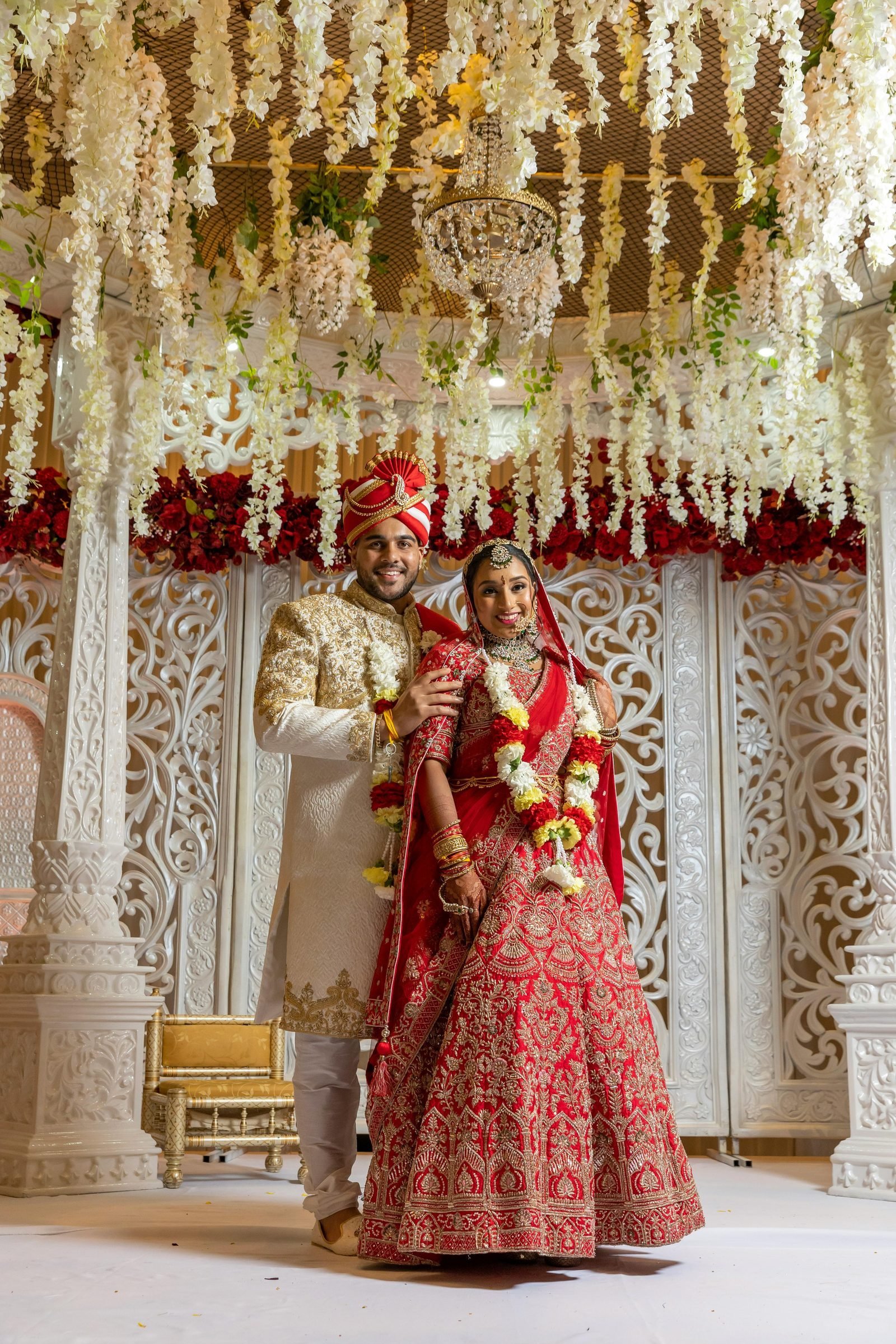
Key takeaways
- Our Qazi reads the nikah for ₹5,000, with the nikahnama and certificate the same day.
- For a Sunni nikah, bring two adult Muslim witnesses (two men, or one man and two women) who know you. We do not provide witnesses.
- Mahr belongs to the wife; write the amount clearly and say whether it is prompt or deferred.
- A nikahnama is not a government certificate. Register the nikah with Delhi under the 2014 Order for passports and visas.
- Instant triple talaq is void; a woman "divorced" that way cannot remarry until the marriage is properly dissolved.
A nikah is one of the simplest marriage ceremonies in the world. There is no fire, no pheras and no priest's long ritual. It is a contract: the woman consents, the man consents, two witnesses hear them, a mahr is agreed, and the marriage is complete. Yet many couples in Delhi find the practical side confusing. Which Qazi should read the nikah? What will the nikahnama say? Is a Qazi's certificate enough, or does the marriage also need government registration? What if one partner is divorced, or from a different sect, or from a different religion altogether? This page answers those questions, explains exactly what our ₹5,000 nikah service includes, and shows how to book.
We have written it for every kind of Muslim couple we meet in Delhi: families arranging a simple nikah without a big wedding, couples marrying by their own choice, widows and divorced women remarrying, working professionals who want the paperwork done properly, and families who want the nikah now and the reception later. If you only need government registration of a nikah that has already happened, see our Muslim marriage registration service.
What a Nikah Is, in Law and in Practice
Under Muslim personal law, which applies to Muslims in India through the Muslim Personal Law (Shariat) Application Act of 1937, marriage is a civil contract. It is also a religious act, but its legal validity depends on the contract, not on a particular ritual or place. That is why a nikah can be read in a masjid, at home, in a hall or in an office, as long as the essential conditions are met.
| Essential | What it means | How we handle it |
|---|
| Ijab (proposal) | An offer of marriage by or on behalf of one party | Our Qazi puts the offer clearly, with the names and the mahr |
| Qubool (acceptance) | Acceptance by the other party at the same sitting | Each partner accepts in their own words; we never accept on behalf of an adult who is present |
| Free consent | Both must agree without force or pressure | The Qazi speaks to the bride and groom separately to confirm consent |
| Capacity | Both must be adults of sound mind and not within prohibited relationships | We check age proof and marital status before fixing the date |
| Witnesses | For Sunnis, two adult Muslim men, or one man and two women | You bring your own witnesses who know you; we do not provide witnesses |
| Mahr | A gift or amount the husband owes the wife, as her right | Written in the nikahnama, split into prompt and deferred if you wish |
The nikahnama is the written record of this contract. It sets out the names and parentage of the bride and groom, their addresses, the date and place of the nikah, the amount and type of mahr, the names of the witnesses and the wakil if any, and the signatures of everyone involved. It is a strong piece of evidence that a marriage took place. It is not, by itself, a government registration certificate; we explain the difference in the section on what the certificate is.
Sunni, Shia and Other Traditions: What Changes
Most Muslims in Delhi follow the Hanafi school of Sunni law, and a large community follows Shia (Ithna Ashari) law. There are also Ahl-e-Hadith, Bohra and other communities. The core of the nikah is the same everywhere, but some details differ, and our Qazi follows the tradition of the couple.
| Point | Hanafi Sunni | Shia (Ithna Ashari) | Ahl-e-Hadith and others |
|---|
| Witnesses at nikah | Required: two men, or one man and two women | Not a condition of validity, though many families still have them | Required |
| Wali (guardian) for an adult woman | An adult woman may contract her own marriage | An adult woman who has been married before may contract her own; views differ for a first marriage | A wali is generally required |
| Language of the contract | Any language the parties understand | Traditionally Arabic formula, with explanation | Any language |
| Temporary marriage (muta) | Not recognised | Recognised in Shia law; we do not perform it | Not recognised |
If the bride and groom come from different sects, tell us at the start. Many Sunni–Shia couples marry, and families are often more concerned about the ceremony than the law. We usually suggest that the nikah satisfies the stricter requirement on each point, for example by having two witnesses even if one side's tradition does not insist on them, so that no one can later question it.
Who Can Have a Nikah With Us
- Two Muslims, of any sect, who are both adults and free to marry.
- A divorced woman, after her iddat (waiting period) has ended, with proof of divorce such as a talaqnama, khula document or court decree.
- A widow, after her iddat, with the husband's death certificate.
- A divorced man, with proof of divorce.
- Cousins: Muslim law permits marriage between first cousins, and we perform such nikahs.
- A Muslim and a non-Muslim: this is a separate question with serious legal consequences. Read the section on interfaith couples before booking; the Special Marriage Act is usually the safer route.
Our age rule is firm: we perform a nikah only when the bride is at least 18 and the groom at least 21, shown by a reliable age document. Courts in India have taken different views on the age of marriage under Muslim personal law, and in August 2025 the Supreme Court dismissed a child-rights commission's appeal on this question on technical grounds without deciding it. But the Prohibition of Child Marriage Act and the POCSO Act apply to everyone, Delhi's registration system works on 18 and 21, and a nikah that cannot be registered or that exposes the family to criminal complaints helps no one. We do not bend on this.
Relationships That Cannot Marry
Muslim law prohibits marriage between certain relatives. A nikah between them is void, and no Qazi can make it valid.
- By blood: a man cannot marry his mother or grandmother, daughter or granddaughter, sister, niece or great-niece, or aunt or great-aunt.
- By marriage (affinity): a man cannot marry his wife's mother or grandmother, his wife's daughter or granddaughter (if the marriage with the wife was consummated), his father's wife or his son's wife.
- By fosterage: relationships created by nursing (a milk-mother, milk-sister and so on) are prohibited in the same way as blood relationships, subject to recognised exceptions.
- Unlawful conjunction: a man cannot be married at the same time to two women who are so related that they could not have married each other if one were a man, for example two sisters, or an aunt and her niece.
- A woman in iddat: a woman cannot marry until her iddat after divorce or widowhood has ended.
- A woman who is already married: a Muslim woman cannot have more than one husband.
If you are unsure whether a relationship is prohibited, ask before booking. We would rather give you an honest answer on the phone than read a nikah that can later be challenged.
Mahr: How Much, and Prompt or Deferred
Mahr (also called mehr or dower) is the amount or property the husband gives or promises to the wife as a consequence of the marriage. It belongs to her alone. It is not a payment to her family, and it is not a price. Indian law sets no minimum or maximum; the amount is whatever the two sides agree and write in the nikahnama.
| Type | When it is due | Practical point |
|---|
| Prompt mahr (mu'ajjal) | Immediately on marriage, or whenever the wife asks | Often paid at the nikah itself, in cash, gold or by bank transfer |
| Deferred mahr (mu'wajjal) | On divorce or on the husband's death, unless an earlier date is agreed | A debt owed to the wife; it ranks as a claim against the husband's estate |
| Mixed | Part prompt, part deferred | Common in Delhi; the nikahnama should state each part separately |
Families sometimes write a very large deferred mahr for social reasons or a symbolic amount for religious reasons. Either can be valid, but think about it seriously. A deferred mahr is a real legal debt, and a wife can recover it in court. A mahr that the husband could never pay causes bitterness later; a mahr so small that it gives the wife no security defeats its purpose. We do not advise on the amount, but we make sure whatever you agree is written clearly: the sum in figures and words, whether it is prompt or deferred, and whether any part was paid at the nikah.
The Nikah Ceremony, Step by Step
A nikah with our Qazi usually takes thirty to forty-five minutes. Families who want a longer religious programme can add it; the legal core does not change.
- Document check: before the date is fixed, we have already checked age proof, identity and marital status. On the day, the Qazi sees the originals.
- Separate consent: the Qazi, with witnesses, asks the bride whether she consents to marry the groom for the stated mahr. Her consent is recorded. The groom is asked separately. No one can give consent on behalf of an adult who is present.
- Khutba: the Qazi recites the khutbat-un-nikah, the sermon from the Sunnah, and may say a few words about the rights and duties of husband and wife.
- Ijab and qubool: the offer and acceptance are made in the presence of the witnesses, usually three times by custom, though once is legally sufficient.
- Signing: the bride, groom, witnesses, wakil if any, and the Qazi sign the nikahnama.
- Dua: the Qazi prays for the couple. Families often distribute dates or sweets.
- Certificate: the nikahnama and our certificate are handed over the same day.
If the bride's side wants her consent taken privately, with the wakil and witnesses carrying it to the gathering, that is the traditional practice in many families and is perfectly valid. What matters is that the consent is hers and freely given.
Documents You Need
| Document | Who | Notes |
|---|
| Age proof | Bride and groom | Class 10 certificate, birth certificate or passport. Aadhaar is identity, not reliable age proof |
| Identity proof | Bride and groom | Aadhaar, voter ID, passport or driving licence |
| Address proof | Bride and groom | Needed for the nikahnama and later registration |
| Photographs | Bride and groom | Four passport-size photographs each |
| Proof of divorce | If divorced | Talaqnama, khula or mubarat document, or court decree; the iddat must have ended |
| Death certificate of spouse | If widowed | And the iddat must have ended |
| Witnesses' ID | Each witness | Aadhaar or other photo ID with address |
| Wakil's ID | If a wakil acts | Photo ID |
Send clear photographs of these on WhatsApp before booking. We tell you within a few hours whether anything is missing, and what can replace it. If a date of birth differs between documents, or a name is spelt differently, fix it or explain it with an affidavit before the nikah, not after; the nikahnama will be copied into every later record.
Witnesses: Bring Your Own
A Sunni nikah needs two adult Muslim male witnesses, or one man and two women, who are of sound mind and who hear the offer and acceptance. They should be people who know you, such as a brother, uncle, cousin, friend or neighbour, because a witness may one day be asked to confirm the marriage in an office or a court.
We do not provide witnesses, and we do not arrange strangers to sign. A witness who does not know the couple is worthless as evidence and can create problems if the marriage is ever questioned. If your family is not attending, ask trusted friends. For government registration later, the witnesses usually need to attend the registration appointment too, so choose people who can do that.
What the Certificate Is, and What It Is Not
After the nikah you receive the nikahnama, signed by everyone, and a nikah certificate issued by us with the Qazi's signature and seal. Together they prove that a nikah took place on that date, between those people, before those witnesses, for that mahr. Courts, families and many private institutions accept them as evidence of marriage.
They are not a government marriage registration certificate. Passport offices, embassies, visa authorities, some banks and insurance companies, and many government departments ask for a certificate issued by the state. For that, the nikah must be registered with the Delhi government. That is a separate process with its own appointment, which we handle in our registration service (₹6,000), or as part of the combined nikahnama, certificate and court affidavit package (₹7,000).
| Document | Issued by | Good for |
|---|
| Nikahnama | Signed by the parties, witnesses and Qazi | Proof of the contract and mahr; family, community and court evidence |
| Nikah certificate | Our office and Qazi | A clean one-page summary for everyday use |
| Marriage affidavits | Sworn by each spouse before a notary or oath commissioner | Supporting evidence of the marriage, names and dates |
| Government registration certificate | Delhi government | Passport, visa, embassy, government records, strongest proof |
Registering a Nikah With the Delhi Government
The Delhi (Compulsory Registration of Marriage) Order, 2014 requires every marriage performed in Delhi to be registered, whatever the religion of the parties. For years, however, the online e-District portal offered only two options, the Hindu Marriage Act and the Special Marriage Act. Muslim couples who wanted a government certificate were often steered into registering their nikah under the Special Marriage Act.
That has consequences many couples do not realise. A marriage registered under the Special Marriage Act is treated as a marriage under that Act, and succession to the couple's property is governed by the Indian Succession Act instead of Muslim personal law. The Delhi High Court took up this problem in Dhanak of Humanity v. Government of NCT of Delhi in 2021, and again in Faizan Ayubi v. Government of NCT of Delhi in 2024, where a Muslim couple who had registered under the Special Marriage Act because the portal gave them no other option had that registration set aside. In November 2024 the court directed the Chief Secretary to ensure that Muslim marriages could be registered online under the 2014 Order in a time-bound manner.
What this means for you: when you are ready to register, we check which option the portal and the registration office currently offer, and register your nikah under the 2014 Order where that route is available. We do not register a nikah under the Special Marriage Act without first explaining, in plain words, what it changes. Some couples do choose the Special Marriage Act deliberately, for example an interfaith couple or a couple who wants the Indian Succession Act to apply, and our Nikah + Special Marriage Act service is designed for them.
Interfaith Couples: Read This Before Booking a Nikah
We are often called by a Muslim man and a Hindu, Sikh or Christian woman, or a Muslim woman and a non-Muslim man, who want a nikah. The honest position is this.
- A Muslim woman and a non-Muslim man: under Muslim personal law, a nikah between them is not valid unless the man genuinely becomes a Muslim. A nikah read without that is open to challenge.
- A Muslim man and a Christian or Jewish woman (kitabiya): the Hanafi school treats this marriage as valid.
- A Muslim man and a Hindu, Sikh or other non-kitabi woman: the Hanafi school treats the marriage as irregular (fasid) rather than fully valid unless she becomes a Muslim.
- Conversion only for marriage is legally risky. Courts have repeatedly questioned conversions made only to get married, and several states, including Uttar Pradesh, Uttarakhand, Haryana and Madhya Pradesh, have laws that regulate religious conversion and can make a conversion for marriage a criminal matter. If either partner lives in, comes from or has family in such a state, take this seriously.
For almost every interfaith couple, the safer route is the Special Marriage Act, 1954, which lets two people of different religions marry without either converting. After the civil marriage, families who wish can hold a religious ceremony. We explain both options in detail on our Nikah and Special Marriage Act page and our inter-religion marriage page.
Remarriage After Divorce or Widowhood
Many of the nikahs we read are second marriages. Muslim law has always allowed divorced and widowed people to remarry, and there is no stigma in law. What matters is the paperwork of the earlier marriage.
| Earlier marriage ended by | What you should have | Iddat for the woman |
|---|
| Talaq by the husband (talaq-e-ahsan or hasan) | Talaqnama and proof it became final | Three menstrual cycles, or until delivery if pregnant |
| Khula (initiated by the wife) | Khulanama signed by both, or a decree | As for divorce |
| Mubarat (mutual) | Mubaratnama signed by both | As for divorce |
| Court decree under the Dissolution of Muslim Marriages Act, 1939 | Certified copy of the decree | As for divorce |
| Death of the husband | Death certificate | Four months and ten days, or until delivery if pregnant |
Triple talaq in one sitting is not a valid divorce. The Supreme Court held instant triple talaq (talaq-e-biddat) invalid in Shayara Bano v. Union of India in 2017, and the Muslim Women (Protection of Rights on Marriage) Act, 2019 declares it void and makes pronouncing it an offence. A woman whose "divorce" was only an instant triple talaq is, in law, still married. She cannot validly remarry until the marriage has actually been ended, and we will not read her nikah until it has. This protects her more than anyone.
A Man's Second Marriage
Muslim personal law permits a man to have up to four wives at a time, subject to treating them equally. In practice in Delhi, a second marriage while the first wife is living raises questions we insist on answering before any nikah:
- Disclosure: we require the groom to disclose an existing marriage in writing. The bride must know. A nikah based on concealment is a recipe for litigation.
- Government employees: central and most state conduct rules forbid a government servant from entering a second marriage while the first spouse is living without the government's permission, even where personal law allows it. Breaking this can cost the job.
- Special Marriage Act marriages: if the first marriage was registered under the Special Marriage Act, a second marriage is void and is the offence of bigamy, whatever the husband's religion.
- The first wife's rights: under the Dissolution of Muslim Marriages Act, 1939, a wife can seek divorce if a husband with more than one wife does not treat her equitably, and she keeps her rights to maintenance and mahr.
We do not read a second nikah where the groom is hiding the first marriage, where either spouse is a minor, or where we have reason to think the bride is being pressured.
Nikah Across Delhi
Our couples come from every part of Delhi. Some of the neighbourhoods we hear from most are the Old Delhi mohallas around Jama Masjid, Ballimaran, Chandni Mahal, Turkman Gate and Daryaganj; the Jamia Nagar area of Batla House, Zakir Nagar, Shaheen Bagh, Abul Fazal and Okhla Vihar; Nizamuddin Basti and Jangpura; the North East Delhi localities of Seelampur, Jafrabad, Welcome, Mustafabad, Brijpuri and Chand Bagh; Sadar Bazar, Quraish Nagar and Inderlok; Mehrauli and Sangam Vihar in the south; and the new colonies of Dwarka, Rohini and Mayur Vihar. We also hear from Noida, Ghaziabad, Gurugram and Faridabad, and from couples who have moved to Delhi for work from Uttar Pradesh, Bihar, Kashmir, West Bengal and elsewhere.
For registration, the Delhi address of either spouse, or the place in Delhi where the nikah was performed, decides the registration office. Since 1 January 2026 Delhi has 13 revenue districts and 39 sub-divisions, and the portal allocates the office by address. Jamia Nagar and Okhla fall under the South East district, the Old Delhi mohallas under the Old Delhi district, and the Seelampur–Mustafabad belt under the North East district, but always follow the office named on your appointment slip.
All Our Muslim Marriage Services and Prices
| Service | Price | Best for |
|---|
| Muslim nikah with certificate | ₹5,000 | A simple nikah by our Qazi, nikahnama and certificate the same day |
| Nikahnama + certificate + court affidavit | ₹7,000 | Nikah plus sworn affidavits for stronger legal proof |
| Muslim marriage deed only | ₹5,000 | A written, notarised record of a nikah that has taken place |
| Live-in relationship agreement | ₹11,000 | Adults living together who are not ready to marry |
| Muslim love marriage | ₹7,000 | Couples marrying by their own choice, with safety guidance |
| Urgent / same-day nikah | ₹7,000 | When the nikah is needed at short notice |
| Muslim marriage registration | ₹6,000 | Government registration of a nikah already performed |
| Nikah + Special Marriage Act | ₹15,000 | Interfaith couples, or those who want a civil marriage too |
| NRI Muslim nikah + apostille | ₹30,000 | Couples where one or both live abroad |
| Duplicate or corrected nikahnama | ₹2,500 | Lost nikahnama, spelling or date mistakes |
Government fees, notary charges and courier costs, where they apply, are paid at actual cost. Full prices for all services are on our fees page.
Which Service Do You Need?
| Your situation | Start with |
|---|
| Both Muslim, want a simple nikah soon | Nikah with certificate (₹5,000) |
| Want the nikah and extra legal proof for a job, bank or family dispute | Nikahnama + certificate + affidavit (₹7,000) |
| Already had a nikah, need a government certificate | Registration (₹6,000) |
| Already had a nikah, the family has no proper written record | Marriage deed (₹5,000) |
| Marrying against family wishes | Love marriage (₹7,000) |
| Different religions | Nikah + Special Marriage Act (₹15,000) |
| One partner abroad, or certificate needed for a visa | NRI package (₹30,000) |
| Lost or wrong nikahnama | Duplicate / correction (₹2,500) |
Preparing for the Nikah Day
A nikah is short, but small things go wrong when families are not prepared. This is the checklist we give every couple.
- ☐ Original age proof, ID and address proof for bride and groom, plus two photocopies of each
- ☐ Four passport photographs of each
- ☐ Divorce papers or death certificate, if either has been married before
- ☐ Two witnesses (Sunni: two Muslim men, or one man and two women) with original photo ID
- ☐ The wakil, if the bride's consent will be carried by a wakil, with ID
- ☐ The agreed mahr: the amount, how much is prompt, and the prompt amount in hand if it will be paid at the nikah
- ☐ Any special conditions agreed between the families, written down in advance
- ☐ Spellings of names, fathers' names and addresses exactly as in Aadhaar and the passport
- ☐ A phone to photograph the signed nikahnama before it leaves the room
Arrive a little early. The Qazi uses the first few minutes to see the originals, confirm the spellings and meet the witnesses, so that the ceremony itself can proceed without interruption.
When Families Disagree About the Details
Often the couple agree on everything, but the two families do not. The most common disagreements, and how we handle them:
| Disagreement | What the law says | How we help |
|---|
| The amount of mahr | Whatever the parties agree; it is the bride's right | We explain prompt and deferred mahr so both sides can settle on a realistic figure |
| Who will be the witnesses | Any adult Muslim men (or one man and two women) of sound mind | Families usually pick one witness from each side |
| Whose tradition to follow | The nikah is valid if the essentials of the parties' schools are met | We meet the stricter requirement on each point |
| Nikah now or after the wedding functions | The nikah is the marriage; functions are social | Many families read the nikah first and hold functions later |
| Whether to register | The Delhi 2014 Order requires registration | We explain what registration adds and the right route for Muslims |
Dowry is a separate matter. Giving or demanding dowry is an offence under the Dowry Prohibition Act, 1961, whatever the religion, and it is not the same as mahr. Mahr is owed by the husband to the wife; dowry demanded from the bride's family is illegal.
Why We Always Recommend Registration
Many families feel a nikahnama is enough because everyone in the mohalla knows the couple are married. That is true until someone outside the mohalla needs proof: a passport officer, an embassy, an insurance company after a death, a court in a property dispute, or a foreign employer. At those moments a registered certificate ends the discussion in minutes, while a nikahnama alone can lead to months of affidavits and hearings. Registration is also required by the Delhi 2014 Order. Our advice is simple: read the nikah correctly, keep the nikahnama safe, and register it within the sixty-day window.
How to Book, and What Happens Next
- Call or WhatsApp +91 8376863962. Tell us the names, whether either partner has been married before, the sect, and the date you have in mind.
- Send documents. Clear photographs of age proof, ID and address proof for both, and divorce or death papers if relevant.
- We check and confirm. Usually within a few hours. We point out any mismatch in names or dates and how to fix it.
- Fix the date and time. We confirm the place, the Qazi, and what the witnesses must bring.
- Nikah day. The Qazi confirms consent, reads the khutba, completes ijab and qubool, and everyone signs.
- Documents handed over. The nikahnama and our nikah certificate the same day.
- Optional registration. If you want a government certificate, we move straight to registration.
| Stage | Typical time |
|---|
| Document check | Same day |
| Nikah date | Usually within 1–3 days of booking; same day with our urgent service |
| Nikahnama and certificate | Same day as the nikah |
| Government registration | Depends on appointment availability and the route the portal offers |
After the Nikah: Records to Update
- Aadhaar: a wife can change her address to the husband's, using the marriage record as proof of relationship under UIDAI's head-of-family process, or add her own address proof. Changing her surname is optional.
- Passport: to add the spouse's name, the passport office usually wants a registered marriage certificate. This is one of the most common reasons couples come back for registration.
- Bank and insurance: update nominations on bank accounts, fixed deposits, insurance policies, EPF and pension schemes. Mahr and inheritance are separate from nomination, but a missing nomination causes months of paperwork after a death.
- Employer records: add the spouse for medical insurance, leave travel and family benefits.
- Ration card: the wife can be added to the family's card with the marriage record.
Rights of a Wife After Nikah
A nikah gives the wife rights that the nikahnama helps her enforce.
- Mahr: prompt mahr on demand, deferred mahr on divorce or the husband's death.
- Maintenance: the husband must maintain his wife. In Mohd. Abdul Samad v. State of Telangana (10 July 2024) the Supreme Court held that a Muslim wife, including a divorced wife, can seek maintenance under the general law, section 125 of the old Criminal Procedure Code, now section 144 of the Bharatiya Nagarik Suraksha Sanhita, in addition to her rights under the 1986 Act on divorced women.
- Protection from instant triple talaq: it is void and an offence under the 2019 Act.
- Divorce on her own initiative: by khula, or through the court under the Dissolution of Muslim Marriages Act, 1939 on grounds including cruelty, failure to maintain for two years, and desertion.
- Protection from domestic violence: the Protection of Women from Domestic Violence Act, 2005 applies to Muslim wives like all others.
- Inheritance: a wife inherits from her husband under Muslim law, and her mahr is a debt paid before the estate is divided.
A clear nikahnama, with the mahr stated correctly and the witnesses identifiable, makes all of these far easier to claim if they are ever needed.
Common Mistakes We See
- Relying only on a handwritten nikahnama from an unknown Qazi, with no witnesses' addresses and no copy kept.
- Names spelt differently in the nikahnama and in Aadhaar or the passport.
- Recording the mahr vaguely, such as "as per Shariat", with no amount.
- Using witnesses who do not know the couple and cannot be found later.
- Remarrying after an instant triple talaq that was never a valid divorce.
- Remarrying before the iddat has ended.
- Assuming the nikahnama is a government certificate and discovering the difference at the passport office.
- Registering a nikah under the Special Marriage Act without understanding the effect on inheritance.
- An interfaith couple relying on a quick conversion certificate and a nikah instead of the Special Marriage Act.
- Waiting years to register, until a death, a visa or a dispute forces it.
Five Delhi Couples
The simple family nikah
A family in Zakir Nagar wanted their daughter's nikah done quietly, with the walima to follow after Eid. The bride and groom sent documents on a Monday, the nikah was read on Wednesday evening with twelve relatives present, and the nikahnama and certificate were handed over the same evening. Registration followed three weeks later.
The widow's remarriage
A widow from Seelampur, whose husband had died two years earlier, wanted to marry a family friend. We checked the death certificate, confirmed the iddat had long ended, and her brothers acted as witnesses. Her children's rights to their father's estate were unaffected by her remarriage.
The "divorce" that was not
A young woman came to us for a nikah. Her first husband had pronounced triple talaq in one sitting over the phone. We explained that this was void in law and that she was still married. She obtained a decree under the Dissolution of Muslim Marriages Act, and after her iddat we read her second nikah.
The Sunni–Shia couple
A Sunni groom from Old Delhi and a Shia bride from Jafrabad married with the consent of both families. We had two male witnesses present and read the nikah so that it met the requirements of both traditions.
The couple who needed a passport
A couple from Okhla had their nikah with us and then needed the wife's passport updated for a Gulf job. We moved straight to government registration, and the registered certificate went to the passport office with her application.
How We Help
Our Qazi reads the nikah according to your tradition. We check every document before the date is fixed so there are no surprises, write the nikahnama clearly and correctly, explain mahr and the wife's rights in plain language, and issue the certificate the same day. When you need government registration, an affidavit, a correction, or a Special Marriage Act marriage, we handle that too. Everything is confidential. We do not provide witnesses, we do not perform a nikah for anyone under 18 (bride) or 21 (groom), and we do not read a nikah where either partner's consent is in doubt.
Questions and Answers
How much does a nikah cost with you in Delhi?▼
Our nikah service is ₹5,000. It includes our Qazi reading the nikah, the nikahnama, a nikah certificate handed over the same day, and a check of your documents before the date is fixed. Government registration, if you want it, is a separate service at ₹6,000, and any government fee or notary charge is paid at actual cost.
Do you have your own Qazi?▼
Yes. The nikah is read by our own Qazi, who follows the tradition of the couple, whether Hanafi Sunni, Shia or another school. You do not need to find a Qazi separately, and the Qazi signs and seals the nikahnama and certificate.
Is a nikah read by your Qazi legally valid?▼
A nikah is valid under Muslim personal law when the essentials are met: free consent of both adults, offer and acceptance at one sitting, witnesses where the school requires them, no prohibited relationship, and the capacity to marry. The identity of the Qazi is not what makes it valid; the correct performance of the contract is. Our Qazi makes sure every essential is met and recorded.
Do you provide witnesses for the nikah?▼
No. We do not provide or arrange witnesses. For a Sunni nikah you need two adult Muslim men, or one man and two women, who know you and hear the offer and acceptance. Bring relatives or trusted friends who can also attend a registration appointment later if needed.
Can women be witnesses at a nikah?▼
In Sunni law, two women can stand in place of one man, so one man and two women is acceptable. Shia law does not make witnesses a condition of validity for the nikah itself, though many Shia families still have them.
Does the bride need a wali (guardian)?▼
In the Hanafi school, which most Delhi Sunnis follow, an adult woman may contract her own marriage without a wali, though families usually take part. Other schools, including Ahl-e-Hadith, generally require a wali. Tell us your tradition and our Qazi will follow it.
What is the minimum age for a nikah with you?▼
The bride must be at least 18 and the groom at least 21, shown by a Class 10 certificate, birth certificate or passport. Courts have differed on the age of marriage under Muslim personal law, but the child marriage law, POCSO and Delhi's registration system work on 18 and 21, and we do not make exceptions.
What documents do we need?▼
Age proof, identity proof and address proof for both, four passport photographs each, and ID for each witness. If either partner has been married before, bring the divorce document or court decree, or the spouse's death certificate. Send photographs on WhatsApp first so we can check them.
How long does the nikah take?▼
About thirty to forty-five minutes: consent is confirmed, the khutba is recited, the offer and acceptance are made before the witnesses, the nikahnama is signed and the Qazi makes dua. Families can add a longer religious programme if they wish.
Can the nikah be done on the same day we call?▼
Often yes, if documents are complete and your witnesses are available. That is our urgent same-day nikah service at ₹7,000, which prioritises your booking and paperwork.
What is written in the nikahnama?▼
The names, parentage and addresses of the bride and groom, their dates of birth, the date and place of the nikah, the mahr and whether it is prompt or deferred, the names and addresses of the witnesses and any wakil, any special conditions agreed, and everyone's signatures with the Qazi's seal.
How much mahr should we fix?▼
Indian law sets no minimum or maximum; it is what the two sides agree. It belongs to the wife. Choose an amount the husband can honour, write it in figures and words, and state whether it is prompt, deferred, or split between the two. Deferred mahr is a real debt the wife can recover.
Can conditions be added to the nikahnama?▼
Yes. Couples sometimes add conditions such as the wife's right to continue her education or job, or a delegated right of divorce (talaq-e-tafweez). Conditions that are lawful and not against the essence of marriage can be recorded. Discuss them with us before the nikah day.
Is the nikahnama the same as a marriage certificate?▼
It is proof that the nikah took place, and many institutions accept it. It is not a government registration certificate. Passport offices, embassies and many departments want the Delhi government's certificate, which comes from registering the nikah.
How do we register our nikah with the Delhi government?▼
The Delhi Compulsory Registration of Marriage Order, 2014 applies to all marriages in Delhi. After the Delhi High Court's 2024 directions, the government was told to enable online registration of Muslim marriages under that Order. We check the current route on the portal and at the office and handle the registration for ₹6,000.
Should we register our nikah under the Special Marriage Act?▼
Only if you understand the effect. Registration under the Special Marriage Act brings the marriage under that Act, and succession to your property is then governed by the Indian Succession Act, not Muslim personal law. The Delhi High Court has set aside such a registration where the couple did it only because the portal offered no other choice.
Can a Muslim woman marry a Hindu man by nikah?▼
Under Muslim personal law a nikah between a Muslim woman and a non-Muslim man is not valid unless he genuinely becomes a Muslim. Conversion only to marry is legally risky. The Special Marriage Act allows them to marry without either converting, and it is the route we recommend.
Can a Muslim man marry a Hindu woman by nikah?▼
The Hanafi school treats such a marriage as irregular rather than fully valid unless she becomes a Muslim, while a marriage with a Christian or Jewish woman is valid. Conversion for marriage can be a criminal matter in several states. The Special Marriage Act is usually the safer route.
Can a divorced woman remarry immediately?▼
She must first complete her iddat, generally three menstrual cycles after divorce, or until delivery if she is pregnant. She should have proof of the divorce, such as a talaqnama, khulanama or court decree.
My husband gave triple talaq at once. Can I remarry?▼
Instant triple talaq is void under the Supreme Court's 2017 judgment and the 2019 Act. In law you are still married. You need a valid dissolution, for example a decree under the Dissolution of Muslim Marriages Act, 1939 or a valid khula, before you can remarry.
How long must a widow wait before a new nikah?▼
The iddat of a widow is four months and ten days from the husband's death, or until delivery if she is pregnant. After that she is free to remarry. Bring the death certificate.
Can first cousins marry by nikah?▼
Yes. Muslim law does not prohibit marriage between first cousins, and we perform such nikahs. Marriages with closer relatives such as a niece or aunt are prohibited.
Can a man take a second wife through you?▼
Muslim personal law permits it subject to conditions, but we require written disclosure of the existing marriage to the bride. Government servants usually need permission under their conduct rules, and if the first marriage was under the Special Marriage Act a second marriage is void and an offence.
Is Shia nikah different?▼
The core is the same: consent, offer and acceptance, mahr. Shia law does not make witnesses essential to validity, and the formula is traditionally recited in Arabic. We do not perform temporary (muta) marriages.
We are Sunni and Shia. Can we marry?▼
Yes. Many Sunni–Shia couples marry. We read the nikah so that it satisfies both traditions, for example with two male witnesses, so that neither family can later question it.
Can the nikah be done without our parents?▼
Yes, both of you are adults. A Hanafi woman may contract her own marriage. If you fear opposition, see our Muslim love marriage service, which adds safety guidance and immediate registration planning.
Where is the nikah performed?▼
At the time and place agreed with you when you book. Tell us whether the families want it at home, at a masjid or at our office, and we will confirm the arrangements.
Can a nikah be done by phone or video call?▼
We do not perform nikahs over video calls. Offer and acceptance at one sitting, before witnesses who can later be identified, are central to a valid and provable nikah. Where one partner is abroad, see our NRI Muslim nikah service, which explains the options.
Can we do the nikah now and the walima later?▼
Yes. The nikah is complete once performed. Many families hold the walima or reception weeks or months later. Keep the nikahnama safe and consider registering soon.
What if our names are spelt differently in documents?▼
Fix it before the nikah if you can, or explain it with an affidavit. The nikahnama will be copied into Aadhaar, passport and bank records, so the spelling you choose now matters.
Does the wife have to change her surname?▼
No. There is no legal requirement. If she chooses to, the marriage record supports the change in Aadhaar, the passport and bank records.
Can a divorced wife claim maintenance?▼
Yes. In July 2024 the Supreme Court held in Mohd. Abdul Samad that a Muslim woman, including a divorced woman, can seek maintenance under the general maintenance law, section 125 CrPC (now section 144 BNSS), in addition to the 1986 Act.
Is the nikah certificate accepted for a passport?▼
The passport office generally prefers a government-registered marriage certificate to add a spouse's name. Register the nikah first; we do this as a separate service.
Will our nikah be kept confidential?▼
Yes. We share your documents with no one except the offices that must receive them for registration. We do not publish names or photographs.
Can you read a nikah for a Muslim convert?▼
If the conversion is genuine and complete, yes, with the conversion documents. If the conversion is only for marriage, we will explain the legal risks and usually recommend the Special Marriage Act instead.
What if one of us is from another state?▼
That is common. For the nikah it makes no difference. For registration in Delhi, at least one spouse's Delhi address or the Delhi place of the nikah decides the office.
What happens if we lose the nikahnama?▼
We can issue a duplicate from our record for ₹2,500, and correct genuine errors with supporting documents.
Do we need to register within a time limit?▼
The Delhi 2014 Order expects registration within sixty days of the marriage, with a further sixty days on a small fee and a penalty after that. Late registration is still possible; register as soon as you can.
Is mahr the same as dowry?▼
No. Mahr is owed by the husband to the wife and belongs to her. Dowry, meaning property demanded from or given by the bride's family in connection with the marriage, is prohibited by the Dowry Prohibition Act, 1961 for every community. We record mahr in the nikahnama; we never record dowry.
Can the wife ask for her deferred mahr before divorce?▼
Deferred mahr becomes payable on divorce or the husband's death unless the nikahnama fixes an earlier date or event. Prompt mahr can be demanded at any time. If you want a different arrangement, write it clearly in the nikahnama.
Can a pregnant woman have a nikah?▼
If she is free to marry, meaning she is not in another man's marriage or iddat, yes. A divorced or widowed pregnant woman's iddat lasts until delivery, so she cannot remarry before then. Speak to us confidentially about your situation.
Do you perform nikahs on Fridays and holidays?▼
Yes. Friday, especially after Jumma, is a popular day for nikahs. We also read nikahs on Sundays and public holidays. Government registration appointments, however, are only on working days.
Can the groom's consent be given by a wakil?▼
If the groom cannot attend, he can appoint a wakil (agent) by a proper written authority to accept on his behalf, and the nikah is valid if the other essentials are met. It complicates later registration, where both spouses usually have to appear, so we prefer both to be present.
What is khula and can you help with it?▼
Khula is a divorce initiated by the wife, usually in return for giving up her mahr or another consideration. We can explain the process and documents, and a proper khulanama is needed before she remarries. Contested cases should go to a family lawyer.
Can we book on WhatsApp?▼
Yes. WhatsApp +91 8376863962 with your names, sect, previous marital status and preferred date, and photographs of your documents. We confirm the date after checking them.
What will you refuse to do?▼
We will not read a nikah for an underage bride or groom, where consent is doubtful, where a previous marriage has not been validly ended, where a second marriage is being concealed, or where we are asked to supply witnesses. These rules protect you.
Sources and Official References
Legal points on this page were checked against these sources. Procedures and portals change, so confirm current details before applying.
- Muslim Personal Law (Shariat) Application Act, 1937 – Indian Kanoon
- The Delhi (Compulsory Registration of Marriage) Order, 2014 – Revenue Department, Delhi
- Delhi High Court directs online registration of Muslim marriages (Faizan Ayubi, November 2024) – LiveLaw
- Delhi's compulsory registration and its consequences for Muslims (Dhanak of Humanity, 2021) – The Wire
- Muslim Women (Protection of Rights on Marriage) Act, 2019 – India Code
- Dissolution of Muslim Marriages Act, 1939 – Indian Kanoon
- Mohd. Abdul Samad v. State of Telangana, Supreme Court, 10 July 2024 – SCC Online
- Supreme Court dismisses NCPCR appeal on Muslim marriage age, 19 August 2025 – The Leaflet
- The Special Marriage Act, 1954 – India Code
This page is general information, not legal advice for your specific case. Call +91 8376863962 for advice on your situation.
Related Services and Guides
📚 Nikah Process Step by Step in Delhi 2026
From rishta and mahr to the ceremony (consent, khutbah, ijab-qubool, nikahnama, dua), rukhsati, walima and reg
Read →
📚 Nikah Documents and Registration in Delhi 2026
Complete checklist of nikah documents, witnesses, divorce proof and NRI cases, and step-by-step registration u
Read →
📚 Muslim Women's Rights in Marriage in India 2026
Choice, consent, mahr, maintenance, home, protection from violence, khula and court divorce, rights after divo
Read →
📚 Muslim Divorce in India 2026: Talaq, Khula, Mubarat, Iddat
Valid talaq forms, why triple talaq is void, khula, mubarat, delegated divorce, court grounds, iddat, wife's r
Read →
📚 Mahr (Meher) in India 2026: Amount, Prompt and Deferred
How much mahr to fix, prompt vs deferred, how to write it, mahr on divorce and death, recovery in court, and w
Read →
📚 Muslim Marriage Law in India 2026: Complete Guide
Nikah essentials, age and consent, void and irregular marriages, mahr, maintenance, talaq, khula, iddat, custo
Read →
📜 Muslim Marriage Registration
Government certificate for your nikah – ₹6,000.
Read →
📑 Nikahnama + Court Affidavit
Stronger legal proof – ₹7,000.
Read →
❤️ Muslim Love Marriage
Marrying by your own choice – ₹7,000.
Read →
⚡ Urgent Same-Day Nikah
When time is short – ₹7,000.
Read →
🕊️ Nikah + Special Marriage Act
Interfaith couples – ₹15,000.
Read →
🌍 NRI Muslim Nikah
With apostille – ₹30,000.
Read →
🖋️ Muslim Marriage Deed
Written record of your nikah – ₹5,000.
Read →
🏠 Live-in Agreement
For adults living together – ₹11,000.
Read →
🔁 Duplicate / Correction
Lost or wrong nikahnama – ₹2,500.
Read →
💰 All Prices
Full fee list.
Read →