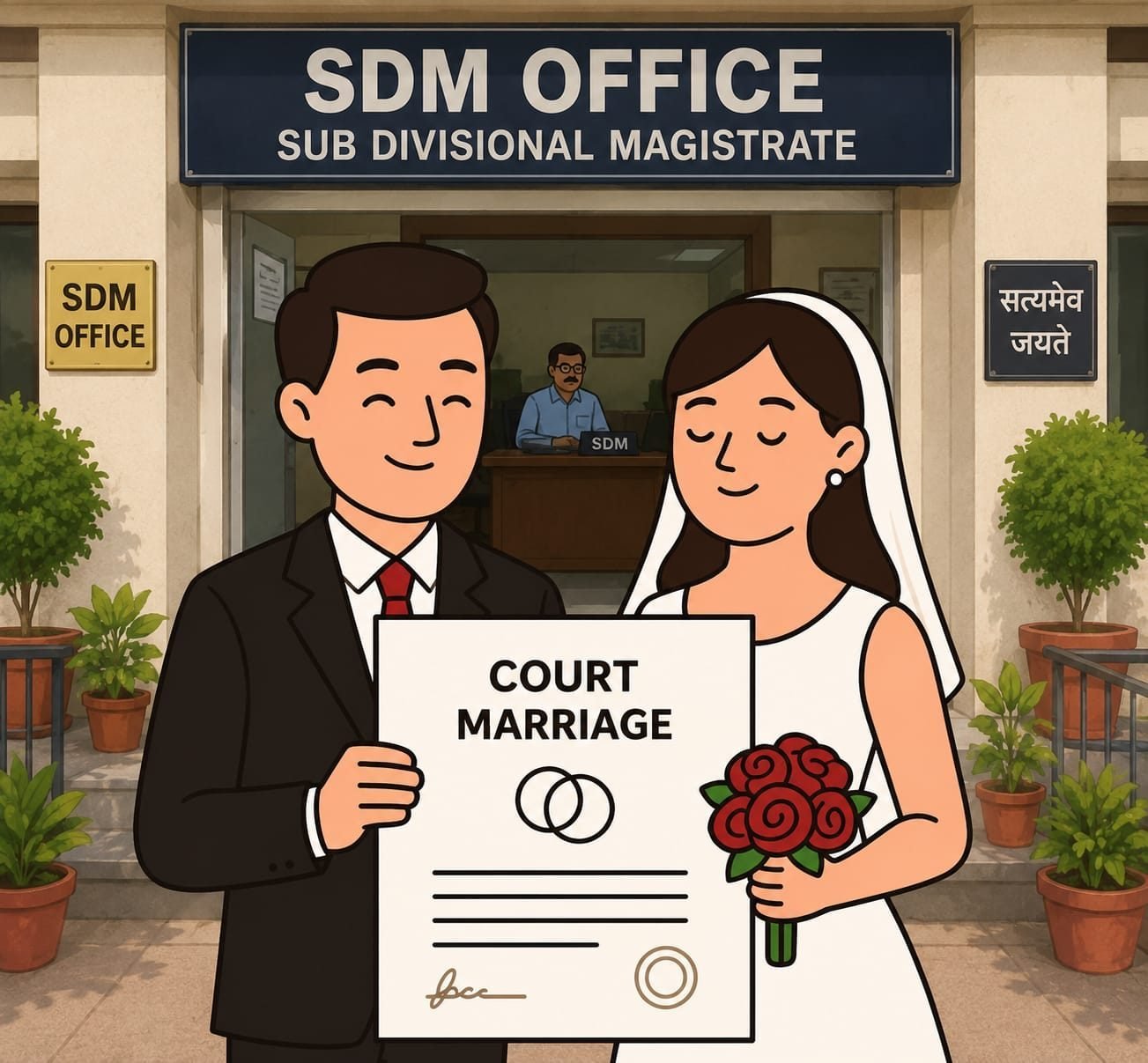
Jahangirpuri and Adarsh Nagar: Everything Is Known, Nothing Is Recorded
Jahangirpuri, Bhalswa, Adarsh Nagar, Azadpur and the blocks around them make up one of the most tightly known neighbourhoods in Delhi. People here have lived on the same lane for two and three generations. The landlord knows which room belongs to which family. The shopkeeper knows who is married to whom, who the children belong to, and which uncle came from the village last winter.
And almost none of it exists on paper.
That is not a criticism of anybody. It is what happens in a belt built out of resettlement and migration, where families arrived from West Bengal, Bihar and eastern Uttar Pradesh with a box of documents from somewhere else, and where the things that matter locally — trust, standing, who vouches for whom — have never needed a form. A wedding here is attended by three hundred people. Every one of them could tell you it happened. Not one of them is a document.
So the question this page answers is the one families in this belt actually ask, usually in a slightly frustrated tone: "Everybody knows we are married. Why is that not enough?"
It is a fair question, and it has a precise legal answer that almost nobody is ever given. The answer is not that officials are difficult or that the system distrusts poor people. It is that the law of evidence treats one kind of paper completely differently from every other kind — and a marriage register entry is that kind. This page sets out, in the statute's own words, exactly why.
The general law of marriage and registration is on our process, documents and registration pages; the fees are on the fee page.
What a Family Here Actually Holds
Before the law, an honest inventory. When we ask a Jahangirpuri family what they have to show for a marriage, the answer is some combination of these — and it is usually a longer list than they expect.
Photographs. Sometimes hundreds, sometimes an album, more often now on a phone that has been replaced twice.
The invitation card, kept in a trunk, occasionally with the date printed on it and occasionally not.
A letter or certificate from whoever performed the ceremony — a mandir, a samiti, a purohit's own receipt book.
A letter from a pradhan, a councillor's office, a samiti or a landlord, saying that this couple lives here and is married. These are written constantly in this belt and families set great store by them.
An affidavit, often prepared years ago by somebody outside a court, on stamp paper, notarised.
The ration card, which for many households is the single most important piece of paper they own and is treated as proof of almost everything.
And the neighbours — three hundred people who were there.
Every item on that list has value. Not one of them does the thing a register entry does, and the difference is not a matter of degree. It is a matter of category, and the category is defined by statute.
VERIFIED — What the Law Calls a "Public Document"
The starting point is section 74 of the Bharatiya Sakshya Adhiniyam, 2023, which divides every document in existence into two classes and does it in a few lines.
| The Act's own words | What falls inside |
|---|
| "The following documents are public documents:— (a) documents forming the acts, or records of the acts— (i) of the sovereign authority; (ii) of official bodies and tribunals; and (iii) of public officers, legislative, judicial and executive of India or of a foreign country;" | A record made by a public officer in the executive branch, of an act done by that officer. A marriage register kept by a registering authority is exactly that. |
| "(b) public records kept in any State or Union territory of private documents." | Where the State keeps a public record of something private, that record is public too. |
| "All other documents except the documents referred to in sub-section (1) are private." | And here is where the rest of the list lands. Photographs, the invitation card, the samiti's letter, the pradhan's letter, the landlord's letter, the affidavit — all private documents. |
Read the last row without taking offence at it, because none is intended. "Private" is not the law saying your documents are worthless or that anybody doubts you. It is a classification, and what follows from it is procedural: a private document has to be proved. Somebody has to establish who made it, when, and that it is what it claims to be. The person who wrote the letter may have to be produced. The photographer may have to be identified. The person who swore the affidavit may have to swear to it again.
In a belt where the purohit has died, the samiti has changed hands, the photographer's shop has closed and two of the three hundred witnesses have gone back to the village for good, "has to be proved" is not a small phrase. It is the difference between handing something over and mounting a case.
VERIFIED — Why the Register Entry Stands on Different Ground
Now the provision that does the real work, and it is one sentence. Section 29 of the Bharatiya Sakshya Adhiniyam, 2023, headed "Relevancy of entry in public record or an electronic record made in performance of duty":
"An entry in any public or other official book, register or record or an electronic record, stating a fact in issue or relevant fact, and made by a public servant in the discharge of his official duty, or by any other person in performance of a duty specially enjoined by the law of the country in which such book, register or record or an electronic record, is kept, is itself a relevant fact."
Take the last four words on their own: is itself a relevant fact.
Not "may be considered". Not "will be given weight if the officer comes and confirms it". The entry, by virtue of being an entry made by a public servant in the discharge of official duty in a register the law requires to be kept, is itself relevant. It does not arrive needing somebody to vouch for it. It arrives already carrying its own standing.
That is the entire answer to "everybody knows we are married". Everybody knowing is testimony — three hundred people who would each have to be found, brought, and asked. The entry is a fact in a book that the State keeps because a statute tells it to, made by an officer whose job it was to make it.
And notice what the section does not require. It does not ask whether the family is well known in the colony. It does not ask how long anybody has lived there, what language the documents are in, which State the family came from, or how good the photographs are. It asks one thing: was this entry made by a public servant in the discharge of official duty, in a register kept as the law requires. For a registered marriage the answer is yes, and it is yes for a household in Bhalswa exactly as it is for one in a farmhouse.
That last point is the reason we think this belt deserves the section spelled out rather than summarised. A register entry is the one form of proof in which a Jahangirpuri family and the wealthiest family in Delhi stand in precisely the same position. Everything else — the quality of the photographs, the letterhead the certificate is printed on, whether there is an advocate in the family — varies with money. The entry does not.
What registration still does not do. We are not going to overstate it. Order 8 of Delhi's 2014 Order says plainly that registration will not tantamount to validity; section 7 of the Hindu Marriage Act is what marries you, at the ceremony, on the day, and your marriage has been good since then whether or not anybody wrote it down. Section 8 of that Act states the object of registration and states it modestly: facilitating proof. The point of this page is that "facilitating proof" is doing far more work than the phrase suggests, and section 29 is where you can see how much.
What Your Other Papers Are Actually Worth
Not a dismissal — a straight valuation, because families here are routinely told these things are either everything or nothing, and both are wrong.
Photographs of the ceremony. Genuinely useful, especially for registering a wedding held years ago. Pictures of the rites themselves, with both families visible, are worth many times more than pictures of the meal. Keep them, back them up, and do not rely on them as the record.
The invitation card. Small, and better than people assume, because it is contemporaneous and it carries a date. Keep it.
The institution's certificate. Real and important. It is what the body that performed the ceremony says it did, and it supports a later registration. It is not itself the government's record.
A pradhan's, councillor's, samiti's or landlord's letter. This is the one where the honest answer disappoints people. These letters are written constantly here, families keep them carefully, and they do have practical use with local bodies and sometimes with a bank. But under section 74 they are private documents, and the person who signed one may have to be produced to prove it. A letter is a person's word in writing, and a person can move, forget, retire, fall out with you or die.
An affidavit. The same, with an added risk worth naming. An affidavit is your own statement, sworn. It proves that you said something, not that the thing is true. And where a declaration receivable in evidence contains something false, section 236 of the Bharatiya Nyaya Sanhita is engaged — so an affidavit drafted in a hurry to plug a gap can create a much larger problem than the gap. Never let anybody talk you into swearing a date or a fact you are not certain of.
The ration card. Enormously useful in this belt for what it is — and it is not a record of a marriage. It records a household for a purpose. Offices asked to accept it as proof of a marital relationship generally will not, and the family is left puzzled because locally it works for everything.
The neighbours. Three hundred people who were there is real, and in a contested matter their evidence may one day matter. But evidence means somebody attends, on a date, and is questioned. It is the most expensive form of proof a poor family can be pushed towards, and it is the one that a two-thousand-rupee entry in a register removes the need for.
Read the Entry the Day It Arrives — Here Is Why Each Field Matters
We tell every couple to read the certificate on the day it comes, and most people nod and put it away. In this belt it is worth explaining why, because once you understand what the entry is doing, the two minutes stop feeling like a formality.
The entry's whole strength, under section 29, is that it is a record made by a public servant of what was placed before him. That strength is also its limit: it records what it was given. If a name was given to the clerk in a spelling that does not match your other documents, the register faithfully records that spelling — and the register is right, because that is what was said. The mismatch then belongs to you to explain, for as long as the document exists.
So check each field against the document it came from, not against your memory.
Both names, letter by letter, against the Aadhaar. This is the field that goes wrong most often here and the one that costs most later.
Both fathers' names, in the same way. An initial on one document and a full name on another is exactly the kind of small difference that produces a long conversation at a bank ten years from now.
Both dates of birth, against the age proof rather than against what the family says. Where the village date and the certificate date differ, the document governs, and you should know which one is now on the register.
The date of the marriage. Obvious, and genuinely got wrong — particularly for a wedding years ago, where two people in the same family will give you two dates.
The addresses, as the cards print them.
And the entry number, the date of registration and the name of the office. Those three are the handle on the record itself, and they belong on a separate sheet, not only on the certificate they identify.
If something is wrong, say so immediately. A correction sought in the first week is an ordinary administrative matter. The same correction sought in year nine, when the certificate is already lying in front of an office that is asking questions, is a far heavier exercise — and in the meantime every institution that has seen the document has seen the error.
Getting the Entry, When the Wedding Was Years Ago in Another State
Which is the usual position here, so this is the usual job.
It can be done now. A marriage solemnised in a village in Nadia, Malda, Madhubani or Gorakhpur in any earlier year can be brought onto the record. There is no cut-off after which it becomes impossible, and the Order's charges are two fixed figures — ₹500 where the file is lodged in the second sixty days and ₹1,000 afterwards, as a penalty the ADM or DM may waive — neither of which grows with the years. A wedding from 2011 costs what one from this spring costs.
What helps. Pictures in which the ceremony itself is happening and both families can be seen; whatever card was printed; a certificate from whoever conducted it, if one was given; and any later paper carrying both your names — a joint account, a child's school form, an insurance policy, a hospital record.
What is needed regardless. Both of you, in person, with originals; two witnesses who know you; and the address written exactly as the Aadhaar prints it. Where your Aadhaar still carries the village and you have nothing yet in your own name at your Delhi address, the whole method is on our Laxmi Nagar page, and the reason every room here is let on an eleven-month arrangement is explained on our Burari page.
Whether Delhi is even the right place. Registration here turns on the marriage having been solemnised here or on either of you residing here — and living in a room in Jahangirpuri is residing here. But where the village is somewhere you return to each year and mean to settle in again, handling it there can be the wiser course, and we would rather tell you that than take on a file that belongs to another state. And one registration anywhere in the country is the whole of it — arriving home does not call for a second.
And once you have it: write the entry number, the date of registration and the name of the issuing office on a separate sheet, keep two certified copies in different places, and photograph it. Those three particulars turn any future request into a short application instead of a search — which matters more here than almost anywhere, because this is a belt where papers move house often.
One Name, Four Spellings — the Problem Nobody Warns You About
This belt has a documentary problem that has nothing to do with anybody's honesty and everything to do with how names travel between scripts and clerks.
A family's papers were written in a village, over thirty years, by different hands. The tenth-class certificate came from a board in another State and the name was transliterated one way. The Aadhaar operator in Delhi typed it another way. The bank wrote it a third way, the ration card a fourth. Sudip and Sudeep. Samir and Sameer. Chaudhary, Chowdhury and Choudhuri. Roy and Ray. Devi appearing on one document and not on another. A father's name with an initial on one card and spelled out on the next.
Locally none of this causes a moment's difficulty — everybody knows who is meant. At a counter it is the single commonest reason a file is handed back in this belt, and the family goes home believing they were refused for some larger reason when the actual issue was one letter.
What to do about it, and do it before the appointment, not at it.
Pick one spelling and make it the Aadhaar spelling. Not because Aadhaar outranks anything in law, but because it is the document every counter reads first, so it is the cheapest one to make everything else agree with.
Lay the documents out and write down every version. Literally on a sheet: this is how the name appears on the Aadhaar, this on the marksheet, this on the bank passbook. You will usually find two or three variants, not ten, and the picture becomes manageable the moment it is written down.
Fix the ones that are cheap to fix and leave the ones that are not. A bank record is usually easy. A board certificate from another State is slow and often not worth disturbing. The aim is not perfect uniformity across thirty years of paper — it is that the documents you are actually producing together agree with each other.
Where two documents genuinely refer to the same person under different spellings, that is a recognised situation and there is an ordinary way of dealing with it, which our documents page covers. What we will not do is suggest swearing anything that is not exactly true in order to bridge a gap.
Send us photographs of the documents before you come. Ten minutes on a phone, and we will tell you which spelling to use and whether anything needs fixing first. In a belt where a trip to an office costs a day's earning, this is the single most useful thing on the page.
Two Witnesses, in a Place With No Shortage of People
Finding two people who know you is not the difficulty here. Finding two who can spend a weekday morning at a government office, without losing the day's earning, is.
So the practical advice is about choosing, not about finding. Look for somebody whose time is their own — a shopkeeper with a second person behind the counter, somebody who works nights, a relative who is retired, a neighbour with a fixed monthly job rather than daily work. A person on daily wages is giving up something real to come, and it is worth knowing that before you ask, and worth saying thank you properly afterwards.
Say plainly how small the job is. Their part is to turn up and put a signature down in the officer's presence, attesting to your identity and to the fact that the wedding took place. No guarantee is being given, no debt underwritten, no commitment made about anything that happens afterwards. Wariness about signing in a government office is common around here and usually rests on something somebody heard; that one sentence settles it.
What each one brings: their own original photo identity and their own address proof, in their own name. Nothing goes ahead by courier, nothing is signed in advance, and no one signs for a person who is not in the room. Who qualifies is set out on our witnesses page.
Confirm both the evening before and keep a third name. Daily work changes overnight and a Tuesday plan made on Sunday is not a plan.
And the line that does not move, which this belt will hear offered to it more than most. We do not supply witnesses and we will not arrange them through anybody else, at any price. Somebody will offer. The offer is cheap and it sounds like a kindness. But the whole point of the entry this page has been describing is that it holds up years from now in front of an office that has never met you — and a signature from a stranger who was not there is the one thing that can be pulled to unravel it. You would be paying to weaken the document you came to get.
Which Office, and What Happens to Old Records
No office is named anywhere on this site. Allocation follows the address exactly as it is written on the form, Delhi reworked its sub-divisional boundaries through 2026, and a name put into print can be out of date by the time somebody spends a morning travelling to it. So: read us the address exactly as your Aadhaar carries it, we establish where it currently reports, and you know before anything is paid.
Two things worth saying to a belt that has been moved, renamed and re-mapped more than once. Nothing done to a district later works backwards — a certificate already issued stays good, whatever the area is called now. And a register does not disappear when an office changes its board: the successor office holds those books, so an entry nobody can locate is a tracing job. The route — a written representation first, then the RTI — is on our Mayur Vihar Phase 2 page. Where a file has simply stopped moving, our Lajpat Nagar page explains Delhi's service-guarantee law and the compensation a late officer owes personally.
The boundary question here runs north. Jahangirpuri, Bhalswa, Adarsh Nagar, Azadpur, Mukherjee Nagar, Model Town, Burari and Narela are Delhi. Keep going up the highway and you reach Sonipat and Kundli, which are Haryana, with their own registration machinery; Loni, on the other side, is Uttar Pradesh. People here work across all of those lines. It matters twice: a marriage is solemnised where the ceremony physically takes place, and on the civil route a notice begun in the wrong State cannot be carried across — it restarts from day one and costs a month. So tell us where each of you sleeps, not where the work is.
Jahangirpuri, Adarsh Nagar and Around
| Area | What the file usually turns on here |
|---|
| Jahangirpuri blocks, Bhalswa, Bhalswa Dairy | A wedding in another State years ago, and a name spelled three different ways. |
| Adarsh Nagar, Azadpur, Sarai Pipal Thala | Mandi and trade households; daily work, so the morning has to be planned. |
| Mukherjee Nagar, Model Town, Gujranwala Town | Settled colonies with a different problem — our Shalimar Bagh page. |
| Burari, Sant Nagar, Kadipur | Eleven-month arrangements and out-of-State Aadhaar — our Burari page. |
| Wazirpur, Ashok Vihar, Shalimar Bagh | Industrial units alongside owner colonies, with both kinds of file in one pin code. |
| Narela, Alipur, Bakhtawarpur | Delhi, and a long way north. Confirm the residence side before assuming. |
| Sonipat, Kundli | Haryana. Different law, different portal, different office. |
| Families whose home district is in Bengal, Bihar or eastern UP | The honest question is Delhi or home, and we will answer it straight. |
Ten Things That Go Wrong in This Belt
One — believing that because the whole colony knows, an office will too. The colony is not who will be asking, and testimony is the most expensive proof a family can be pushed towards.
Two — relying on a pradhan's or samiti's letter as the record. Useful locally. Under section 74 it is a private document, and the person who signed it may have to be produced.
Three — treating the ration card as proof of a marriage. It records a household for a purpose. It is not a record of a marital relationship, however well it works locally.
Four — swearing an affidavit to bridge a gap. It proves you said something, not that it is true, and a false statement in a declaration receivable in evidence engages section 236 of the Bharatiya Nyaya Sanhita.
Five — going to the office without checking the spellings first. One letter of difference between the Aadhaar and the marksheet is the commonest reason a file here is handed back.
Six — trying to make thirty years of documents perfectly uniform. Unnecessary. The documents you produce together need to agree; the rest can stay as they are.
Seven — assuming a wedding from 2011 is too old. It is not, and the charges are fixed sums that do not grow with the years.
Eight — asking a daily-wage neighbour to be a witness without thinking about his day. Choose somebody whose time is their own, and confirm the evening before.
Nine — paying somebody for a signature. You would be paying to weaken the very document you came for.
Ten — not writing down the entry number, date and office. In a belt where papers move house often, those three particulars are what make a lost certificate a short application rather than a search.
What We Charge
Four routes with their prices below. Everything else — duplicates, corrections, apostille handling, the fully managed service, and what the State itself takes — sits together on our fee page. Keeping it all in one location is deliberate: a single place to update means no old figure survives anywhere else.
| Route | Our fee | Who it suits in this belt |
|---|
| Arya Samaj ceremony at our mandir | ₹5,100 | The rites and the institution's certificate. Section 7 treats you as married from that morning, with nothing yet in any government register. |
| Ceremony with registration handled | ₹7,100 | Both together, and the one that produces the entry this whole page is about. |
| A wedding already held, brought onto the record | ₹6,000 | A village ceremony in Bengal, Bihar or eastern UP from any earlier year. The most common job we do from these blocks. |
| Special Marriage Act, whole route | ₹15,000 | The civil route, with its residence requirement and a notice that is displayed and open to objection for thirty days. |
Separately, three small amounts belong to the State and never to us: ₹100 to the Marriage Clerk, the ₹200 requisite fee set by Delhi's 2014 Order, and — on the civil route only — ₹15 to the District cashier. You are handed a receipt for every one of them, and you should keep them. Where the wedding is an old one, two further sums come from the Order itself: ₹500 if the file goes in during the second sixty days, and ₹1,000 beyond that as a penalty which the ADM or DM can waive. Neither one climbs with time. That is the number that matters to a household which has been meaning to do this since before the children were born — the delay has cost you nothing in rupees and a great deal in everything else. Our late registration page sets out how such a file is put together.
Five things are not for sale here at any price: witnesses; a date earlier than the real one; a certificate produced without both of you attending; a promise about how a named officer will behave; and any suggestion that you swear something you are not sure of.
Sources, and the Limits of What This Page Can Say
Sourced — the Bharatiya Sakshya Adhiniyam, 2023. Section 74, providing that "The following documents are public documents:— (a) documents forming the acts, or records of the acts— (i) of the sovereign authority; (ii) of official bodies and tribunals; and (iii) of public officers, legislative, judicial and executive of India or of a foreign country; (b) public records kept in any State or Union territory of private documents", and that "All other documents except the documents referred to in sub-section (1) are private." And section 29, headed "Relevancy of entry in public record or an electronic record made in performance of duty", providing that "An entry in any public or other official book, register or record or an electronic record, stating a fact in issue or relevant fact, and made by a public servant in the discharge of his official duty, or by any other person in performance of a duty specially enjoined by the law of the country in which such book, register or record or an electronic record, is kept, is itself a relevant fact."
Sourced — the law of marriage. From the Hindu Marriage Act: section 7, by which the customary rites are the act of solemnisation; section 5(ii), making free consent a condition of a valid marriage; and section 8, directed at facilitating proof. Delhi's 2014 registration Order contributes Order 8, declaring that registration will not tantamount to validity, and four amounts — a requisite fee of ₹200, a sixty-day window, condonation of ₹500 and a penalty of ₹1,000. The Delhi Revenue Department is the source for the ₹100 owed to the Marriage Clerk, the ₹15 to the District cashier, and its published timings of roughly fifteen days on a Hindu Marriage Act file and roughly sixty under the Special Marriage Act. That Act in turn supplies the residence condition, entry of the notice in the Marriage Notice Book, and the month during which it lies open to inspection and objection. From the Bharatiya Nyaya Sanhita: section 236, on false statements in declarations receivable in evidence. And from the Ministry of External Affairs: no charge for attestation in the ordinary course, ₹50 for each document or page apostilled.
What this page cannot tell you. How any particular document would be treated in any particular proceeding. Sections 74 and 29 are set out because they explain the difference between a register entry and everything else, not because a website can predict what a court or an office will do with your papers — that depends on the matter, the forum and the facts, and it is an advocate's subject. Whether a specific letter, affidavit or card will be accepted by a specific office. How long a duplicate will take from a board or authority in another State, each of which works to its own calendar. Which office serves a given address, allotted on the exact address after boundaries that moved in 2026. Stated plainly: we solemnise and register marriages. We do not appear in any proceeding, draft no affidavits, conduct no litigation, and give no evidence for anybody. Free legal aid, and who qualifies for it with no income test at all, is on our Vikaspuri page.
Before You Call
One — send photographs of the documents first. Both Aadhaar cards, both age proofs, anything else. Ten minutes on a phone, and it tells us whether the spellings agree before you spend a working day finding out that they do not.
Two — say where the wedding happened and roughly when. A village ceremony from any earlier year is the most ordinary job we do from these blocks, and the delay adds nothing to the cost.
Three — say where each of you lives now, exactly as the card prints it, and whether you intend to stay in Delhi. That decides whether the file belongs here or at home.
The number is +91 8376863962. Nothing is charged until you have heard three things: the route your situation needs, our figure for it, and which slice of that figure belongs to the government instead of to us. Where the truthful answer turns out to be that your home district is the right place for this, you will hear that too, at no cost.
Jahangirpuri and Adarsh Nagar — Your Questions51 Questions Answered
Everybody in our colony knows we are married. Why is that not enough?▼
Because knowing is testimony, and testimony means people attending on a date and being questioned. A register entry is different in kind: under section 29 of the Bharatiya Sakshya Adhiniyam an entry made by a public servant in the discharge of official duty is itself a relevant fact.
What does 'itself a relevant fact' actually mean?▼
That the entry arrives already carrying its own standing. It does not need somebody to come and vouch for it before it counts.
Is our marriage certificate a public document?▼
A register kept by a registering authority is a record of the acts of a public officer, which section 74 places among public documents. Letters, affidavits, photographs and cards are private documents.
Is 'private document' an insult?▼
Not at all — it is a classification, not a judgement. What follows from it is procedural: a private document has to be proved, meaning somebody must establish who made it and that it is what it claims to be.
Our pradhan gave us a letter saying we are married.▼
It has practical use locally and it is worth keeping. But it is a private document, and the person who signed it may have to be produced — and people move, retire, forget or die.
What about a letter from the samiti or the landlord?▼
The same position. It is somebody's word in writing, which is useful, and it is not the State's record of the marriage.
We have an affidavit on stamp paper.▼
An affidavit proves that you said something, not that the thing is true. And where a declaration receivable in evidence contains something false, section 236 of the Bharatiya Nyaya Sanhita is engaged — so never swear a date you are unsure of.
Our ration card shows us as one household.▼
It records a household for a purpose, and it is genuinely important here. It is not a record of a marital relationship, which is why offices that accept it for other things will not accept it for this.
Are our wedding photographs useless then?▼
No — they are genuinely useful, especially for registering a wedding held years ago. Pictures of the rites with both families visible are worth far more than pictures of the meal.
And the invitation card?▼
Small but better than people assume, because it is from the time and carries a date. Keep it.
Does registration make the marriage valid?▼
No, and we will not pretend it does. Section 7 of the Hindu Marriage Act married you at the ceremony, and Order 8 of Delhi's 2014 Order says registration will not tantamount to validity.
Then what is the point of it?▼
Section 8 states the object: facilitating proof. This page exists because that modest phrase is doing much more work than it sounds like.
Does a poor family's certificate count for less?▼
No, and that is the part worth knowing. Section 29 asks only whether the entry was made by a public servant in the discharge of official duty. It does not ask about your colony, your income or your photographs.
We married in a village in West Bengal in 2011 and never registered.▼
That is the most common job we do from these blocks. It can be brought onto the record now, and there is no cut-off after which it becomes impossible.
Does the delay make it more expensive?▼
The Order adds ₹500 where the file is lodged in the second sixty days and ₹1,000 afterwards as a penalty the ADM or DM may waive. Both are fixed and neither grows with the years.
What helps prove a wedding from that long ago?▼
Pictures in which the ceremony is actually taking place and both families are visible; whatever card was printed; a certificate from whoever conducted it; and any later document carrying both names — a joint account, a child's school form, an insurance policy.
Our name is spelled differently on different documents.▼
Extremely common here and it is the commonest reason a file is handed back. It is a transliteration problem, not an honesty problem, and it is fixable before the appointment.
Which spelling should we use?▼
Make the Aadhaar spelling the one everything else agrees with — not because it outranks anything in law, but because it is the document every counter reads first.
Do all our documents have to match perfectly?▼
No, and chasing that is a waste. The documents you actually produce together need to agree; thirty years of older paper can stay as it is.
Two documents refer to me with different spellings. Is that fatal?▼
No. It is a recognised situation with an ordinary way of dealing with it, covered on our documents page. What we will not do is suggest swearing anything that is not exactly true.
How do we avoid wasting a day at the office?▼
Send us photographs of the documents first. Ten minutes on a phone tells you whether the spellings agree before you give up a day's earning to find out.
Whose address goes on the form?▼
Where you actually live, written exactly as the Aadhaar prints it. Nobody at the counter is examining who owns the room.
Our Aadhaar still shows the village.▼
Very common, and worth correcting. The route for somebody with nothing yet in their own name at a Delhi address is on our Laxmi Nagar page.
Why does every room here come on an eleven-month agreement?▼
There is a statutory reason and it is explained on our Burari page. It does not stop you registering.
Should we register in Delhi or back in the village?▼
A room here counts as residing here, which puts Delhi within reach. That said, where you travel back each year and intend to settle there again, handling it in the village can be the wiser course — and we will tell you so.
If we register here, must we register again at home?▼
You will not. A single registration anywhere in the country is the whole of it, and whoever tells you a second one is needed is either misinformed or after your money.
Who should be our witnesses?▼
Somebody who knows you and whose time is their own — a shopkeeper with a second person behind the counter, someone who works nights, a retired relative, a neighbour on a monthly job rather than daily work.
Our neighbours work daily wages. Is it fair to ask?▼
It costs them a real day, so ask knowing that, choose carefully, and thank them properly. It is also worth telling them how short the job actually is.
What does a witness take on?▼
Very little. They attend and sign before the officer confirming who you are and that the marriage took place. No guarantee, no liability, no promise about the future.
What do they bring?▼
Their own original photo identity and address proof, in their own name. Nothing by courier, nothing signed in advance, and never a signature for somebody absent.
Somebody offered to arrange witnesses cheaply.▼
Refuse it, and we will not arrange them either. A signature from a stranger who was not there is the one thing that can be pulled to unravel the document — you would be paying to weaken what you came to get.
Can one of us attend and the other stay at work?▼
No. Both parties appear in person where both are required, and India recognises no marriage by proxy.
An agent said he can do it without us going.▼
He is taking your money. Nothing in that offer is achievable.
How long does registration take?▼
There is a published expectation from the Revenue Department: in the region of fifteen days for a file under the Hindu Marriage Act, and in the region of sixty days where solemnisation falls under the Special Marriage Act.
What does the government charge?▼
Three modest amounts — the Marriage Clerk's ₹100, a requisite fee of ₹200 under the 2014 Order, and ₹15 for the District cashier if you take the civil route. Hold on to all three receipts.
Can the thirty-day notice be shortened?▼
No. It is written into the Act, and no payment, venue or middleman reduces it.
Which office will our file go to?▼
Whichever one the address itself reports to. This site names none, because the districts were redrawn in 2026 and a printed name can be quietly wrong.
Our certificate is from before that reorganisation.▼
It is unaffected. Nothing done to a district later reaches a document already issued.
Our old entry cannot be traced.▼
A written representation first, then the Right to Information route if nothing happens. The stages are on our Mayur Vihar Phase 2 page.
Our application has been sitting for weeks.▼
There is a statute for this. Delhi sets a period for the service and requires the officer who misses it to pay compensation himself. Our Lajpat Nagar page explains how to raise it politely.
Is Sonipat in Delhi?▼
No — Sonipat and Kundli are Haryana, and Loni is Uttar Pradesh. Jahangirpuri, Bhalswa, Adarsh Nagar, Azadpur, Burari and Narela are Delhi.
We live in Delhi and work across the border.▼
Common here and not a difficulty. Residence is what the form asks about, and a marriage is solemnised where the ceremony physically takes place.
What should we do once the certificate arrives?▼
Read all six fields the same day, then write the entry number, the date of registration and the issuing office on a separate sheet and keep two certified copies in different places.
Why does that matter so much here?▼
Because this is a belt where papers move house often. Those three particulars turn a lost certificate into a short application instead of a search.
Our families disapprove of the match.▼
Two adults who consent may marry, and disapproval is not a defect in anybody's papers. Whoever telephones us hears exactly that.
Will you discuss our file with a relative?▼
We will not. Anyone who telephones gets a courteous hearing, but the contents of a file are gone over with its two owners and nobody else.
What will you refuse to do?▼
Five things. A ceremony where either person is clearly being forced. Anything involving somebody below the legal age. A date written earlier than the real one. Witnesses from us. And any suggestion that you put your name to something you are not certain of.
We are marrying again after a divorce.▼
Lawful and ordinary. The one question is whether the earlier decree is final, a narrower test than most expect; our remarriage page quotes it, and if it is not final we stop before taking money.
Do you charge for the first call?▼
No, including the call that ends with us telling you to do this in your home district instead.
What should we have ready before calling?▼
Photographs of the documents, where and roughly when the wedding happened, and where each of you lives now.
How do we reach you?▼
Call +91 8376863962. Those three things are enough for a straight answer, and nothing is charged before you have it.