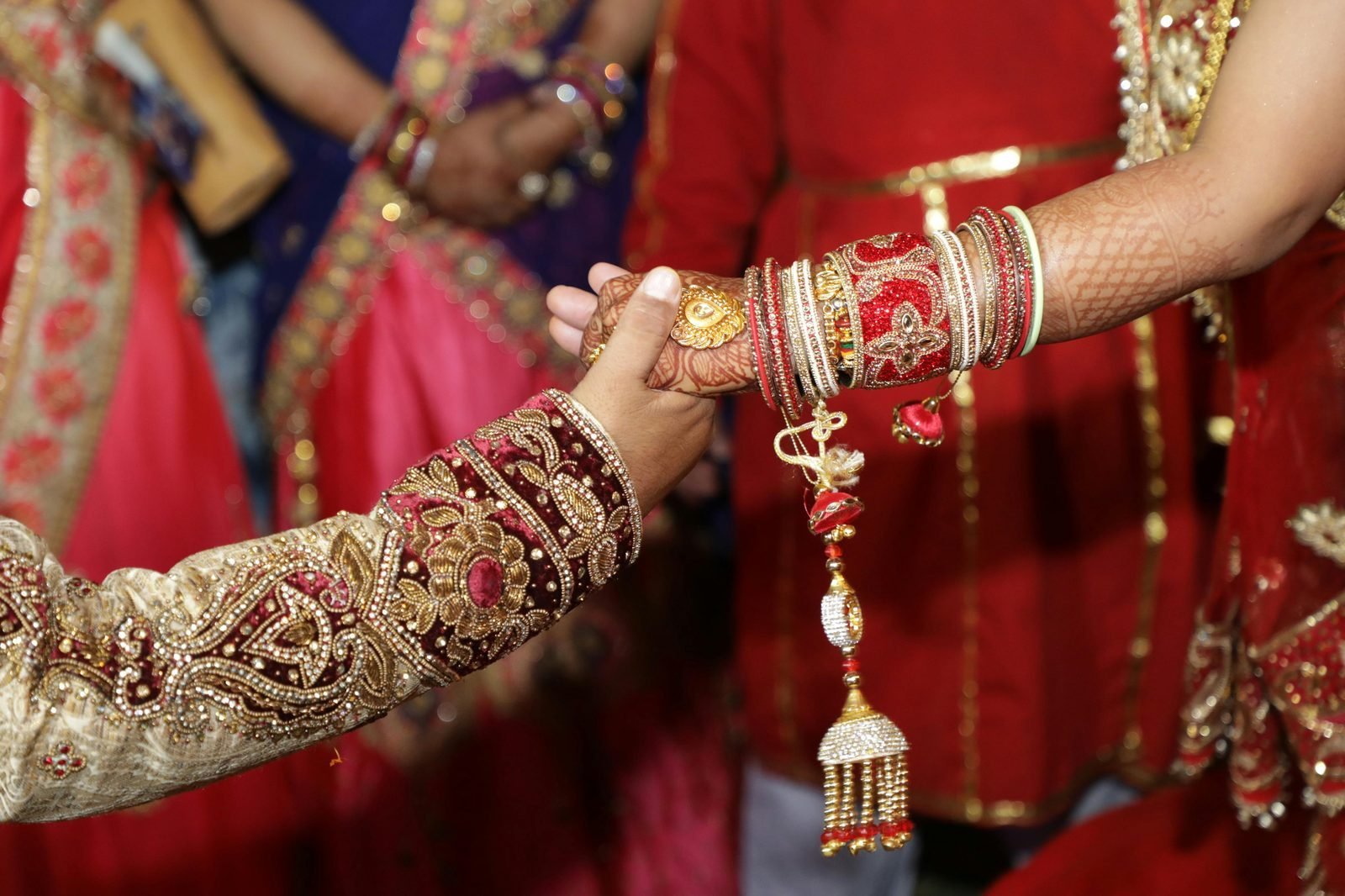
NRI Marriage in India (2026): Complete Guide to Process, Documents and Timeline
📅 Updated 22 Sep 2026⏱ 40 min read
Quick answer: NRIs, OCI cardholders and foreign nationals can legally marry in India. If both partners are Hindu, Sikh, Jain or Buddhist, the quickest route is an Arya Samaj Vedic wedding on the day you choose, followed by registration with the SDM under the Hindu Marriage Act. In Delhi that usually takes one to two weeks, or one to two working days with Tatkal (₹10,000 official fee). There is no 30-day residence rule on this route. If the partners are of different religions, or one is a foreign national, the usual route is the Special Marriage Act. Under it, one partner must have lived in the district for 30 days before notice, the notice is displayed for 30 days, and the whole process takes about 35 to 60 days. Both partners must appear in person with passports and documents. Plan your trip around the route: most NRI problems come from booking flights before checking the timeline.
Key takeaways
NRIs are Indian citizens and marry under Indian law; OCI and foreign partners need extra documents.
Both Hindu/Sikh/Jain/Buddhist: Arya Samaj + HMA registration, about 1–2 weeks, or days with Tatkal; no 30-day residence rule.
Different religions or foreign national: Special Marriage Act, 30-day residence for one partner, 30-day notice; about 35–60 days.
Both partners must attend in person; there is no proxy or video marriage.
Apostille the certificate for visas; families should verify an NRI partner's status and always register the marriage.
Every month we help couples where at least one partner lives abroad: software engineers in the US flying in for three weeks, nurses in the UK and Australia, families in the Gulf, Canadian PR holders, and foreign nationals marrying Indian partners. Their questions are always practical. How many days do we need in India? Which documents must we bring from abroad? Will the certificate work for a spouse visa? This guide answers those questions in the order you will face them.
Your status decides which documents you need and, sometimes, which law applies.
Status
Who
Travel document for India
Marriage points
NRI
Indian citizen living abroad
Indian passport
Marries as an Indian citizen; foreign residence documents may be asked for marital status
OCI cardholder
Foreign citizen of Indian origin, or foreign spouse of an Indian/OCI, registered as OCI
Foreign passport + OCI card
Foreign national in law; usually needs a marital status document from the country of citizenship
PIO (legacy)
PIO cards were merged into OCI
Foreign passport + OCI card
As OCI
Foreign national
Citizen of another country, no Indian card
Foreign passport + Indian visa
Needs a valid visa for the whole stay; embassy documents often needed
An NRI remains an Indian citizen. Many NRIs assume they are treated as foreigners for marriage; they are not. But because they live abroad, the office may still want evidence that they are unmarried, and the foreign country may want documents for its own visa process.
Which Law Applies to Your Couple
Couple
Usual law
Time in India
NRI Hindu + Indian Hindu (includes Sikh, Jain, Buddhist)
Hindu Marriage Act (Arya Samaj + registration)
About 1–2 weeks; less with Tatkal
NRI + Indian of different religions
Special Marriage Act
About 35–60 days (30-day residence and notice)
Indian + foreign national
Usually Special Marriage Act
About 35–60 days
OCI Hindu + Indian Hindu
Hindu Marriage Act or Special Marriage Act, depending on the facts; we check before booking
1–2 weeks (HMA) or 35–60 days (SMA)
Two foreign nationals
Special Marriage Act
About 35–60 days
The Hindu Marriage Act applies to Hindus, Sikhs, Jains and Buddhists, and extends to Hindus domiciled in India who are outside India. Where one partner is a foreign citizen, whether the Hindu Marriage Act is the right law depends on religion and domicile, and some offices prefer the Special Marriage Act for foreign nationals. We check this case by case before you book tickets. The difference between the two laws is set out in Special Marriage Act versus Hindu Marriage Act.
Should You Marry in India or Abroad?
Option
How it works
Good for
Marry in India
Arya Samaj + HMA registration, or Special Marriage Act, at the SDM office
Couples who want family present in India and an Indian certificate
Marry abroad under local law
Civil marriage in the foreign country
Couples both living in that country; recognised in India if valid where performed
Marry abroad under the Foreign Marriage Act, 1969
Before an Indian diplomatic or consular Marriage Officer, where at least one partner is an Indian citizen
Couples abroad who want an Indian-law marriage
Most couples who come to us marry in India because families are here and a Vedic ceremony matters to them. If both of you live abroad and can only visit briefly, and you are of different religions, marrying under local law where you live may be quicker than the Special Marriage Act in India.
Planning the Trip Around the Timeline
The most expensive mistake NRI couples make is booking a short trip for a route that cannot fit into it. Work out the route first, then book flights.
Special Marriage Act; normal registration if appointments are busy
2–3 weeks
Arya Samaj wedding + normal registration; apostille of the certificate may be possible
Special Marriage Act
5–8 weeks
Special Marriage Act, if one partner has lived in the district 30 days before notice
—
Two short trips
SMA: first trip for residence and notice, second for solemnisation (within three months of notice)
Needs careful date planning
A sample 10-day plan (both Hindu)
Day
Task
Before travel
Send scans for document check; arrange any foreign marital status document; confirm witnesses
Day 1
Arrive; rest
Day 2
Originals checked; affidavits signed
Day 3
Arya Samaj wedding; mandir certificate
Day 3–4
e-District application with Tatkal
Day 5–6
SDM appointment with witnesses; certificate
Day 7–9
Apostille process started if needed; family time
Day 10
Fly back with certificate (apostille may follow by courier)
Timelines depend on office workload and holidays. Leave buffer days, and avoid planning around a single appointment date.
Route 1: Arya Samaj Wedding + Hindu Marriage Act Registration
Document check before you travel. Send scans of passports, age proofs, address proofs and any marital status documents. We tell you what is missing while you are still abroad.
Book the wedding date. Any day, including weekends; no muhurat restrictions.
Affidavits. Signed and attested in India once you arrive.
The Vedic ceremony. About one to one and a half hours: havan, vows, saptapadi, sindoor and mangalsutra. The mandir certificate is issued the same day.
Registration application on the Delhi e-District portal under the Hindu Marriage Act. Jurisdiction usually depends on where the marriage was performed or where the partner in India lives.
Tatkal or normal appointment. ₹10,000 for an appointment usually within one to two working days, or ₹100 for a normal appointment, usually within one to two weeks.
SDM appointment. Both partners and two witnesses appear with original passports and documents.
Certificate. Issued on the day or soon after; download and check every detail against the passport.
Section 5 of the Special Marriage Act requires that at least one partner has resided in the Marriage Officer's district for at least 30 days immediately before the notice. For NRI couples this rule causes more confusion than any other.
It applies only to the Special Marriage Act. The Arya Samaj and Hindu Marriage Act route has no 30-day residence requirement.
Only one partner needs to satisfy it. Usually the partner living in India does, which means the NRI partner can arrive later.
Residence must be real and supported by address proof. A short hotel stay created only to file is risky.
Both partners must attend notice verification and solemnisation, so plan the NRI partner's travel around those two dates.
A common plan: the partner in India files notice where they already live; the NRI partner flies in for verification (if required in person at that stage) and again, or stays on, for solemnisation after 30 days.
Documents From the NRI or Foreign Partner
Document
NRI (Indian passport)
OCI / foreign national
Passport
Original Indian passport
Original foreign passport
Visa / OCI card
Not needed
Valid visa for the whole stay, or OCI card
Age proof
Passport or Class 10 certificate
Passport; birth certificate if asked
Address proof
Indian address proof if any, plus foreign address proof
Foreign address proof; Indian stay address
Marital status
Affidavit; sometimes a document from the country of residence
Single-status or no-impediment certificate from the embassy or home authority, often required
Divorce decree / death certificate
If previously married; foreign decrees may need apostille
If previously married; apostilled or legalised
Photographs
Recent passport-size
Recent passport-size
Requirements differ between SDM offices and depend on the partner's country. Get the list confirmed before you travel. Documents from abroad often take weeks to obtain.
Documents From the Partner in India
Age proof: Class 10 certificate, birth certificate or passport
Identity proof: Aadhaar, passport, voter ID or similar
Address proof for Delhi, which matters for jurisdiction
Passport-size photographs
Affidavit of age, marital status and religion
Divorce decree or former spouse's death certificate, if applicable
Foreign Documents: Apostille, Legalisation and Translation
Any document issued abroad, such as a divorce decree, birth certificate or single-status certificate, usually needs to be authenticated before an Indian office accepts it.
Apostille: if the issuing country is a party to the Hague Apostille Convention, the document is apostilled by that country's competent authority. India is also a party, so an apostilled foreign document is generally accepted without further legalisation.
Legalisation: for countries not in the Convention, documents are usually attested by that country's authorities and then by the Indian embassy or consulate there.
Translation: documents not in English or Hindi need a certified translation.
NRI couples often struggle with witnesses because friends live abroad. Witnesses must be adults with valid ID who genuinely know you and attend the marriage: two for Hindu Marriage Act registration, three for the Special Marriage Act. Cousins, siblings, family friends and the Indian partner's colleagues usually work well. Foreign citizens can be witnesses with their passports. We do not provide witnesses; plan them before you travel.
After the Wedding: From Certificate to Visa
Check the certificate against both passports: names, dates of birth, spellings. A mismatch can cause a visa refusal.
Apostille the certificate through the Ministry of External Affairs for use in Hague Convention countries, or get embassy attestation for others. See marriage certificate apostille for visa.
Collect evidence of the relationship that visa officers commonly ask for: wedding photographs, the mandir certificate, communication history, travel records.
Update the Indian partner's passport with the spouse's name if the destination country prefers it.
Apply for the spouse visa under the destination country's rules.
OCI and Visas for a Foreign Spouse
When the Indian partner stays in India, or the couple plans to live in India later, the foreign spouse has options under Indian rules:
Entry (X) visa: a foreign spouse of an Indian citizen or OCI can generally apply for an entry visa as a spouse.
OCI registration: under the Citizenship Act, a foreign national married to an Indian citizen or an OCI cardholder, whose marriage has been registered and has subsisted for at least two continuous years before the application, can apply for an OCI card, subject to security clearance and other conditions.
Registration certificate: the Indian marriage certificate, and its registration, is the key document for these applications.
Rules are set by the Ministry of Home Affairs and change from time to time; check the current conditions on the official visa and OCI portals before applying.
Checks Before Marrying an NRI
Most NRI marriages are genuine and happy. But the government has repeatedly warned about cases where brides, and sometimes grooms, were deceived or abandoned after marrying an NRI. Families in India should make sensible checks before the wedding:
Immigration status: ask to see the visa, work permit or residence card, and its validity.
Marital status: confirm the NRI partner is not already married abroad; a single-status certificate helps.
Employment: employer name, role and address, which can be checked.
Address abroad: where the couple will live; talk to people who know them there.
Spouse visa plan: who will sponsor, when, and what the timelines are in that country.
Register the marriage: never rely only on a religious ceremony; the registered certificate is essential if anything goes wrong.
Keep copies of the NRI partner's passport, visa and address.
Protection for Spouses Left Behind
If an NRI spouse abandons their partner, the law provides several remedies, which work far better when the marriage is registered:
Maintenance under Section 144 of the Bharatiya Nagarik Suraksha Sanhita, 2023 and the marriage laws.
Protection of Women from Domestic Violence Act, 2005, including residence and monetary relief.
Passport action: the Passports Act, 1967 allows the authority to impound or revoke a passport in specified circumstances, including where a court case is pending; the Ministry of External Affairs has acted in NRI abandonment cases.
Help from government: the Ministry of External Affairs and the National Commission for Women provide guidance and assistance to women deserted by NRI husbands, and Indian missions abroad can help with information.
The Law Commission of India has also recommended compulsory registration of marriages involving NRIs and OCIs. Whatever the law requires at any given time, registration is the single best protection.
Can an NRI Marry Without Coming to India?
No. Indian marriage law requires both partners to be physically present. There is no legal way to marry in India by video call, by proxy, or through a power of attorney. The ceremony under the Hindu Marriage Act needs both partners to take the seven steps together, and under the Special Marriage Act both partners must make their declarations in person before the Marriage Officer and witnesses. The registration appointment also needs both of you. Anyone offering a "marriage certificate without coming to India" is offering something that will not stand up, and it may amount to fraud.
Registering an Older Marriage When One Partner Now Lives Abroad
Many couples married by Hindu rites years ago but never registered, and only discover the problem when one of them applies for a spouse visa. The solutions:
Hindu Marriage Act registration of the earlier marriage: possible with proof of the ceremony (mandir or temple certificate, photographs, invitation card, affidavits). Both partners must appear, so plan it for a visit.
Tatkal: useful when leave is short.
Delay: older marriages may attract questions about why registration was delayed; a clear affidavit helps.
Apostille: after registration, for use abroad.
Do not arrange a "fresh" marriage ceremony to create a new date if you are already married. The certificate should reflect the real date of your marriage, and inconsistent dates cause visa problems.
What Destination Countries Commonly Ask For
Spouse visa rules belong to each destination country and change often, so always check the official immigration website of the country concerned. In our experience, these are the things visa officers commonly look at for couples married in India:
Evidence
Why it matters
Government marriage certificate, apostilled or attested
Legal proof of the marriage
Wedding photographs showing the ceremony and guests
Shows a genuine wedding
Mandir certificate and invitation cards
Supporting evidence
Communication history before marriage
Shows a genuine relationship
Travel records of visits
Shows time spent together
Sponsor's income and accommodation proof
Required by many countries for spouse visas
Consistent names and dates on all documents
Inconsistencies are a common cause of refusal
Name Change After Marriage for NRI Couples
Whether the wife changes her surname is her choice. If she does, plan the order carefully, because a passport name that differs from the marriage certificate can delay a visa:
Marriage certificate in the name on her current passport.
Decide whether to change the name before or after the spouse visa; many couples apply for the visa first in the existing name.
If changing, apply through Passport Seva (or the Indian mission abroad) using the marriage certificate.
Update other records after the passport.
Legal Marriage and Family Celebrations
NRI families often want large celebrations, sometimes in more than one city. It helps to separate the legal marriage from the celebrations. The legal marriage is the Arya Samaj ceremony with registration, or the Special Marriage Act solemnisation, and it produces the certificate. Receptions, sangeet, a second religious ceremony in the home town, or a party abroad are celebrations. They can happen before or after, but the certificate should carry the date of the legal marriage. Planning the legal marriage early in the trip leaves time to fix any document problem before you leave.
A Two-Trip Plan for the Special Marriage Act
When the NRI partner cannot stay for six weeks, the Special Marriage Act can often be done in two shorter visits, provided the partner in India satisfies the residence rule.
Stage
Who must be in India
Notes
30 days' residence before notice
Partner in India (already living there)
Address proof for the district
Filing and verification of notice
Both partners, where the office requires joint appearance
First trip; confirm the office's practice in advance
30-day notice period
Nobody needs to be present
NRI partner can fly back
Solemnisation (after day 30, within three months)
Both partners and three witnesses
Second trip
Apostille
Can be handled after you leave
Courier the certificate back
The three-month window is strict: if the marriage is not solemnised within three months of the notice, a fresh notice is needed. Book the second trip with that date in mind.
The Foreign Marriage Act, 1969: Marrying Abroad Under Indian Law
If you cannot come to India, the Foreign Marriage Act allows a marriage abroad between two people, at least one of whom is an Indian citizen, before a Marriage Officer appointed at an Indian embassy or consulate. The procedure resembles the Special Marriage Act, with notice, a waiting period for objections, and solemnisation before witnesses. Availability of the service, waiting times and documents vary by mission, so check with the Indian embassy or consulate where you live. Many couples abroad instead marry under the local law of their country of residence, which is also generally recognised in India if the marriage was valid where it was performed.
Where in Delhi Can an NRI Couple Register?
Hindu Marriage Act registration: the Delhi e-District portal allocates the SDM office. In practice, Delhi registration is generally available where the marriage was performed in Delhi or one of you lives in Delhi. The partner in India's Delhi address is often the basis.
Special Marriage Act: the SDM of the district where one partner has lived for 30 days before notice.
If neither of you lives in Delhi: you can still marry by Arya Samaj rites in Delhi and register in the home state of the partner in India, under that state's rules.
Questions to Ask Before You Book Flights
Which law applies to us, and has someone checked it against both passports?
How many days do we need in India for that route, including buffer days?
Which marital status document does the SDM office want from the NRI or foreign partner, and how long will it take to get from abroad?
Does any foreign document need apostille or legalisation and translation?
Is the foreign partner's visa valid for the whole stay?
Are our witnesses available on the wedding and appointment dates?
Will we use Tatkal, and is our schedule firm enough to justify it?
How long will the apostille take, and can it be sent after we leave?
What does our destination country's spouse visa need from the marriage?
Do names and dates of birth match across all documents?
If you can answer all ten, your trip is very unlikely to go wrong.
What to Carry From Abroad: A Document Packing List
Forgetting one document can cost a trip. Pack these in your cabin bag, not your checked luggage, and keep scans in cloud storage.
Item
Originals
Copies
Notes
Passport (and OCI card or visa)
Yes
3 sets
Check validity well beyond your stay
Class 10 certificate or birth certificate
Yes
3 sets
Age proof; passport also works for most offices
Foreign address proof
Yes
2 sets
Driving licence, residence card or utility bill
Marital status document
Apostilled original
2 sets
Single-status or no-impediment certificate, if required
Divorce decree or death certificate
Apostilled original
2 sets
Only if previously married
Certified translations
Yes
2 sets
For documents not in English or Hindi
Passport-size photographs
6–8
—
White background; recent
Employment letter and residence permit
Copies
2 sets
Often useful for the family and for later visa steps
Timing around Indian holidays
SDM offices close on gazetted holidays, and appointment slots are harder to get around major festivals and at the end of the financial year. NRIs often visit in December and January or during festival season, which are also busy periods for weddings. If your dates are fixed, send your documents early and book the wedding and registration at the same time, leaving at least two working days' buffer before your return flight.
Booking a two-week trip for a Special Marriage Act marriage. It cannot be done in two weeks.
Arriving without the foreign marital status document. Getting one from India can take weeks.
Not checking the visa's validity for a foreign partner through to the solemnisation date.
Name mismatches between passport and Indian documents, which later cause visa problems.
No witnesses arranged because friends are abroad.
Relying only on the mandir certificate for a spouse visa; embassies generally want the government certificate.
Leaving the apostille until after flying back. It can be done by courier, but it is easier if planned into the trip.
Not checking the destination country's requirements for evidence of the relationship.
Five NRI Couples
Typical situations, with details changed for privacy.
US engineer with twelve days' leave
Both Hindu. Documents were checked by email before the flight. They married on day 3 and paid for Tatkal, and the certificate was issued on day 5. The apostille followed while they were still in India, and the H-4 process started on their return.
UK nurse and her fiancé in Delhi
She is Christian and he is Hindu, and she wished to keep her faith. He had lived in Delhi for years and filed notice under the Special Marriage Act. She flew in for verification, returned for solemnisation six weeks later, and they applied for the UK spouse visa with the apostilled certificate.
Canadian PR holder, family in Punjab
Both Sikh. They married by Arya Samaj rites in Delhi with a small family gathering, registered the marriage, and held an Anand Karaj celebration in Punjab the next week.
German citizen and his Indian partner
He obtained a certificate of no impediment from his home authority, apostilled, before travelling. They married under the Special Marriage Act, and the German spouse visa process used the apostilled Indian certificate.
Gulf-based groom and a cautious family
The bride's family asked for the groom's work visa, employer letter and a single-status document before agreeing. Everything checked out. They married and registered the marriage, and the bride joined him on a family visa four months later.
NRI Marriage Checklist
☐ Route chosen: HMA (both Hindu/Sikh/Jain/Buddhist) or SMA
☐ Trip length matches the route
☐ Passports valid; visa valid for the whole stay (foreign partner)
☐ Marital status document from abroad, apostilled or legalised
☐ Divorce decree apostilled, if applicable
☐ Scans sent for document check before travel
☐ Witnesses who know us confirmed for the dates
☐ For SMA: one partner has 30 days' residence in the district
☐ Certificate checked against passports
☐ Apostille planned
☐ Destination country's spouse visa requirements checked
One-Minute Summary
NRIs are Indian citizens and marry under Indian law like anyone else; OCI and foreign partners need extra documents.
Both Hindu/Sikh/Jain/Buddhist: Arya Samaj + HMA registration, about 1–2 weeks, or days with Tatkal; no 30-day residence rule.
Different religions or foreign national: Special Marriage Act, 30-day residence for one partner and 30-day notice; about 35–60 days.
Foreign documents need apostille or legalisation; the certificate needs apostille for use abroad.
Families should verify an NRI partner's status; registration is the best protection.
How We Help NRI Couples
We check your documents by email before you travel, tell you exactly how many days you need, book the wedding and registration around your flights, conduct the Arya Samaj ceremony, handle e-District registration including Tatkal, guide Special Marriage Act couples through notice and solemnisation, and arrange the apostille of your certificate. We do not provide witnesses; please plan for people who know you.
Flying in to get married?
Send your documents before you book flights. NRI marriage with apostille and embassy support ₹30,000; Arya Samaj wedding + registration from ₹7,100.
Before the questions below, a short planning note for families. Most NRI weddings are planned months ahead, but the paperwork is often left to the last week of the visit. Reverse that order. Settle the route, collect the documents from abroad and book the registration appointment first, then plan the functions around it. Families who do this almost always finish the registration, and often the apostille, before the flight home, while those who leave it to the end usually have to complete it by courier, with more cost and more worry.
It also helps to decide early who in the family will be the single point of contact for the paperwork while the couple is abroad: one parent or sibling in Delhi who keeps copies of every document, receives the courier from abroad, accompanies the couple to the registration office during the visit and, if needed, follows up on the apostille afterwards. One organised person saves a great deal of confusion.
Questions and Answers: NRI Marriage in India
Can an NRI get married in India?▼
Yes. An NRI is an Indian citizen living abroad and can marry in India under the Hindu Marriage Act or the Special Marriage Act, exactly like a resident Indian. If both partners are Hindu, Sikh, Jain or Buddhist, the usual route is an Arya Samaj wedding followed by registration with the SDM. If they are of different religions, the Special Marriage Act applies. Both partners must be present in India for the ceremony and registration, with original passports and documents. The office may ask for evidence of marital status from the country where the NRI lives.
How many days does an NRI need in India to get married?▼
It depends on the route. For two Hindus, Sikhs, Jains or Buddhists, an Arya Samaj wedding can be done on the day you choose and registration usually takes one to two weeks, or one to two working days with Tatkal, so a stay of about a week can work if documents are ready. Under the Special Marriage Act, one partner needs 30 days' residence in the district before notice and the notice runs for 30 days, so the process takes about 35 to 60 days, or two separate trips. Always add buffer days.
Is there a 30-day residence requirement for NRI marriage?▼
Only under the Special Marriage Act, where Section 5 requires at least one partner to have lived in the district for 30 days before notice. Usually the partner living in India satisfies this, so the NRI partner does not need to stay for those 30 days. There is no 30-day residence requirement for an Arya Samaj wedding followed by Hindu Marriage Act registration, which is why that route suits NRI couples who are both Hindu, Sikh, Jain or Buddhist and have limited leave.
Can an NRI marry in India on a short trip?▼
Yes, if both partners are Hindu, Sikh, Jain or Buddhist. Send documents for checking before you travel, marry by Arya Samaj rites soon after arriving, and apply for Tatkal registration with the ₹10,000 official fee, which usually gives an appointment within one to two working days. The government certificate can then be apostilled, sometimes before you leave. A short trip is not enough for the Special Marriage Act, which needs a 30-day notice period; for that route, plan a longer stay or two trips.
What documents does an NRI need to get married in India?▼
An NRI needs the original Indian passport, age proof (the passport or Class 10 certificate), address proof, recent photographs and an affidavit of age, marital status and religion. The office may ask for a document from the country of residence confirming marital status. If previously married, the final divorce decree or the former spouse's death certificate is needed, and foreign decrees usually need apostille or legalisation. The partner in India needs the usual age, identity and address proofs. Two or three witnesses who know you must bring their IDs.
What documents does a foreign national need to marry in India?▼
A foreign national needs a valid passport and an Indian visa valid for the whole stay, or an OCI card; proof of address abroad and in India; recent photographs; an affidavit; and usually a single-status or no-impediment certificate from their embassy or home authority, apostilled or legalised. A previously married foreign partner needs the divorce decree or death certificate, authenticated. Documents not in English or Hindi need certified translation. Requirements vary between offices and countries, so confirm the list before travelling.
Can a foreigner marry an Indian under the Hindu Marriage Act?▼
The Hindu Marriage Act applies to Hindus, Sikhs, Jains and Buddhists, and extends to Hindus domiciled in India who are outside India. Whether it applies to a foreign citizen depends on religion and domicile, and some registration offices prefer the Special Marriage Act for foreign nationals. In most Indian-foreigner marriages, the Special Marriage Act is the clearer route and is widely accepted abroad. We check your specific situation before you book any tickets, so that the marriage and the certificate cannot later be questioned.
Can an OCI cardholder marry in India?▼
Yes. An OCI cardholder is a foreign citizen in law, travelling on a foreign passport with the OCI card, and can marry in India under the Special Marriage Act, or under the Hindu Marriage Act where the facts allow. The office usually asks for the foreign passport, OCI card, a marital status document from the country of citizenship, and address proof. Both partners must attend in person. After marriage, the certificate can be apostilled for use in the OCI holder's country of residence.
Can we get married in India without the NRI partner coming?▼
No. Indian marriage law requires both partners to be physically present. There is no marriage by video call, proxy or power of attorney. Under the Hindu Marriage Act the couple must perform the ceremony, including saptapadi, together, and under the Special Marriage Act both must make their declarations before the Marriage Officer and witnesses. Registration also needs both partners in person. Anyone offering a certificate without the partner coming to India is offering something that is not legally valid.
What is Tatkal marriage registration and is it useful for NRIs?▼
Tatkal is a priority option for registering a Hindu marriage in Delhi. The official fee is ₹10,000 instead of ₹100, and the appointment is usually within one to two working days instead of one to two weeks. The certificate is identical to a normal one. It is very useful for NRIs with short leave, because it lets them marry and receive the government certificate within a few days. It is not available under the Special Marriage Act. Pay for Tatkal only when documents and witnesses are fully ready.
Do NRIs need witnesses for marriage in India?▼
Yes. Two adult witnesses are usually needed for Hindu Marriage Act registration and three for Special Marriage Act solemnisation. They need valid ID and address proof and must genuinely know the couple and attend the marriage. Foreign citizens can be witnesses with their passports. Because many NRIs' friends live abroad, cousins, siblings, family friends and the Indian partner's colleagues usually serve as witnesses. We do not provide witnesses; confirm your witnesses' availability for the wedding and appointment dates before you travel.
How do we get the Indian marriage certificate accepted abroad?▼
For countries that are parties to the Hague Apostille Convention, the certificate is apostilled by India's Ministry of External Affairs through its authorised process, after any required state-level verification. For countries not in the Convention, the certificate is attested by the MEA and then by that country's embassy in India. Check the certificate against both passports before starting, because mismatches cause refusals. Our apostille-for-visa article explains the process and timing in detail, and our apostille service costs ₹4,500.
Does an NRI need an apostille on their foreign documents?▼
Usually, yes, for documents issued abroad that the Indian office must rely on, such as a divorce decree, birth certificate or single-status certificate. If the issuing country is a party to the Hague Apostille Convention, the document is apostilled there. Otherwise it is legalised by that country's authorities and then by the Indian embassy or consulate. Documents not in English or Hindi also need certified translation. Get these done before travelling to India, because obtaining them from India can take weeks.
Can a foreign spouse of an Indian get an OCI card?▼
Under the Citizenship Act, a foreign national married to an Indian citizen or an OCI cardholder, whose marriage has been registered and has subsisted for at least two continuous years immediately before applying, can apply for an OCI card, subject to security clearance and other conditions. The registered marriage certificate is a key document. Until then, a foreign spouse can generally apply for an entry visa as a spouse. Rules are set by the Ministry of Home Affairs and change from time to time, so check the official OCI portal.
What visa does a foreign spouse need to live in India?▼
A foreign spouse of an Indian citizen or OCI cardholder can generally apply for an entry (X) visa, which can be extended in India under the applicable rules, and later for an OCI card once the marriage has been registered and has lasted at least two years. The marriage certificate, the Indian spouse's passport or proof of citizenship, and evidence of the relationship are usually needed. Visa rules change, so check the official Indian visa portal and the Ministry of Home Affairs guidelines before applying.
How much does an NRI marriage cost in India?▼
Our Arya Samaj wedding costs ₹5,100, and ₹7,100 including SDM registration. Urgent or Tatkal registration handling is ₹6,100, and the official Tatkal fee is ₹10,000 (normal registration ₹100). The full Special Marriage Act process is ₹15,000 plus about ₹15 in official fees. Apostille of the certificate is ₹4,500, and our NRI package with apostille and embassy work is ₹30,000. Flights, accommodation and foreign document costs are extra. All charges are given in writing before you pay.
Can we marry in India if we are both foreign nationals?▼
Yes, under the Special Marriage Act, provided at least one of you has lived in the district for 30 days before giving notice and you meet the Act's conditions. Both of you need valid visas for the whole period, passports, and usually marital status documents from your countries, apostilled or legalised. The marriage is solemnised after the 30-day notice before three witnesses. Check first with your own countries' authorities whether they will recognise an Indian marriage and what documents they will need afterwards.
Can an NRI couple marry abroad under Indian law?▼
Yes. The Foreign Marriage Act, 1969 allows a marriage abroad where at least one partner is an Indian citizen, before a Marriage Officer at an Indian embassy or consulate. The procedure resembles the Special Marriage Act, with notice and a waiting period for objections before solemnisation. Availability and waiting times vary by mission, so check with the Indian embassy or consulate where you live. Alternatively, a marriage under the local law of the country where you live is generally recognised in India if valid there.
We married years ago but never registered. Can we register now?▼
Yes. A Hindu marriage performed years ago can be registered under the Hindu Marriage Act with proof of the ceremony, such as a temple or mandir certificate, photographs and invitation cards, plus affidavits. Both partners must appear before the SDM, so plan it for a visit to India; Tatkal helps if leave is short. The office may ask why registration was delayed, so explain clearly in the affidavit. Do not arrange a new ceremony to create a new date; the certificate should show the true date of your marriage.
Should the wife change her name before or after the spouse visa?▼
It is her choice whether to change her surname at all. If she does, many couples apply for the spouse visa first using the name on her current passport, which matches the marriage certificate, and change the name afterwards through Passport Seva or the Indian mission abroad. Changing the passport name in the middle of a visa application can cause mismatches and delays. Whatever you decide, make sure names are consistent across the marriage certificate, passport and visa application.
What should Indian families check before marrying their daughter to an NRI?▼
Families should see the NRI partner's passport, visa or residence permit and check its validity; confirm marital status, ideally with a single-status document from the country of residence; verify employment with the employer's name and address; learn where the couple will live and speak to people who know them there; understand the spouse visa plan and its timelines; and insist on registering the marriage. Keep copies of the partner's passport, visa and address. Most NRI marriages are genuine, but these checks prevent the painful cases the government has warned about.
What can a woman do if her NRI husband abandons her?▼
She can claim maintenance under Section 144 of the Bharatiya Nagarik Suraksha Sanhita, 2023 and the marriage laws, and seek residence and monetary relief under the Protection of Women from Domestic Violence Act, 2005. Where a case is pending, the passport authority can act under the Passports Act, 1967, and the Ministry of External Affairs has acted in NRI abandonment cases. The National Commission for Women and Indian missions abroad provide guidance. A registered marriage certificate makes every one of these remedies much easier to use.
Is NRI marriage registration compulsory?▼
Delhi has a compulsory marriage registration order for marriages performed in Delhi, and the Law Commission of India has recommended compulsory registration of marriages involving NRIs and OCIs. Whatever the law requires at a given time, registration is essential in practice: embassies generally want the government certificate for spouse visas, and it is the key document if the marriage is ever disputed or a spouse is abandoned. We advise every NRI couple to register their marriage before leaving India.
Can the NRI partner's parents attend if they are abroad?▼
Parents' attendance is not a legal requirement. Many NRI couples marry with a small group in Delhi and hold receptions or family ceremonies later, sometimes abroad, when relatives can travel. Some families join by video call to watch the ceremony, which is fine as a celebration, but the couple and witnesses must be physically present for the legal marriage. The certificate should carry the date of the legal marriage, and later celebrations do not change it.
How long does the apostille of the marriage certificate take?▼
It depends on the verification required before the Ministry of External Affairs issues the apostille and on current processing times. Plan for it in your trip: some couples complete it before flying back, while others have it done afterwards and couriered. Before starting, check that the certificate matches both passports exactly. For non-Hague countries, embassy attestation after MEA attestation adds further time. Our apostille-for-visa article gives the full process, and our apostille service costs ₹4,500.
Do we need to be in India for the 30-day notice period?▼
Not necessarily. Under the Special Marriage Act, the partner in India usually satisfies the 30-day residence requirement before notice. Both partners attend the notice verification if the office requires it, and both must attend solemnisation after day 30 and within three months of the notice. Nobody needs to be present during the notice period itself, so the NRI partner can fly back and return for solemnisation. Confirm the office's practice on joint appearance at the notice stage before booking.
Can a divorced NRI remarry in India?▼
Yes, once the divorce is final. A foreign divorce decree usually needs apostille or legalisation before an Indian office relies on it. Whether a foreign divorce is recognised in India depends on the circumstances, including jurisdiction and grounds; the Supreme Court addressed this in Y. Narasimha Rao v. Y. Venkata Lakshmi (1991). If the earlier marriage took place in India and the divorce was granted abroad, take legal advice before remarrying, because marrying while the earlier marriage still subsists in Indian law would be bigamy.
Which Delhi office registers an NRI marriage?▼
The Delhi e-District portal allocates the SDM office. For Hindu Marriage Act registration, Delhi registration is generally available where the marriage was performed in Delhi or one partner lives in Delhi; the partner in India's Delhi address is often the basis. For the Special Marriage Act, it is the SDM of the district where one partner has lived for 30 days before notice. If neither of you lives in Delhi, you can marry by Arya Samaj rites in Delhi and register in the home state of the partner in India.
What evidence do embassies usually want for a spouse visa?▼
Requirements belong to each destination country and change often, so check its official immigration website. Commonly, visa officers look for the government marriage certificate (apostilled or attested), wedding photographs showing the ceremony and guests, supporting documents such as the mandir certificate and invitations, evidence of the relationship before marriage, records of time spent together, and the sponsor's income and accommodation proof. Consistent names and dates across all documents are essential; inconsistencies are a common reason for refusal.
Can a Muslim or Christian NRI marry a Hindu in India?▼
Yes, under the Special Marriage Act, without either partner converting. One partner, usually the one living in India, must have lived in the district for 30 days before notice; the notice runs for 30 days; and the marriage is then solemnised before three witnesses. The process takes about 35 to 60 days, so plan a longer stay or two trips. The certificate is widely accepted abroad after apostille. Our inter-religion marriage guide explains succession, children and other consequences of marrying under this Act.
Is an Arya Samaj certificate enough for a spouse visa?▼
Generally not on its own. The mandir certificate is proof that the ceremony took place, but embassies usually want the government marriage certificate issued after registration with the SDM, apostilled or attested for use abroad. The mandir certificate and wedding photographs are useful supporting evidence. That is why we register every NRI marriage, using Tatkal where leave is short, so that the couple leaves India with a government certificate rather than only the mandir certificate.
Why choose your service for an NRI marriage?▼
We check your documents by email before you book flights, tell you exactly how many days you need, schedule the wedding and registration around your travel, conduct the Arya Samaj ceremony, handle e-District registration including Tatkal, guide Special Marriage Act couples through notice and solemnisation, and arrange the apostille of the certificate. We have helped NRI couples from the US, UK, Canada, Australia, Europe and the Gulf since 1998. Everything is confidential, prices are in writing, and we do not provide witnesses.
Sources and Official References
Facts in this article were checked against the following primary sources. Government fees and procedures change, so confirm current details on the official portal before applying.