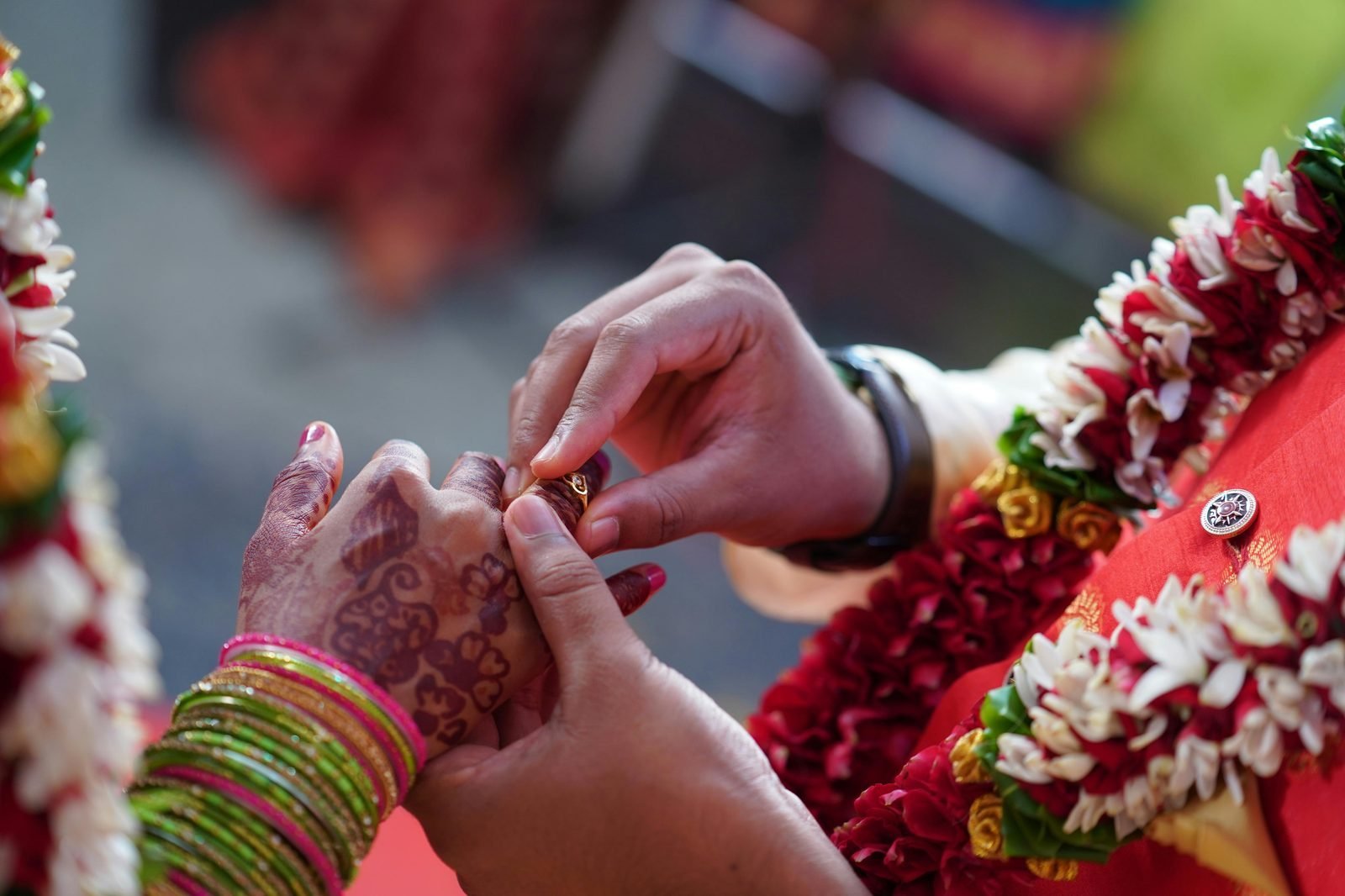
Quick answer: An Arya Samaj marriage is a Hindu wedding by Vedic rites (havan and saptapadi) performed at an Arya Samaj mandir; it is valid under the Hindu Marriage Act, 1955 and the Arya Marriage Validation Act, 1937, can be completed in a single morning, and is open only to Hindus, Sikhs, Jains and Buddhists (others can join by voluntary Shuddhi). A court marriage is a civil marriage before the SDM under the Special Marriage Act, 1954; it needs no ritual and no religion change, but requires a 30-day public notice, so it takes about 35 to 60 days. Both are fully legal. Choose Arya Samaj when both partners are Hindu, Sikh, Jain or Buddhist and you want speed or a traditional ceremony; choose court marriage when you are of different religions and neither wants to convert, or you want a purely civil wedding. Whichever you choose, register the marriage with the SDM so that you hold a government certificate.
Key takeaways
Last reviewed: 22 September 2026 · 40 min read
On this page
"Should we do Arya Samaj marriage or court marriage?" is probably the question we answer most often. Couples hear both terms from friends, relatives and websites, sometimes used as if they were the same thing, and sometimes as if one were "real" and the other not. Both are real, both are legal, and each is better in particular situations. This article compares them point by point, so that you can make the choice with confidence rather than guesswork. For the full procedure of each, see our articles on the court marriage process and Arya Samaj court marriage.
| Point | Arya Samaj marriage | Court marriage (Special Marriage Act) |
|---|---|---|
| Governing law | Hindu Marriage Act, 1955; Arya Marriage Validation Act, 1937 | Special Marriage Act, 1954 |
| Nature | Religious (Vedic) wedding | Civil wedding |
| Who performs it | Arya Samaj purohit at a mandir | Marriage Officer (SDM in Delhi) |
| Where | Arya Samaj mandir | SDM office |
| Who can use it | Hindus, Sikhs, Jains, Buddhists; others after voluntary Shuddhi | Any two eligible adults of any religion or none |
| Religion change | Needed if one partner is outside these faiths | Never needed |
| Public notice | None | 30 days at the SDM office |
| Time to marry | Same day (1–2 hours) | 35–60 days |
| Time to government certificate | 1–15 days after registration; 1–2 days with Tatkal | At solemnisation, same day or a few days later |
| Witnesses | Usually two at the mandir and two at registration | Three at solemnisation |
| Residence condition | No 30-day rule for the ceremony | One partner must have lived 30 days in the district |
| Age | Groom 21, bride 18 | Groom 21, bride 18 |
| Parental consent | Not required | Not required |
| Ceremony | Havan, pheras, saptapadi, sindoor, mangalsutra | Signed declaration and spoken words before the officer |
| Certificate issued | Mandir certificate; government certificate after SDM registration | Government marriage certificate |
| Official cost | About ₹100 registration (₹10,000 Tatkal) plus mandir charges | About ₹15 |
| Our package | ₹5,100 ceremony; ₹7,100 with SDM registration | ₹6,100 advocate-assisted; ₹15,000 full SMA process |
| Succession law | Hindu Succession Act, 1956 | Indian Succession Act, 1925 (Hindu Succession Act if both are Hindu, Sikh, Jain or Buddhist) |
| Divorce law | Hindu Marriage Act | Special Marriage Act |
| Best for | Hindu couples, inter-caste couples, urgent cases | Inter-religion couples, NRIs and foreigners, civil-only weddings |
The Arya Samaj is a Hindu reform movement founded by Swami Dayanand Saraswati in 1875. One of its central ideas was a return to simple Vedic rituals, without caste distinctions, dowry or elaborate expense. That philosophy shaped the Arya Samaj wedding: a short, meaningful ceremony performed in front of the sacred fire, open to couples regardless of caste.
Legally, an Arya Samaj marriage is a Hindu marriage. Section 7 of the Hindu Marriage Act, 1955 says a Hindu marriage may be solemnised according to the customary rites and ceremonies of either party, and where those rites include saptapadi, the marriage becomes complete and binding when the seventh step is taken. The Arya Samaj ceremony includes saptapadi, which is why its marriages are complete on the day. In addition, the Arya Marriage Validation Act, 1937 specifically confirms that marriages between Arya Samajists are valid even if the partners belonged to different castes, or to different religions before becoming Arya Samajists.
What the mandir gives you on the day is a marriage certificate issued by the mandir. That certificate is evidence that the ceremony took place. It is not, by itself, a government certificate. To get a government certificate, the marriage is registered with the SDM under Section 8 of the Hindu Marriage Act and Delhi's registration rules. More on that under certificates.
A court marriage is a civil marriage under the Special Marriage Act, 1954. Despite the name, there is no courtroom and no judge. The Marriage Officer, who in Delhi is the SDM of your sub-division, receives a notice of intended marriage, displays it for 30 days so that anyone with a legal objection can raise it, and then solemnises the marriage in the presence of three witnesses. The couple signs a declaration and says, in any language, that they take each other as lawful spouses. The officer then enters the certificate in the Marriage Certificate Book, and that entry is conclusive evidence of the marriage.
The Special Marriage Act was created so that any two eligible adults in India could marry without reference to religion. It does not ask about caste or faith, and it never requires conversion. That is its great strength, and it is why it is the default route for inter-religion couples. The full picture is in our main article on court marriage in Delhi.
In everyday speech, "court marriage" is also used for an Arya Samaj wedding that is later registered with the SDM, because the couple ends up with a certificate from the same government office. So when a relative says "they did court marriage in one day", they usually mean an Arya Samaj wedding with quick registration, not a Special Marriage Act marriage, which cannot be done in a day.
Yes. An Arya Samaj marriage performed with the essential Vedic rites between eligible Hindu partners is a valid marriage under the Hindu Marriage Act from the moment the saptapadi is complete. A court marriage under the Special Marriage Act is valid from the moment the Marriage Officer solemnises it. Both carry the same rights: maintenance, inheritance, protection under the Protection of Women from Domestic Violence Act, legitimacy of children and eligibility for dependent visas.
The difference is about proof, not validity. A Special Marriage Act marriage produces a government certificate as part of the process. An Arya Samaj marriage produces a mandir certificate first; to get the government certificate that passport offices, embassies and many banks want, you register it with the SDM. A validly performed Arya Samaj marriage that has not yet been registered is still a valid marriage, but it is harder to prove, and some courts have looked sceptically at mandir certificates issued without proper checks. Registration removes that problem.
An Arya Samaj ceremony cannot cure a legal defect. The marriage is void or voidable, whatever the certificate says, if:
Underage marriage is also prohibited and punishable under the Prohibition of Child Marriage Act, 2006. A careful mandir checks all of these before the ceremony, and so do we.
| Couple | Arya Samaj marriage | Court marriage (SMA) |
|---|---|---|
| Two Hindus (any castes) | Yes | Yes |
| Hindu and Sikh, Jain or Buddhist | Yes | Yes |
| Hindu and Muslim, Christian, Parsi or Jew, no conversion | No | Yes |
| Same couple, non-Hindu partner voluntarily converts by Shuddhi | Yes | Yes |
| Two Muslims, two Christians or other non-Hindu couples | No (unless both convert) | Yes |
| Indian and foreign national | Only if both are or become Hindu | Yes |
| Couple where neither has 30 days of Delhi residence | Ceremony possible; registration depends on jurisdiction | Not in Delhi until one qualifies |
| Atheist or non-religious couple wanting no ritual | Not suitable | Yes |
For many couples, this single point settles the question. An Arya Samaj marriage is a Hindu marriage, so both partners must be Hindu in the legal sense (which includes Sikhs, Jains and Buddhists). If one partner is Muslim, Christian, Parsi or Jewish, the only way to use the Arya Samaj route is for that partner to embrace Hinduism through Shuddhi before the wedding.
Conversion is a serious personal decision with lasting consequences for identity, family, succession and sometimes for the law of other countries. Courts have repeatedly refused to recognise conversions made only to get around the law, and several states have their own laws regulating conversion. A conversion must be genuine and voluntary. If either of you has any hesitation, choose the Special Marriage Act, which lets both of you keep your religion, name and practices. Our Shuddhi Sanskar and inter-religion marriage articles explain both paths honestly, and our inter-religion marriage service handles either.
| Step | Arya Samaj + registration | Court marriage (SMA) |
|---|---|---|
| Preparing documents | 1 day | 1–3 days |
| Marriage | Same day, 1–2 hours | After 30-day notice |
| Government registration | 1–15 days (1–2 with Tatkal) | Part of solemnisation |
| Total to government certificate | 1 to 15 days | 35 to 60 days |
If you have a visa appointment, a posting abroad, a family emergency or simply do not want to wait, and both of you are Hindu, Sikh, Jain or Buddhist, the Arya Samaj route wins easily. Our explainers on same-day registration and Tatkal certificates set realistic expectations.
Under the Special Marriage Act, the notice of intended marriage is displayed at the Marriage Officer's office for 30 days, and a copy may be sent to another district where one partner lives. The Marriage Notice Book is open for inspection. For couples whose families are hostile, this public window can be stressful.
An Arya Samaj marriage has no public notice period. The ceremony happens at the mandir, and registration follows. For Hindu couples who fear interference, this is often the safer choice. Couples who must use the Special Marriage Act can still protect themselves: prepare a written protection request to the police in advance, keep the plan private and, if threats are serious, seek protection from the Delhi High Court. See our love marriage service and love marriage legal rights.
| Requirement | Arya Samaj + registration | Court marriage (SMA) |
|---|---|---|
| Age proof | Both partners | Both partners |
| Identity and address proof | Both partners | Both; one must show 30 days in the district |
| Affidavits | For the mandir; joint affidavit for registration | Individual affidavits for the notice |
| Proof of ceremony | Mandir certificate and photographs | Not applicable |
| Conversion certificate | If one partner converted | Never |
| Witnesses | Usually two, with ID | Three, with ID |
The complete list with affidavit specimens is in our documents required article, and witness rules are in witness requirements.
The wedding feels like a wedding. The couple sits before the sacred fire, the purohit explains each mantra, and the ceremony moves through the havan, panigrahan (taking of hands), mutual vows, the rounds around the fire and the saptapadi, the seven steps, each with a promise. Sindoor and mangalsutra follow if the couple wishes, then blessings. Friends and family can attend, photographs are welcome, and many couples say the simplicity is what makes it meaningful. It usually takes one to two hours.
A court marriage is short and administrative. After waiting your turn, you, your partner and three witnesses enter the officer's room, sign the declaration, say the words of marriage and sign the certificate book. It can take less than half an hour inside the room. Couples who want some ceremony often exchange garlands or rings, and many hold a reception or a religious blessing separately later. For couples who want a wedding free of any religious ritual, this simplicity is exactly the point.
Government fees are small in both cases: about ₹100 for Hindu Marriage Act registration (₹10,000 for Tatkal) and about ₹15 for a Special Marriage Act marriage. With our service, an Arya Samaj marriage is ₹5,100, the Arya Samaj ceremony plus SDM registration is ₹7,100, an advocate-assisted court marriage is ₹6,100, and the full Special Marriage Act process, which runs for weeks, is ₹15,000. Every rupee is broken down in court marriage fees in Delhi and on our fees page.
Cost differences between the two routes are really differences in time and work. An Arya Samaj wedding with registration is finished within days, with one mandir visit and usually one SDM visit. A Special Marriage Act marriage involves filing, a verification visit, a month of waiting, possible objections, a second visit with three witnesses and a deadline to watch. When couples compare prices, they should compare the whole journey rather than the headline fee. For many Hindu couples, the combined Arya Samaj and registration package is both the quickest and the most economical path to a government certificate, while for inter-religion couples the Special Marriage Act is the only path, and its extra weeks are simply part of the law.
This is where most practical problems arise, so it is worth being precise.
| Use | Arya Samaj mandir certificate alone | Government certificate (SDM) |
|---|---|---|
| Passport: adding spouse, surname change | Often not accepted alone | Accepted |
| Spouse or dependent visa | Generally not accepted | Accepted, usually with apostille |
| Bank and insurance nominations | Sometimes | Accepted |
| Employer records and benefits | Depends on employer | Accepted |
| Property, succession and court matters | Supporting evidence | Strong primary evidence |
| Inter-caste marriage incentive schemes | Not sufficient | Required |
| Police protection requests | Useful | Strongest |
The practical conclusion is straightforward: if you marry at an Arya Samaj mandir, register the marriage with the SDM. It costs little, takes a short time, and gives you the same government certificate a court marriage couple receives. Our marriage registration service handles this.
This is the least discussed difference, and sometimes the most important one.
Succession for both spouses continues to be governed by the Hindu Succession Act, 1956. Nothing changes in their position in a Hindu undivided family.
So for two Hindus, the inheritance consequences of a court marriage and an Arya Samaj marriage are essentially the same. For an inter-religion couple under the Special Marriage Act, the Indian Succession Act will generally apply, which is one more reason to consider writing wills. This area can be technical; if property or a family business is involved, take specific legal advice. A fuller comparison is in Special Marriage Act versus Hindu Marriage Act.
Nobody marries planning a divorce, but the law that will govern it is part of an informed choice.
| Point | Arya Samaj (Hindu Marriage Act) | Court marriage (Special Marriage Act) |
|---|---|---|
| Grounds for divorce | Section 13 | Section 27 |
| Divorce by mutual consent | Section 13B | Section 28 |
| Bar on filing in the first year | Section 14, with exceptions for hardship | Section 29, with exceptions for hardship |
| Maintenance and alimony | Sections 24 and 25, plus general law | Sections 36 and 37, plus general law |
In practice, the grounds and procedures are broadly similar under both Acts. Maintenance is also available under Section 144 of the Bharatiya Nagarik Suraksha Sanhita, 2023, regardless of which Act you married under.
Honest advice includes the uncomfortable parts. Over the years, several courts have criticised some mandirs and organisations for issuing marriage certificates without properly checking age, identity, consent or residence. In one widely reported remark in June 2022, the Supreme Court observed that issuing marriage certificates is not the business of the Arya Samaj, in a case where the validity of a certificate was in question. High Courts have also flagged certificates issued in bulk with little scrutiny.
None of this means a genuine Arya Samaj wedding is invalid. A marriage validly solemnised with Vedic rites between eligible Hindus remains a valid marriage under the Hindu Marriage Act. What it means in practice is:
That is exactly how we work: document checks before the ceremony, a proper Vedic wedding, and registration with the SDM afterwards.
For Hindu, Sikh, Jain and Buddhist couples, the combined route gives the best of both. You have a real ceremony with meaning and memories, and within days you hold the same government certificate as a court marriage couple, without waiting 30 days and without a public notice.
This combined package is ₹7,100 with us, compared with ₹11,100 if you bought the ceremony and registration separately. See the Arya Samaj marriage service for what is included.
| Your situation | Best route | Why |
|---|---|---|
| Both Hindu, want a traditional ceremony | Arya Samaj + registration | Ceremony and certificate within days |
| Both Hindu, need a certificate for a visa next week | Arya Samaj + Tatkal registration | Fastest lawful route |
| Both Hindu, want no religious ritual at all | Court marriage (SMA) | Purely civil ceremony |
| Inter-caste Hindu couple | Arya Samaj + registration | Caste irrelevant; Arya Samaj validated inter-caste marriages; quick |
| Hindu and Sikh, Jain or Buddhist | Either; Arya Samaj if speed matters | Both are covered by the Hindu Marriage Act |
| Hindu and Muslim, neither will convert | Court marriage (SMA) | Only route without conversion |
| Hindu and Christian, Christian partner sincerely wishes to embrace Hinduism | Arya Samaj after Shuddhi, or SMA | Both lawful; SMA if any hesitation |
| Indian and foreign national of another faith | Court marriage (SMA) | No conversion; widely accepted abroad |
| Family strongly opposes, both Hindu | Arya Samaj + registration | No 30-day public notice |
| Family strongly opposes, different religions | Court marriage with a protection plan | SMA is required; plan for safety |
| Already married at a temple years ago | HMA registration only | No new wedding needed |
| Neither partner has 30 days of Delhi residence | Arya Samaj ceremony; register where eligible | SMA notice in Delhi not yet possible |
| Myth | Fact |
|---|---|
| Arya Samaj marriage is not legal | It is valid under the Hindu Marriage Act and the Arya Marriage Validation Act, 1937 when performed with the essential rites between eligible partners |
| Court marriage is more legal than Arya Samaj | Both are equally valid; the difference is the type of certificate you start with |
| Arya Samaj can marry anyone of any religion | Only Hindus, Sikhs, Jains and Buddhists, or those who genuinely convert |
| Court marriage can be done in one day | Not under the Special Marriage Act; the 30-day notice is mandatory |
| The mandir certificate is a government certificate | It is not; register with the SDM for that |
| Parents must be present for either | Adults do not need parental consent or presence |
| Court marriage needs a lawyer | No; a lawyer is optional |
| An inter-caste couple must use court marriage | No; the Arya Samaj route is fully open to inter-caste Hindu couples |
Understanding where each law came from makes the difference between them feel less arbitrary.
In short, the Arya Samaj route grew out of reform within Hindu tradition, while the court marriage route grew out of the need for a marriage law that sits outside religion altogether. Both are respected parts of Indian law.
Knowing what happens in the mandir helps couples decide whether this route feels right for them.
The purohit explains the meaning of each step in plain language, so couples understand what they are promising. Many couples tell us afterwards that this was the part they remember most.
If you choose the Arya Samaj route, the quality of the mandir matters, both for your experience and for the strength of your paperwork.
Our list of Arya Samaj mandirs in Delhi and the article on finding an Arya Samaj mandir near you help with the choice.
Couples, especially inter-religion couples, often think ahead to children.
Law is only part of the decision. Families matter, and so does how you want to remember your wedding day.
The detailed procedure is in our step-by-step process article, under the Arya Samaj and Tatkal sections.
Sometimes the best way to choose is to answer a few honest questions together.
These composite examples reflect the reasoning we use in real consultations.
Both Hindu, from different castes, with families not yet told. Vikas starts a job in Dubai in three weeks and wants Neha's dependent visa process to begin. A Special Marriage Act marriage would take too long and would put their names on a public notice. They chose an Arya Samaj wedding on a weekday morning, registered the marriage under the Hindu Marriage Act within the week, and had the certificate apostilled before Vikas flew.
Sara is Christian, Arjun is Hindu, and both are clear that neither will convert. The Arya Samaj route was never an option for them. They filed a Special Marriage Act notice through Arjun's Delhi address, used the 30 days to plan a small dinner for friends, and married before the SDM with three colleagues as witnesses. Both families attended the dinner, if not the office.
Both Hindu, families supportive, no deadline. They could have used either route but wanted the experience of a Vedic ceremony with parents present. They chose an Arya Samaj wedding with close family, followed a week later by registration with the SDM. Their only regret was not ordering extra certified copies of the certificate at the start.
Imagine a Hindu couple who decide on Monday, 5 October 2026, that they want to marry. Here is how the two routes play out.
| Date | Arya Samaj + HMA registration | Court marriage (SMA) |
|---|---|---|
| Mon 5 Oct | Documents checked, affidavits notarised | Documents prepared, affidavits notarised |
| Tue 6 Oct | Vedic ceremony at the mandir; mandir certificate; registration applied for | Notice filed online |
| Thu 8 Oct | With Tatkal: SDM registration, government certificate | Verification at SDM office; notice published around this date |
| Mid-October | With a normal appointment: SDM registration, government certificate | 30-day notice running |
| Early November | Married with certificate for weeks already | Notice period ends |
| Mid-November | – | Solemnisation before SDM; government certificate |
The legal result at the end is the same: a married couple holding a government certificate. The difference is five to six weeks and whether there was a public notice along the way.
Since 1998 we have arranged both kinds of marriage in Delhi, so we have no reason to push you towards one. In a free consultation, we ask about your religions, dates of birth, where each of you lives, whether either was married before, your timeline and any safety concerns, and then tell you honestly which route fits. If you choose the Arya Samaj route, we arrange a registered mandir, check documents, conduct the Vedic ceremony and complete SDM registration. If you choose the Special Marriage Act, we draft affidavits, file the notice, accompany you on both office visits and watch the deadlines. See our Arya Samaj marriage and court marriage service pages, the list of Arya Samaj mandirs in Delhi, and the process overview.
Ready to book? Choose your route
Arya Samaj marriage with same-day mandir certificate from ₹5,100 (₹7,100 with SDM registration), or advocate-assisted court marriage from ₹6,100. Government fees separate and shown in writing.
Book Arya Samaj Marriage – ₹5,100 → Book Court Marriage – ₹6,100 →Facts in this article were checked against the following primary sources. Government fees and procedures change, so confirm current details on the official portal before applying.
This article is general information, not legal advice for your specific case. Call +91 8376863962 for advice on your situation.
Law, routes, fees and rights.
Read →The two Acts compared in depth.
Read →Vedic wedding plus registration.
Read →Every stage and visit.
Read →Cost of each route.
Read →Conversion before Arya Samaj marriage.
Read →Process, cost and timeline, step by step.
Read →Process and ₹2.5 lakh incentive scheme.
Read →Free Consultation • 15 Minute Reply • Expert Team • Same Day Service