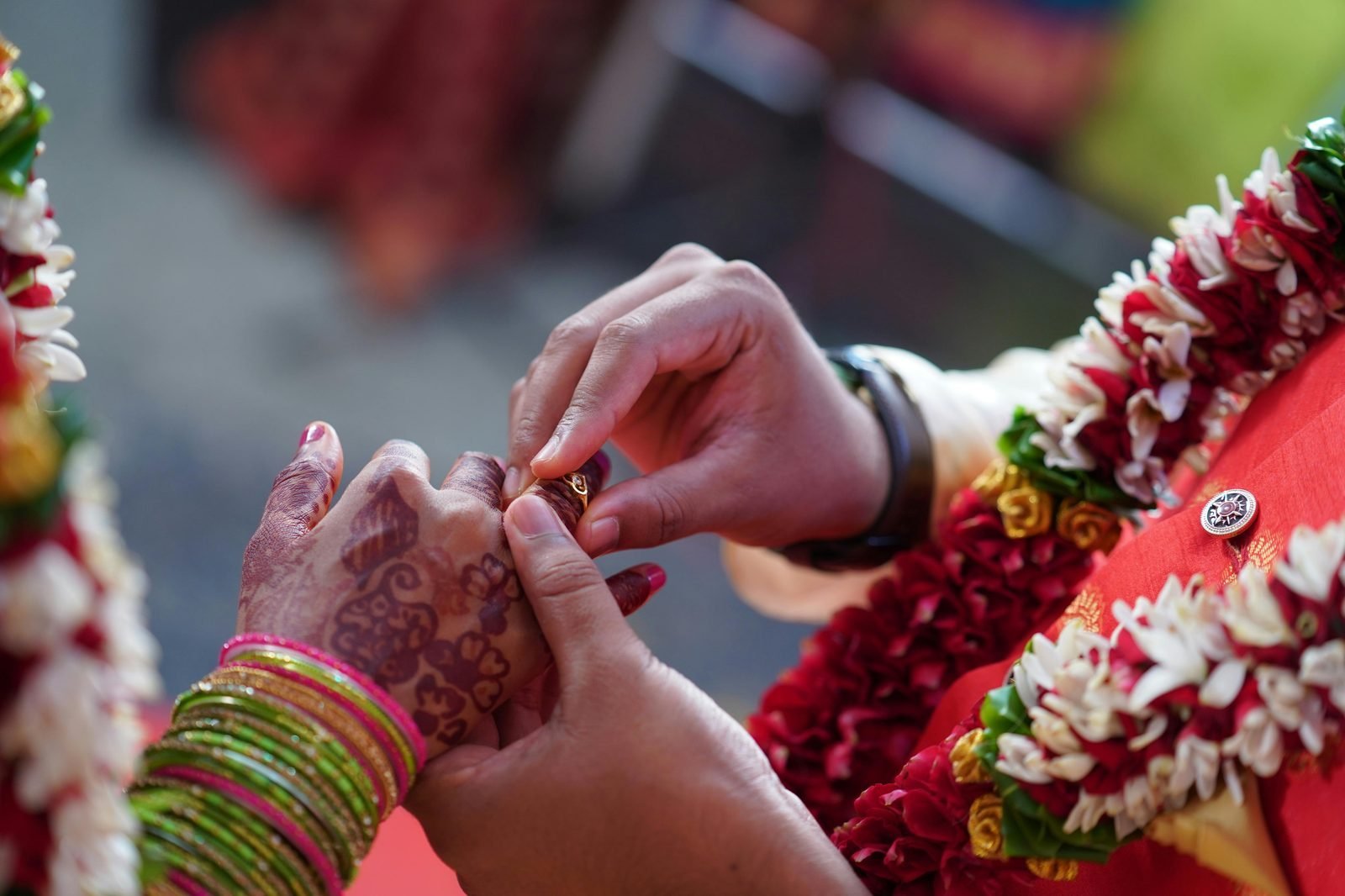
Quick answer: A nikah in Delhi has a few legal essentials and many family customs. The essentials are: two adults free to marry each other, the bride's and groom's free consent, an agreed mahr, a proposal and acceptance (ijab and qubool) in one sitting, and witnesses as the school followed requires. On the day, the Qazi checks documents, the bride's consent is taken (usually through her wakil with two witnesses), the mahr is announced, the Qazi recites the khutbah, the groom accepts ("qubool kiya"), the nikahnama is signed, and a dua is made. Rukhsati (the bride's farewell) and walima (the reception) follow, the same day or later. Customs such as mangni, mehndi and haldi are optional. Finally, the marriage must be registered within 60 days under the Delhi 2014 Order. A simple nikah with our own Qazi costs ₹5,000.
Key takeaways
Last reviewed: 22 September 2026 · 35 min read
Ask ten Delhi families how a nikah is done and you will hear ten slightly different answers. A family from Old Delhi, one from Hyderabad now living in Okhla, a Bengali family in Seelampur and a Shia family near Jor Bagh will each have their own customs, their own sequence and their own words. Yet underneath the differences, every nikah shares the same simple core, set by Islamic law and recognised by Indian law. This guide separates the two. It explains, step by step, what must happen for a valid nikah, and then describes the customs that surround it before and after, so that couples and families can plan a nikah that is valid, dignified and as simple or as elaborate as they wish.
We are a Delhi marriage service with our own Qazi. We read nikahs at our office, in homes, mosques and banquet halls, and handle nikahnamas, affidavits and registration. We do not provide witnesses; the witnesses at a nikah should be people who know the couple.
On this page
A nikah is a contract, and Islamic law is precise about what makes it valid. Everything else, however beautiful or long-standing, is custom. Knowing the difference matters: families sometimes delay a nikah for months over a custom that is not required at all, while overlooking something that is.
| Essential (for validity) | Custom (optional) |
|---|---|
| Two parties legally capable of marrying each other: adults, of sound mind, not within prohibited relationships, the woman not in iddat or already married | Rishta visits, istikhara, family meetings |
| Free consent of the bride and groom | Mangni (engagement) and exchange of rings |
| Proposal and acceptance (ijab and qubool) in one sitting | Manjha, haldi or ubtan |
| Witnesses: in Hanafi law, two adult Muslim men or one man and two women | Mehndi night |
| Mahr (it is due even if not fixed, but should be agreed and recorded) | Baraat, sehra, music |
| — | Chhuhare distribution, joota chupai, arsi mushaf |
| — | Rukhsati on the same day; walima on a particular day |
Indian law adds two more requirements that are not about religious validity but about protection. First, the age rules: the Prohibition of Child Marriage Act applies to everyone, and Delhi registration works on 18 for the bride and 21 for the groom. Second, registration under the Delhi (Compulsory Registration of Marriage) Order, 2014. A nikah that ignores these creates legal risks that no custom can fix.
The Prophet's own practice was one of simplicity: a nikah announced openly, a modest walima, and a mahr within the groom's means. Many scholars and community organisations in India today encourage families to return to this simplicity and avoid heavy spending, dowry and display. We read nikahs of every size, but we are always happy to help a family keep it simple.
In most Delhi families, a nikah begins with a rishta: a proposal from one family to the other, often through relatives, friends, a community matchmaker or, increasingly, a matrimonial website. The families exchange details of education, work and family background, and the boy and girl meet, usually in the presence of family members.
Many families perform istikhara, a prayer seeking God's guidance, before agreeing. It is a recommended practice, not a legal requirement, and the decision still belongs to the bride and groom.
For couples who have chosen each other, the rishta may be a formality, or families may be reluctant. Adults have a constitutional right to marry a person of their choice, which the Supreme Court has protected repeatedly (for example in Shafin Jahan and Shakti Vahini, both in 2018). Under Hanafi law an adult woman can contract her own nikah without a wali. If your families oppose, see our Muslim love marriage service.
Consent is the heart of the rishta. The bride's "yes" must be her own. Families should ask her directly and in private, and listen to her answer. A nikah forced on an adult woman is open to challenge, and forcing a marriage can be a crime.
Once both families agree, many hold a mangni or engagement. The groom's family visits the bride's home with gifts, sweets and often a ring; in some families the bride's family reciprocates. Some families hold a small "baat pakki" or "rishta pakka" gathering instead.
A mangni is a promise, not a marriage. It creates no marital rights, and either side can break it. Gifts exchanged at a mangni are usually returned if it is broken, though customs differ. The couple are not married until the nikah is performed.
Islam does not fix any auspicious or inauspicious days for a nikah. A nikah can be performed on any day of the year. That said, many families choose Fridays, or dates after Eid, and some avoid the first ten days of Muharram out of respect for its mourning, especially Shia families. These are customs, not rules.
There is one legal limit on timing: a woman who has been divorced or widowed cannot remarry until her iddat has ended. The iddat after divorce is usually three menstrual cycles (or three months), and after the husband's death four months and ten days; if she is pregnant, it lasts until delivery.
Practically, choose a date that leaves enough time to collect documents, and plan the registration appointment within 60 days after the nikah, especially if one partner will travel abroad.
Mahr is the bride's right: money or property the groom gives her, which belongs to her alone. It is not a price and not a dowry, and it is not paid to her family. The amount should be agreed before the nikah, with the bride's own agreement.
Agree the total, the split between prompt and deferred, and whether any part will be paid at the nikah itself (cash, gold or bank transfer). Record it in the nikahnama in figures and words. A realistic mahr, within the groom's means and paid honestly, is far better than a large figure written only for show. Read our full mahr guide.
A month before the nikah, collect for both the bride and groom: age proof (Class 10 certificate, birth certificate or passport), photo ID, address proof and passport-size photographs. Witnesses should bring photo ID. Anyone married before needs proof of divorce or the former spouse's death certificate. Check that names and dates match across documents, and get an affidavit if they do not. The full list, with special cases, is in our nikah documents and registration guide.
A nikah can be performed anywhere that is suitable and dignified:
| Venue | Suits | Points to note |
|---|---|---|
| Mosque | Families who want the nikah in a religious setting | Check the mosque's timings and arrangements for women; many mosques host the nikah after a prayer |
| Home | Small, family nikahs | Intimate and inexpensive; arrange a private room for the bride's consent |
| Banquet hall or community centre | Large gatherings with baraat and dinner | Book early in wedding season; plan a quiet place for the ceremony itself |
| Our office | Simple nikahs, couples marrying by choice, urgent nikahs | Qazi, nikahnama and certificate in one visit; bring your own witnesses |
Families spend weeks discussing the venue, the menu and the guest list. The bride and groom should spend at least as long on the questions that will shape their married life. Islam encourages the couple to see each other and speak before the nikah, in a proper setting, precisely so that they marry with open eyes. Useful questions include:
None of these questions is a sign of mistrust. Couples who talk honestly before the nikah start their marriage on firmer ground, and agreements written into the nikahnama protect both of them.
The days before a nikah are full of family customs. Their names and forms vary by region and community, and none is required for a valid nikah. The most common in Delhi are:
A few days before the nikah, the bride (and in many families the groom) is applied a paste of turmeric, gram flour and oils, meant to brighten the skin. In many North Indian Muslim families this is called manjha or manjha baithna; the bride may stay at home, in simple yellow clothes, until the nikah. It is a family and women's celebration, with songs and sweets.
The mehndi night is often the most joyful event before the nikah. Henna is applied to the bride's hands and feet, and sometimes a small token to the groom's. Women sing wedding songs, and the families eat together. In some communities the groom's family brings the henna and the bride's wedding dress to her home in a procession.
In some communities the groom's family sends the bride's wedding outfit, jewellery and cosmetics in a ceremony known as sanchaq or by other local names. Customs differ, and many families today prefer simpler gift exchanges.
Dowry is not part of Islam and is illegal in India. The Dowry Prohibition Act, 1961 makes giving, taking or demanding dowry an offence, and the criminal law punishes cruelty connected with dowry demands. Gifts freely given by a bride's family to their daughter are hers; demands made by the groom's side are not gifts. If a demand is made, the bride's family should refuse, record it and seek help.
On the nikah day, in many Delhi families the groom arrives with his family and friends in a procession, the baraat, often wearing a sherwani and a sehra (a veil of flowers or pearls over the face). The bride's family receives the baraat with garlands, and sometimes sherbet or sweets. In smaller nikahs there is no baraat at all: the groom's family simply arrives.
In families that follow gender separation, men and women sit in separate areas, and the bride remains in a separate room with women of her family until the ceremony is completed.
This is the legal and religious heart of the day. It usually takes about 20 to 40 minutes, depending on the family's practice.
The Qazi checks age proofs, IDs, proof of divorce or death where relevant, and the witnesses' IDs, and fills the nikahnama with names, parentage, addresses, dates of birth, the date and place, and the mahr. He confirms that the bride is not in iddat and that there is no legal bar to the marriage.
In most Sunni families in Delhi, the bride does not sit with the men. Her wakil (usually her father, brother or another close relative), accompanied by two witnesses, goes to her. The wakil tells her the groom's name and parentage and the mahr, and asks whether she accepts him in marriage and appoints the wakil to give her in nikah. Custom is to ask three times. She says "haan" or "qubool hai", and in many families signs the nikahnama at this point. Her consent must be free; our Qazi also satisfies himself that it is.
In some families the bride sits in the same gathering behind a curtain, or with the groom, and accepts herself. Both practices are valid.
The Qazi recites the khutbah-e-nikah, the marriage sermon. It is customarily based on the Prophet's sermon of need (khutbat al-hajah), with verses of the Quran on piety and on the creation of mankind from a single soul (from Surah an-Nisa, Surah Aal-Imran and Surah al-Ahzab). Many Qazis add a short explanation, in Urdu or Hindi, of the duties of husband and wife.
The Qazi, speaking for the bride through her wakil's authority, addresses the groom: he names the bride and her father, states the mahr, and asks whether he accepts her in nikah. The groom answers clearly, "qubool kiya" or "maine qubool kiya", usually three times by custom. The two witnesses must hear both the proposal and the acceptance. At this moment, the nikah is complete.
The groom, the bride (if she has not already signed), the wakil, the two witnesses and the Qazi sign the nikahnama. Check the spellings, dates and mahr in figures and words before signing. Ask for three copies: for the bride, the groom and the Qazi's register. See our nikahnama guide for protective clauses you can add.
The Qazi makes a dua (prayer) for the couple, often the Prophet's prayer for a newly married couple, asking God to bless them and bring goodness between them. The gathering says "Ameen". Then come the "Mubarak ho!" greetings, hugs between the families, and, in many North Indian families, the distribution of chhuhare (dried dates) or mishri among the guests.
If part of the mahr is to be paid at the nikah, the groom pays it now, in cash, jewellery or by bank transfer, directly to the bride. Record the payment in the nikahnama or on a receipt signed by her.
A Shia (Ithna Ashari) nikah shares the same core of consent, mahr and a proposal and acceptance, but differs in some details:
Shia families should use a Qazi or maulana familiar with Shia practice. Tell us your school when you book, so that the right formula and nikahnama format are used.
A wedding day is crowded and emotional, and it is easy for the bride's own voice to be lost. Yet the nikah is, above all, her contract. On the day she is entitled to:
Our Qazi makes sure of each of these at every nikah we read. For a full explanation of a Muslim woman's rights before, during and after marriage, see the Muslim women's rights guide.
| Person | Role | Needs to bring |
|---|---|---|
| Bride | Gives her free consent; accepts the mahr; signs the nikahnama | Age proof, ID, address proof, photographs |
| Groom | Accepts the nikah ("qubool kiya"); pays the prompt mahr; signs | Age proof, ID, address proof, photographs, the prompt mahr |
| Qazi | Checks eligibility and documents; recites the khutbah; conducts ijab and qubool; completes and certifies the nikahnama | Nikahnama forms, register, seal |
| Bride's wakil | Takes her consent and conveys it; gives her in nikah on her authority | Photo ID |
| Two witnesses | Hear the consent, the proposal and the acceptance; sign | Photo ID with address |
| Wali (guardian) | In Hanafi law not required for an adult woman; in practice the father's blessing is sought; other schools give the wali a larger role | — |
| Families | Arrange the venue, food and customs; support the couple | — |
One person can play more than one role in practice: the bride's father is often both wali and wakil, and a brother or uncle is often one of the witnesses. The Qazi should not be a witness to the same nikah he conducts, and a witness should be someone independent enough to confirm the marriage later if needed.
Delhi's Muslim population is remarkably diverse. Old Delhi families around Jama Masjid and Ballimaran keep customs that go back centuries: elaborate manjha ceremonies, the sehra, songs sung by women on the mehndi night, and a formal baraat. Families from western Uttar Pradesh bring their own songs and gift customs. Families of Hyderabadi origin may hold a sanchaq and a jalwa, where the couple are presented to each other. Bengali Muslim families in east Delhi may hold a gaye holud (turmeric ceremony) with their own traditions. Families from Kashmir, Bihar and Kerala, and from Afghan, Rohingya or other communities, bring still more variety.
Among Shia families, the nikah may be read by two maulanas representing the bride and groom, and events may be arranged around the calendar of Muharram and Safar. Among some reformist families, most pre-nikah customs are dropped entirely in favour of a nikah in a mosque and a modest walima.
None of this changes the legal core. Whatever the customs, the Qazi will look for the same things: adults free to marry, free consent, mahr, ijab and qubool, and witnesses. And whatever the customs, Delhi law will expect the same registration afterwards.
If you are invited to a nikah in Delhi for the first time, a few courtesies are appreciated:
Rukhsati is the moment the bride leaves her parents' home for her husband's. It is emotional: the bride's family bids her farewell with prayers and tears, and in many families a copy of the Quran is held over her head as she walks out, as a blessing. Her father or brothers accompany her to the car.
Rukhsati is not a legal requirement. It can happen on the nikah day, a few days later, or months later, for example when a student bride finishes her studies, or when the groom's job begins in another city. Many families now hold the nikah early and the rukhsati later. The couple are fully married from the moment of the nikah; the timing of the rukhsati only affects when they begin living together.
The bride is welcomed by the groom's mother and family. Customs include the arsi mushaf, where the couple see each other's faces in a mirror, sometimes with a Quran placed between them, and small games such as finding a ring in a bowl of milk. None of these is required; families choose what they enjoy.
The walima is the wedding feast hosted by the groom's family, and it is a recommended practice (sunnah) of the Prophet. It is usually held after the couple have begun living together, often the day after the rukhsati, though families hold it within a few days.
The spirit of walima is gratitude and announcement: letting the community know of the marriage and sharing food with relatives, friends, neighbours and those in need. The Prophet's own walimas were modest, and he encouraged inviting the poor as well as the rich. A walima does not need to be expensive to be complete.
In many Delhi families, the bride visits her parents' home a few days after the rukhsati, a custom called chauthi (the fourth day) or by other names. The bride's family may send gifts, fruit and sweets. Then begin the rounds of dinner invitations from relatives on both sides.
If the prompt mahr was not paid at the nikah, the husband should pay it as soon as possible. The deferred mahr remains a debt he owes his wife until paid. Keeping a written record of all payments avoids later disputes.
Make a family file with the nikahnama, the Qazi's certificate, the affidavits and, once issued, the registration certificate. The wife should keep her own complete set. Photograph every page and store the files in email or the cloud.
The last step is legal rather than ceremonial, and it is compulsory in Delhi. Under the Delhi (Compulsory Registration of Marriage) Order, 2014, every marriage solemnised in Delhi, of any religion, must be registered where at least one party is an Indian citizen: within 60 days (government fee ₹200), or within a further 60 days with a ₹500 fee, and after that with a ₹1,000 penalty. The couple apply online, upload documents and attend an appointment with two witnesses who have Delhi address proof.
The route matters. Registration under the 2014 Order records the nikah while Muslim personal law continues. Registering an existing nikah under the Special Marriage Act moves the couple's succession to the Indian Succession Act. In 2024, in Faizan Ayubi, the Delhi High Court directed that Muslim marriages be registrable online under the 2014 Order. For the full process, see the nikah documents and registration guide, or let us handle it through our registration service (₹6,000).
The marriage certificate is needed for a passport with the spouse's name, spouse visas, name changes, bank and insurance nominations, children's documents, and the protection of the wife's rights to mahr, maintenance and inheritance.
The Qazi does far more than recite the khutbah. He checks that the marriage is lawful, protects the bride's consent, records the mahr, prepares the nikahnama that the couple will rely on for the rest of their lives, and often provides the certificate used at registration. A careless Qazi can create problems that take years to fix. When choosing one, ask:
Our own Qazi follows all of these. We read nikahs every week in Delhi, keep a proper register, give the bride her own copy of the nikahnama, and prepare the file for registration.
The nikah itself is inexpensive; the costs of a wedding come from the celebrations around it. It helps to separate the two when planning.
| Item | Cost | Notes |
|---|---|---|
| Nikah with our Qazi, nikahnama and certificate | ₹5,000 | At our office; travel to your venue may add a charge |
| Nikahnama, certificate and sworn court affidavits | ₹7,000 | Ready for registration |
| Urgent nikah | ₹7,000 | Same-day document check |
| Muslim love marriage nikah | ₹7,000 | With affidavits of free consent |
| Registration service | ₹6,000 | Plus government fee ₹200 (Tatkal extra where available) |
| Mahr | As agreed | The bride's own right, not a wedding expense |
| Venue, food, clothing, jewellery | Varies widely | Entirely the families' choice |
See the complete price list. We quote clearly in advance, and government fees are paid at actual cost.
When one partner has embraced Islam before the nikah, the ceremony is the same, but the Qazi will ask for a certificate of acceptance of Islam and an affidavit that it was the person's free choice. The acceptance should be genuine and not merely a formality to marry: courts have examined such conversions closely, and several states have laws requiring notice and declarations. A couple of different faiths who do not want either partner to change religion can marry under the Special Marriage Act instead; see our Special Marriage Act service and the Hindu–Muslim marriage guide.
| When | What happens |
|---|---|
| 2–6 months before | Rishta, families meet, istikhara, agreement |
| 1–3 months before | Mangni; date fixed; venue and Qazi booked |
| 1 month before | Documents collected and checked; mahr agreed; witnesses confirmed |
| 3–5 days before | Manjha, haldi or ubtan |
| 1–2 days before | Mehndi |
| Nikah day | Baraat, nikah, dinner, rukhsati |
| Day after | Walima |
| Within 60 days | Registration under the 2014 Order |
| Time | What happens |
|---|---|
| Morning | Documents checked by WhatsApp in advance; couple, wakil and witnesses arrive at our office, a mosque or home |
| Within the hour | Consent, khutbah, ijab and qubool, signing, dua |
| Same day | Nikahnama copies and our certificate; lunch with close family |
| Next days | Affidavits and online application for registration |
Weddings in Delhi can cost a family years of savings. Much of that cost comes from customs, display and social pressure, not from anything the nikah requires. A simple nikah has real advantages:
A simple nikah is not a lesser nikah. Its legal and religious validity is exactly the same. Many families now hold a simple nikah and give the money saved to the couple, or spend it on the bride's education or a home.
A wakil is an agent appointed to act for one party at the nikah. The bride's wakil is common in Sunni nikahs in Delhi. A groom can also appoint a wakil, for example when he is abroad and cannot travel.
Nikahs conducted entirely by video call are debated among scholars, and many require the parties or their wakils to be physically present in one sitting. Where one partner is abroad, a wakil present in Delhi is the safer course. See our NRI nikah service.
Some couples come to us because their families oppose their marriage. The steps are the same, with a few extra precautions. Both must be adults, free to marry, and consenting. Bring your own witnesses: friends or colleagues who know you both. Keep the nikahnama, our certificate and sworn affidavits together, and register the marriage quickly. If you fear threats, you can seek police protection or approach the High Court; the Supreme Court has directed police to protect couples in such cases. See our Muslim love marriage service (₹7,000).
Sometimes a nikah must happen within days: a visa deadline, a job abroad, an illness in the family. A nikah can be performed on any day, and it takes less than an hour once documents are ready. The time goes into checking documents and bringing the right people together. Send photographs of documents in advance, confirm the witnesses, agree the mahr, and come prepared. See our urgent nikah service.
A nikah is a contract, but it is also a set of promises. In Islamic teaching, the husband takes on the duty to pay the mahr, to maintain his wife with food, clothing and a home according to his means, and to treat her with kindness and fairness. The wife's property and earnings remain her own. Both spouses owe each other companionship, respect and faithfulness, and both share the care of their children. The Quran describes spouses as garments for one another, a picture of closeness and mutual protection.
Indian law gives some of these promises legal force. A wife can claim maintenance under personal law and under the general criminal law; she has a right to reside in the shared household and to protection from domestic violence under the Domestic Violence Act, 2005; dowry demands are criminal; and instant triple talaq is void and punishable under the 2019 Act. Many couples also write specific promises into the nikahnama: the bride's right to study or work, where they will live, arbitration before any talaq, or a delegated right of divorce. Read more in the guide to Muslim women's rights in marriage and the complete Muslim marriage law guide.
A good Qazi reminds both of these duties in his address. Families can help the couple honour them by resisting the pressures of display and dowry, respecting the bride's rights, and supporting the couple rather than controlling them.
A family in Jamia Nagar held the nikah after the Asr prayer at their local mosque, with only close relatives present. Our Qazi read the nikah, the bride's consent was taken at home by her father as wakil with two witnesses, and the families shared dates and sweets outside the mosque. The walima the next evening was in a banquet hall for three hundred guests. The nikah itself cost almost nothing; the family chose to spend on the walima.
A couple who worked in Gurugram had known each other for three years. Their families agreed but lived in different states and could not travel together. The couple came to our office with two colleagues as witnesses and the bride's elder brother as her wakil. The nikah was read in forty minutes, the prompt mahr was paid by bank transfer on the spot, and both families watched on a video call. The couple registered the marriage the following month.
A bride from Zakir Nagar was in the final year of her medical degree. The families held the nikah in December, with a clause in the nikahnama recording her right to complete her studies and work. The rukhsati was held after her final exams the following summer, with the walima the day after.
A groom working in Dubai could not get leave for the nikah date. He appointed his uncle in Delhi as his wakil through a notarised wakalatnama naming the bride and the mahr. The nikah was read in Delhi, and the couple attended the registration appointment together when he arrived a month later.
Book your nikah with our own Qazi – ₹5,000
At our office, your home, a mosque or a banquet hall · nikahnama and certificate · with sworn affidavits ₹7,000 · urgent nikah ₹7,000 · registration ₹6,000.
Book a Nikah – ₹5,000 →Also: Urgent nikah · Love marriage nikah · Registration
Facts in this article were checked against the following primary sources. Government fees and procedures change, so confirm current details on the official portal before applying.
This guide is general information, not legal advice for your specific case. Call +91 8376863962 for advice on your situation.
Our own Qazi – ₹5,000.
Read →Within days – ₹7,000.
Read →Marrying by choice – ₹7,000.
Read →Sworn proof – ₹7,000.
Read →Within 60 days – ₹6,000.
Read →Wakil, visa, apostille.
Read →Everything to bring.
Read →Agree it right.
Read →Clause by clause.
Read →Full fee list.
Read →Free Consultation • 15 Minute Reply • Expert Team • Same Day Service