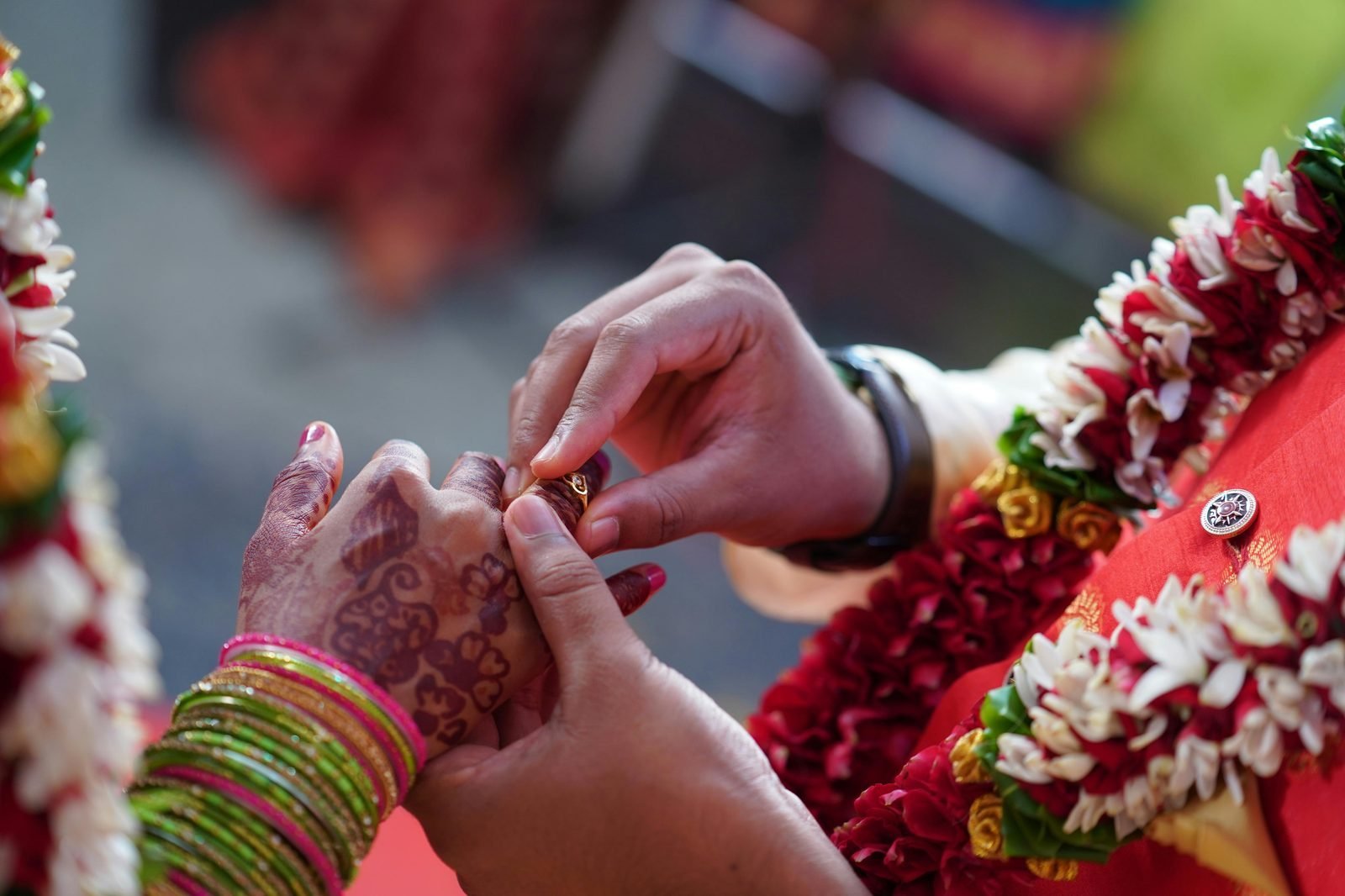
Arya Samaj Marriage: The Complete Guide (2026) to Rituals, Legal Validity and Registration
📅 Updated 22 Sep 2026⏱ 38 min read
Quick answer: An Arya Samaj marriage is a Hindu marriage performed by the Vedic rites of the Arya Samaj: havan, vows, panigrahan and the seven steps (saptapadi). It is valid under Section 7 of the Hindu Marriage Act, 1955 when both partners are Hindu, Sikh, Jain or Buddhist, meet the legal conditions (groom 21, bride 18, no living spouse, not closely related) and the essential ceremonies are actually performed. The Arya Marriage Validation Act, 1937 also confirms that marriages between Arya Samajists are valid even if they came from different castes or faiths. The mandir certificate only records the ceremony. It is not a government certificate. The Supreme Court (2022) and the Allahabad High Court (2022) have said a mandir certificate alone does not prove a legal marriage. So the complete, legally secure way is an Arya Samaj ceremony followed by registration with the SDM under the Hindu Marriage Act. In Delhi, that is done through the e-District portal. The fee is ₹100 and it usually takes one to two weeks, or one to two working days with Tatkal.
Key takeaways
An Arya Samaj marriage is a valid Hindu marriage under HMA Section 7 when both are Hindu (incl. Sikh, Jain, Buddhist), eligible, and saptapadi is performed.
The mandir certificate records the ceremony; the Supreme Court and Allahabad HC (2022) said it alone does not prove a legal marriage.
Register with the SDM under the Hindu Marriage Act on Delhi e-District: ₹100 (1–2 weeks) or ₹10,000 Tatkal (1–2 working days).
Arya Samaj weddings are registered under the Hindu Marriage Act, not the Special Marriage Act.
Our Arya Samaj marriage is ₹5,100; with SDM registration ₹7,100. Bring witnesses who know you.
"Arya Samaj court marriage" is a phrase many people search for, but it mixes two different things. An Arya Samaj marriage is a religious Hindu wedding. A "court marriage", properly speaking, is a civil marriage under the Special Marriage Act at the SDM office. What most couples actually want, and what this guide explains, is the combination that gives the strongest legal position: a proper Arya Samaj Vedic wedding followed by government registration of that marriage under the Hindu Marriage Act.
This is the guide to the Arya Samaj marriage itself: what it is, why it is legal, what happens in the ceremony and what each rite means, and how to turn it into a government-recorded marriage. For a comparison of this route with the Special Marriage Act, see Arya Samaj marriage vs court marriage. For the practical Delhi process with costs and timelines, see love marriage in Delhi.
What an Arya Samaj Marriage Is
An Arya Samaj marriage is a Hindu marriage solemnised by the Vedic rites prescribed in the Arya Samaj tradition, as set out in Swami Dayanand Saraswati's Sanskar Vidhi, the Arya Samaj manual of the sixteen life-cycle rites. Compared with many regional Hindu weddings, it is:
Shorter: about one to one and a half hours, focused on the core rites.
Explained: the priest explains the mantras and vows so the couple understands them.
Free of caste customs: the Arya Samaj rejects birth-based caste, so the ceremony does not depend on caste practices.
Free of muhurat restrictions: marriages are performed on any day.
Without idol worship: worship centres on the sacred fire and Vedic mantras.
These features explain why Arya Samaj mandirs have long been the choice of inter-caste couples, couples who want a simple ceremony, and couples marrying without large family gatherings.
The Arya Samaj in Brief
The Arya Samaj was founded by Swami Dayanand Saraswati in Bombay in 1875 as a reform movement within Hinduism. It called for a return to the Vedas, opposed caste discrimination, child marriage and idol worship, promoted women's education and widow remarriage, and opened its rites to all who accepted its principles. Its ten principles emphasise truth, knowledge, righteous conduct and the welfare of all. Arya Samaj units across India are connected through regional Arya Pratinidhi Sabhas and the Sarvadeshik Arya Pratinidhi Sabha in Delhi.
The marriage ceremony reflects these ideas: the couple are treated as equal partners making promises to each other before the sacred fire, and the rites are explained rather than recited unintelligibly.
The Legal Basis of an Arya Samaj Marriage
Law
What it provides
Hindu Marriage Act, 1955, Section 5
Conditions: groom 21, bride 18, no living spouse, capacity to consent, not within prohibited degrees or sapinda relationship unless custom allows
Hindu Marriage Act, Section 7
A Hindu marriage may be solemnised by the customary rites of either party; where the rites include saptapadi, the marriage is complete and binding when the seventh step is taken
Hindu Marriage Act, Section 8
States may make rules for registering Hindu marriages; registration is proof, and failure to register does not affect validity
Arya Marriage Validation Act, 1937
A marriage between two Arya Samajists is not invalid because they belonged to different castes, or to different religions before becoming Arya Samajists
Delhi (Compulsory Registration of Marriage) Order, 2014
Marriages solemnised in Delhi are required to be registered
Two points follow. First, the ceremony creates the marriage, not the certificate; the Supreme Court held in Dolly Rani v. Manish Kumar Chanchal (2024) that without the essential ceremonies there is no valid Hindu marriage, and registration cannot create one. Second, registration is what gives you government proof, and in Delhi it is also required.
The Special Marriage Act, 1954 is a separate law for civil marriages. It is not used to register an Arya Samaj wedding. Some websites, including an earlier version of this page, wrongly said that Arya Samaj marriages are registered under the Special Marriage Act; they are registered under the Hindu Marriage Act.
What Courts Have Said About Mandir Certificates
Courts have become sceptical of Arya Samaj certificates issued without proper checks, and couples should understand why.
Supreme Court, June 2022: hearing a bail matter, a bench of the Supreme Court remarked that the Arya Samaj has no business issuing marriage certificates, which is the work of the competent authorities, and declined to rely on such a certificate.
Allahabad High Court, Neelam Sharma v. State of U.P. (September 2022): held that a certificate issued by an Arya Samaj alone does not prove the legality of a marriage, and noted that such certificates had often been issued without checking the genuineness of documents.
Dolly Rani (Supreme Court, 2024): a certificate or registration without the essential ceremonies does not make a valid Hindu marriage.
None of this makes Arya Samaj marriages invalid. A genuine Arya Samaj ceremony between eligible Hindus is a valid marriage. What the courts are saying is: the mandir certificate is not enough proof on its own, and certificates from places that skip checks are worthless. The answer is to marry at a responsible mandir that checks eligibility, perform the ceremonies properly, and register the marriage with the SDM.
Who Can Marry by Arya Samaj Rites
Two Hindus, including Sikhs, Jains and Buddhists, who are all "Hindus" for the Hindu Marriage Act, of any caste or sub-caste.
A groom of at least 21 and a bride of at least 18 on the wedding date.
Partners with no living spouse; divorced partners with a final decree; widowed partners.
Partners not within prohibited degrees or sapinda relationship, unless a custom governing both permits it. Same-gotra marriage is not prohibited.
Partners who consent freely and are capable of consent.
NRIs and OCI holders who meet these conditions; see the NRI guide.
Who Cannot
Situation
Why not
Alternative
One partner is Muslim, Christian, Parsi or Jew and keeps that faith
The Hindu Marriage Act applies only where both are Hindu
The sequence below follows the Arya Samaj marriage ceremony as commonly performed. Priests may adjust details, but the essential rites are the same.
Rite
What happens
Meaning
Ishvara stuti, prarthana, upasana
Opening prayers
Seeking divine blessing and a pure mind
Swasti vachan and shanti path
Mantras for wellbeing and peace
Peace for the couple, families and all beings
Madhuparka
The groom is welcomed with a mixture of honey, curd and ghee
Honour and sweetness in the new relationship
Havan (yajna)
Offerings of ghee and samagri into the sacred fire
Agni as witness and purifier
Jaimala
Exchange of garlands
Mutual acceptance
Kanyadaan
The bride's hand is placed in the groom's by a family member or elder
Entrusting; in Arya Samaj practice, a joining of equals
Panigrahan
The groom holds the bride's hand with a vow
Promise of lifelong companionship and support
Shilarohan
The bride steps on a stone
Steadfastness, like the rock
Laja homa
Offering of puffed rice into the fire, often with the bride's brother
Prosperity and the goodwill of the family
Parikrama / pheras
The couple circle the fire
Commitment before the sacred fire
Saptapadi
Seven steps together, each with a vow
Completes the marriage under Section 7
Hridaya sparsha
Touching the heart with a mantra
Union of hearts and minds
Sindoor and mangalsutra
The groom applies sindoor and ties the mangalsutra
Symbols of married life
Dhruva and Arundhati darshan
Looking towards the pole star and Arundhati star, sometimes symbolically
Constancy and fidelity
Ashirvad
Blessings from the priest and those present
Good wishes for the couple
The Seven Vows of Saptapadi
Saptapadi is the heart of the ceremony and, legally, the moment the marriage becomes complete. With each step, the couple takes a vow. In Arya Samaj practice, the steps are commonly explained as:
For nourishment and a healthy shared life.
For strength of body, mind and spirit.
For prosperity earned by righteous means.
For happiness and mutual respect.
For children and their good upbringing, if the couple is so blessed.
For a life in harmony with the seasons of life.
For lifelong friendship and companionship.
After the seventh step, the couple are husband and wife. That is why the Supreme Court in Dolly Rani stressed that where saptapadi is part of the rites, it must actually be performed.
Key Mantras and What They Mean
Many Arya Samaj marriage mantras come from the Rigveda's marriage hymn (the Surya Sukta, Rigveda 10.85) and related Vedic texts. A few of the most important, in simple words:
Moment
Mantra theme
Meaning in plain words
Panigrahan
"I take your hand for good fortune"
The groom takes the bride's hand, promising that they will grow old together and share the duties of the household
Laja homa
Offering for long life and the family's welfare
The bride prays for her husband's long life and the prosperity of both families
Saptapadi
"Be my friend with the seventh step"
After seven steps, the couple become lifelong friends and companions
Hridaya sparsha
"May our hearts be one"
Each partner places a hand over the other's heart, wishing for one mind and one purpose
Dhruva darshan
"Be as firm as the pole star"
A wish that the marriage be as steady as the pole star
Ashirvad
Blessings for a long, righteous married life
Everyone present blesses the couple
The emphasis on friendship and equality in these mantras is one reason many modern couples feel the Arya Samaj ceremony speaks to them. Ask the priest to explain any mantra you would like to understand more deeply.
What the Priest and Mandir Check Before the Ceremony
Identity: that the two people are who their documents say.
Age: groom 21 and bride 18 on the day, from a reliable age proof.
Religion: that both are Hindu, Sikh, Jain or Buddhist.
Marital status: no living spouse; divorce decree or death certificate where relevant.
Relationship: not within prohibited degrees or sapinda relationship.
Consent: both are marrying freely, confirmed by speaking to each.
Witnesses: that they are adults with ID who know the couple.
These checks are not bureaucracy for its own sake. They are what makes the certificate credible and the marriage secure if it is ever questioned.
From First Call to Government Certificate
Stage
Typical timing
First call and eligibility check
Day 1
Document scans checked
Day 1–2
Wedding date
Any day once documents are ready; often within a few days
Mandir certificate
Wedding day
e-District application
Wedding day or the next working day
SDM appointment (normal)
About 1–2 weeks after applying
SDM appointment (Tatkal)
About 1–2 working days after applying
Government certificate
At or soon after the appointment
Vow Renewals and Second Ceremonies
Some couples who married years ago, sometimes in a civil marriage or a very small ceremony, ask for an Arya Samaj ceremony later, for example on an anniversary or when families have reconciled. A second religious ceremony between a couple who are already legally married is a celebration, not a new marriage. The legal date of marriage remains the date of the original marriage, and no second registration is needed. Tell the mandir that it is a vow renewal so the paperwork reflects that correctly.
Couples who married under the Special Marriage Act and later want a Vedic ceremony can also have one; again, it does not change the legal marriage or its date.
The Wedding Day at the Mandir
Time
What happens
Arrival (about 30–45 minutes before)
Originals checked against the scans; affidavits signed and attested; witnesses' IDs checked
Preparation
Couple change clothes if they wish; havan area prepared
Photographs; mandir register signed by the couple and witnesses
Certificate
Mandir marriage certificate issued with photographs
Next steps
SDM registration explained and started
Clothes are your choice. Friends, siblings and supportive relatives are welcome. Take plenty of photographs of the rites, especially the pheras and saptapadi. They are useful evidence at registration and for any future visa.
Mandir Certificate vs Government Certificate
Point
Mandir certificate
Government certificate
Issued by
The Arya Samaj mandir
SDM / Registrar of Marriages
What it records
That the ceremony took place
Registration of the marriage in the government register
When
On the wedding day
At or soon after the SDM appointment
Legal weight
Evidence of the ceremony; courts say not enough alone
Official proof of marriage
Passport, visa, bank, insurance
Usually not accepted alone
Accepted
Can be apostilled
No
Yes
You need both: the mandir certificate is evidence of the ceremony that the SDM relies on, and the government certificate is what you use everywhere else. See certificate apostille for visa for use abroad.
Choose registration of marriage under the Hindu Marriage Act.
Enter both partners' details, the date and place of marriage and the witnesses' details.
Upload age, identity and address proofs, photographs, the mandir certificate, a wedding photograph and the affidavits.
Pay ₹100 for a normal appointment or ₹10,000 for Tatkal.
Attend the SDM appointment with both partners and two witnesses, with all originals.
Receive and check the government certificate.
A normal appointment is usually available within one to two weeks and a Tatkal appointment within one to two working days. Details are in registration online in Delhi and Tatkal certificate. Earlier versions of this page said couples file "Form-A" at the SDM office; that is incorrect for Hindu Marriage Act registration in Delhi, which is done online.
Documents
Document
Groom
Bride
Age proof: Class 10 certificate, birth certificate or passport
Yes
Yes
Identity proof: Aadhaar, passport, voter ID
Yes
Yes
Address proof
Yes
Yes
Recent passport-size photographs
Yes
Yes
Affidavit of date of birth, marital status, religion and consent
Yes
Yes
Divorce decree or death certificate of former spouse
If applicable
If applicable
Passport and visa/OCI (NRIs and foreign citizens)
If applicable
If applicable
Each witness needs identity and address proof. The full list with alternatives is in documents required.
Witnesses
Two adult witnesses usually attend the ceremony and the SDM appointment. They should genuinely know you: friends, colleagues, siblings or relatives. They sign the mandir register and the government register, and they may be asked how they know you. We do not provide witnesses. Please bring people who know you; see witness rules.
Cost
Service
Our charge
Arya Samaj marriage (ceremony + mandir certificate)
₹5,100
Registration of an already-performed Hindu marriage
₹6,000
Arya Samaj marriage + SDM registration (combined)
₹7,100
Urgent / Tatkal handling
₹6,100
Official HMA registration fee
₹100 (Tatkal ₹10,000)
Notary charges and photographs are small extras. Current prices are always on the fees page, and a full breakdown is in court marriage fees 2026.
Arya Samaj Wedding vs a Traditional Hindu Wedding
Point
Arya Samaj wedding
Typical traditional wedding
Duration of rites
About 1–1.5 hours
Several hours, often spread over days
Muhurat
Not required; any day
Auspicious date and time usually chosen
Caste customs
Not relevant
Often central
Worship
Sacred fire and Vedic mantras
Often includes idol worship and regional rites
Language
Sanskrit mantras explained in Hindi or English
Sanskrit or regional, often unexplained
Essential rite for validity
Saptapadi
Saptapadi or other customary rites
Cost
Modest
Varies, often high
Legal validity
Valid under HMA Section 7
Valid under HMA Section 7
Registration
Recommended and required in Delhi
Recommended and required in Delhi
Many families combine the two: an Arya Samaj ceremony for the legal marriage and a family celebration with regional customs before or after. Only one marriage ceremony is legally needed.
Marriage Among the Sixteen Sanskars
In Swami Dayanand Saraswati's Sanskar Vidhi, marriage (vivah) is one of sixteen sanskars, the rites that mark a person's life from before birth to death. They include garbhadhan (conception), namkaran (naming), annaprashan (first solid food), mundan (first haircut), upanayan (sacred thread), vedarambh (beginning of study), vivah (marriage), grihastha, vanaprastha and sannyas (the later stages of life) and antyeshti (last rites). Arya Samaj teaches that these sanskars shape character and responsibility. Many couples who marry at an Arya Samaj later return for their children's namkaran or mundan.
Preparing for the Ceremony
Documents: originals and two sets of copies of everything; see the documents section.
Photographs: several recent passport-size photographs of each partner.
Clothes: anything you like; many brides wear a saree or lehenga and grooms a kurta or sherwani, but ordinary clothes are fine.
Garlands, sindoor and mangalsutra: arranged by the mandir or brought by you.
Sweets: optional, to share after the ceremony.
A friend with a phone: to take clear photographs of the key rites.
Arrive early: document checks take time before the ceremony starts.
Special Situations
Divorced or widowed partners
Bring the final divorce decree or the former spouse's death certificate. The ceremony is the same. The affidavit states the correct marital status.
Hindu and Sikh, Jain or Buddhist partners
All are Hindus for the Hindu Marriage Act, so they can marry by Arya Samaj rites and register without conversion. Some Sikh families also hold an Anand Karaj; only one legal marriage is needed.
Inter-caste couples
Caste is no bar. SC and non-SC couples may be eligible for government incentives if the marriage is registered; see inter-caste marriage.
Couples already married by other Hindu rites
If you already had a temple or family ceremony, you do not need a second marriage; you can register the existing marriage with the SDM using evidence of that ceremony.
Older couples and second marriages
There is no upper age limit. Many older couples prefer the simplicity of an Arya Samaj ceremony.
Couples in a hurry
The ceremony can usually be held the day documents are ready, and Tatkal registration gives a certificate within days; see same-day marriage.
After the Marriage
Check the government certificate for spelling and dates as soon as it is issued.
Keep the mandir certificate, government certificate and photographs safely, with scans in the cloud.
Update bank and insurance nominations, employer records and, if you wish, your passport.
If you will use the certificate abroad, get it apostilled.
If the bride changes her surname, the government certificate supports the change; some records need a gazette notification.
How to Choose a Genuine Arya Samaj Mandir
Because courts have criticised careless certificates, where you marry matters. A responsible mandir or service:
checks both partners' age, identity, marital status and religion from original documents;
speaks to both partners to confirm free consent;
performs the full ceremony, including saptapadi, not a shortened formality;
maintains a proper register signed by the couple and witnesses;
requires witnesses who genuinely know the couple and never supplies strangers;
issues a certificate with the true date and details;
helps with SDM registration rather than treating the mandir certificate as the end;
gives written prices, with government fees shown separately.
Be wary of anyone offering a certificate without a ceremony, a backdated certificate, "marriage in 15 minutes", or witnesses for hire. Such certificates are exactly what courts have refused to accept.
With or Without Families
Arya Samaj weddings work well in both situations. Some couples marry with both families present and later hold a reception. Others marry with a few friends because their families have not yet agreed. The ceremony and its legal effect are identical. Where the bride's family is not present, an elder, friend or sibling can take part in kanyadaan, or it can be performed symbolically. The legal validity does not depend on who performs it. Couples whose families oppose the marriage should also read love marriage legal rights.
Common Misconceptions
Misconception
Fact
"An Arya Samaj marriage is a court marriage."
It is a Hindu religious marriage; a court marriage is a civil marriage under the Special Marriage Act. Registration after the ceremony is under the Hindu Marriage Act.
"The mandir certificate is enough."
Courts have said it alone does not prove a legal marriage. Register with the SDM.
"Any two people can marry at an Arya Samaj."
Only where both are Hindu (including Sikh, Jain, Buddhist) and eligible.
"Registration makes any ceremony valid."
No; without the essential ceremonies there is no valid Hindu marriage (Dolly Rani, 2024).
"Arya Samaj marriages are only for runaway couples."
Many families choose them for simplicity, cost and meaning.
"Two certificates mean double legal protection."
Only the government certificate is official proof; the mandir certificate supports it.
"Same-gotra couples cannot marry."
The Hindu Marriage Act does not prohibit same-gotra marriage.
Four Arya Samaj Weddings
Typical situations, with details changed for privacy.
The simple family wedding
Both families agreed to the marriage but wanted to avoid a costly traditional wedding. Twenty relatives attended the Arya Samaj ceremony on a Sunday morning, the priest explained every rite in Hindi, and the families held a lunch afterwards. The couple registered the marriage with the SDM the following week.
The couple with an old mandir certificate
A couple had married at a small mandir five years earlier and held only the mandir certificate. When the husband's visa application needed a government certificate, they discovered the mandir kept no proper register. With photographs, the invitation card and affidavits from relatives who attended, they registered the existing marriage under the Hindu Marriage Act.
The Hindu and Jain couple
Their families followed different traditions. The Arya Samaj ceremony, being free of sect-specific customs, suited both. Because both are Hindus for the Hindu Marriage Act, no conversion was needed, and the marriage was registered in the usual way.
The couple who wanted it done properly
A couple had been offered a "certificate in 15 minutes" elsewhere. After reading about court decisions on careless certificates, they chose a full ceremony with proper document checks and registered it immediately with Tatkal, so that no one could later question their marriage.
Questions to Ask Before Booking Any Mandir
Will you check our original documents and speak to both of us before the ceremony?
Will the full ceremony, including saptapadi, be performed and explained?
Do you keep a register that we and our witnesses sign?
Will you help us register the marriage with the SDM, and what does that cost in total?
What exactly is included in your price, and what are the government fees?
Do you require witnesses who know us? (If they offer to supply witnesses, look elsewhere.)
Will the certificate show the true date of the ceremony?
A mandir that answers all of these clearly is protecting you. One that avoids them is putting your marriage at risk.
Couples From Other States
Couples often travel to Delhi for an Arya Samaj wedding from Uttar Pradesh, Haryana, Rajasthan, Punjab, Bihar, Uttarakhand and elsewhere. The ceremony can be performed in Delhi whatever state you live in. Registration then depends on jurisdiction:
Registering in Delhi: generally possible where the marriage was performed in Delhi or one partner lives in Delhi, subject to the e-District portal's rules. We confirm this before you travel.
Registering in your home state: the Delhi mandir certificate, photographs and affidavits can be used to register the marriage under your own state's Hindu marriage registration rules.
Keep the evidence: whichever office you use, it will want proof of the ceremony, so keep the mandir certificate, register details and photographs safely.
If either of you lives in a state with a religious conversion law and a conversion is involved, take advice on that law first; see the Shuddhi guide.
The Arya Samaj and Women's Equality in Marriage
From its beginning, the Arya Samaj opposed child marriage, supported widow remarriage and promoted women's education, positions that were controversial in the nineteenth century and later became part of Indian law. Its marriage ceremony reflects this: the bride and groom make vows to each other as partners, the bride takes part actively in the rites, and the ceremony is explained so that she understands what she is promising. Many brides tell us that this is what drew them to an Arya Samaj wedding.
Checklist
☐ Both Hindu, Sikh, Jain or Buddhist
☐ Groom 21+, bride 18+
☐ No living spouse; divorce decree final if applicable
☐ Documents checked before booking
☐ Two witnesses who know us
☐ Full ceremony including saptapadi, with photographs
☐ Mandir certificate checked for correct details
☐ SDM registration applied for and attended
☐ Government certificate checked against our documents
One-Minute Summary
An Arya Samaj marriage is a valid Hindu marriage when both are Hindu, eligible, and the rites including saptapadi are performed.
The mandir certificate records the ceremony; courts have said it is not enough alone.
Register the marriage with the SDM under the Hindu Marriage Act on e-District: ₹100, or ₹10,000 Tatkal.
Our Arya Samaj marriage is ₹5,100; with registration ₹7,100.
Choose a mandir that checks documents and consent, and bring witnesses who know you.
How We Help
Since 1998 we have conducted Arya Samaj marriages in Delhi and registered them with the SDM. We check both partners' documents and eligibility before booking, speak to both partners about consent, perform the complete Vedic ceremony with each rite explained, issue the mandir certificate, and handle the e-District registration and appointment so you leave with a government certificate. Prices are in writing. We do not provide witnesses.
A proper Vedic wedding, properly registered
Arya Samaj marriage ₹5,100 · with SDM registration ₹7,100. Government fees separate and shown in writing.
An Arya Samaj marriage is a Hindu marriage performed by the Vedic rites of the Arya Samaj, the reform movement founded by Swami Dayanand Saraswati in 1875. The ceremony follows his Sanskar Vidhi and includes prayers, a havan, exchange of garlands, kanyadaan, panigrahan, laja homa, pheras, the seven steps of saptapadi, sindoor and mangalsutra, and blessings. It takes about one to one and a half hours, has no muhurat restrictions, ignores caste, and the priest explains the mantras so the couple understands their vows.
Is an Arya Samaj marriage legally valid?▼
Yes, when both partners are Hindus (including Sikhs, Jains and Buddhists), meet the conditions in Section 5 of the Hindu Marriage Act, and the essential ceremonies, including saptapadi, are actually performed. Section 7 of the Act recognises marriages by the customary rites of either party, and the Arya Marriage Validation Act, 1937 confirms that marriages between Arya Samajists are valid even if they came from different castes or faiths. Registration with the SDM then provides government proof of the marriage.
Is an Arya Samaj marriage the same as a court marriage?▼
No. An Arya Samaj marriage is a Hindu religious marriage. A court marriage, strictly, is a civil marriage under the Special Marriage Act, 1954, solemnised before the Marriage Officer at the SDM office after a 30-day notice. People often say 'Arya Samaj court marriage' to mean an Arya Samaj ceremony followed by government registration. That registration is under the Hindu Marriage Act, not the Special Marriage Act, and it has no notice period.
Is the Arya Samaj certificate enough as proof of marriage?▼
No. The mandir certificate records that the ceremony took place, but it is not a government certificate. In June 2022 a Supreme Court bench remarked that the Arya Samaj has no business issuing marriage certificates, which is the work of competent authorities, and in September 2022 the Allahabad High Court held that an Arya Samaj certificate alone does not prove a legal marriage. Register the marriage with the SDM to get official proof.
What did the Supreme Court say about Arya Samaj certificates?▼
In June 2022, while hearing a bail matter, a Supreme Court bench remarked that the Arya Samaj has no business to issue marriage certificates, as that is the work of the competent authorities, and declined to rely on such a certificate as proof. This does not make Arya Samaj marriages invalid. It means a mandir certificate alone is not treated as proof of a legal marriage, which is why couples should register their marriage with the government after the ceremony.
Who can marry by Arya Samaj rites?▼
Two Hindus, including Sikhs, Jains and Buddhists, of any caste; with the groom at least 21 and the bride at least 18 on the wedding date; with no living spouse; not within prohibited degrees or sapinda relationship unless a governing custom allows it; and both consenting freely. Divorced partners with a final decree and widowed partners can marry. NRIs and OCI cardholders who meet these conditions can also marry by Arya Samaj rites in India.
Can a Hindu marry a Muslim or Christian at an Arya Samaj?▼
Not while the other partner keeps their faith, because the Hindu Marriage Act applies only where both partners are Hindus. Couples of different religions who wish to keep their faiths should marry under the Special Marriage Act. If a partner genuinely wishes to adopt the Vedic faith through Shuddhi, an Arya Samaj marriage becomes possible, but the conversion must be genuine and voluntary, and several states require prior notice before conversion. We explain both routes honestly.
What rituals are performed in an Arya Samaj marriage?▼
The ceremony commonly includes opening prayers (Ishvara stuti, prarthana, upasana), swasti vachan and shanti path, madhuparka (welcoming the groom), the havan, jaimala (garlands), kanyadaan, panigrahan (taking the bride's hand with a vow), shilarohan (stepping on a stone), laja homa (offering puffed rice), pheras around the fire, saptapadi (seven steps), hridaya sparsha, sindoor and mangalsutra, dhruva and Arundhati darshan, and blessings. Each rite is explained to the couple.
What are the seven vows of saptapadi?▼
In Arya Samaj practice, the seven steps are commonly explained as vows for nourishment and a healthy shared life; strength of body, mind and spirit; prosperity earned righteously; happiness and mutual respect; children and their good upbringing; harmony through the seasons of life; and lifelong friendship. Under Section 7 of the Hindu Marriage Act, where the rites include saptapadi, the marriage becomes complete and binding when the seventh step is taken.
How long does an Arya Samaj marriage take?▼
The ceremony itself takes about one to one and a half hours. With document checks, affidavits, photographs and the mandir certificate, allow about two and a half to three hours at the mandir. The wedding can usually be held on the day documents are ready. Government registration afterwards takes about one to two weeks for a normal appointment, or one to two working days with Tatkal.
Can we marry at an Arya Samaj on any day?▼
Yes. The Arya Samaj does not require a muhurat, so ceremonies are held on any day, including weekends and most holidays. The SDM office, however, works on government working days, so the registration appointment must be on a working day. Many couples marry on a weekend and register on a weekday soon after.
How is an Arya Samaj marriage registered in Delhi?▼
Through the Delhi e-District portal under the Hindu Marriage Act. You enter both partners' details, the date and place of marriage and the witnesses, upload age, identity and address proofs, photographs, the mandir certificate, a wedding photograph and affidavits, and pay ₹100 for a normal appointment or ₹10,000 for Tatkal. Both partners and two witnesses then attend the SDM appointment with originals, and the government certificate is issued.
Is registration of an Arya Samaj marriage compulsory in Delhi?▼
Delhi's Compulsory Registration of Marriage Order, 2014 requires marriages solemnised in Delhi to be registered. Under Section 8 of the Hindu Marriage Act, failure to register does not make a valid marriage invalid, but registration is the official proof you need for passports, visas, bank and insurance records and any dispute. Given the court decisions on mandir certificates, registration is essential in practice.
Is an Arya Samaj marriage registered under the Special Marriage Act?▼
No. An Arya Samaj wedding between two Hindus is registered under the Hindu Marriage Act, which has no notice period. The Special Marriage Act is a separate civil marriage law with a 30-day notice, used mainly by couples of different religions. Some websites wrongly describe Arya Samaj marriages as registered under the Special Marriage Act. If the couple already had a religious marriage, Section 15 of the Special Marriage Act allows registration under that Act in some cases, but that is a different route.
What documents are needed for an Arya Samaj marriage?▼
Each partner needs age proof (Class 10 certificate, birth certificate or passport), identity proof, address proof, recent passport-size photographs, and an affidavit of date of birth, marital status, religion and consent. A divorced partner needs the final decree and a widowed partner the former spouse's death certificate. NRIs and foreign citizens need their passports and visas or OCI cards. Two witnesses need identity and address proof.
How many witnesses are needed?▼
Usually two adult witnesses, who attend the ceremony and the SDM registration appointment. They sign the mandir register and the government register and may be asked how they know the couple. They should genuinely know you, such as friends, colleagues, siblings or relatives, and they can be of any religion. We do not provide witnesses. Witnesses for hire undermine the evidence of your marriage.
How much does an Arya Samaj marriage cost?▼
Our Arya Samaj marriage with the mandir certificate is ₹5,100, and ₹7,100 including SDM registration support. Registration of an already-performed Hindu marriage is ₹6,000, and urgent or Tatkal handling ₹6,100. The official registration fee is ₹100, or ₹10,000 for Tatkal. Notary charges and photographs are small extras. All charges and government fees are shown in writing before you pay.
Can inter-caste couples marry by Arya Samaj rites?▼
Yes. The Arya Samaj rejects birth-based caste, and the Hindu Marriage Act has no caste condition. The Arya Marriage Validation Act, 1937 specifically confirms that marriages between Arya Samajists of different castes are valid. Inter-caste couples where one partner is Scheduled Caste and the other is not may also be eligible for government incentives, which require the marriage to be registered.
Can a Hindu and a Sikh marry at an Arya Samaj?▼
Yes. Sikhs, Jains and Buddhists are Hindus for the purposes of the Hindu Marriage Act, so a Hindu and a Sikh can marry by Arya Samaj rites without either converting and register the marriage under the Hindu Marriage Act. Some Sikh families also hold an Anand Karaj, which is recognised under the Anand Marriage Act; only one legal marriage is needed, and the couple can choose which ceremony to register.
Can same-gotra couples marry in an Arya Samaj?▼
Yes. The Hindu Marriage Act does not prohibit marriage within the same gotra, and the older bar was removed by the Hindu Marriage Disabilities Removal Act, 1946. What the Act prohibits are marriages within degrees of prohibited relationship and between sapindas, which concern close family relationships, unless a governing custom allows them. Social objections to same-gotra marriage have no legal force.
Can a divorced person marry by Arya Samaj rites?▼
Yes, once the divorce is final. Bring the final divorce decree, not an interim order, and make sure any appeal period has ended or no appeal is pending. The affidavit should state that you are divorced. A widowed person needs the former spouse's death certificate. The ceremony is the same, and the marriage is registered in the usual way.
Do parents need to be present at an Arya Samaj marriage?▼
No. Parents' presence or consent is not a legal requirement for adults. Many Arya Samaj weddings are attended by both families; others by a few friends. Where the bride's family is not present, an elder, friend or sibling can take part in kanyadaan, or it can be performed symbolically. The legal validity of the marriage does not depend on who performs it.
What does the Arya Marriage Validation Act, 1937 say?▼
It provides that a marriage between two Arya Samajists is not invalid merely because, at the time of marriage, they belonged to different castes, or to different religions before becoming Arya Samajists. It was enacted to settle doubts about inter-caste and similar marriages solemnised by Arya Samaj rites. It does not create or regulate conversion, and it does not replace the Hindu Marriage Act's conditions or the need to register.
What happens if saptapadi is not performed?▼
Where saptapadi is part of the customary rites being followed, the marriage becomes complete when the seventh step is taken. If the essential ceremonies are not performed, there may be no valid Hindu marriage at all. The Supreme Court held in Dolly Rani v. Manish Kumar Chanchal (2024) that a certificate or registration cannot make a Hindu marriage valid without the essential ceremonies. That is why a full ceremony, not a shortened formality, matters.
How do we recognise a fake Arya Samaj certificate provider?▼
Warning signs include offering a certificate without a ceremony, backdated certificates, 'marriage in 15 minutes', no document checks, no conversation with both partners, supplying witnesses who do not know the couple, no register, and no help with SDM registration. Courts have criticised certificates issued in such circumstances. A genuine mandir checks eligibility, performs the full ceremony and encourages registration.
Can we have an Arya Samaj marriage at home or a banquet hall?▼
Many Arya Samaj priests can perform the ceremony at a venue of your choice, bringing the havan arrangements, provided the full rites are performed and the details are recorded properly. The place of marriage is recorded on the certificate and in the registration application, so tell the mandir in advance. Registration with the SDM follows in the usual way on a working day.
Can NRIs have an Arya Samaj marriage in Delhi?▼
Yes, if both partners are Hindu, Sikh, Jain or Buddhist and eligible. There is no 30-day residence requirement for this route. NRIs bring their passports and, where required, marital status documents from abroad. The ceremony can be held soon after arrival, and Tatkal registration can produce the government certificate within days, which can then be apostilled for a spouse visa.
Can we register an old Arya Samaj marriage now?▼
Yes. A marriage performed years ago by Arya Samaj rites can be registered under the Hindu Marriage Act with evidence of the ceremony: the mandir certificate, photographs, invitation card and affidavits. Both partners and witnesses must attend the SDM appointment. The office may ask why registration was delayed. Do not hold a second ceremony to create a new date; register the real marriage.
Does the mandir certificate help with a passport or visa?▼
Usually not on its own. Passport offices, embassies, banks and insurers generally want the government marriage certificate issued after registration. The mandir certificate and wedding photographs are useful supporting evidence, especially for spouse visas, but only the government certificate can be apostilled for use abroad.
What should we wear to an Arya Samaj wedding?▼
Whatever you like. Many brides wear a saree or lehenga and grooms a kurta or sherwani, but simple clothes are equally acceptable, and the legal validity does not depend on dress. The mandir usually has a place to change. Bring comfortable footwear that can be removed for the havan area, and ask a friend to take clear photographs of the key rites.
Can we get married by Arya Samaj rites if our families oppose?▼
Yes, if you are both adults of marriageable age and otherwise eligible. Parents' consent is not required. Secure your documents, bring witnesses who support you, marry, and register promptly so you hold a government certificate. If you fear harm, submit a written protection request to the police and consider a High Court protection petition. Our love marriage legal rights guide explains protection in detail.
Is the Arya Samaj marriage ceremony explained in Hindi or English?▼
Arya Samaj ceremonies use Sanskrit Vedic mantras, and priests usually explain their meaning in Hindi, and in English where the couple prefers. Understanding the vows is part of the Arya Samaj approach. Tell us in advance if one partner, or family members, do not understand Hindi, so the explanation can be given in a language everyone follows.
What are the sixteen sanskars?▼
In Swami Dayanand Saraswati's Sanskar Vidhi, the sixteen sanskars are rites that mark life from before birth to death, including garbhadhan, namkaran, annaprashan, mundan, upanayan, vedarambh, vivah (marriage), grihastha, vanaprastha, sannyas and antyeshti. Marriage is one of the most important. Many couples who marry by Arya Samaj rites later return for their children's namkaran or mundan.
Why choose your service for an Arya Samaj marriage?▼
Since 1998 we have conducted Arya Samaj marriages in Delhi and registered them with the SDM. We check documents and eligibility before booking, speak to both partners about consent, perform the complete ceremony with each rite explained, keep a proper register, issue the mandir certificate, and handle e-District registration so you leave with a government certificate. Prices are written: ₹5,100, or ₹7,100 with registration. We do not provide witnesses.
Can we renew our vows with an Arya Samaj ceremony?▼
Yes. Couples who are already legally married, whether by a civil marriage or a small ceremony years ago, can have an Arya Samaj ceremony later as a vow renewal or family celebration. It is not a new marriage: the legal date of marriage remains the original date, and no second registration is needed. Tell the mandir it is a vow renewal so the paperwork reflects that correctly.
Which Vedic mantras are used in an Arya Samaj wedding?▼
Many come from the Rigveda's marriage hymn (Rigveda 10.85) and related texts. They include the panigrahan mantra, in which the groom takes the bride's hand for good fortune and a shared life; the laja homa offerings for long life and family welfare; the saptapadi mantra asking the bride to become a lifelong friend with the seventh step; and the hridaya sparsha mantra wishing for one heart and mind. The priest explains each so the couple understands the vows.
What does the mandir check before an Arya Samaj wedding?▼
A responsible mandir checks identity, age (groom 21, bride 18) from reliable proof, that both are Hindu, Sikh, Jain or Buddhist, marital status including divorce decrees or death certificates, that the couple are not within prohibited degrees, that both consent freely, and that the witnesses are adults who genuinely know the couple. These checks make the certificate credible and protect the marriage if it is ever questioned.
Can couples from other states have an Arya Samaj marriage in Delhi?▼
Yes. The ceremony can be performed in Delhi whatever state you live in. Registration in Delhi is generally possible where the marriage was performed in Delhi or one partner lives in Delhi, subject to the e-District portal's rules; otherwise you can register in your home state using the Delhi mandir certificate, photographs and affidavits under that state's rules. We confirm which option applies before you travel.
Did the Arya Samaj support widow remarriage and women's rights?▼
Yes. From its founding in 1875, the Arya Samaj opposed child marriage, supported widow remarriage and promoted women's education, positions that later became part of Indian law. Its marriage ceremony reflects this by treating the bride and groom as partners who make vows to each other, with the bride taking an active part in the rites and the mantras explained so she understands what she promises.
Sources and Official References
Facts in this article were checked against the following primary sources. Government fees and procedures change, so confirm current details on the official portal before applying.