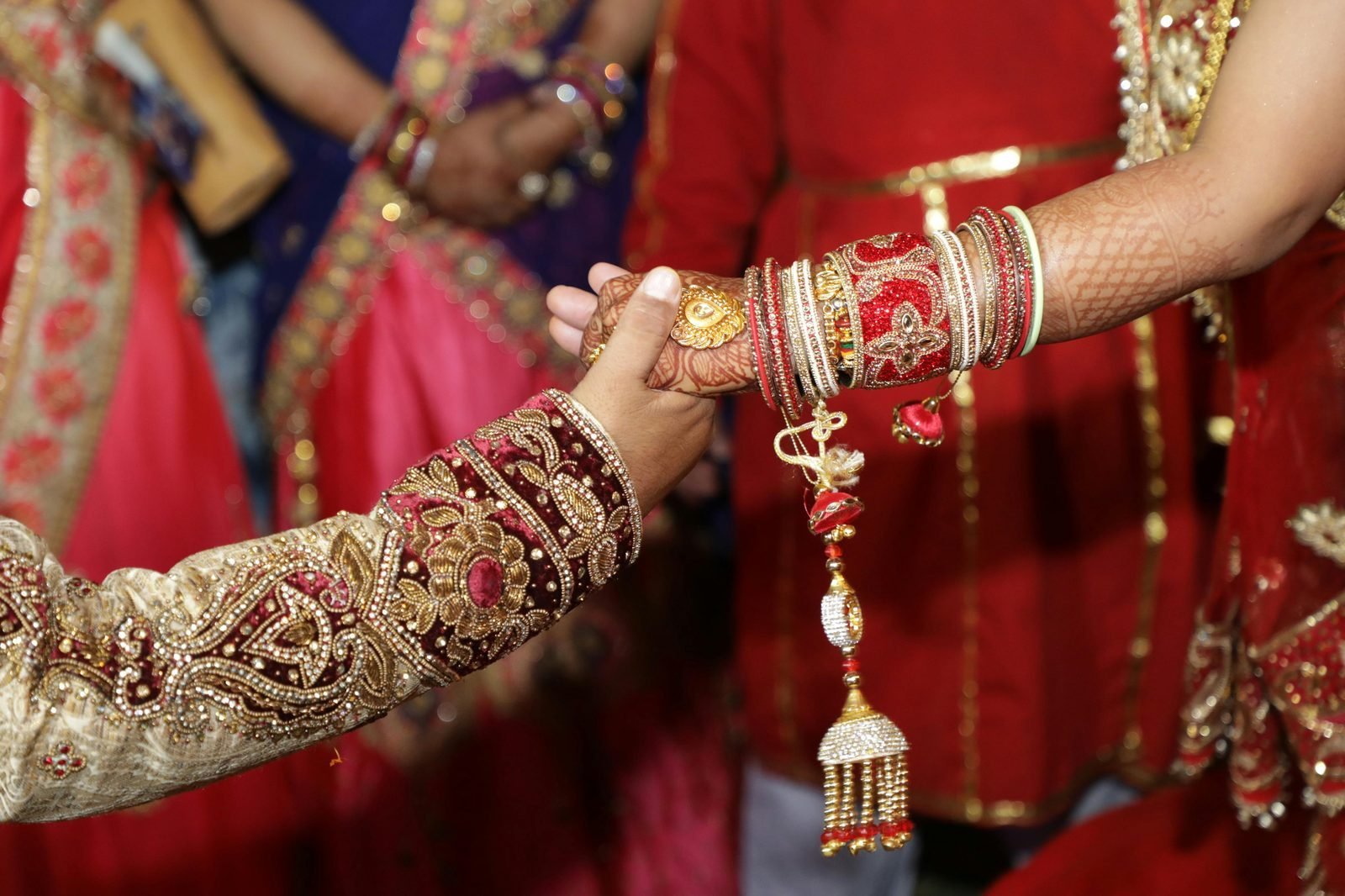
Court Marriage in Delhi (2026): Process, Documents, Fees and Timeline
📅 Updated 22 Sep 2026⏱ 42 min read
Quick answer: Court marriage in Delhi is a civil marriage solemnised before the Sub-Divisional Magistrate (SDM), who acts as the Marriage Officer under the Special Marriage Act, 1954. You file a notice of intended marriage online on the Delhi e-District portal, the notice stays on display for 30 days, and if nobody raises a valid objection you marry in the SDM office before three witnesses. The government marriage certificate is usually issued the same day or within a few working days. The whole journey usually takes 35 to 60 days, the official government fee is only around ₹15, and the groom must be at least 21 and the bride at least 18. If you cannot wait 30 days, the faster legal alternative is an Arya Samaj (Vedic) wedding followed by registration under the Hindu Marriage Act, which can be finished within one to three days.
Key takeaways
Court marriage in Delhi is a civil marriage before the SDM (Marriage Officer) under the Special Marriage Act, 1954.
A 30-day public notice is compulsory under the Special Marriage Act; the whole process usually takes 35 to 60 days.
The official government fee is about ₹15; Tatkal (₹10,000) exists only for Hindu Marriage Act registration.
Groom must be 21+, bride 18+; no parental consent, religion change or caste condition is required.
Hindu, Sikh, Jain and Buddhist couples can marry at an Arya Samaj mandir and register with the SDM in 1 to 15 days.
The phrase "court marriage" is a little misleading, and that is where much of the confusion begins. You do not go to a courtroom, you do not stand before a judge, and there is no case filed against anyone. In legal terms, a court marriage is a civil marriage performed and recorded by a government officer called the Marriage Officer. In Delhi, that role is carried out by the Sub-Divisional Magistrate (SDM) of the Revenue Department in each sub-division. The officer sits in a government office, not a court, but because the office belongs to the magistracy, people started calling it "court marriage", and the name stuck.
The law behind it is the Special Marriage Act, 1954. It was written so that any two adults in India can marry each other regardless of religion, caste, community or belief, without performing any religious ritual and without converting. A Hindu can marry a Muslim, a Sikh can marry a Christian, two atheists can marry, and two people of the same religion can also choose this route simply because they want a purely civil ceremony. Neither partner changes religion, and neither has to give up anything about their identity.
In everyday conversation in Delhi, however, people use "court marriage" for two different things:
A true civil marriage under the Special Marriage Act, where the marriage itself is solemnised in front of the SDM after a 30-day public notice.
Registration of a marriage that has already happened through a religious ceremony (most commonly an Arya Samaj marriage) under the Hindu Marriage Act, 1955. Here the SDM does not marry you; the SDM records a marriage that already took place.
Both give you a marriage certificate issued by the Government of NCT of Delhi. Both are fully valid across India and accepted for passports, visas, bank nominations and property matters. The difference lies in who can use which route, how long it takes and what you must do before you reach the SDM office. Choosing the wrong route is the single most common reason couples lose weeks, so the next section compares them side by side.
Why Delhi couples choose court marriage
Over the years we have spoken to thousands of couples, and the reasons they give tend to fall into a handful of patterns. Some want a simple, low-cost wedding without the expense and stress of a large function. Some are marrying across religion or caste and want the one route that asks nobody to convert. Some have families who are unhappy with the match and want the strongest possible legal record. Working professionals often need a government certificate quickly for a spouse visa, a company transfer or a joint home loan. And many couples who already had a traditional wedding simply come to register it because their embassy, employer or bank has asked for a government certificate.
Whatever the reason, the logic is the same: a government-issued marriage certificate is the single most accepted proof of marriage in India. It closes arguments before they start.
The Two Legal Routes: Special Marriage Act and Hindu Marriage Act
Before collecting a single document, decide which Act applies to you. This decision controls the timeline, the witnesses, the paperwork and even what happens to inheritance later.
Point of difference
Special Marriage Act, 1954
Hindu Marriage Act, 1955
Who can use it
Any two adults of any religion, or no religion
Both partners Hindu, Buddhist, Jain or Sikh (including Arya Samaj converts by Shuddhi)
Religious ceremony
Not required; the SDM solemnises the marriage
Required first (Vedic, Arya Samaj, Sikh Anand Karaj, etc.)
Public notice
Yes, 30 days on the SDM's notice board
No public notice period
Residence condition
At least one partner must have lived 30 days in that SDM's district
Registration where the marriage took place or where either partner lives
Witnesses
Three
Two (practice varies by office)
Typical total time
35 to 60 days
1 to 15 days; same day with Tatkal
Official fee
About ₹15
About ₹100; ₹10,000 for Tatkal
Religion change
Never needed
Needed if one partner is not Hindu, Sikh, Jain or Buddhist
Inheritance law after marriage
Indian Succession Act, 1925 (with an exception if both are Hindu)
Hindu Succession Act, 1956
Best suited for
Inter-religion couples, NRIs, anyone wanting a purely civil wedding
Hindu couples, inter-caste Hindu couples, urgent cases
A simple rule of thumb works for most couples. If you are marrying someone of a different religion and neither of you wants to convert, the Special Marriage Act is your route, and the 30-day notice is unavoidable. If both of you are Hindu, Sikh, Jain or Buddhist, the quicker path is a religious wedding followed by registration under the Hindu Marriage Act. That is why so many couples in Delhi book a combined Arya Samaj ceremony and SDM registration in the same week.
Section 4 of the Special Marriage Act lays down the conditions. They are short, but each one matters, and the SDM will check all of them.
Age. The groom must have completed 21 years and the bride 18 years on the date of the marriage, not merely on the date of notice. If the groom turns 21 in the middle of the notice period, the notice can still be filed, but the marriage can only be solemnised after his birthday. Read more in our explainer on the legal marriage age in India.
No living spouse. Neither partner can have a husband or wife who is alive at the time of marriage. A divorce must be final (decree passed and appeal period over), and a widow or widower must show the death certificate of the late spouse.
Sound mind. Both must be capable of giving valid consent. The law also bars marriage where a person suffers from a mental disorder of a kind or extent that makes them unfit for marriage and procreation.
Not within prohibited degrees. The partners must not be related within the degrees of prohibited relationship listed in the First Schedule of the Act (for example, a person cannot marry a sibling, a parent's sibling or a sibling's child). A custom recognised in one partner's community can allow an exception, but that has to be established clearly.
Free consent. Nobody can be married under pressure. The SDM usually speaks to both partners separately if there is any doubt.
There is no condition about religion, caste, parents' consent, income, education or nationality. Adults do not need their families' permission to marry in India. The Supreme Court made this clear in Lata Singh v. State of Uttar Pradesh (2006) and repeated it strongly in Shakti Vahini v. Union of India (2018), where it described the choice of a life partner as part of an adult's fundamental right to liberty and dignity. Our article on love marriage without family permission explains these rights in plain language.
Can foreign nationals and NRIs marry in Delhi?
Yes. The Special Marriage Act does not require either partner to be an Indian citizen. A foreign national can marry an Indian, and two foreigners can technically marry each other in India too, provided the residence condition is met. The practical difference is paperwork: a passport with a valid visa, a certificate of no impediment or single status from their embassy, and sometimes a translated and apostilled birth certificate. We explain the details in the NRI marriage in India article and on our NRI marriage service page.
Which SDM Office Is Yours? The 30-Day Residence Rule
Under Section 5 of the Act, the notice must be given to the Marriage Officer of the district where at least one of the partners has lived for at least 30 days immediately before the date of the notice. In Delhi, this translates into the SDM office covering the area where either of you currently lives.
Three practical points trip people up here:
Only one partner needs to satisfy the rule. If the bride lives in Laxmi Nagar and the groom lives in Jaipur, the couple can apply at the SDM office that covers Laxmi Nagar.
The address must be provable. Aadhaar, voter ID, passport, a registered rent agreement, a recent electricity or water bill, or a bank passbook in the partner's name are commonly accepted. If you have recently moved, a rent agreement plus a utility bill is usually safer than Aadhaar alone because Aadhaar is often not updated.
Delhi's districts have been reorganised more than once. Some localities moved from one district or sub-division to another. The e-District portal lets you select your locality and shows the correct sub-division. Choosing the wrong one means the application is rejected and you lose days.
If neither of you has lived in Delhi for 30 days, you cannot file the notice in Delhi yet. You can either wait until one of you completes 30 days at a Delhi address, or file in the district where one of you already qualifies. Couples living in the NCR often find their local option faster, and we handle marriages in Noida, Gurgaon, Ghaziabad and Faridabad as well.
Most delays at the SDM office are not legal problems at all. They are document problems: a name spelt differently in two IDs, a missing affidavit, a photocopy that is not self-attested, or a date of birth that does not match. Spend an evening getting this right and you will save yourself weeks. The complete list with specimen formats is on our documents page and in the detailed documents checklist article; the summary below covers what every Delhi office asks for.
From both partners
Document
What is accepted
Common problem
Proof of date of birth
Class 10 certificate or marksheet, birth certificate, or passport
Aadhaar alone is often not accepted as age proof
Proof of identity
Aadhaar, passport, voter ID, PAN or driving licence
Name spelling differs from the birth proof
Proof of address
Aadhaar, voter ID, passport, registered rent agreement, recent utility bill
Address not updated after moving; rent agreement unregistered
Photographs
Recent passport-size photos, usually four to six each, plus joint photos where asked
Old photos where the face no longer matches
Affidavit
Notarised affidavit declaring date of birth, marital status, nationality and that the partners are not within prohibited degrees
Wrong format or unsigned pages
Marital status proof (if applicable)
Divorce decree for divorcees; death certificate of spouse for widows and widowers
Divorce appeal period not yet over
From each witness
One photo identity proof with address (Aadhaar, voter ID, passport or driving licence).
One or two passport-size photographs.
PAN card is requested by some offices, so it is sensible to carry it.
Additional documents in special cases
Foreign nationals: passport, valid Indian visa, and a certificate of no impediment or single-status letter issued by their embassy, with translation where the original is not in English.
NRIs with an Indian passport: passport showing current address abroad, plus proof of the Delhi address of the partner through whom residence is claimed.
Change of name: gazette notification or a name-change affidavit if any document carries an older name.
Converted partner (HMA route): Shuddhi or conversion certificate from the Arya Samaj where the conversion happened. See our article on Shuddhi Sanskar before marriage.
Five checks before you upload anything
Write your full name exactly as it appears in your Class 10 certificate, and make sure every other document matches it letter for letter. "Mohd." and "Mohammad" are different names to a clerk.
Confirm that the date of birth on the affidavit matches the birth proof.
Self-attest every photocopy with your signature and the date.
Scan documents as clear, colour PDFs under the portal's file-size limit; blurry scans are the second most common reason for return.
Keep one complete set of originals and two sets of photocopies ready for the day of verification.
Witness Rules Explained Simply
Under Section 11 of the Special Marriage Act, the marriage is solemnised in the presence of the Marriage Officer and three witnesses. Under Hindu Marriage Act registration, most Delhi offices ask for two. The rules are gentler than people fear:
A witness must be an adult of sound mind and must carry valid photo identification.
Witnesses can be friends, colleagues, neighbours or relatives. They do not need to be family members, and parents do not have to attend.
Witnesses do not need to belong to the same religion as either partner.
Most offices do not insist that witnesses live in Delhi, but they must physically attend on the day of solemnisation and sign the register.
A witness is not guaranteeing your marriage. They simply confirm that the marriage took place in front of them and that they know who you are.
Witnesses should be people who genuinely know you, such as friends, colleagues or relatives, because they are confirming your identity and that the marriage took place in front of them. We do not provide witnesses. If your family is not yet aware of the marriage, a few trusted friends or colleagues are the usual choice. The complete rules, including what questions officers sometimes ask witnesses, are in our article on court marriage witness requirements.
Step-by-Step Court Marriage Process in Delhi (Special Marriage Act)
Here is the full journey exactly as it plays out for a typical Delhi couple. Each step names the section of the law it comes from, so you know what the officer is doing and why.
Step 1: Decide the route and confirm eligibility (Day 0)
Confirm that you both meet the conditions in Section 4, pick the correct Act and identify the SDM office where one of you meets the 30-day residence requirement. If you are unsure, a 15-minute consultation usually settles it. Call us on +91 8376863962 and we will tell you which route and which office fits your situation.
Step 2: Prepare the documents and affidavits (Days 1 to 3)
Collect the documents listed above, get the affidavits drafted and notarised, and scan everything. If one partner is a divorcee or widowed, add the decree or death certificate now rather than later.
Step 3: File the Notice of Intended Marriage online (Day 3 or 4)
The notice under Section 5 is filed through the Delhi government's e-District portal (edistrict.delhigovt.nic.in). You create an account, select "Registration of Marriage under the Special Marriage Act", fill in the details of both partners, upload the documents and pay the fee online. Once submitted, the system generates an application number and you receive a date for physical verification. The portal itself is free apart from the official fee and a small payment-gateway charge; be cautious of websites that look official but charge for "form submission".
Step 4: Verification at the SDM office (within about a week)
Both partners appear in person at the SDM office on the given date with original documents. The staff compare originals with uploads, take signatures on the notice and sometimes ask a few simple questions. The notice is then formally entered in the Marriage Notice Book (Section 6).
Step 5: The 30-day public notice period (Days 5 to 35)
A copy of the notice is displayed at a conspicuous place in the Marriage Officer's office. If either partner lives outside that district, a copy may be sent to the Marriage Officer of the district where they live. Any person can raise an objection within 30 days, but only on the legal grounds in Section 4 (underage, existing spouse, unsound mind or prohibited relationship). Disapproval of the match, caste, religion or family pride is not a legal ground.
Couples are often anxious about what appears on the notice. Typically it includes names, age, occupation, address and the period of residence. If safety is a concern, read the section on safety and family opposition below before you file.
Step 6: Booking the solemnisation date (after Day 30)
When the 30 days pass without objection, you choose a date for solemnisation. Remember Section 14: the marriage must take place within three calendar months of the date of notice. If you miss that window, the notice lapses and a fresh notice with another 30-day wait is needed. Submit your witnesses' details at least a day in advance if the office asks for them.
Step 7: Solemnisation before the SDM (Day 31 onward)
On the appointed day both partners and three witnesses attend. The partners and witnesses sign the declaration in the form given in the Third Schedule. Under Section 12, you then say to each other, in any language you both understand, words to the effect of "I take thee to be my lawful wife" and "I take thee to be my lawful husband". That is the entire ceremony. Many couples exchange garlands or rings as well, which is allowed but not required. The whole process in the room often takes less than half an hour.
Step 8: Marriage certificate (same day to a few working days)
The Marriage Officer enters the certificate in the Marriage Certificate Book in the form given in the Fourth Schedule, signed by the partners and the three witnesses (Section 13). This certificate is conclusive evidence that the marriage was solemnised under the Act. In most Delhi offices the certificate can be collected the same day or downloaded from the portal within a few working days. Check the spelling of every name before you leave the office; correcting it later requires a separate application.
Our dedicated article on the court marriage process in Delhi covers each step with screenshots-style descriptions of the portal and what to say at the counter.
The Faster Route: Arya Samaj Wedding plus Hindu Marriage Act Registration
If both of you are Hindu, Sikh, Jain or Buddhist, there is no 30-day notice to wait for. The law treats your marriage as complete once the essential ceremony is performed, and the SDM only registers it. This is why couples who need speed usually take this path.
Vedic ceremony at an Arya Samaj mandir. The marriage is solemnised according to Vedic rites, including havan and saptapadi (the seven steps), which Section 7 of the Hindu Marriage Act treats as the point at which the marriage becomes complete and binding. Arya Samaj marriages are also protected by the Arya Marriage Validation Act, 1937, which settles their validity even between partners of different castes. The ceremony takes one to two hours and you receive a mandir marriage certificate the same day.
Application for registration. An application is filed on the e-District portal under the Hindu Marriage Act with the Arya Samaj certificate, wedding photographs, ID and age proof of both partners and their witnesses.
Appearance before the SDM. On the appointment date both partners and the witnesses appear, the officer verifies the documents and the marriage is entered in the register. A normal appointment is usually given within one to two weeks; under Delhi's Tatkal scheme, an appointment can often be given within one to two working days for a higher official fee.
The Hindu Marriage Act applies only when both partners are Hindu (a term that legally includes Sikhs, Jains and Buddhists). If one partner is Muslim, Christian, Parsi or Jewish, there are two lawful choices: marry under the Special Marriage Act with no conversion, or the non-Hindu partner voluntarily embraces Hinduism through Shuddhi at an Arya Samaj before the Vedic wedding. Conversion must be a genuine, voluntary decision; courts have repeatedly refused to recognise conversions made only to get around the law, and some states have specific conversion statutes. If you have any hesitation about changing religion, choose the Special Marriage Act. Our inter-religion marriage service and the article on inter-religion marriage in India explain both options honestly.
Court Marriage Fees in Delhi: Government Fee and Real Cost in 2026
The government fee for court marriage in Delhi is small. What costs money is everything around it: affidavits, notary charges, stamp paper, photographs, travel and, if you choose, professional help to avoid mistakes. Here is an honest breakdown.
Official government fees
Item
Approximate official fee
Notes
Special Marriage Act (solemnisation)
₹15
Paid online on the e-District portal
Hindu Marriage Act registration
₹100
Normal appointment
Tatkal registration (Hindu Marriage Act)
₹10,000
Priority appointment, usually within one to two working days
Payment gateway charge
₹10 to ₹20
Varies by payment method
Notary for each affidavit
₹50 to ₹200
Charged by the notary, not the government
Stamp paper for affidavits
₹10 to ₹100
Depends on the value required
Government fees are revised from time to time. Always confirm the current amount on the payment screen of the e-District portal before paying.
Our professional fees
You can do the whole process yourself, and many couples do. People who come to us usually want certainty: correct documents the first time, a fixed date, and someone to stand with them at the office. Our published packages are:
Vedic ceremony plus SDM registration and government certificate
Special Marriage Act full process
₹15,000
Notice, 30-day follow-up, solemnisation and certificate
Government fees, notary charges and optional extras such as photography or pickup are separate and are told to you in writing before you pay anything. The complete price list, including apostille and NRI packages, is on our fees page, and the reasoning behind each cost is explained in court marriage fees in Delhi 2026.
How to spot overcharging
Anyone who quotes a "government fee" of several thousand rupees for a normal Special Marriage Act application is inflating it.
Anyone who promises a Special Marriage Act certificate within a week is either misunderstanding the law or planning to use a different route without telling you.
Anyone who refuses to give a written break-up of their charges should be avoided.
Realistic Timeline: How Long Court Marriage Takes in Delhi
Stage
Special Marriage Act
Arya Samaj + HMA registration
Document preparation
1 to 3 days
1 day
Online application and verification
3 to 7 days
1 to 7 days (1 to 2 with Tatkal)
Public notice
30 days, fixed by law
Not applicable
Solemnisation or registration appointment
Usually within 1 to 2 weeks after notice ends
Same visit as verification
Certificate
Same day to a few working days
Same day to a few working days
Total
About 35 to 60 days
About 1 to 15 days
Public holidays, election duty (SDMs are heavily involved in elections), and the month of Sawan followed by the wedding season from November to February all stretch appointment queues. If your date matters, start at least 45 days ahead for the Special Marriage Act and a week ahead for Hindu Marriage Act registration.
Special Situations: Inter-Caste, Inter-Religion, NRI, Divorcees and More
Inter-caste couples
There is no legal barrier to marrying outside your caste. Hindu couples of different castes can use either the Hindu Marriage Act (usually through an Arya Samaj wedding) or the Special Marriage Act. The central government's Dr. Ambedkar Scheme for Social Integration through Inter-Caste Marriages provides financial support of ₹2.5 lakh where one partner belongs to a Scheduled Caste and the marriage is legally registered, subject to the scheme's conditions. Our inter-caste marriage service and the inter-caste marriage legal process article explain eligibility and paperwork.
Inter-religion couples
The Special Marriage Act is the only route that allows you to marry without either partner changing religion. Your personal faith, name and practices remain your own. The 30-day notice cannot be skipped, so plan accordingly and follow the safety advice below if families are hostile. Read inter-religion marriage in India for a full explanation of rights, inheritance and children's status.
NRIs and foreign nationals
A foreign partner needs a valid passport and visa, a single-status or no-impediment certificate from their embassy, and sometimes translations. After marriage, most couples need the certificate apostilled by the Ministry of External Affairs for use abroad. The process is covered in our marriage certificate apostille article and in the NRI marriage apostille and embassy explainer.
Divorced partners
You can remarry once your divorce is final. Under the Hindu Marriage Act, a divorcee may remarry after the decree is passed and the appeal period has expired, or after any appeal is dismissed. Carry a certified copy of the decree. If the decree is from a foreign court, the SDM may ask for it to be apostilled or attested.
Widows and widowers
Carry the death certificate of your late spouse. The affidavit should state your status as widow or widower and the date of the spouse's death.
Couples already married in a religious ceremony
If your marriage has already happened by Hindu rites, register it under the Hindu Marriage Act. If it happened in some other form and you want the Special Marriage Act's civil status, Section 15 allows registration of a marriage already celebrated, provided the conditions of that section are satisfied, after a 30-day notice.
Couples from other states living in Delhi
Your home state does not matter. What matters is where one of you has lived for the 30 days before the notice. Students, working professionals in paying-guest accommodation and people on company leases can all qualify if they have address proof for Delhi.
What Happens If Someone Objects or the SDM Refuses
Section 7 allows any person to object before the 30 days end, but only because one of the conditions in Section 4 is not met. When a valid objection is filed, the Marriage Officer cannot solemnise the marriage until the objection is examined. Under Section 8, the officer inquires into it and must decide within 30 days of receiving it.
If the objection is rejected, the marriage goes ahead.
If the objection is upheld and the marriage refused, either partner may appeal to the district court within 30 days of the refusal.
Objections based on caste, religion, family status or "parents did not agree" are not legal grounds and are routinely rejected.
If an objection is found to be frivolous and not made in good faith, the Marriage Officer can impose costs on the objector, up to ₹1,000, payable to the couple.
Occasionally an office delays matters without a clear reason, for example by asking for documents that the law does not require. A polite written request citing the Act usually resolves this. If it does not, a writ petition before the Delhi High Court is available, and the High Court has on many occasions directed Marriage Officers to process applications of adult couples promptly.
Safety, Privacy and Family Opposition
For many couples, the real worry is not the paperwork but what happens when families find out. Here is what the law and experience say.
You are adults and the choice is yours. Police and officials are bound by the Supreme Court's rulings that adults may marry whom they choose.
Protection is available. If you fear harm, you can approach the local police station or the District Police Deputy Commissioner in writing. After Shakti Vahini, the Delhi Police follows guidelines that include special cells for couples facing honour-based threats and safe houses in each district. You can also petition the Delhi High Court for protection, which is usually heard quickly.
Consider the faster route if you qualify. For two Hindu partners, an Arya Samaj wedding followed by registration avoids the 30-day public display entirely.
Keep copies of everything. Save the notice, receipts, certificates and any threats you receive (messages, call records) in a safe place outside your phone.
Tell one trusted person. A friend or colleague who knows your plans and can alert the police if needed is invaluable.
After the Certificate: Legal Rights and What to Update
The certificate is not the end of the process; it is the key that unlocks everything else. Once your marriage is registered, you have the following legal protections and practical next steps.
Your legal rights as a married couple
Maintenance. A spouse who cannot maintain themselves can claim maintenance under Section 144 of the Bharatiya Nagarik Suraksha Sanhita, 2023 (the provision that replaced Section 125 of the old Criminal Procedure Code), in addition to rights under the marriage law itself.
Protection from domestic violence. The Protection of Women from Domestic Violence Act, 2005 gives a wife the right to residence in the shared household, protection orders and monetary relief.
Inheritance. For marriages under the Special Marriage Act, succession is generally governed by the Indian Succession Act, 1925. There is an important exception in Section 21A: where both partners are Hindu, Buddhist, Sikh or Jain, the Hindu Succession Act continues to apply. For marriages registered under the Hindu Marriage Act, the Hindu Succession Act applies.
Children. Children born of a valid marriage are legitimate for every purpose, including inheritance from both parents.
Nominations and benefits. Spouses can be nominated for provident fund, gratuity, insurance, bank accounts and government pensions, and the certificate is the standard proof.
Documents to update after marriage
Passport. Add your spouse's name, and change your surname if you choose to. The marriage certificate is the supporting document.
Aadhaar. Update your address or name if needed at an Aadhaar Seva Kendra or online.
Bank accounts. Update nominations and, if you like, open a joint account.
Employer records. Add your spouse for medical insurance, leave travel concession and other benefits.
Visa applications. For use abroad, obtain an apostille from the Ministry of External Affairs after state-level authentication.
Recent legal changes worth knowing
New criminal laws since 1 July 2024. The Bharatiya Nyaya Sanhita, the Bharatiya Nagarik Suraksha Sanhita and the Bharatiya Sakshya Adhiniyam replaced the Indian Penal Code, the Criminal Procedure Code and the Indian Evidence Act. Older articles that still cite "Section 125 CrPC" for maintenance are out of date; the equivalent provision is now Section 144 of the BNSS.
Electronic records. Under the Bharatiya Sakshya Adhiniyam, properly preserved electronic records carry clear evidentiary value. Keep digital copies of your notice, receipts and certificate, and keep any threatening messages intact.
Same-sex marriage. In Supriyo Chakraborty v. Union of India (October 2023), the Supreme Court declined to read the Special Marriage Act as permitting same-sex marriages, leaving the question to Parliament. As of this review, the Act continues to apply to marriages between a man and a woman.
Online filing. Delhi's e-District portal is now the standard entry point for both Special Marriage Act notices and Hindu Marriage Act registrations, which has made paper-only applications largely a thing of the past.
Lost or damaged certificates can be replaced. Our marriage certificate service handles certified copies, corrections and apostille.
Ten Mistakes That Delay Court Marriage in Delhi
In our experience, most couples who are told "come back later" have made one of these avoidable errors.
Applying in the wrong sub-division. The address you claim must fall under the office you select. Check the locality list on the portal.
Name mismatch between documents. Fix spelling differences before you apply, not at the counter.
Using Aadhaar as the only age proof. Carry a Class 10 certificate, birth certificate or passport.
Filing before the groom turns 21. Notice can be filed, but solemnisation must wait until he is 21; plan the date.
Letting the three-month window lapse. Solemnise within three months of notice or start again.
Choosing the Special Marriage Act when speed matters and both partners are Hindu. The Hindu Marriage Act route is far quicker.
Forgetting the divorce appeal period. A decree dated last week is not yet final if an appeal is still possible.
Witnesses without original ID. Photocopies are not enough on the day.
Trusting "same-day court marriage under the Special Marriage Act". It does not exist; the 30 days are fixed by law.
Not checking the certificate before leaving. A wrong spelling on the certificate takes a separate application to correct.
Court Marriage Myths versus Facts
Myth
Fact
Parents must sign or attend
Adults need no parental consent; parents do not have to attend
Court marriage happens in a courtroom before a judge
It happens in the SDM's office before the Marriage Officer
A lawyer is compulsory
No; a lawyer or service helps avoid errors but is optional
You must change religion to marry someone of another faith
Not under the Special Marriage Act
An Arya Samaj certificate alone is the same as a government certificate
It proves the ceremony; registration with the SDM gives the government certificate
The notice is sent to the newspaper
It is displayed at the Marriage Officer's office; there is no newspaper advertisement requirement
Court marriage can be done fully online
Application is online; both partners must appear in person
Anyone can stop the marriage by objecting
Only objections on legal grounds in Section 4 are considered
Couples often ask whether the certificate from an Arya Samaj mandir is "enough". The honest answer is that it depends on where you will use it. A mandir certificate proves that a Vedic ceremony took place; a certificate from the SDM proves that the government has recorded your marriage. The second is accepted almost everywhere, the first only in some places.
Where you will use it
Mandir certificate alone
Government certificate (SDM)
Passport (adding spouse's name)
Often not accepted on its own
Accepted
Spouse or dependent visa
Generally not accepted
Accepted, usually with apostille
Bank nominations and joint accounts
Sometimes accepted
Accepted
Employer insurance and benefits
Varies by employer
Accepted
Property, inheritance and succession matters
Supporting evidence only
Strong primary evidence
Police protection request
Useful as evidence of marriage
Strongest evidence
Inter-caste marriage incentive schemes
Not sufficient
Required
This is why we almost always recommend that couples who marry at a mandir also register the marriage with the SDM. It costs little extra, and it removes every future question about proof. Our combined package exists for exactly this reason.
Before you call anyone for help
Whether you call us or any other service, having these answers ready will make the first conversation much more useful:
Both partners' religions, and whether either is willing to convert (it is completely fine if not).
Both dates of birth, and what document shows each one.
Where each of you has lived for the last 30 days, and what proof you have for that address.
Whether either of you was married before.
Whether either of you is a foreign national or lives abroad.
Your target date, and why that date matters.
Whether families know, and whether you have any safety concerns.
With those seven answers, any competent adviser can tell you your route, your office and your realistic timeline in a single call.
Three Typical Situations and the Right Route for Each
The examples below are composite scenarios based on the questions we hear most often. Names and details are illustrative, but the legal reasoning is exactly what we apply in real consultations.
Scenario 1: Two Hindu professionals who need a certificate in ten days
A software engineer from Noida and a teacher living in Janakpuri are both Hindu. The groom's company has offered him an overseas posting, and the visa appointment is in three weeks. The Special Marriage Act would take at least 35 days, which is too long. The right route is an Arya Samaj Vedic wedding on a convenient day, followed by Hindu Marriage Act registration at the SDM office covering Janakpuri (the bride's address). With documents ready on day one and a Tatkal appointment, the government certificate can be in their hands within a few working days, leaving enough time to get it apostilled for the visa file.
Scenario 2: An inter-religion couple who do not want anyone to convert
A Hindu woman living in Mayur Vihar and a Christian man from Kerala who has worked in Delhi for four years want a civil marriage. Neither wants to change religion. The only lawful route is the Special Marriage Act. Both qualify on residence, so they file at the office where they feel more comfortable, keep their documents consistent, arrange three friends as witnesses, and book the solemnisation for a date just after the 30 days end. Total time is about six weeks. Because both are adults and neither family has made threats, they file normally; had there been threats, we would first have discussed a written request for police protection.
Scenario 3: A couple married years ago at a temple, with no certificate
A couple in Rohini married at a temple eight years ago and never registered the marriage. Now they need a certificate for their child's passport and a joint property purchase. They do not need a new wedding. They apply for registration under the Hindu Marriage Act with whatever proof of the ceremony they have (photographs, invitation card, temple receipt) and two witnesses who attended. Where ceremony proof is weak, a fresh Arya Samaj ceremony to reaffirm the marriage is sometimes suggested, followed by registration. Delayed registration is possible, though the office may ask for an explanation for the delay.
Court Marriage Across Delhi: Local Notes
The law is the same across Delhi, but the experience at each office differs in small ways: queue lengths, how early you should arrive, whether witness details are needed in advance, and how busy the office becomes in the wedding season. A few patterns we have seen over the years:
South and South-West Delhi (Saket, Hauz Khas, Vasant Vihar, Dwarka, Najafgarh) see heavy demand from working couples and NRIs; early-morning slots fill quickly during November to February.
East and North-East Delhi (Preet Vihar, Shakarpur, Mayur Vihar, Shahdara, Seelampur, Yamuna Vihar) have a large number of inter-caste and love-marriage applications, and offices here are experienced with protection-related requests.
North and North-West Delhi (Model Town, Civil Lines, Rohini, Narela, Alipur) cover large areas, so confirming the correct sub-division for your exact colony before filing is especially important.
Central and New Delhi (Karol Bagh, Patel Nagar, Chanakyapuri, Delhi Cantonment) handle many cases involving foreign nationals and government employees, so carry embassy documents and service records where relevant.
We have been helping couples marry in Delhi since 1998, and the service is designed around the things couples actually worry about: getting it right the first time, keeping it private, and finishing on a date they can plan around.
A free first consultation by phone or WhatsApp to tell you which route and which office apply to you.
Document checking and drafting of every affidavit so nothing is sent back.
Online filing on your behalf with you in the loop at each step.
Accompanied visits to the SDM office for verification and solemnisation.
Guidance on choosing witnesses from among people who know you (we do not provide witnesses), and complete confidentiality at every stage.
After-marriage support for certificates, apostille and name changes.
Frequently Asked Questions About Court Marriage in Delhi
What is court marriage in Delhi, in simple words?▼
Court marriage is a civil marriage performed by a government officer instead of a priest. In Delhi, the Sub-Divisional Magistrate acts as the Marriage Officer under the Special Marriage Act, 1954. You give a notice, wait 30 days for any legal objection, then marry in the SDM's office by making a declaration in front of three witnesses. It is not a court case and no judge is involved. The same name is often used for registering an Arya Samaj or other Hindu wedding with the SDM, which also gives a government certificate.
How many days does court marriage take in Delhi?▼
Under the Special Marriage Act, plan for 35 to 60 days. About a week goes in preparing documents, filing online and the verification visit. Then comes the compulsory 30-day notice period. After that, the office gives a solemnisation date, usually within one to two weeks, and the certificate follows on the same day or within a few working days. If both partners are Hindu, Sikh, Jain or Buddhist, an Arya Samaj wedding plus Hindu Marriage Act registration usually takes 1 to 15 days, or a day or two with Tatkal.
Is one-day court marriage possible in Delhi?▼
A true Special Marriage Act marriage cannot be done in one day, because the law fixes a 30-day notice period that nobody can waive. What is sold as a one-day court marriage is actually a Vedic wedding at an Arya Samaj mandir in the morning, followed by registration under the Hindu Marriage Act with a Tatkal or early appointment. That is legal and gives a government certificate, but it is only available when both partners are Hindu, Sikh, Jain or Buddhist. Be wary of anyone promising a one-day Special Marriage Act certificate.
What is the government fee for court marriage in Delhi in 2026?▼
The official fee for a marriage under the Special Marriage Act is modest, around ₹15, paid online on the e-District portal. Registration under the Hindu Marriage Act is about ₹100, and a Tatkal registration appointment costs ₹10,000. On top of this, expect small costs for stamp paper, notarising affidavits and a payment-gateway charge. Government fees are revised from time to time, so check the amount shown on the portal's payment screen. Anything that is described as a government fee of several thousand rupees for a normal application is inflated.
Which documents are compulsory for court marriage in Delhi?▼
Each partner needs proof of date of birth (Class 10 certificate, birth certificate or passport), identity proof, address proof for the Delhi address, recent passport-size photographs and a notarised affidavit covering age, marital status, nationality and prohibited relationship. A divorced partner adds a certified copy of the final divorce decree, and a widowed partner adds the late spouse's death certificate. Foreign nationals add a passport with visa and a single-status certificate. Each of the three witnesses brings an original photo ID with address and photographs.
Can we do court marriage without our parents knowing?▼
Yes. Adults in India do not need parental consent to marry, and parents do not have to sign anything or attend. The Supreme Court has held in Lata Singh (2006) and Shakti Vahini (2018) that choosing a life partner is part of an adult's fundamental rights. The practical point to remember is that the Special Marriage Act notice is displayed publicly for 30 days. If privacy or safety is a concern, discuss the route with an adviser before filing; Hindu couples can often use the faster registration route, which has no public notice.
Is the notice sent to our home address?▼
The Special Marriage Act requires the notice to be displayed at a conspicuous place in the Marriage Officer's office, and a copy to be sent to the Marriage Officer of another district where a partner permanently lives. The Act itself does not require notices to be posted to parents or home addresses, and there is no newspaper publication. Practice at individual offices has varied over the years, so if this is a concern, ask the office about its current practice before filing, or consider the Hindu Marriage Act route if you qualify.
Who can be a witness for court marriage in Delhi?▼
Any adult of sound mind with a valid original photo ID showing an address can be a witness. Friends, colleagues, neighbours and relatives all qualify; they do not need to belong to your religion or family. Three witnesses are needed for a Special Marriage Act marriage and most offices ask for two for Hindu Marriage Act registration. Witnesses only confirm that the marriage took place before them and that they know you. They take no legal responsibility for your marriage, but they must genuinely know you and actually be present. We do not provide witnesses; please bring people who know you.
Can an inter-religion couple do court marriage in Delhi without conversion?▼
Yes, that is exactly what the Special Marriage Act is for. A Hindu can marry a Muslim, a Christian can marry a Sikh, and so on, without either partner changing religion, name or practices. The only conditions are age, no living spouse, sound mind and not being within prohibited degrees of relationship. The 30-day notice cannot be skipped. After marriage, succession is generally governed by the Indian Succession Act. If you are considering conversion instead, understand that it must be genuine and voluntary, not just a way to save time.
Can a Hindu couple also choose the Special Marriage Act?▼
Yes. Any couple can choose the Special Marriage Act, including two Hindus who want a purely civil wedding without religious ritual. The trade-off is time: the Special Marriage Act needs a 30-day notice, while an Arya Samaj wedding with Hindu Marriage Act registration can be finished in days. Under Section 21A, where both partners are Hindu, Buddhist, Sikh or Jain, the Hindu Succession Act continues to govern inheritance even if they marry under the Special Marriage Act, so the inheritance difference is smaller than people assume.
Which SDM office should we apply to in Delhi?▼
You apply to the SDM whose sub-division covers the address where at least one of you has lived for at least 30 days immediately before the notice. Only one partner needs to meet this rule. Select the locality on the e-District portal to see the correct sub-division, and cross-check with the district's website, because boundaries in Delhi have changed more than once. Applying in the wrong office is one of the most common reasons couples lose one to two weeks.
What if neither of us has lived in Delhi for 30 days?▼
Then you cannot yet file a Special Marriage Act notice in Delhi. You have three options: wait until one of you has lived at a provable Delhi address for 30 days, file in another district where one of you already qualifies, or, if both of you are Hindu, Sikh, Jain or Buddhist, marry at an Arya Samaj mandir and register the marriage, where the residence rules are more flexible. Couples living in Noida, Gurgaon, Ghaziabad or Faridabad can often use their local office instead.
Can the SDM refuse to marry us?▼
The SDM can refuse only if a condition in Section 4 is not met, for example underage, an existing spouse, unsound mind or a prohibited relationship. Family disapproval, caste or religion are not grounds. If someone objects, the officer must inquire and decide within 30 days. If the marriage is refused, either partner may appeal to the district court within 30 days. If an office simply delays a complete application, a written representation and, if necessary, a writ petition in the Delhi High Court are available remedies.
Is an Arya Samaj certificate enough, or do we need SDM registration?▼
An Arya Samaj certificate proves that a valid Vedic ceremony took place, and the marriage is legally valid. But for passports, visas, many banks, employers and inter-caste incentive schemes, a government certificate from the SDM is what is usually asked for. That is why we recommend registering every Arya Samaj marriage under the Hindu Marriage Act. The combined ceremony and registration package costs little extra and removes any future question about proof of marriage.
Can a divorced person do court marriage in Delhi?▼
Yes, once the divorce is final. For a Hindu Marriage Act divorce, remarriage is allowed only after the decree is passed and the appeal period has expired without an appeal, or after any appeal is dismissed. Bring a certified copy of the decree and mention its details in your affidavit. If the divorce was granted abroad, the office may ask for it to be apostilled or attested. Filing too soon after a decree can lead to refusal, so check dates carefully.
What is the legal age for court marriage in Delhi?▼
The groom must be at least 21 years old and the bride at least 18 years old on the date of the marriage. Age is proved by a Class 10 certificate, birth certificate or passport, not by Aadhaar alone. A notice can be filed shortly before the groom turns 21 as long as the solemnisation takes place after his birthday and within three months of the notice. Marriages below the legal age are an offence under the Prohibition of Child Marriage Act, 2006.
Can NRIs and foreigners do court marriage in Delhi?▼
Yes. Nationality is not a condition under the Special Marriage Act. One partner must meet the 30-day Delhi residence rule. A foreign partner needs a passport with a valid visa and usually a single-status or no-impediment certificate from their embassy, with translations where needed. After the marriage, the certificate is normally apostilled by the Ministry of External Affairs for use abroad, which most embassies require for spouse visas.
Is court marriage valid all over India and abroad?▼
Yes. A marriage solemnised or registered by a Delhi Marriage Officer is valid throughout India. The certificate is accepted by passport offices, courts, banks and government departments. For use abroad, it is usually apostilled (for Hague Apostille Convention countries) or attested by the relevant embassy, after which it is accepted for visas, residence permits and name changes in most countries.
What rights does a spouse get after court marriage?▼
Registration gives both spouses the full set of marital rights: maintenance (now under Section 144 of the Bharatiya Nagarik Suraksha Sanhita, which replaced Section 125 CrPC), protection and residence rights under the Protection of Women from Domestic Violence Act, inheritance rights, nomination rights for insurance, bank and provident fund, and eligibility for dependent visas. Children of the marriage are legitimate for all purposes. The certificate is the proof that makes these rights easy to enforce.
Do we need a lawyer for court marriage in Delhi?▼
No law requires a lawyer. Couples can file the notice online and attend the SDM office themselves. People use a lawyer or an experienced service mainly to avoid document errors, choose the right office and route, meet the three-month deadline and deal with objections or protection issues. If your case is straightforward and your documents are consistent, you can manage it yourself; if there is any complication, professional help usually saves time.
What happens if we don't marry within three months of the notice?▼
Section 14 of the Special Marriage Act says that if the marriage is not solemnised within three calendar months of the date of notice, the notice lapses. You would have to file a new notice and wait another 30 days. This most often happens when a couple delays booking a date or when a witness drops out close to the deadline. Write down the last valid date as soon as your notice is published and keep a standby witness.
Can we get court married on a Sunday or holiday?▼
SDM offices work on government working days, so solemnisation and registration normally happen on weekdays in the morning session. Sundays and gazetted holidays are not available. If you want your religious ceremony on a particular auspicious day, a common approach is to hold the Arya Samaj wedding on that day and complete registration on the next working day.
Can a court marriage be done at home or at a venue?▼
Under Section 12 of the Special Marriage Act, a marriage may be solemnised at the Marriage Officer's office or at another place within reasonable distance, on payment of additional fees as prescribed. In practice in Delhi, almost all court marriages happen at the SDM office. Couples who want a function with family usually marry at the office and hold a reception separately.
Is there any government money for inter-caste couples?▼
The central Dr. Ambedkar Scheme for Social Integration through Inter-Caste Marriages offers ₹2.5 lakh where one spouse belongs to a Scheduled Caste and the marriage is legally registered, subject to the scheme's conditions and budget. Some states run their own schemes too. A government marriage certificate is essential for any such application, which is another reason to register rather than rely only on a religious certificate.
What mistakes delay court marriage most often?▼
The usual culprits are applying in the wrong sub-division, name spellings that differ between documents, using only Aadhaar as age proof, filing before the groom turns 21 without planning the date, missing the three-month window, and a witness failing to turn up. Each of these can cost one to four weeks. A careful document check and a clear calendar at the start prevent almost all of them.
Can we correct a mistake in the court marriage certificate later?▼
Yes, but it is slower than getting it right at the counter. A correction needs a separate application to the office that issued the certificate, with supporting documents showing the correct detail, such as a passport or Class 10 certificate. Depending on the error, an affidavit may also be required. That is why we tell every couple to read every letter of their names, dates and addresses before leaving the SDM office.
How much does court marriage cost with professional help?▼
Our published fees are ₹6,100 for an advocate-assisted court marriage, ₹6,000 for Hindu Marriage Act SDM registration, ₹7,100 for the combined Arya Samaj ceremony and SDM registration, and ₹15,000 for the full Special Marriage Act process including the 30-day follow-up. Government fees, notary charges and optional extras such as photography are separate and given to you in writing before you pay.
How do we start with your team?▼
Call or WhatsApp us on +91 8376863962 with both partners' religions, dates of birth, where each of you has lived for the last 30 days, whether either was married before and your target date. In one conversation we will tell you the right route, the right office and a realistic timeline, and then give you a written quote. The first consultation is free and everything you share is kept confidential.
Sources and Official References
Facts in this article were checked against the following primary sources. Government fees and procedures change, so confirm current details on the official portal before applying.